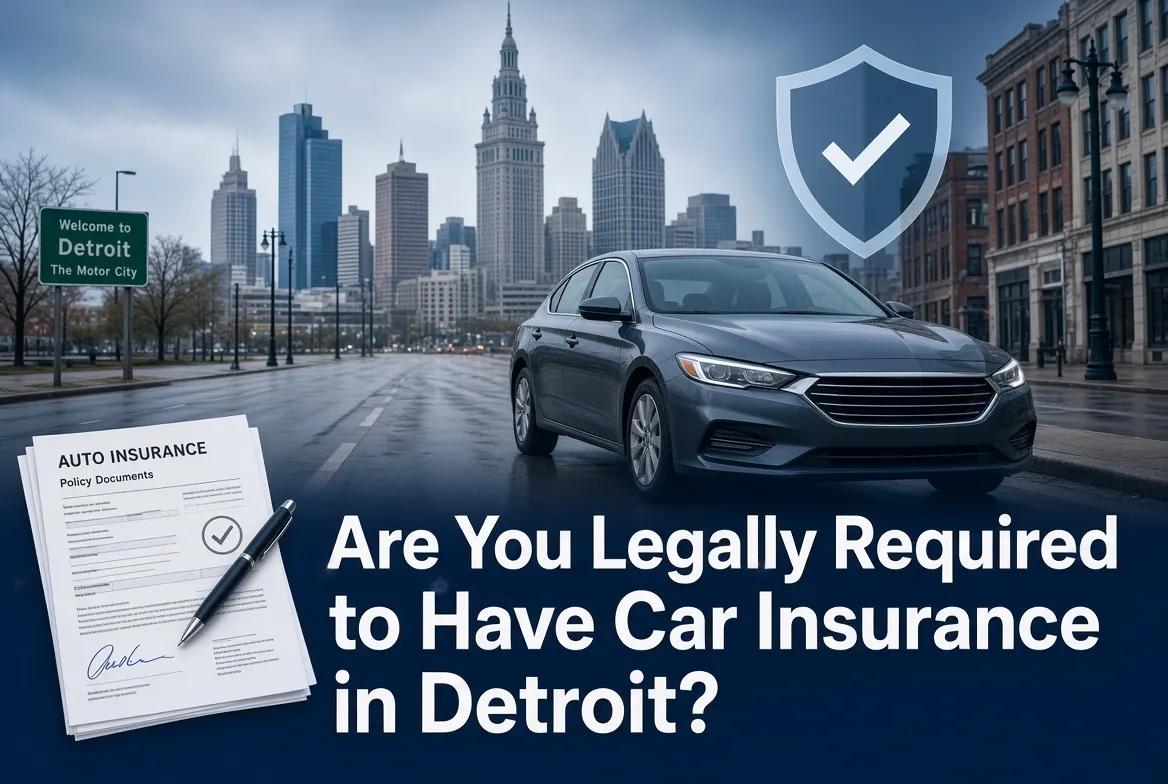
If you drive in Detroit, one question matters more than almost any other before you turn the key: Are you legally required to have car insurance?
The short answer is yes. Michigan law requires nearly every vehicle driven on public roads to carry auto insurance that meets the state's minimum legal requirements. Driving without insurance is not simply a paperwork issue. It can lead to fines, license suspension, expensive legal consequences, and personal financial risk if you're involved in a crash.
Still, the real story goes beyond a simple yes or no. Detroit drivers often face some of the highest insurance premiums in Michigan, which makes many people wonder whether they can delay coverage, buy the cheapest policy possible, or drive temporarily without insurance. Those decisions can become surprisingly costly.
This guide explains what Michigan law requires, why the rules exist, and what Detroit drivers should know before getting behind the wheel.
Understanding Michigan's Car Insurance Law
Michigan is one of the few states with a unique no-fault auto insurance system. That system changes how medical expenses and certain accident-related costs are handled after a crash.
Under Michigan law, drivers must maintain a valid insurance policy for vehicles operated on public roads. If your car is registered in Michigan and you drive it regularly, insurance is generally required regardless of how often you use the vehicle.
The legal requirement applies to:
- Cars and SUVs.
- Pickup trucks.
- Vans.
- Motor vehicles registered for road use.
It does not matter whether the vehicle is brand new or fifteen years old. If it's legally driven on public roads, it generally needs insurance.
For anyone looking for Auto insurance in Detroit, understanding these legal requirements is the first step before comparing prices or coverage options.
What Minimum Car Insurance Is Required in Detroit?
Michigan requires drivers to carry several types of mandatory coverage. Since insurance reforms took effect in recent years, drivers have more choices for certain coverages, but some protections remain mandatory.
Personal Injury Protection (PIP)
PIP helps pay medical expenses for injuries after an accident, regardless of who caused it. Michigan drivers can choose from different coverage levels depending on their eligibility and health insurance situation.
Property Protection Insurance (PPI)
This coverage pays for damage your vehicle causes to property in Michigan, such as buildings, parked cars, fences, or utility poles.
Residual Liability Coverage
Liability coverage helps pay for injuries or property damage you may legally owe in situations that fall outside Michigan's no-fault protections.
These coverages work together to meet Michigan's legal insurance requirement.
Minimum Required Coverages at a Glance
| Coverage Type | Why It's Required |
| Personal Injury Protection | Helps cover medical expenses after an accident. |
| Property Protection Insurance | Covers damage you cause to property in Michigan. |
| Residual Liability Coverage | Provides protection in legally eligible liability claims. |
Choosing only the legal minimum may reduce your monthly premium, but it does not always provide enough financial protection after a serious accident.
Can You Drive Without Car Insurance in Detroit?
Legally, no.
Driving without insurance in Detroit is against Michigan law if the vehicle is required to be insured. Police officers may request proof of insurance during a traffic stop, after an accident, or during certain vehicle-related investigations.
Imagine a driver commuting daily along I-75 who decides to let coverage lapse for two weeks to save money before payday. If they're stopped during that period or become involved in even a minor collision, the financial consequences can quickly outweigh the temporary savings.
Insurance lapses also create problems beyond traffic citations. A lapse may increase future insurance premiums because insurers often consider continuous coverage when calculating rates.
What Happens If You're Caught Driving Without Insurance?
The consequences can be significant.
Possible Legal Penalties
Drivers caught operating an uninsured vehicle in Michigan may face:
- Fines imposed by the court.
- Suspension of vehicle registration.
- Suspension of driver's license in certain circumstances.
- Additional reinstatement fees after resolving the violation.
Financial Consequences After an Accident
This is where many drivers underestimate the risk.
Suppose you're involved in an accident without insurance, even if the crash seems relatively small. You may lose important legal protections available under Michigan's insurance laws and become personally responsible for costs that insurance would normally help cover.
That could include:
- Vehicle repairs.
- Medical expenses.
- Legal claims.
- Court costs in some situations.
A few missed insurance payments can become thousands of dollars in unexpected expenses.
Why Detroit Drivers Often Pay Higher Insurance Rates
Detroit has long been associated with higher insurance premiums than many other Michigan cities. That doesn't mean every driver pays the same amount, though.
Several factors influence pricing.
Population Density
More vehicles on the road generally mean more opportunities for accidents and insurance claims.
Accident Frequency
Areas with higher crash rates may see higher average premiums because insurers evaluate historical claim patterns.
Vehicle Theft Rates
Detroit has historically experienced elevated vehicle theft rates in some neighborhoods, which may affect comprehensive insurance costs.
Driving Record
Your personal driving history often matters as much as your ZIP code. A clean driving record usually results in lower premiums than someone with recent accidents or violations.
Interestingly, two neighbors driving similar vehicles may receive noticeably different quotes because insurers evaluate age, driving experience, coverage choices, mileage, vehicle model, and several other factors.
Is Liability Insurance Enough?
This question deserves a more careful answer than most insurance advertisements give.
Liability insurance satisfies part of Michigan's legal requirements, but it primarily protects against certain damages you may owe others. It does not automatically pay for every type of damage involving your own vehicle.
Liability Coverage Usually Helps With
- Certain bodily injury claims where applicable.
- Certain property damage claims outside no-fault protections.
It Usually Does Not Cover
- Damage to your own vehicle after many collisions.
- Theft.
- Vandalism.
- Weather-related damage like hail or flooding.
Think of liability insurance as wearing a seatbelt. It's essential, legally required in part, and incredibly valuable. But wearing a seatbelt doesn't eliminate every risk involved in driving.
Drivers with financed or leased vehicles often need additional coverage because lenders typically require collision and comprehensive insurance.
Do You Need Full Coverage in Detroit?
The phrase "full coverage" is widely used, although it is not an official legal insurance category.
Typically, full coverage combines:
- Required Michigan coverages.
- Collision coverage.
- Comprehensive coverage.
When Full Coverage May Make Sense
- Your vehicle has significant value.
- You still owe money on the loan.
- You rely on the vehicle for commuting or work.
- Repair costs would be difficult to pay out of pocket.
When Drivers Sometimes Choose Less Coverage
If you own an older vehicle outright, the cost of collision coverage may exceed the vehicle's value over time. In that situation, some drivers decide to carry only legally required coverages after carefully weighing repair costs against insurance premiums.
There is no universal answer. The better choice depends on your vehicle, finances, and tolerance for risk.
How Much Does Car Insurance Cost in Detroit?
There isn't one average price that fits everyone.
Insurance companies calculate premiums using dozens of variables.
Factors That Affect Your Premium
| Factor | Potential Impact |
| Age | Younger drivers often pay more. |
| Driving history | Tickets and accidents can increase rates. |
| ZIP code | Different Detroit neighborhoods may have different pricing. |
| Vehicle type | Luxury or sports cars often cost more to insure. |
| Coverage choices | Higher protection usually increases premiums. |
| Deductible | Higher deductibles may lower monthly premiums. |
A driver with a ten-year-old sedan and a clean record may receive a dramatically different quote than someone insuring a newer SUV with recent speeding violations.
That is why comparing multiple quotes often produces better results than accepting the first offer.
How to Find Affordable Auto Insurance in Detroit
Affordable coverage doesn't necessarily mean buying the cheapest policy available.
Instead, it usually means finding coverage that matches your needs without paying for unnecessary extras.
Compare Multiple Quotes
Rates vary between insurers because each company uses its own pricing model.
Choose a Practical Deductible
A higher deductible may reduce monthly payments, but make sure it's an amount you could realistically afford after an accident.
Ask About Discounts
Many insurers offer discounts for:
- Safe driving.
- Multi-vehicle policies.
- Bundling renters or homeowners insurance.
- Paying premiums electronically.
- Completing eligible driver programs.
Review Your Coverage Every Year
Life changes. Your insurance should too.
A vehicle that was worth $20,000 five years ago may not need the exact same coverage today.
Common Myths About Car Insurance in Detroit
Myth 1: "I Don't Drive Much, So I Don't Need Insurance."
Even occasional drivers generally need insurance if they operate a registered vehicle on public roads.
Myth 2: "The Cheapest Policy Is Always Best."
Low premiums sometimes mean less protection. Saving $20 each month may not feel worthwhile if a policy leaves you paying thousands after a collision.
Myth 3: "My Friend Can Drive My Car Without Insurance."
Insurance rules involving permissive drivers can be complicated. Coverage may depend on the policy, driver eligibility, and circumstances surrounding the accident.
Myth 4: "Insurance Starts Automatically After Buying a Car."
Coverage usually begins only when the policy is active according to the insurer's terms. Assuming you're covered before confirmation can create legal problems.
Why Proof of Insurance Matters
Michigan drivers should keep proof of insurance readily available. Most insurers provide digital insurance cards through mobile apps, while paper copies remain an option.
You may need proof of insurance when:
- Registering a vehicle.
- During traffic stops.
- After an accident.
- Renewing certain vehicle documents.
Keeping current proof accessible can prevent unnecessary delays during routine interactions with law enforcement or after a collision.
Choosing Coverage That Fits Your Situation
Every Detroit driver has different priorities.
A college student driving an older compact car likely needs a different insurance strategy than a family with two SUVs and teenage drivers. Someone using a vehicle for daily commuting may also face different risks than someone who drives only on weekends.
The goal should not simply be satisfying Michigan law. It should be understanding what risks you want insurance to help manage.
When comparing Auto insurance in Detroit, pay attention to coverage details, deductibles, exclusions, available discounts, and customer service—not just the monthly premium.
Providers such as L.A. Insurance Detroit offer coverage options for different driving situations, making it worthwhile to compare quotes and discuss policies that fit your vehicle, budget, and insurance needs.
Final Thoughts
Yes, you are legally required to have car insurance in Detroit if you drive a vehicle that must be insured under Michigan law. That requirement exists for a reason: accidents happen unexpectedly, and insurance helps protect drivers from potentially overwhelming financial losses while keeping them compliant with state regulations.
Still, meeting the legal minimum is only part of the decision. The better question is whether your coverage realistically matches the way you drive, the value of your vehicle, and the risks you face on Detroit roads.
Taking time to compare policies, understand Michigan's no-fault system, and review your coverage regularly can help you stay both legally protected and financially prepared.


















Sign in to leave a comment.