
Strategic Trends and Commercial Opportunities in the Worldwide Armodafinil Market
The global market for armodafinil continues to demonstrate steady expansion, reflecting a complex interplay of therapeutic demand, regulatory frameworks, and manufacturing dynamics. Valued at approximately 475.25 million in the base year of 2025, the market has evolved from 385.2 million in 2020, marking a consistent upward trajectory over the five-year historical period. Projections indicate that revenue will reach 647.62 million by 2032, representing a compound annual growth rate of 4.52 percent. This growth trajectory underscores a mature yet evolving landscape where incremental gains are driven by broader access, generic competition, and sustained clinical utilization rather than disruptive breakthroughs.
Despite the positive outlook, the industry operates within a tightly constrained environment. Market concentration remains notably high, with the top three participants accounting for roughly 58.4 percent of total revenue and the top five commanding approximately 72.15 percent. Such concentration signals entrenched distribution channels, established regulatory footprints, and significant barriers to rapid market entry. For decision-makers, this structure implies that scale, compliance infrastructure, and strategic partnerships often outweigh pure volume production in determining commercial success.
Several structural challenges are reshaping how stakeholders navigate this space. First, the classification of armodafinil as a Schedule IV controlled substance in the United States introduces regulatory friction that directly influences manufacturing capacity and supply continuity. Annual production limits tied to DEA quotas create periodic bottlenecks, forcing manufacturers to balance inventory planning against compliance requirements. Second, the transition from patent-protected formulations to a predominantly generic supply environment has intensified price competition while simultaneously expanding patient access. This shift requires companies to differentiate through reliability, quality assurance, and supply chain resilience rather than relying on exclusivity. Third, intermittent availability fluctuations reported by end users highlight the vulnerability of concentrated manufacturing networks, even when formal shortage designations remain absent. These dynamics collectively point to a market that rewards operational discipline and strategic foresight over short-term volume optimization.
For executives and investors, the immediate implication is clear: growth in this segment will continue, but it will be uneven and highly sensitive to regulatory timing, quota allocations, and manufacturing readiness. Companies that align production planning with compliance cycles, diversify sourcing where feasible, and build transparent distribution pathways are better positioned to capture steady revenue while mitigating supply volatility. The market is no longer defined solely by clinical efficacy; it is increasingly shaped by the ability to deliver consistent access within a controlled substance framework.
Key Drivers Shaping Market Dynamics
The sustained expansion of the armodafinil market is underpinned by several interconnected forces that extend beyond simple demand growth. Technological and process innovations in generic manufacturing have played a pivotal role in broadening supply. With key formulation and method patents expiring in 2024, multiple manufacturers gained the ability to produce AB-rated equivalents, accelerating multisource availability. Facilities equipped for compliance with current Good Manufacturing Practices now operate with standardized quality documentation, including United States Major Drug Master Files and Certificates of Analysis, enabling smoother regulatory submissions and faster market entry for finished dosage forms. This maturation of generic production capabilities has reduced single-source dependency and created a more competitive pricing environment, which in turn supports broader prescribing and patient access.
Vinpocetine Market
Regulatory architecture remains a defining driver, shaping both production capacity and commercial strategy. The ongoing DEA quota system for Schedule IV substances introduces a structured but inflexible production cadence. Semi-annual quota allocations, implemented since 2023, require manufacturers to forecast demand carefully and align batch scheduling with compliance windows. While armodafinil is not formally listed on official drug shortage databases as of early 2026, patient-level reports of intermittent availability persist, largely reflecting quota timing and concentrated manufacturing rather than absolute supply deficits. For industry participants, this environment demands proactive quota management, buffer inventory strategies, and close coordination between API sourcing and finished product bottling. Companies that treat regulatory constraints as operational parameters rather than external disruptions gain a meaningful advantage in maintaining continuous supply.
Demand-side behavior has also evolved, driven by the clinical need for wakefulness-promoting therapies across distinct patient populations. The therapeutic utilization of armodafinil spans narcolepsy, obstructive sleep apnea, and shift work sleep disorder, each with different prescribing patterns, dosing preferences, and care pathways. Clinicians and payers increasingly favor flexible dosing options that align with patient-specific tolerability and adherence profiles. Consequently, the availability of multiple tablet strengths has become a practical differentiator, enabling tailored regimens without requiring formulation switches. At the same time, healthcare systems under cost pressure continue to favor generic alternatives, reinforcing the importance of reliable AB-rated supply and competitive pricing structures. The demand narrative is therefore shifting from novelty to consistency, with procurement decisions weighted toward supply reliability, documentation completeness, and predictable lead times.
Supply chain and cost structure considerations further influence market direction. The concentration of active pharmaceutical ingredient production among several Indian-based manufacturers has created a globally integrated sourcing network. GMP-compliant API producers with established documentation packages support finished dosage form manufacturers across multiple regions, facilitating scale and reducing dependency on isolated supply nodes. However, this geographic concentration also introduces exposure to logistics variability, regulatory inspections, and quota-driven production pacing. Cost structures are increasingly shaped by compliance overhead, documentation readiness, and the ability to maintain uninterrupted quota utilization rather than raw material price alone. For commercial teams, this means that competitive positioning often hinges on supply chain predictability, quality audit readiness, and the capacity to fulfill regional registration requirements without delay.
Competitive Landscape and Strategic Positioning
The armodafinil market features a blend of established branded portfolio holders, large generic suppliers, and specialized API producers. Teva Pharmaceutical Industries, through its historical association with Cephalon, remains closely linked to the reference listed drug Nuvigil and continues to supply reference and generic formulations for wakefulness promotion across multiple indications. This legacy positioning provides a recognizable clinical anchor and established distribution relationships, which continue to influence prescribing familiarity and supply expectations. At the same time, the entry of additional branded rights holders has reshaped the commercial landscape, particularly in the United States.
A notable development occurred in early 2025 when Apotex, through its affiliate Nuvo Pharmaceuticals, acquired US marketing rights for branded Nuvigil and expanded its branded portfolio integration. This move illustrates a broader trend in which companies seek to combine branded presence with existing generic infrastructure, creating a dual-commercial model that captures both premium positioning and volume-driven generic demand. The acquisition underscores how rights consolidation can alter regional competitive dynamics, especially in markets where brand recognition and generic availability coexist. For competitors, this signals that portfolio strategy is increasingly about balancing reference-product visibility with scalable generic execution.
The generic segment is anchored by several multinational and India-based manufacturers with FDA-approved tablet offerings across multiple strengths. Lupin, Natco Pharma, Aurobindo Pharma, and Mylan Pharms have established themselves as active suppliers of AB-rated finished products, with manufacturing footprints that support both domestic and international distribution. These companies differentiate not through exclusivity but through production capacity, multi-strength availability, and regulatory documentation readiness. Their strategic advantage lies in the ability to fulfill large-volume orders, maintain consistency across batches, and respond to regional registration requirements with established compliance frameworks. In a market where price competition is intensifying, such operational reliability becomes a critical commercial asset.
PW Consulting
Parallel to finished product manufacturers, a network of API producers supports the broader supply chain. Companies such as Acura Labs, Unimark Remedies, HRV Pharma, and Wellona Pharma operate as GMP-compliant api suppliers and tablet exporters, providing high-purity material and logistics capabilities that enable downstream manufacturers to scale efficiently. This supplier ecosystem contributes to a more resilient multisource environment, reducing the risk that a single facility disruption would halt regional availability. The strategic implication is that competitive advantage is increasingly distributed across the value chain: API producers compete on quality documentation and supply continuity, while finished product manufacturers compete on dosing flexibility, regional compliance, and distribution reach.
Market consolidation and fragmentation are occurring simultaneously. On one hand, branded rights acquisitions and portfolio integration reflect consolidation at the commercial level, as companies seek to capture both branded recognition and generic volume. On the other hand, the post-patent environment has enabled a broader set of generic entrants, creating fragmentation in supply sources and pricing tiers. New entrants and expanding suppliers are likely to focus on niche differentiation, such as specialized logistics, dropshipping arrangements for distributors, or region-specific registration readiness. Over the next few years, the landscape will likely tilt toward strategic partnerships, quota-aligned production planning, and supply chain transparency as the primary competitive levers. Companies that can demonstrate predictable availability, complete documentation, and flexible dosing options will be better positioned to secure long-term procurement relationships and withstand periodic supply friction.
Forward-Looking Trends and Commercial Implications
The next three to five years will likely be defined by three interconnected trends that carry direct commercial implications. First, quota-aligned production planning will become a standard capability rather than a reactive exercise. As semi-annual allocation cycles continue to shape manufacturing timing, companies that integrate quota forecasting into capacity planning, inventory buffering, and order fulfillment scheduling will experience fewer interruptions and more predictable revenue streams. This trend rewards operational maturity and creates a competitive divide between organizations that treat controlled substance compliance as a core planning function and those that manage it as an administrative constraint.
Second, the post-patent generic environment will continue to deepen, but differentiation will shift toward supply reliability and dosing flexibility. With multiple AB-rated manufacturers active across 50 mg, 150 mg, 250 mg, and other tablet strengths, buyers will increasingly evaluate suppliers on continuity, documentation completeness, and regional registration support rather than price alone. The commercial opportunity lies in building procurement partnerships that value predictable lead times and audit-ready quality systems. Manufacturers that can offer consistent availability across strengths and maintain transparent supply communication are likely to secure more stable contracts, even in a price-sensitive environment.
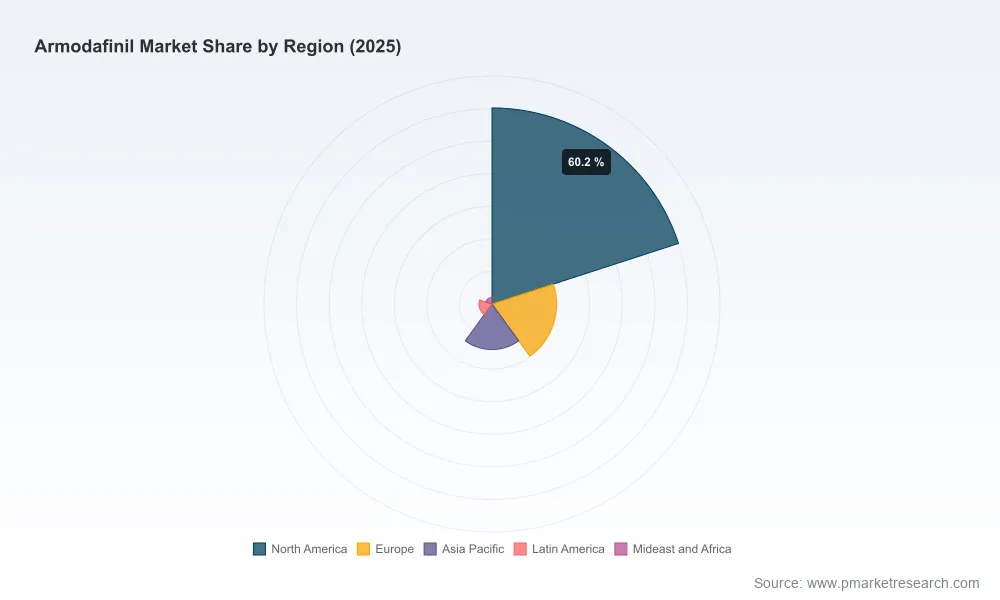
Third, regional demand patterns will continue to evolve as healthcare systems balance access, cost containment, and regulatory compliance. North America remains the largest revenue contributor, supported by established prescribing habits, generic substitution trends, and a mature distribution infrastructure. Europe and Asia Pacific represent important growth avenues, though their trajectories will be shaped by local registration pathways, reimbursement dynamics, and the speed at which generic supply can be reliably integrated into regional supply chains. The commercial implication is that growth strategies should be calibrated to regional compliance readiness and distribution maturity rather than assuming uniform expansion. Companies that invest in region-specific documentation, localized logistics, and quota-aware supply planning will be better equipped to convert demand potential into sustainable revenue.
Potential risks remain material. Quota timing mismatches, concentrated API sourcing, and periodic availability fluctuations can disrupt supply even when formal shortage designations are absent. Additionally, the controlled substance classification continues to impose compliance overhead that can affect cost structures and production pacing. Decision-makers should monitor regulatory updates, quota allocation patterns, and supplier concentration metrics as early indicators of supply friction. The opportunity lies not in chasing volume alone, but in building resilient, well-documented, and quota-aligned supply capabilities that can sustain access through regulatory cycles.
Actionable Insights for Decision-Makers
For manufacturers, the priority is to embed quota-aware production planning into core operations. Aligning batch scheduling with semi-annual allocation cycles, maintaining buffer inventory for critical strengths, and ensuring API documentation packages are current can reduce supply interruptions and support more predictable order fulfillment. Companies should also evaluate regional registration readiness as a strategic differentiator, since multi-market distribution increasingly depends on documentation completeness and compliance agility rather than volume capacity alone.
For investors, the market signals a preference for operational resilience over speculative scale. Interest is likely to favor entities with established compliance infrastructure, diversified sourcing where feasible, and clear pathways to maintain continuous supply in a controlled substance environment. Due diligence should prioritize quota management capability, supplier documentation standards, and historical stability in fulfilling regional demand rather than focusing solely on top-line growth projections.
Worldwide Mazindol Tablet Market
For procurement and supply chain leaders, supplier evaluation should extend beyond pricing to include supply continuity risk, multi-strength availability, and transparency around production timing. Building relationships with manufacturers that demonstrate predictable lead times, audit-ready quality systems, and clear communication during quota cycles can reduce downstream disruption. Diversifying across qualified suppliers while maintaining rigorous quality and documentation standards offers a practical path to balancing cost efficiency with supply reliability.
A detailed examination of regional revenue splits, indication-level demand patterns, dosage strength performance, and company-specific strategic positioning can further sharpen these decisions. Professionals seeking granular segmentation data, quota-cycle planning frameworks, and customized competitive assessments may find value in accessing the full PW Consulting market research report, which provides expanded datasets and tailored recommendations for specific operational and investment contexts.
For detailed analysis of this topic, please visit the official page: Worldwide Armodafinil Market
Lacy Lee
Senior Marketing Manager
[email protected]
PW Consulting: www.pmarketresearch.com

























Sign in to leave a comment.