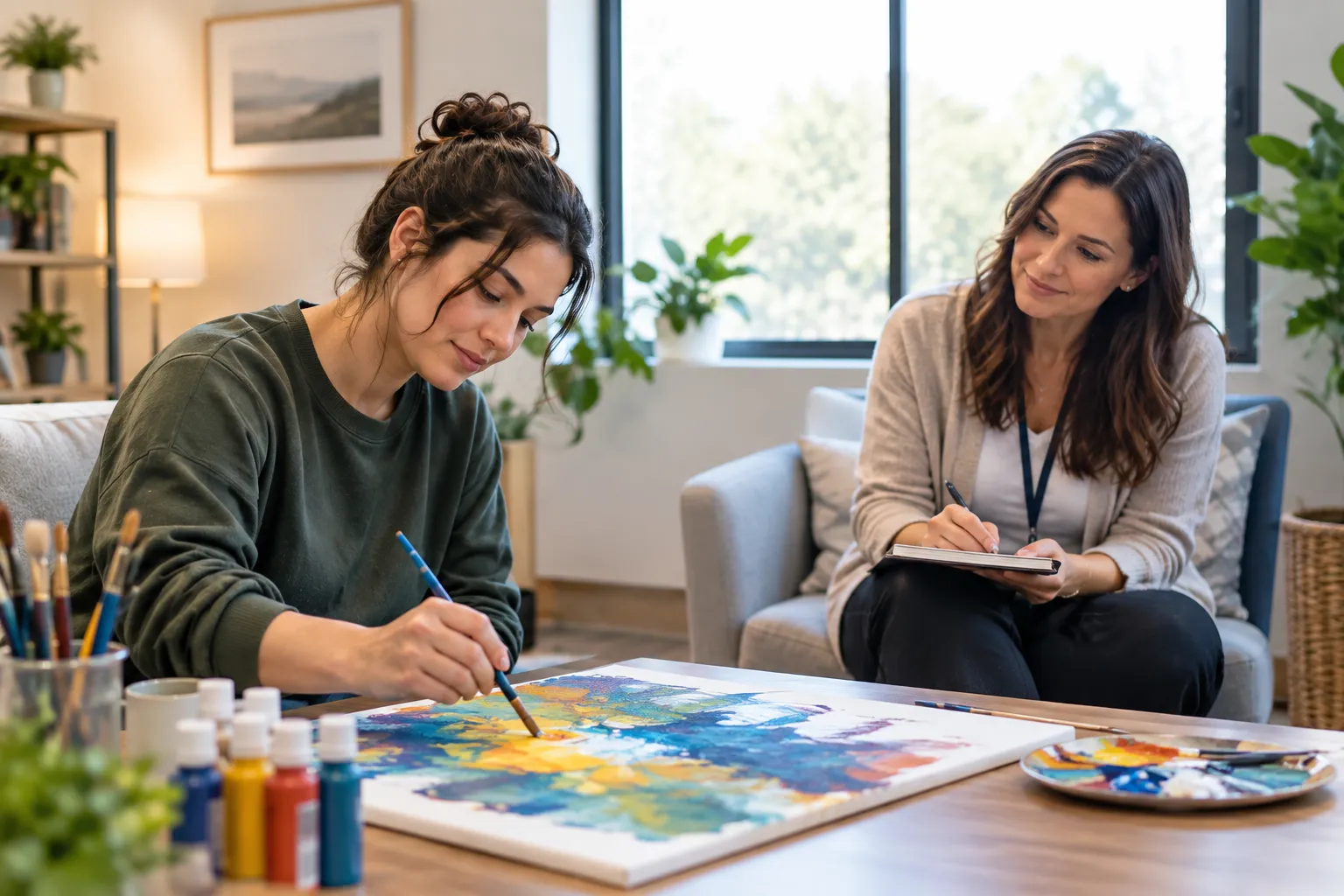

Recovery from substance use is not only about stopping substance use. It can also involve learning to understand emotions, manage stress, rebuild confidence, and develop healthier ways to express difficult experiences. For some people, traditional talk-based therapy can be challenging, especially when emotions are difficult to put into words. This is where creative approaches can add another dimension to treatment.
Art Therapy NJ offers a structured way to use creative expression as part of a broader recovery plan. Rather than focusing on artistic talent or producing something perfect, art therapy can provide an opportunity for self-expression, reflection, and therapeutic exploration. At Ikon Recovery Center, art therapy is included among the therapeutic approaches available for addiction recovery.
Here are seven ways creative expression can complement the recovery process.
1. Create an Outlet for Difficult Emotions
Addiction can be accompanied by emotions such as shame, frustration, grief, anger, anxiety, or loneliness. Talking about these feelings is helpful for many people, but not everyone finds verbal communication easy.
Drawing, painting, collage, sculpture, and other creative activities can provide another form of expression. With guidance from a trained professional, the creative process may help a person explore emotions that are difficult to explain directly.
The goal isn't to interpret every drawing or search for a hidden meaning. Instead, the process can encourage individuals to notice what they are feeling and reflect on their experiences in a supportive setting.
2. Encourage Present-Moment Awareness
Recovery often requires learning how to respond to difficult moments without automatically returning to unhealthy coping behaviors.
Creative activities can require attention to colors, shapes, textures, movement, and the task immediately in front of you. This can encourage present-moment awareness and give someone a constructive activity to focus on.
Mindfulness is also an important part of many recovery approaches. The Ikon Recovery Center art therapy program describes present-moment focus as one way creative activity can support individuals dealing with cravings, anxiety, or negative thoughts.
3. Make Self-Reflection More Accessible
Recovery involves more than changing behavior. It can also involve understanding personal experiences, emotional patterns, relationships, and situations that may contribute to substance use.
Creative work can become a starting point for reflection.
For example, someone might create an image representing what stress feels like or draw a picture of what a healthier future could look like. A therapist can then use that activity to encourage conversation and deeper self-exploration.
This approach can make therapy feel more interactive while still addressing meaningful emotional and behavioral concerns.
4. Build Confidence Through Small Accomplishments
Addiction can negatively affect a person's sense of confidence. During recovery, rebuilding that confidence often happens gradually.
Art therapy doesn't require professional artistic skills. In fact, the focus is generally on the therapeutic process rather than artistic performance. Ikon specifically notes that participants do not need to be skilled artists to take part in art therapy.
Completing a creative activity, experimenting with a new technique, or simply making something from start to finish can provide a small sense of accomplishment. Over time, these experiences may support a greater willingness to try new healthy activities.
5. Provide a Healthy Way to Release Stress
Stress can influence mood, decision-making, and coping behaviors. Developing healthier ways to respond to stress is therefore an important part of many recovery plans.
Creative expression can provide a constructive activity during emotionally difficult periods. Painting, drawing, sculpting, or creating a collage may give individuals a focused way to slow down and process what they are experiencing.
Art therapy should not be viewed as a replacement for comprehensive addiction treatment. Rather, it can complement other evidence-based approaches and become one component of an individualized care plan. SAMHSA similarly describes substance use treatment as a whole-person process that can include counseling, behavioral therapies, and other appropriate interventions.
6. Support Connection With Others
Recovery can sometimes feel isolating. Group-based creative activities may create opportunities for people to participate alongside others while maintaining their own individual expression.
Sharing artwork is not necessarily required. Simply being part of a supportive creative environment can provide a different kind of social experience.
When people feel comfortable participating, creative activities can open conversations about emotions, recovery goals, challenges, and personal experiences.
That sense of connection can be particularly valuable when someone is working to rebuild a healthier support network.
7. Encourage Healthier Coping Skills
One of the most important parts of recovery is developing alternatives to substance use when difficult emotions or situations arise.
Creative activities can become one healthy coping option. They may not work for everyone, and they should not be considered a universal solution, but they can give individuals another constructive activity to turn toward.
Art-making also involves choices and problem-solving—selecting materials, changing direction, experimenting, and adapting when something doesn't work. Within a therapeutic setting, those experiences can become opportunities to discuss flexibility, patience, frustration tolerance, and decision-making.
What Does Art Therapy Look Like in Addiction Treatment?
Art Therapy NJ is not an art class. The purpose is not to judge artistic ability or create technically impressive work. Instead, creative activities are incorporated into a therapeutic process designed to support emotional exploration and communication.
Depending on the individual's needs and treatment setting, activities may include drawing, painting, sculpture, or collage. Sessions may also take place individually or in a group environment.
The most important factor is the therapeutic relationship and the individual's goals—not the finished artwork.
Art Therapy at Ikon Recovery Center
Ikon Recovery Center incorporates art therapy into a broader, individualized approach to addiction treatment. Its therapy program combines creative approaches with other modalities, including DBT, CBT, family therapy, motivational interviewing, and other treatment options.
For someone exploring treatment, creative therapy may offer an additional way to engage with recovery and express experiences that are difficult to communicate through conversation alone, explore Art Therapy at Ikon Recovery Center.





















Sign in to leave a comment.