
Communication is about much more than speaking. For children on the autism spectrum, communication may involve words, gestures, facial expressions, pictures, body language, or other ways of expressing needs and ideas. Some children may begin speaking later than expected, while others may speak clearly but have difficulty with conversations, social cues, or understanding what others mean.

The good news is that communication skills can develop with the right support and consistent opportunities to practice. Understanding how communication works across the autistic children can help parents, teachers, and caregivers create an environment where children feel understood and confident expressing themselves.
What Does Communication Look Like on the Autism Spectrum?
Every child is different, so communication can look very different from one person to another. Some children may use many spoken words, while others may communicate primarily through gestures, pictures, sign language, or assistive communication tools.
A child may also have strong vocabulary skills but struggle with the social side of communication. For example, they might have difficulty starting a conversation, taking turns, staying on topic, interpreting facial expressions, or understanding sarcasm and indirect language.
These differences do not mean a child has nothing to say. In many cases, the challenge is finding the communication method that works best for that individual child.
Why Communication Skills Matter
Strong communication skills can make everyday life easier. Being able to communicate wants, needs, emotions, questions, and concerns can help a child participate more fully at home, at school, and in the community.
Communication can also reduce frustration. When children have a reliable way to express what they want or what is bothering them, they may have fewer situations where they feel misunderstood.
As communication develops, children may also find it easier to build relationships, participate in activities, follow routines, and become more independent.
Supporting Language Development Through Everyday Activities
Communication practice does not have to happen only during structured therapy sessions. Everyday activities can create valuable opportunities for children to learn and use communication skills.
During mealtime, for example, parents can encourage a child to request food or drinks, identify choices, or describe what they are eating. During play, adults can model simple words, ask questions, and give the child opportunities to take a turn.
Reading together can also support language development. Parents can talk about characters, describe pictures, ask simple questions, and encourage the child to point, gesture, answer, or comment in whatever way is comfortable for them.
The goal is not to turn every activity into a lesson. Instead, communication can become a natural part of daily interactions.
Follow the Child’s Interests
Children are often more motivated to communicate when they are engaged in something they genuinely enjoy. A favorite toy, game, book, animal, or activity can become a natural starting point for communication.
For example, if a child enjoys trains, a parent might talk about the different trains, model simple phrases, or encourage the child to request a particular train. If the child enjoys drawing, that interest can create opportunities to name colors, describe pictures, or share ideas.
Following a child's interests can make communication practice feel meaningful rather than forced.
Encourage Different Forms of Communication
Communication does not have to mean spoken language alone. Children on the children with autism may benefit from different communication methods depending on their individual needs.
These can include gestures, visual supports, picture-based communication, sign language, communication devices, or other augmentative and alternative communication (AAC) methods.
Using an alternative communication method does not mean giving up on spoken language. Instead, it can give a child a dependable way to communicate while other language skills continue to develop.
The most appropriate approach should be based on the child's abilities, needs, and goals, with guidance from qualified professionals when appropriate.
Building Social Communication Skills
Knowing words is only one part of communicating effectively. Social communication involves using language and other signals to interact with people.
Children may need support with skills such as:
- Taking turns during conversations
- Responding to questions
- Asking for help
- Starting interactions
- Staying on a topic
- Recognizing when someone wants to speak
- Understanding facial expressions and body language
- Sharing interests with others
These skills can be practiced through play, structured activities, role-playing, and everyday interactions.
For example, a child can practice greeting someone, asking a peer to join a game, or responding when another person makes a comment. Repeated practice in comfortable situations can help these skills become more familiar.
The Role of Visual Supports
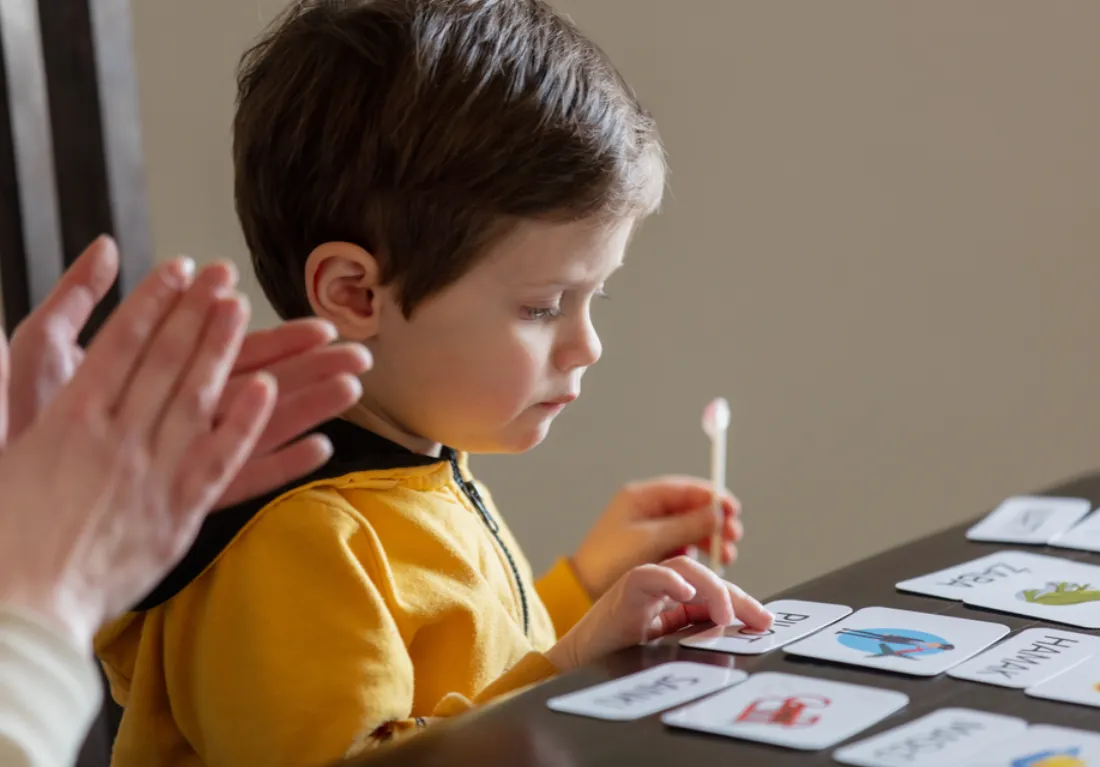
Many children benefit from information they can see as well as hear. Visual supports can make communication and expectations easier to understand.
A visual schedule can show what will happen next. Pictures can help a child make choices. A simple sequence of images can explain the steps involved in an everyday activity.
Visual supports can be especially helpful when a child has difficulty processing spoken instructions or needs extra time to understand information.
The important thing is to choose supports that match the child's communication style rather than assuming one method will work for everyone.
How ABA Therapy Can Support Communication
Applied behavior analysis, commonly known as ABA therapy, may be used to support communication and other developmental skills. Depending on a child's individual goals, therapy may focus on requesting, responding, following directions, initiating interactions, or developing functional communication.
A strong approach should be individualized rather than based on a one-size-fits-all program. The child's current communication abilities, interests, challenges, and goals can all help shape the support they receive.
Parents can also play an important role by practicing communication strategies during everyday routines. When the same skills are encouraged across different environments, children have more opportunities to use what they have learned.
Give Children Time to Respond
One simple but important strategy is allowing enough time for a child to respond.
Adults sometimes repeat a question or provide the answer immediately when a child does not respond right away. However, some children may need additional processing time before they can respond.
After asking a question or offering a choice, pause and give the child time to communicate. Their response may come through speech, a gesture, a picture, a device, or another method.
This small change can create more opportunities for independent communication.
Keep Communication Positive
Children learn best when communication feels safe and encouraging. Correcting every mistake or constantly asking a child to repeat words can make interactions stressful.
Instead, adults can model appropriate language naturally. If a child says, “juice,” a parent might respond, “You want juice.” This gives the child a useful language model without turning the interaction into a test.
Celebrating attempts to communicate can also help build confidence. A child's effort matters, even when their message is not expressed exactly as expected.
Work Together Across Home, School, and Therapy
Communication skills are easier to strengthen when the adults supporting a child work toward consistent goals.
Parents, teachers, therapists, and other caregivers can share information about what communication methods are working well and where the child may need additional support.
For example, if a child is learning to request help using a particular word, gesture, picture, or device, using that same approach across settings can make the skill easier to practice and understand.
Consistency does not mean every environment has to look exactly the same. It means the child has reliable opportunities to communicate wherever they are.
Progress May Look Different for Every Child
There is no single communication timeline for children on the people with autism. One child may make rapid progress with spoken language, while another may make meaningful progress through gestures, AAC, social interaction, or increased independence.
Progress should be measured according to the individual child's needs and goals. Being able to request help, express discomfort, participate in a conversation, or communicate a preference can be just as meaningful as learning a new word.
The focus should remain on helping each child communicate more effectively and participate more comfortably in everyday life.
Helping Children Find Their Voice
Communication development is not about making every child communicate in the same way. It is about giving each child meaningful ways to express themselves, connect with others, and take part in the world around them.
For families supporting a child on the autistic children, small everyday interactions can make a real difference. Following the child's interests, allowing time to respond, using visual supports, encouraging different communication methods, and working consistently with qualified professionals can all create more opportunities for growth.
With individualized support and plenty of opportunities to practice, children can continue developing communication skills in ways that fit their unique strengths and needs.
Read more about: https://newagebehavior.com/





















Sign in to leave a comment.