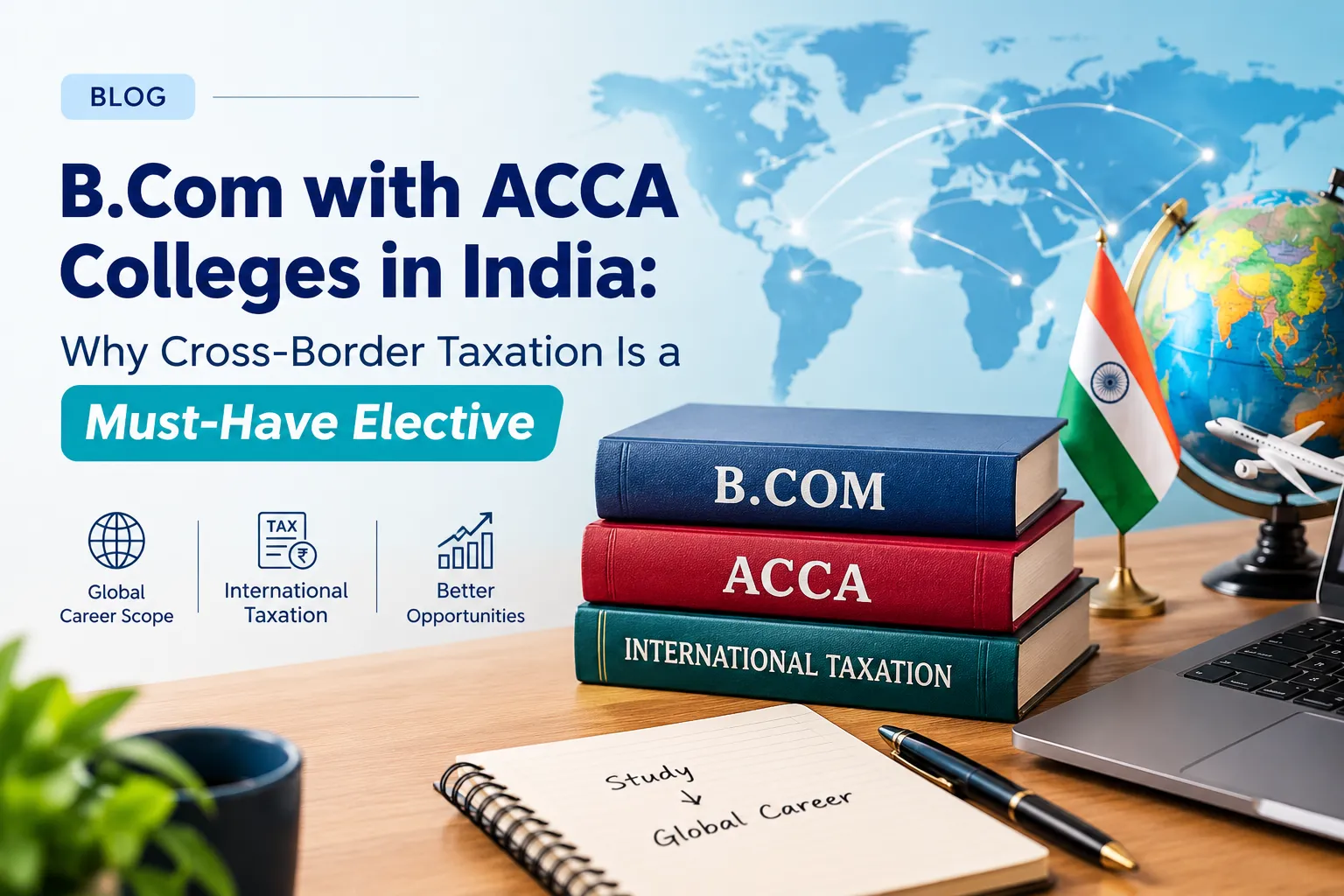

A Ludhiana textile exporter ships fabric to Europe, but every invoice raises the same questions. Which country taxes the profit? Is anything taxed twice? His daughter took those worries seriously. She chose BCom with ACCA and picked cross-border taxation as her elective. Her choice reflects a wider shift, and it is why students comparing B.Com with ACCA colleges in India now ask how well each one teaches international tax.
What Is Cross-Border Taxation?
Cross-border taxation covers how tax rules apply when income, goods or services move between countries.
Taxing Foreign Income
Students learn how a company is taxed on money earned outside its home country, and which country gets the first claim.
Double Taxation and DTAAs
Sometimes two countries tax the same income. Double Taxation Avoidance Agreements (DTAAs) prevent this, and understanding them is central to international tax planning.
Transfer Pricing
This covers how prices are set for transactions between branches or subsidiaries of one group in different countries. Tax authorities watch it closely.
Why Cross-Border Taxation Fits Well with B.Com and ACCA
ACCA’s Global Recognition
ACCA is an internationally recognised qualification, so global tax knowledge extends it naturally. It also complements papers such as financial reporting and audit.
What Recruiters Look For
Employers value graduates who understand tax beyond Indian rules. A graduate from one of the B.Com with ACCA colleges in India who can read a treaty or explain a transfer pricing
policy stands out in interviews.
Is This Elective Useful If You Stay in India?
Yes. You do not need to work abroad to meet cross-border tax questions.
Exporters, Importers and E-Commerce Sellers
Businesses that buy raw materials overseas, sell to foreign customers or receive international payments deal with these rules every day.
Freelancers, Consultants and Startups
Anyone invoicing overseas clients or forming cross-border partnerships needs someone who understands the tax side. That someone is often a young finance graduate.
Career Options After B.Com with ACCA and International Tax
Roles and Employers
Common roles include international tax consultant, transfer pricing analyst, global compliance executive, export-import finance executive, and corporate tax analyst. Employers include accounting and consulting firms, banks, multinationals, and export houses.
Salary Expectations
Pay varies widely by city, employer, and individual performance. Treat any figure you see online as an estimate and check it against current job listings.
Skills You Gain from Cross-Border Taxation
A good course builds practical skills:
- Applying DTAA provisions to real cases
- Understanding transfer pricing
- Handling international compliance
- GST and customs basics for imports and exports
- Reading international financial reporting
- Explaining complex tax rules clearly to clients
How to Choose from B.Com with ACCA Colleges in India
Not every college teaches this elective well. Compare them on these points.
Syllabus and Case Studies
Ask for the full subject list. Check whether it covers real treaties and Indian tax provisions, and whether case studies use real companies.
Faculty and Industry Exposure
Look for teachers with consulting or industry experience in taxation, not only academic backgrounds.
Placements and Partnerships
Review placement records, especially for students who took international tax. Ask about partnerships with accounting or consulting firms.
ACCA Exemptions and Exam Arrangements
Confirm exemptions, exam support, and fees directly with ACCA and the institution, since these affect your cost and timeline.
Conclusion: Which B.Com with ACCA College Should You Pick?
A cross-border taxation elective will not replace the core ACCA qualification, but it can sharpen it. As you shortlist B.Com with ACCA colleges in India, treat the depth of this elective, the quality of the faculty, and the placement outcomes as your tiebreakers. Choose the college that teaches the subject best, not the one with the loudest advertising.
FAQs
Q.1: Do I need a taxation background to study cross-border taxation?
No. A basic business background is enough, as courses introduce core tax principles before moving to international concepts.
Q.2: Can cross-border taxation help startups?
Yes. Founders who export, import, or work with overseas clients make better decisions when they understand foreign tax and compliance rules.
Q.3: How is it different from regular taxation?
Regular taxation covers one country’s rules. Cross-border taxation covers transactions between countries, including overseas income, compliance, and tax treaties.
Q.4: Does it help with higher education?
Yes. Specialised knowledge in international tax can strengthen applications for further study and professional certifications in accounting, finance and taxation.


























Sign in to leave a comment.