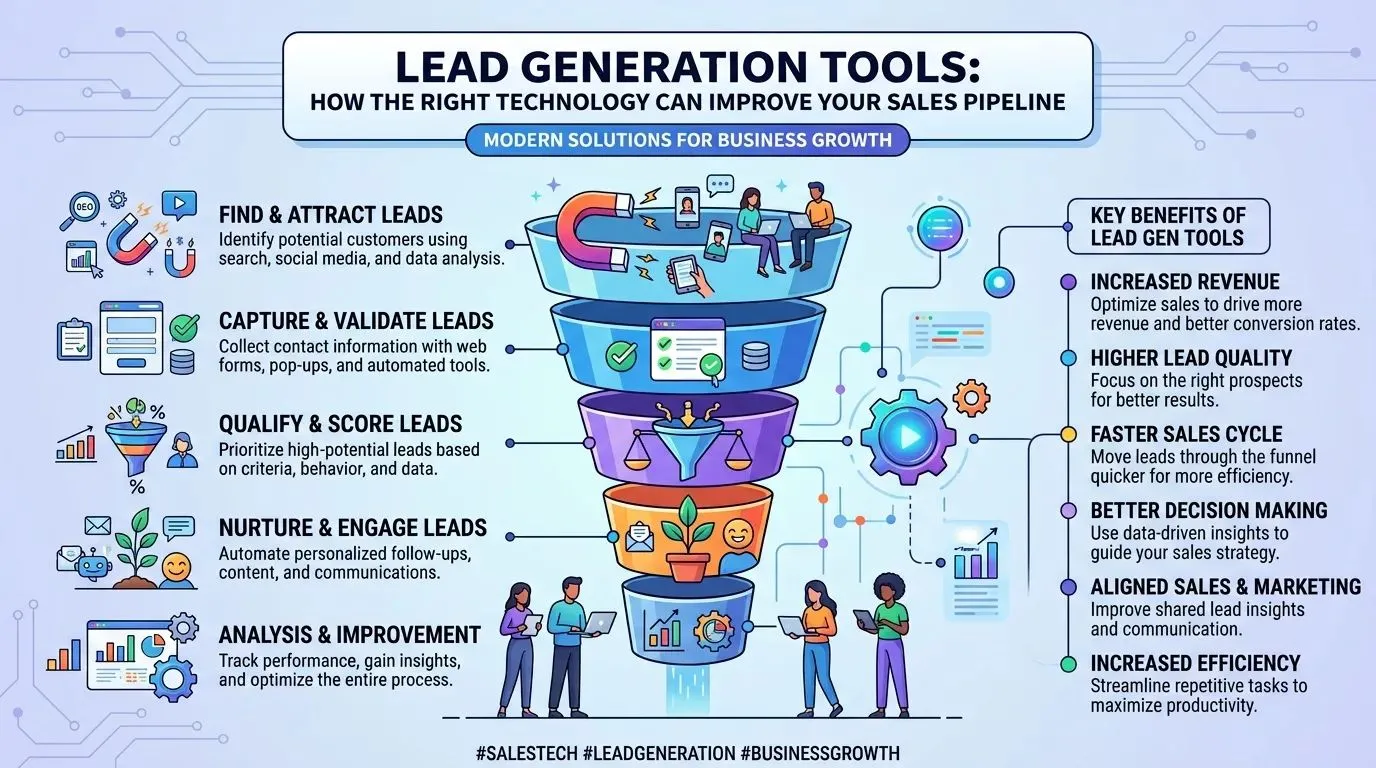

Not every B2B prospect is ready to buy when they first discover a company. A visitor may download a resource, subscribe to an email list, request information, or interact with a sales page without being prepared to make a purchasing decision. In many cases, the prospect needs more information, time, and confidence before moving forward.
This is where B2B lead nurturing becomes important. Rather than treating every new contact as an immediate sales opportunity, nurturing focuses on maintaining useful communication throughout the buying journey. Businesses can use relevant content, email campaigns, automation, and personalized follow-ups to remain connected with prospects until their needs and buying intent become clearer.
A well-structured nurturing process can also create a better connection between marketing and sales. Marketing teams can continue educating prospects while sales representatives focus more attention on contacts showing stronger buying signals. When these activities work together, businesses can create a more organized and consistent path from initial interest to customer.
What Is B2B Lead Nurturing?
B2B lead nurturing is the process of developing relationships with potential business customers over time. Instead of immediately pushing a product or service, businesses provide information and communication that matches the prospect's interests, needs, and position within the buying journey.
The process can begin immediately after a prospect enters the database. Someone who downloads an educational resource, submits a website form, registers for a webinar, or subscribes to company updates may receive a series of relevant communications.
The purpose is not simply to send more emails. Effective nurturing should help prospects understand their problem, explore possible solutions, evaluate available options, and eventually determine whether a company's product or service is appropriate for their needs.
B2B purchases often involve multiple stakeholders and longer decision-making periods. As a result, prospects may interact with a company many times before becoming customers. Consistent and relevant communication helps businesses remain visible throughout that process.
Why B2B Lead Nurturing Matters
Generating a new lead does not guarantee a sale. Many contacts entering a marketing database are still researching their options or trying to understand their problem. If a company stops communicating with them after the initial interaction, another provider may have an opportunity to build that relationship instead.
Lead nurturing gives businesses a way to remain useful without relying on constant direct sales outreach. Educational articles, research reports, case studies, webinars, product information, and other resources can answer questions and gradually increase familiarity with the brand.
Nurturing can also help improve the quality of conversations between sales representatives and prospects. When a prospect has already consumed relevant content and demonstrated interest in a particular topic, sales teams have more context for starting a meaningful conversation.
For businesses investing in digital acquisition, nurturing is particularly valuable because leads can enter through many channels. A visitor may first discover a company through search, return through social media, read a blog post, and eventually submit a form. A connected nurturing system helps maintain continuity throughout these interactions.
Understanding the B2B Buyer's Journey
Successful nurturing begins with understanding that prospects at different stages need different information.
Someone who has only recently discovered a business may be looking for educational information. At this stage, articles, industry research, educational resources, and introductory content can be more appropriate than a direct sales offer.
A prospect who already understands the problem may begin comparing solutions. This person may benefit from webinars, product comparisons, case studies, detailed service pages, or expert analysis.
A prospect closer to making a purchase may want pricing information, implementation details, demonstrations, customer examples, or direct conversations with sales.
The same communication should not necessarily be sent to all three groups. Matching content to buying intent makes nurturing more relevant and reduces the likelihood of overwhelming prospects with information they do not yet need.
Creating Content for Different Stages
Content is one of the most important components of B2B lead nurturing because it gives prospects a reason to continue engaging with a company.
Early-stage prospects generally benefit from educational content that helps them understand a problem or opportunity. Blog articles, industry reports, research, and introductory resources can provide useful information without immediately asking for a purchase.
During the consideration stage, prospects usually need more detailed information. Comparison content, webinars, case studies, product explanations, and technical resources can help them evaluate potential solutions.
Decision-stage prospects may need evidence that reduces uncertainty. Customer stories, demonstrations, pricing information, implementation details, FAQs, and consultations can help answer questions that arise before a purchase.
This content should also connect with the company's broader acquisition strategy. Businesses can use resources about Lead Generation From Website to understand how website content and conversion elements can attract and capture potential customers before they enter a nurturing workflow.
Building Effective B2B Email Nurturing Campaigns
Email remains a practical channel for B2B lead nurturing because it allows businesses to maintain communication over an extended period. However, effective email nurturing requires more than sending a large number of promotional messages.
Segmentation should be considered first. Leads can be divided according to industry, company size, job role, content interests, previous interactions, funnel stage, or other useful characteristics. This allows businesses to send messages that are more closely connected to each group's needs.
The content of each email should also have a clear purpose. One message might introduce an educational resource, while another could explain a common problem, share a customer example, or invite the prospect to a relevant webinar.
Calls to action should match the prospect's level of interest. Asking a new subscriber to schedule a sales call may create unnecessary pressure, while offering a qualified prospect another introductory article may not provide enough value.
Testing can further improve campaign performance. Businesses can experiment with subject lines, email formats, calls to action, timing, and content topics to determine what generates stronger engagement from different audience segments.
Using Marketing Automation for Lead Nurturing
Manual nurturing becomes difficult when a business has hundreds or thousands of prospects. Marketing automation allows companies to create workflows that respond to specific actions and conditions.
For example, a prospect who downloads a particular resource can automatically receive related content several days later. If the person clicks on a product-related email, the system can adjust future communication or notify a sales representative.
Automation can also prevent prospects from receiving irrelevant messages. A contact who has already requested a demonstration may not need to continue receiving introductory emails. Instead, their workflow can change based on the new information.
Platforms such as HubSpot, Marketo, and ActiveCampaign provide tools for creating automated workflows, segmentation, scoring, and communication sequences.
The objective is not to automate every interaction. Human involvement remains important, particularly when a prospect demonstrates strong buying intent or has a complex question. Automation should handle predictable processes while allowing sales teams to focus on conversations where personal attention adds value.
Using Lead Scoring to Identify Sales Opportunities
Not every lead deserves the same level of immediate attention. Lead scoring provides a way to evaluate prospects based on characteristics and behaviors that may indicate relevance or buying interest.
A business might assign points for actions such as visiting important product pages, downloading high-value content, attending a webinar, opening emails, or submitting a consultation request. Additional points may be associated with characteristics such as industry, company size, or job position.
The scoring model should reflect the company's actual sales process. A behavior that indicates strong intent for one business may have little meaning for another.
When a lead reaches a predefined threshold, the system can notify sales or move the contact into a more focused workflow. Other prospects can continue receiving educational content until their engagement increases.
This approach helps marketing and sales teams prioritize their time without completely ignoring contacts that are still early in their buying journey.
Personalizing the Lead Nurturing Experience
Personalization can make nurturing communication more relevant. However, useful personalization goes beyond adding a person's first name to an email.
Businesses can personalize communication based on industry, role, previous interactions, content interests, products viewed, company size, or stage in the buying process.
For example, a marketing manager may be more interested in campaign performance and customer acquisition, while a technical decision-maker may need information about integrations, security, implementation, or functionality.
Behavioral data can also help determine what information a prospect receives next. Someone repeatedly reading articles about one particular problem may be placed into a workflow focused on that subject.
The goal is to make communication feel relevant without becoming intrusive. Businesses should collect and use information responsibly and provide prospects with clear choices about communication preferences.
Connecting Multiple Marketing Channels
Email is an important part of B2B nurturing, but prospects do not interact with businesses through a single channel. They may discover content through search engines, interact with social media posts, attend webinars, revisit the website, or communicate directly with sales.
A multi-channel approach can help maintain continuity across these interactions. For example, a prospect who reads an article may later see a related resource through another channel. Someone who attends a webinar can receive a follow-up email containing additional information connected to the topic.
The key is consistency. Different channels should support the same overall message rather than creating disconnected experiences.
Website content also plays an important role. A prospect may leave an email to research a service on the company's website before returning to the nurturing sequence. This makes it important for businesses to maintain clear messaging and useful information across their digital properties.
Improving Marketing and Sales Alignment
Lead nurturing works more effectively when marketing and sales agree on what constitutes a qualified opportunity.
Marketing may be responsible for attracting and educating prospects, while sales takes over when contacts demonstrate sufficient interest or fit. Without clear criteria, sales teams may receive leads too early, while marketing may continue nurturing prospects who are already ready for direct engagement.
Both teams should establish shared definitions and handoff conditions. These may include lead score, company characteristics, specific website actions, form submissions, product interest, or direct requests for contact.
Feedback from sales can also improve future nurturing campaigns. If sales representatives repeatedly encounter the same objections, marketing can create content that addresses those concerns before prospects reach the sales conversation.
This creates a continuous feedback loop between marketing and sales rather than treating the two functions as separate activities.
Nurturing Qualified Leads Toward a Purchase
Once a prospect becomes more qualified, communication should gradually become more specific. The focus can shift from general education toward information that helps the prospect evaluate the actual solution.
Case studies can demonstrate how similar organizations addressed comparable challenges. Product demonstrations can show how a solution works. ROI information can help stakeholders understand potential business value, while implementation details can reduce concerns about adoption.
At this stage, sales involvement may become more appropriate. A representative can review the prospect's previous interactions and use that information to make the conversation more relevant.
Timing remains important. A qualified prospect may still require internal approval or additional research. The nurturing process should continue supporting the decision rather than assuming that qualification automatically means an immediate purchase.
Measuring B2B Lead Nurturing Performance
Measurement helps businesses determine whether their nurturing strategy is actually contributing to pipeline development.
Email engagement can provide an early indication of whether content is relevant, but businesses should also examine deeper metrics such as lead-to-opportunity conversion, sales-qualified leads, opportunity creation, time to conversion, and revenue generated from nurtured contacts.
Looking at performance by segment can provide additional insight. A campaign may perform differently across industries, job roles, company sizes, or acquisition sources.
Businesses should also examine where prospects stop engaging. If contacts regularly become inactive after a particular email or stage, that point may need to be reviewed.
The objective is not to optimize one metric in isolation. A high email click rate does not necessarily mean that a campaign is producing qualified sales opportunities. The most useful measurements connect engagement with actual business outcomes.
Common B2B Lead Nurturing Mistakes
One common problem is sending too many promotional messages before a prospect has developed sufficient interest. Early-stage leads usually need helpful information rather than repeated sales requests.
Another issue is treating every contact in the same way. Different prospects have different needs, industries, responsibilities, and buying timelines. Segmentation can make communication considerably more relevant.
Poor handoffs between marketing and sales can also weaken a nurturing program. If a qualified prospect is passed to sales without sufficient context, the customer may have to repeat information they have already provided.
Businesses should also avoid creating complicated automation workflows simply because the technology allows it. A smaller number of clear, useful workflows can be easier to manage and improve than a large collection of disconnected sequences.
Strengthening Long-Term B2B Customer Relationships
Lead nurturing should not necessarily end the moment a prospect becomes a customer. The same principles can support onboarding, education, cross-selling, renewals, and long-term customer engagement.
A company can continue providing useful resources after a purchase, helping customers understand products, discover additional capabilities, and get more value from their investment.
This broader approach turns nurturing into part of the customer relationship rather than treating it solely as a pre-sales activity.
Businesses that want to develop stronger digital acquisition and customer communication systems can also explore the wider resources available through LeadGenerateTips. For companies looking at broader digital marketing, SEO, reputation management, and online growth services, SanMo BD can complement these efforts with related digital solutions.
Conclusion
B2B lead nurturing gives businesses a structured way to stay connected with prospects who are not ready to purchase immediately. By providing useful content, segmenting audiences, personalizing communication, automating repetitive activities, and coordinating marketing with sales, companies can create a more consistent customer journey.
The most effective approach is not necessarily the one with the largest number of emails or the most complicated automation. It is the approach that delivers relevant information at the right stage and makes it easier for prospects to move forward when they are ready.
When nurturing is connected with strong website content, lead capture, CRM management, and sales processes, it can become an important part of building a healthier and more predictable B2B pipeline.
Frequently Asked Questions
What is B2B lead nurturing?
B2B lead nurturing is the process of building relationships with potential business customers through relevant content, communication, and follow-up until they become ready for a sales conversation or purchasing decision.
Why is B2B lead nurturing important?
B2B purchases often involve research, multiple stakeholders, and longer decision-making periods. Nurturing helps businesses remain relevant during this process instead of losing contact with prospects who are not ready to buy immediately.
How is lead generation different from lead nurturing?
Lead generation focuses on attracting and capturing potential customers, while lead nurturing focuses on developing relationships with those contacts after they enter the marketing or sales pipeline.
How does email marketing support B2B lead nurturing?
Email allows businesses to maintain regular communication with prospects through educational content, industry information, case studies, product information, and relevant offers. Segmentation and automation can make these campaigns more targeted.
What role does marketing automation play in lead nurturing?
Marketing automation allows businesses to create workflows that respond to prospect behavior. It can send follow-up messages, update lead records, assign scores, notify sales teams, and move contacts between different nurturing sequences.
What is lead scoring in B2B marketing?
Lead scoring is a method of assigning values to prospects based on characteristics and behaviors. Factors such as company fit, content engagement, website activity, and sales inquiries can be used to determine when a prospect may require additional attention.
How can businesses personalize B2B lead nurturing?
Businesses can personalize nurturing according to factors such as industry, job role, company size, content interests, website behavior, previous communication, and buying stage. This allows prospects to receive information that is more relevant to their situation.
How long should B2B lead nurturing continue?
There is no universal timeframe. Nurturing should reflect the company's sales cycle and the prospect's behavior. Some opportunities may develop within weeks, while complex B2B purchases can require several months or longer.
Which metrics should be used to measure B2B lead nurturing?
Useful metrics include email engagement, lead-to-opportunity conversion, sales-qualified leads, time to conversion, opportunity creation, customer conversion rate, and revenue associated with nurtured leads.
Can B2B lead nurturing continue after a prospect becomes a customer?
Yes. Nurturing principles can continue after purchase through onboarding content, educational resources, product updates, customer communication, renewal campaigns, and opportunities for additional products or services.


























Sign in to leave a comment.