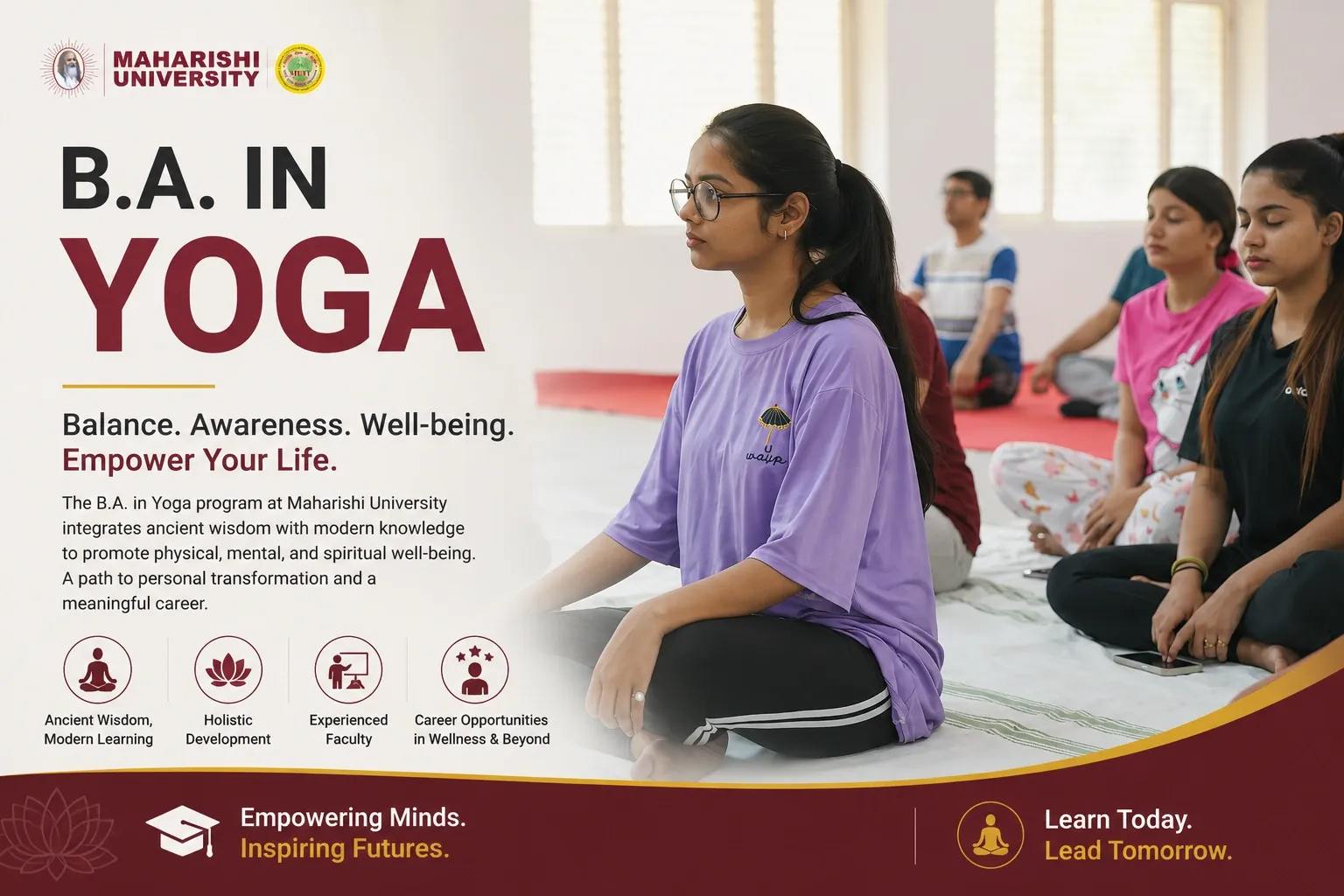

Choosing the right undergraduate programme is an important step toward building a successful career in the health and wellness sector. Among the popular options available, BA in Yoga and BSc Yoga are two programmes that focus on yoga education but differ in their approach, curriculum, and career pathways. Understanding these differences can help students select the course that aligns with their interests and long-term goals.
This guide compares BA in Yoga and BSc Yoga based on curriculum, learning approach, eligibility, career opportunities, and future prospects.
What is BA in Yoga?
A BA in Yoga is a three-year undergraduate programme that focuses on the philosophical, cultural, educational, and practical aspects of yoga. The course combines traditional yogic knowledge with modern wellness concepts, preparing students to become skilled yoga professionals and wellness educators.
Students study yoga philosophy, meditation, pranayama, teaching methodology, psychology, anatomy, and holistic health while developing communication and leadership skills.
What is BSc Yoga?
BSc Yoga is also a three-year undergraduate programme but places greater emphasis on scientific concepts related to health, anatomy, physiology, biomechanics, nutrition, and yoga therapy. The curriculum is designed for students interested in applying yoga within healthcare, rehabilitation, fitness, and research settings.
The programme includes practical training while focusing more extensively on biological sciences and therapeutic applications.
BA in Yoga vs BSc Yoga: Key Differences
| Feature | BA in Yoga | BSc Yoga |
|---|---|---|
| Course Focus | Yoga philosophy, education, meditation, wellness | Scientific study of yoga, anatomy, physiology, therapy |
| Learning Style | Theory with practical yoga training | Science-oriented with practical and laboratory learning |
| Core Subjects | Yoga philosophy, meditation, psychology, teaching methods | Anatomy, physiology, yoga therapy, nutrition, health sciences |
| Skill Development | Teaching, communication, leadership, wellness | Scientific analysis, healthcare, therapy, research |
| Suitable For | Students interested in yoga education and wellness | Students interested in healthcare and scientific applications of yoga |
Eligibility
Admission requirements for both programmes generally include:
- Completion of 10+2 or an equivalent qualification from a recognised board.
- Fulfilment of the university's prescribed eligibility criteria.
- Additional admission requirements, if applicable.
Students should verify the latest admission guidelines issued by their preferred university.
Curriculum Comparison
The BA in Yoga curriculum primarily focuses on:
- Yoga Philosophy
- Meditation
- Pranayama
- Patanjali Yoga Sutras
- Yoga Psychology
- Teaching Methodology
- Holistic Wellness
- Practical Yoga
BSc Yoga generally includes:
- Human Anatomy
- Human Physiology
- Biochemistry
- Nutrition
- Yoga Therapy
- Exercise Science
- Research Methodology
- Practical Yoga
Although both programmes include yoga practice, the academic orientation differs significantly.
Career Opportunities
Career Options After BA in Yoga
Graduates can pursue careers as:
- Yoga Instructor
- Yoga Trainer
- Wellness Coach
- Meditation Instructor
- Health Educator
- Corporate Wellness Coordinator
- Yoga Consultant
- Wellness Centre Manager
Career Options After BSc Yoga
Graduates may work as:
- Yoga Therapist
- Clinical Yoga Practitioner
- Rehabilitation Assistant
- Health and Wellness Consultant
- Fitness Specialist
- Research Associate
- Healthcare Programme Coordinator
Both programmes also provide opportunities in educational institutions, wellness centres, hospitals, NGOs, sports academies, and fitness organisations.
Higher Education Opportunities
After completing BA in Yoga, students can pursue:
- MA in Yoga
- Postgraduate Diploma in Yoga
- Certification Programmes
- Research in Yoga and Wellness
After BSc Yoga, students may continue with:
- MSc Yoga
- MSc Yoga Therapy
- Public Health Programmes
- Healthcare and Rehabilitation Courses
- Research in Health Sciences
Which Course Should You Choose?
Choose BA in Yoga if you:
- Enjoy yoga philosophy and traditional practices.
- Want to become a yoga teacher or wellness coach.
- Are interested in meditation and holistic health.
- Prefer teaching, counselling, and community wellness.
Choose BSc Yoga if you:
- Enjoy biology and health sciences.
- Want to work in therapeutic or clinical settings.
- Are interested in scientific research and rehabilitation.
- Prefer healthcare-oriented careers.
Neither programme is universally better—the right choice depends on your interests, strengths, and career aspirations.
Apply Now for BA in Yoga
📞 Call Us: +91-9870200541
📧 Email: [email protected]
🌐 Apply Online: MUIT Lucknow Admission Portal
🏫 Visit Website: MUIT Lucknow Official Website
FAQs
1. What is the main difference between BA in Yoga and BSc Yoga?
BA in Yoga focuses on yoga philosophy, teaching, meditation, and wellness, whereas BSc Yoga emphasises scientific concepts, anatomy, physiology, and yoga therapy.
2. Which course offers better career opportunities?
Both programmes provide excellent career opportunities. The better option depends on whether you prefer teaching and wellness (BA in Yoga) or healthcare and scientific applications (BSc Yoga).
3. Is BA in Yoga suitable for becoming a yoga instructor?
Yes. BA in Yoga prepares students with practical teaching skills, yoga philosophy, meditation techniques, and wellness knowledge required for professional yoga instruction.
4. Can I pursue higher studies after BA in Yoga?
Yes. Graduates can pursue MA in Yoga, postgraduate diploma programmes, certification courses, and research in yoga and wellness.
5. Which course is better for healthcare careers?
Students interested in clinical, therapeutic, and healthcare-related roles may find BSc Yoga more aligned with their career goals due to its science-oriented curriculum.
6. What is the duration of BA in Yoga and BSc Yoga?
Both programmes are generally three-year undergraduate courses divided into six semesters, though the curriculum may vary among universities.






























Sign in to leave a comment.