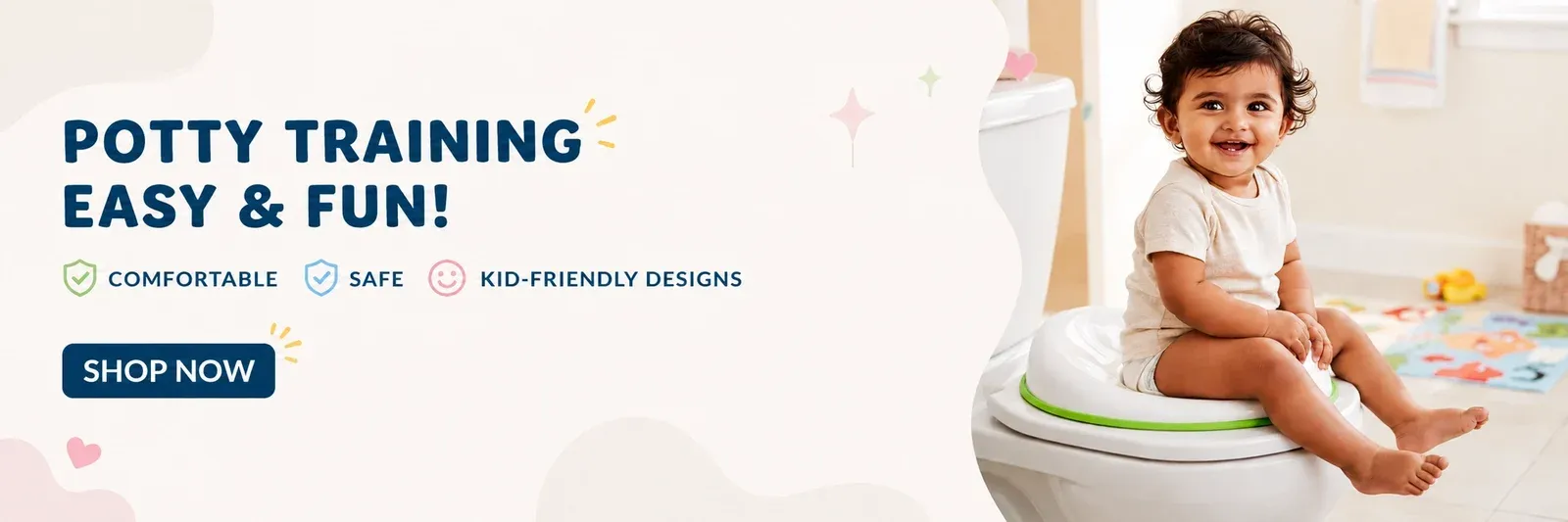

A baby potty seat can be a useful tool when a child begins moving from diapers toward independent toilet habits. Adult toilets are often too large for young children, which can make them feel uncomfortable or unsure. A child-sized potty seat can create a more manageable sitting position and help make the bathroom routine easier to understand.
Toilet training is a gradual process. Children develop at different speeds, so choosing a comfortable seat and introducing it patiently can help create a more positive experience.
What Is a Baby Potty Seat?

A baby potty seat is a child-friendly toilet accessory designed to make toilet use easier for young children. Depending on the design, it may be placed directly on a standard toilet or used as a standalone potty.
A toilet seat designed for toddlers typically reduces the size of the toilet opening, helping the child sit more securely. Some models include features such as anti-slip grips, ergonomic seating, splash protection, and foldable construction.
The best choice depends on the child's age, readiness, bathroom setup, and whether the seat will mainly be used at home or while travelling.
Why Do Parents Use a Baby Potty Seat?
A regular toilet can feel intimidating to a young child. The large seat, height, and open toilet bowl may make a toddler hesitant to sit independently.
A baby potty seat can provide a smaller and more familiar sitting area. This may help children gradually become comfortable with the idea of using the family toilet.
It can also support the transition from diaper-based routines to regular bathroom habits without requiring parents to purchase a separate full-sized toilet.
When Should a Child Start Using a Potty Seat?
There is no universal age for toilet training. Readiness varies from one child to another.
Some children may show interest in the bathroom, communicate when they need to use it, remain dry for longer periods, or understand simple instructions. These signs can indicate that a child may be ready to begin learning.
Parents should focus on readiness rather than comparing their child with other children. Toilet training works best when the child is comfortable with the process.
Comfortable Design for Young Children
Comfort is an important consideration when choosing a baby potty seat. A toddler may need to sit for a short period while learning how to use the toilet, so the seat should feel stable and comfortable.
An ergonomic shape, smooth edges, and a properly sized sitting area can make the experience more pleasant.
A comfortable design may also encourage the child to become more familiar with the toilet instead of viewing it as something unfamiliar or uncomfortable.
Anti-Slip Features for Stability
Stability is essential when a child is using a potty seat on an adult toilet.
Anti-slip grips or rubberized pads can help reduce unwanted movement while the child sits down. A stable seat can give toddlers greater confidence and reduce the feeling that they may slide or wobble.
Parents should always position the seat correctly and check that it is secure before allowing the child to use it.
Kids Station's current potty seat models include anti-slip grips designed to improve stability on compatible toilets.
Easy-to-Clean Potty Seat
Hygiene is another important factor when selecting a baby potty seat.
Toddlers may have occasional accidents during toilet training, so a smooth and easy-to-clean surface can make everyday maintenance much simpler. Parents should look for designs with fewer difficult-to-reach areas and follow the manufacturer's recommended cleaning method.
A wipeable surface can be particularly useful when the seat is used several times throughout the day.
Splash Guard for Better Hygiene
A splash guard can help reduce accidental spills and splashes during toilet training.
This feature can be especially useful for boys because the raised front section provides additional protection against messes. While it cannot eliminate every accident, it can make bathroom cleanup easier.
A splash guard is therefore a practical feature to consider when comparing different potty seat designs.
Portable Baby Potty Seat for Travel
Travel can interrupt a child's regular toilet-training routine. A portable baby potty seat can help parents maintain familiar bathroom habits when visiting relatives, staying at hotels, or travelling with children.
Foldable designs are particularly convenient because they take up less space when packed away.
Kids Station offers foldable and portable potty seat designs intended for everyday use as well as travel. Its portable model is listed with a lightweight construction and travel-friendly design.
Choosing the Right Material
The material of a baby potty seat can affect comfort, durability, hygiene, and maintenance.
Parents may prefer sturdy, child-appropriate materials that are easy to clean and suitable for repeated use. BPA-free and non-toxic plastic can be considered when comparing different products.
Kids Station's current portable potty seat is listed as being made from BPA-free, non-toxic PP plastic and designed for regular toddler use.
Baby Potty Seat for Indian Toilets
When buying a baby potty seat in India, toilet compatibility should be checked before purchase.
Many training seats are designed to fit standard round and oval toilets, while unusual shapes or oversized toilet seats may not be compatible.
Parents should measure their toilet or check the manufacturer's compatibility information before choosing a model. A properly fitted seat should remain stable during use.
Foldable Potty Seat for Small Homes
A foldable potty seat can be particularly useful for families living in apartments or homes where storage space is limited.
After use, the seat can be folded and stored rather than occupying bathroom space continuously. This also makes it easier to carry between bathrooms or take along while travelling.
For parents who want a compact solution without sacrificing everyday functionality, foldability can be a valuable feature.
How to Introduce a Baby Potty Seat
Introducing the potty seat gradually can make the process easier for a child.
Parents can first allow the child to see and explore the seat. Some children may feel more comfortable sitting on it fully clothed before trying to use it.
Once the child becomes familiar with the seat, parents can introduce a simple bathroom routine. Encouragement and positive reinforcement can help the child associate toilet use with a normal daily activity.
There is no need to rush the process.
Helping Your Child Become Independent
A baby potty seat can support a child's growing independence.
Parents can gradually encourage children to participate in simple steps such as entering the bathroom, preparing to sit, pulling clothing down with assistance, using the toilet, and washing their hands afterward.
Young children still require appropriate supervision, but giving them small responsibilities can help build confidence over time.
Baby Potty Seat Safety Tips
Safety should always come first when introducing a child to toilet training.
Parents should:
- Check that the seat is securely positioned.
- Use the seat only with compatible toilet designs.
- Make sure anti-slip grips are clean and functional.
- Never leave a young child unattended on an adult toilet.
- Keep the bathroom floor dry where possible.
- Clean the seat regularly.
- Inspect the seat for cracks or damage.
- Follow the manufacturer's age and weight recommendations.
- Replace the seat if it becomes damaged.
A stable and properly maintained potty seat can provide a better environment for supervised toilet training.
Baby Potty Seat vs Standalone Potty Chair
Both options can be useful, but they serve slightly different purposes.
A standalone potty chair is often positioned directly on the floor and may feel less intimidating for children who are just beginning toilet training. Because the child's feet can reach the floor, some toddlers may feel more secure.
A baby potty seat placed on an adult toilet can help children transition directly to the family bathroom setup.
The right choice depends on the child's comfort level and the family's preferred toilet-training routine.
Features to Consider Before Buying
Before purchasing a baby potty seat, consider the following:
Comfort: Look for a child-friendly shape and smooth edges.
Stability: Anti-slip grips can help reduce movement.
Compatibility: Make sure the seat fits the toilet properly.
Material: Choose a durable and child-appropriate material.
Cleaning: A smooth, wipeable surface can simplify hygiene.
Splash protection: A splash guard can help reduce bathroom mess.
Portability: Foldable designs are useful for travel and storage.
Age suitability: Check the manufacturer's recommended age and weight range.
Choosing a seat based on practical requirements rather than appearance alone can lead to a better everyday experience.
Baby Potty Seat from Kids Station
Kids Station offers baby-care products designed around everyday comfort, safety, and convenience. Its potty seat range includes foldable and portable options with features such as anti-slip grips, easy-clean surfaces, child-sized comfort, and designs suitable for standard round and oval toilets.
For parents, the most suitable potty seat will depend on the child's readiness, toilet type, preferred features, and whether portability is important.
Common Potty Training Mistakes
Parents sometimes expect toilet training to happen quickly, but every child learns differently.
Avoid punishing a child for accidents. Negative reactions can create anxiety around toilet use. Instead, parents can calmly clean up and continue encouraging the child.
It is also better to avoid forcing a child to sit on the toilet for long periods. Short and relaxed practice sessions can help make the process more positive.
Consistency, patience, and encouragement are usually more helpful than pressure.
Frequently Asked Questions
What is a baby potty seat used for?
A baby potty seat is used to make toilet use more comfortable and manageable for young children who are learning to transition away from diapers.
Is a baby potty seat suitable for toddlers?
Yes, many potty seats are specifically designed for toddlers. Always check the recommended age, size, and weight capacity of the individual product.
Does a baby potty seat fit every toilet?
No. Many models are designed for standard round and oval toilets, but compatibility varies. Check the product specifications before purchasing.
Is an anti-slip potty seat safer?
Anti-slip grips can help improve stability by reducing unwanted movement. The seat should still be positioned correctly and used under appropriate supervision.
Can a baby potty seat be used while travelling?
A foldable and lightweight potty seat can be convenient for travel because it is easier to pack and carry.
How do I clean a baby potty seat?
Use the cleaning method recommended by the manufacturer. Smooth surfaces can generally make routine wiping and hygiene easier.
Is a potty seat better than a potty chair?
Neither option is best for every child. A potty chair may be useful for beginners, while a toilet seat can help children become familiar with using the family toilet.
Final Thoughts
A baby potty seat can make toilet training more comfortable by giving young children a smaller and more stable sitting surface. Features such as anti-slip grips, ergonomic construction, easy cleaning, splash protection, and portability can make the daily routine more convenient for both children and parents.
The most important factor is not how quickly a child learns. A calm environment, suitable equipment, patience, and positive encouragement can help children gradually develop confidence and independence in their bathroom routine.





















Sign in to leave a comment.