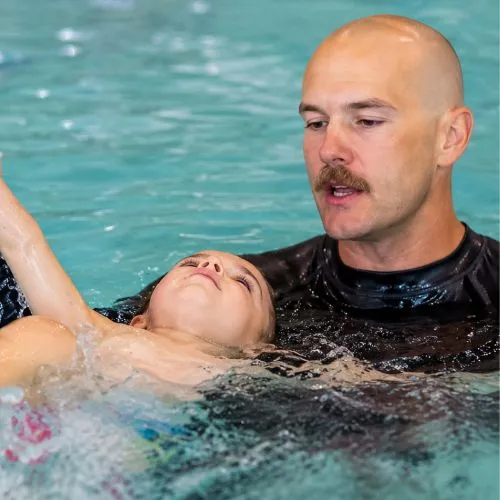

Improve your backstroke technique with expert swimming lessons covering body position, kicking, arm movement, rotation, rhythm, and stroke efficiency.
Backstroke is one of the four main competitive swimming strokes. Unlike freestyle, backstroke is performed while lying on your back, with the face above the water. The position allows swimmers to breathe more easily, but proper body control, arm movement, kicking, and timing are still important.
For swimmers who already know basic water skills, backstroke swimming lessons can help build stronger technique and greater confidence. Intermediate instruction focuses on making each part of the stroke work together, from body position to turns.
What Backstroke Swimming Lessons Teach
Backstroke may look simple because the swimmer stays on the surface, but good technique requires coordination. A swimmer needs to keep the body long, maintain a steady kick, rotate the shoulders correctly, and move the arms in a controlled pattern.
In backstroke swimming lessons, swimmers commonly work on:
- Keeping the hips high instead of allowing the legs to sink
- Maintaining a relaxed head and neutral neck position
- Using alternating arm movements
- Building a steady flutter kick
- Improving body rotation
- Learning efficient breathing and rhythm
- Developing stronger starts and turns
Each skill supports the next. For example, a weak kick can cause the hips to drop, which creates more resistance. A poor arm entry can also affect balance and direction.
How Backstroke Swimming Lessons Improve Technique
Technique matters because efficient movement helps a swimmer travel through the water with less wasted effort. Backstroke swimming lessons give swimmers a chance to correct small movements that can affect the entire stroke.
The first area is body position. The head should remain relaxed while the body stays close to the surface. The hips should not sit too low, and the legs should remain active without creating excessive splashing.
Arm technique is also important. Each arm moves in an alternating cycle. One arm enters the water while the other completes its underwater movement. The arm should enter in line with the shoulder rather than crossing over the body's center.
Shoulder and hip rotation help make the stroke smoother. Rather than keeping the body completely flat, swimmers use controlled rotation as each arm moves. Good rotation can support a longer reach and more efficient pull.
Why Backstroke Swimming Lessons Are Useful for Intermediate Swimmers
Intermediate swimmers often know the basic stroke but may still have technique problems. Backstroke swimming lessons can help identify habits that are difficult to notice without instruction.
Common issues include:
- Bent knees during the kick
- Sinking hips
- Crossing the arms over the head
- Excessive head movement
- Uneven arm recovery
- Holding the breath unnecessarily
- Kicking too hard without control
Correcting these habits can make swimming feel smoother. Instead of simply trying to swim faster, the swimmer learns how to use the body more efficiently.
What to Practice During Backstroke Swimming Lessons
Practice should focus on one skill at a time. Trying to correct every part of the stroke at once can make swimming confusing.
A useful practice sequence includes:
- Body position: Keep the head still and the hips near the surface.
- Flutter kick: Keep the legs relatively straight and kick from the hips.
- Arm recovery: Move each arm smoothly over the shoulder.
- Hand entry: Enter the water with control and avoid crossing the center line.
- Rotation: Coordinate shoulder and hip movement with the arm cycle.
- Full stroke: Combine the kick, arm action, rotation, and rhythm.
Coaches may also use drills to isolate one movement. Drills are useful because they let swimmers feel a specific part of the stroke before combining everything.
How to Improve Backstroke Swimming Technique
Consistent practice is one of the most useful parts of backstroke swimming lessons. Swimmers should focus on quality movement rather than simply completing more laps.
A few technique reminders can help:
- Keep the head relaxed and look upward.
- Keep the hips close to the water's surface.
- Use a steady kick instead of a rushed kick.
- Keep the arms moving in an even rhythm.
- Enter the water near the shoulder line.
- Avoid letting the hands cross over the center of the body.
- Use controlled body rotation.
- Keep movements smooth from one stroke to the next.
Feedback from a qualified coach can also help because swimmers cannot easily see their own backstroke technique while swimming.
How Backstroke Swimming Lessons Build Swimming Confidence
Swimming on the back can feel unusual for swimmers who are more comfortable with freestyle or breaststroke. The swimmer cannot see where they are going, so direction and body awareness become important.
Backstroke swimming lessons provide structured practice in a controlled setting. As swimmers become more comfortable with floating, kicking, arm movement, and rotation, the stroke can feel more natural.
Confidence also improves when swimmers understand how to correct mistakes. A swimmer who knows how to adjust body position or recover from an uneven stroke can stay calmer during practice.
What to Expect From Backstroke Swimming Lessons
An intermediate backstroke session may include a warm-up, technique drills, stroke practice, and swimming sets. The exact structure can vary based on the swimmer's ability and training goals.
A typical lesson may focus on:
- Warm-up swimming and mobility
- Flutter-kick drills
- Arm recovery and entry
- Body rotation
- Full-stroke practice
- Starts, turns, or finishes
- Coach feedback and corrections
Swimmers should arrive ready to listen, practice, and repeat movements. Technique often improves through small corrections made consistently over several sessions.
Backstroke Swimming Lessons and Better Stroke Efficiency
Efficiency is a major goal of backstroke swimming lessons. A swimmer does not need to make every movement larger or faster to improve. In many cases, better alignment and timing can make a noticeable difference.
A balanced stroke allows the swimmer to maintain rhythm without unnecessary tension. The kick supports body position, the arms provide propulsion, and rotation connects the upper and lower body.
When these elements work together, swimming becomes more controlled. The swimmer can focus on maintaining a steady pace and clean technique rather than fighting the water.
Frequently Asked Questions
What is the best way to learn backstroke?
The best approach is structured instruction combined with regular practice. A coach can teach body position, kicking, arm movement, rotation, and timing while correcting technique problems.
Is backstroke easy for beginners?
Backstroke can be comfortable because the face stays above the water, but beginners still need to develop floating, kicking, coordination, and directional awareness before swimming it confidently.
How can I improve my backstroke technique?
Focus on keeping the head relaxed, hips near the surface, legs active, and arms moving in an even rhythm. Regular coaching and technique drills can also help correct inefficient movements.
What muscles does backstroke work?
Backstroke uses several muscle groups, including the shoulders, upper back, arms, core, hips, and legs. The muscles work together to support propulsion, body position, and stability.
How do you breathe during backstroke?
Breathing is generally easier because the face remains above the water. Swimmers should maintain a relaxed breathing pattern rather than holding their breath during the stroke cycle.
How long does it take to learn backstroke?
The time varies based on swimming experience, coordination, practice frequency, and comfort in the water. Regular instruction can help swimmers develop the basic movements and improve technique progressively.
Conclusion: Build Better Backstroke Skills
Backstroke requires more than simply floating and moving the arms. Strong technique depends on body position, kicking, arm recovery, hand entry, rotation, rhythm, and direction.
Backstroke swimming lessons are especially useful for swimmers who already have basic swimming skills and want to improve their technique. Structured coaching can help correct common mistakes, build confidence, and create more efficient movement in the water.
With focused practice and clear feedback, swimmers can develop a smoother and more controlled backstroke while strengthening the skills needed for continued swimming development.























Sign in to leave a comment.