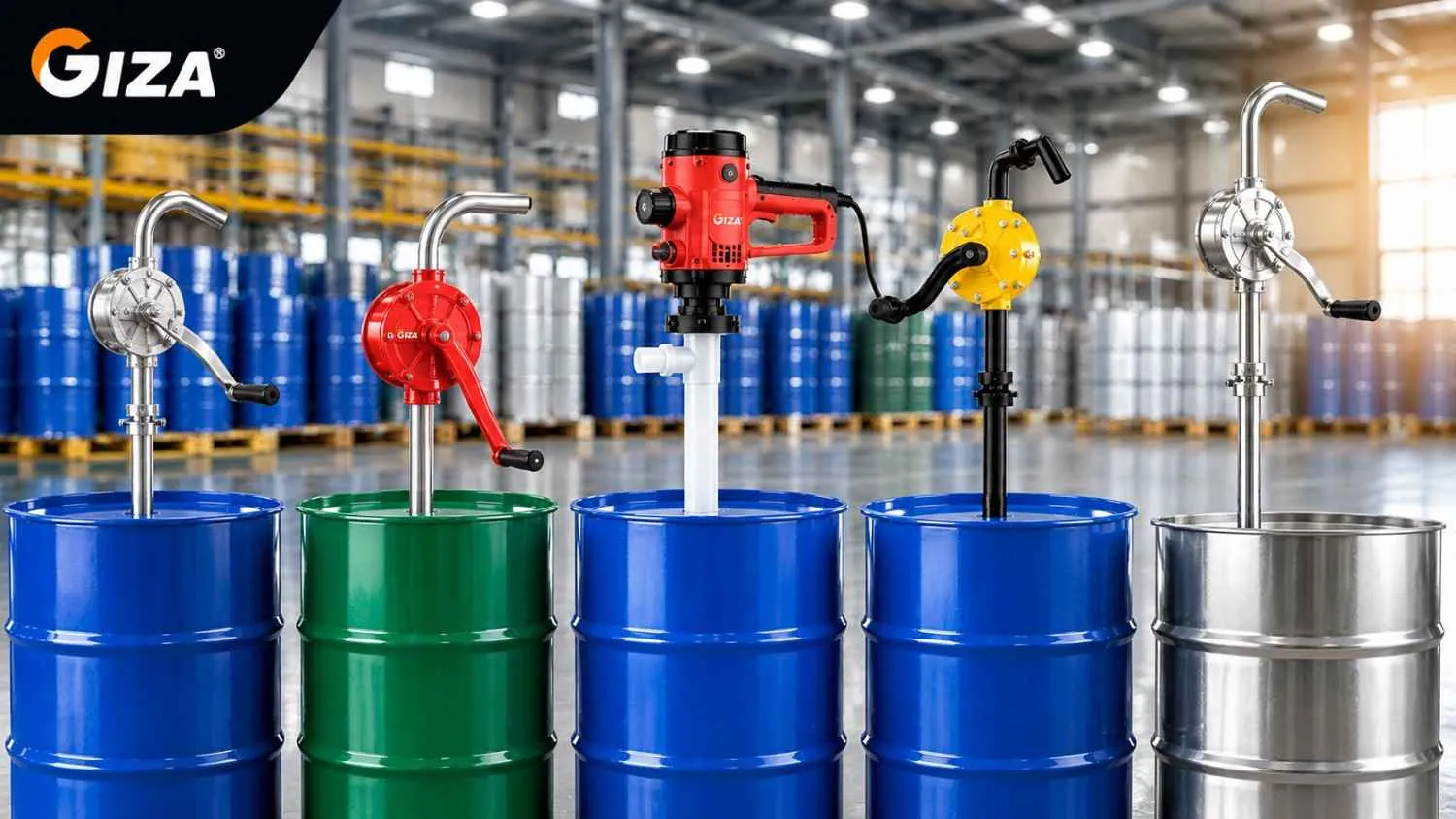

A barrel pump arrives at your factory, fits the drum perfectly, and starts transferring oil. Two weeks later, the seals begin leaking. Production stops, maintenance gets involved, and the supplier suddenly becomes difficult to reach.
Sound familiar?
Buying a Barrel Pump based only on price is a mistake that industrial buyers often discover too late. Whether you're sourcing for a chemical plant, lubricant distributor, automotive workshop, or manufacturing facility, the wrong pump can cause fluid contamination, repeated maintenance, and unnecessary expenses.
Finding a reliable Barrel Pump Manufacturer in India means looking beyond catalogue photographs. Material compatibility, operating conditions, spare parts, and actual supply capability deserve far more attention than a small difference in quotation price.
Barrel Pump Specifications: What Buyers Should Check Before Ordering
A barrel pump transfers liquids from drums, barrels, and storage containers without requiring manual pouring. Different applications call for different construction materials and operating mechanisms.
Pump Types and Their Industrial Applications
- Manual barrel pumps: Suitable for occasional transfer of compatible oils, lubricants, and other liquids where electricity is unavailable or unnecessary.
- Electric barrel pumps: Useful for higher transfer volumes where regular pumping is required.
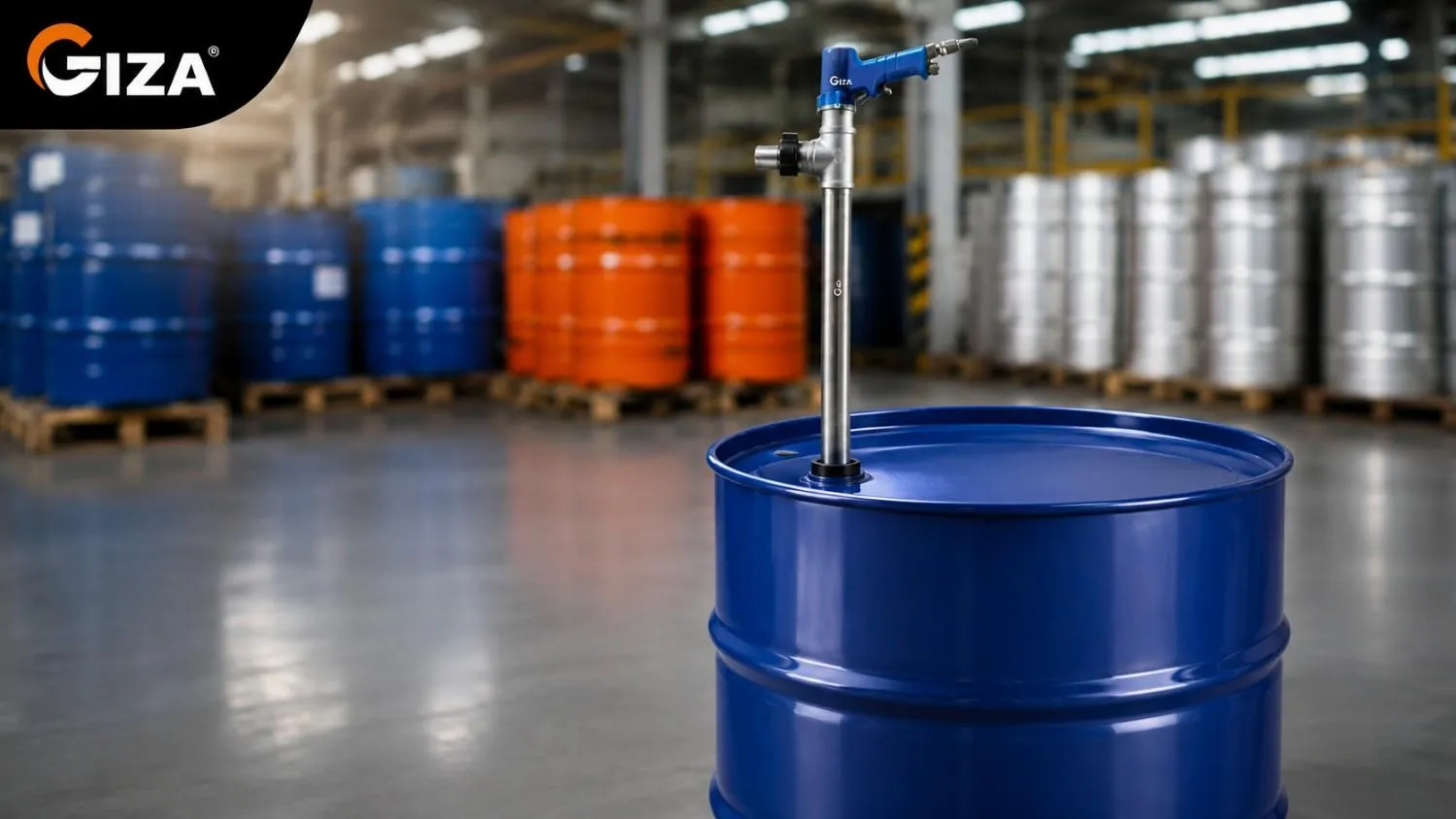
- Pneumatic barrel pumps: Air-operated models suited to facilities with compressed-air infrastructure, subject to the pump's safety classification.
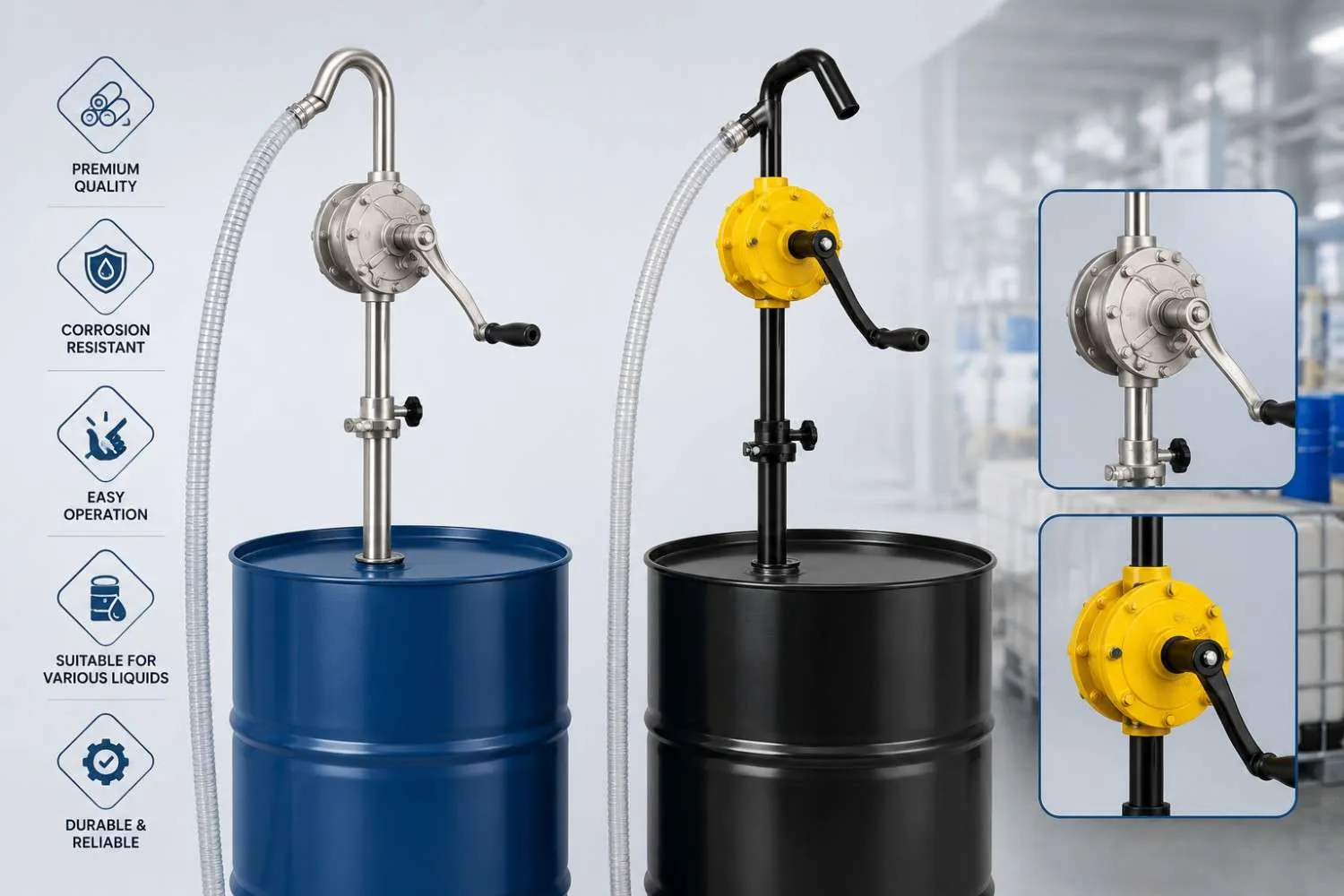
- Rotary barrel pumps: Hand-operated mechanisms commonly selected for workshop oils and compatible petroleum products.
Material Selection: SS 304, SS 316, PP and PVDF
Material choice matters more than many buyers realise.
Stainless steel grades 304 and 316, polypropylene (PP), and polyvinylidene fluoride (PVDF) are among the construction materials listed in Giza Pumps' product range. Each offers different chemical-resistance characteristics.
A pump body made from chemically resistant material isn't enough. Seals, gaskets, hoses, and other wetted components must also be compatible.
The detail buyers overlook: Request the actual flow-rate curve, maximum viscosity rating, immersion-tube length, and seal material. A claimed flow rate without the testing conditions tells you very little about performance in your factory.
Five Criteria for Evaluating a Barrel Pump Manufacturer
Choosing a supplier isn't complicated. Getting useful answers from suppliers is the difficult part.
1. Material compatibility: Ask for written confirmation against the liquid's concentration and operating temperature. A bad answer sounds like, "Our pump works with all chemicals."
2. Performance specifications: Request rated flow, viscosity limits, duty cycle, and discharge conditions. Avoid suppliers who quote maximum flow without explaining the testing setup.
3. Quality inspection: Check whether leakage and performance tests are documented. "We check everything before dispatch" is not an inspection report.
4. Replacement-part availability: Confirm pricing and availability for seals, shafts, and wear components. A supplier who cannot identify replacement parts is creating a future maintenance problem.
5. Commercial commitments: Obtain written payment terms, delivery commitments, warranty exclusions, and defective-item procedures. "We'll sort it out later" is not an acceptable purchasing agreement.
A reliable Barrel Pump Manufacturer should be willing to discuss limitations, not merely repeat product advantages.
Six Benefits of Choosing the Right Barrel Pump
Working with dependable Barrel Pump Suppliers can reduce operating risks while protecting purchasing margins.
- Reduced liquid wastage: Correct fittings and compatible seals help minimise drips, leakage, and avoidable product loss.
- Lower maintenance expenses: Suitable components reduce premature wear and unnecessary replacement costs.
- Better transfer productivity: Correctly sized electric or pneumatic pumps can reduce the time spent emptying multiple drums.
- Improved operator safety: Appropriate equipment reduces manual drum handling and uncontrolled pouring, provided operating precautions are followed.
- Consistent process quality: Compatible wetted materials help reduce the risk of contamination during liquid transfer.
- More predictable procurement costs: Documented spare-parts pricing, warranty terms, and delivery schedules make recurring purchases easier to budget.
And yet, the cheapest quotation can still become the most expensive purchase.
A pump that requires frequent seal replacement or unexpected shutdowns rarely delivers the savings promised on the original invoice.
Barrel Pump Availability Across India: Location Affects Delivery
India's industrial buyers operate across different manufacturing clusters, including Gujarat, Maharashtra, Tamil Nadu, Karnataka, Delhi NCR, and other regions.
A supplier's location affects freight planning, replacement-part delivery, and communication during urgent maintenance requirements.
For example, Giza Pumps lists its business location in Shapar, Rajkot, Gujarat, at Sub-Plot 3/1, Plot No. 3, Dholera Main Road, Shapar, Rajkot – 360024.
Buyers comparing Barrel Pump Dealers and Barrel Pump Wholesalers should check whether their vendors maintain ready inventory or place orders only after receiving customer payments.
For repeat industrial purchases, a supplier's ability to dispatch the same model consistently can matter more than saving a few rupees on individual units.
Before ordering, confirm dispatch origin, stock status, freight charges, and destination-specific transit estimates.
About Giza Pumps: Product Options for Industrial Buyers
At Giza Pumps, we offer barrel pump options for different industrial liquid-transfer requirements.
Our published product range includes manual, electric, rotary, and pneumatic pumps, along with stainless steel, polypropylene, and other material options. We operate from Shapar, Rajkot, Gujarat, and support enquiries for individual requirements and bulk purchases.
We understand that selecting the wrong material can cause costly operating problems. That's why we encourage buyers to share their liquid specifications and working conditions before choosing a pump.
Our product selection should be checked against the actual application rather than assuming that one model suits every industrial fluid.
At Giza Pumps, we invite procurement managers, distributors, and industrial buyers to send us their purchasing requirements.
To help us identify a suitable model, please share your liquid name, chemical concentration (where applicable), viscosity, operating temperature, drum capacity, desired flow rate, order quantity, and delivery PIN code.
We can confirm our applicable minimum order quantity (MOQ), quotation response time, current stock, and estimated dispatch schedule when reviewing your enquiry. These terms are not fixed or published for every model.
Conclusion
Selecting the right Barrel Pump requires more than comparing prices and materials. Buyers should evaluate compatibility, operating performance, maintenance requirements, and supplier commitments before issuing a purchase order. A dependable purchasing decision begins with accurate specifications and written confirmation. That preparation will make future industrial procurement more predictable.
Frequently Asked Questions About Barrel Pumps
1. What should I check before purchasing a Barrel Pump?
Start with the liquid, its viscosity, temperature, and chemical properties. Then check flow rate, immersion length, construction material, and seal compatibility. Don't purchase based on photographs alone.
2. How do I identify a reliable Barrel Pump Manufacturer?
Ask for technical specifications, testing details, warranty terms, and replacement-part availability. A manufacturer should explain where its equipment cannot be used. No pump is suitable for every liquid.
3. Can Barrel Pump Suppliers provide equipment for corrosive chemicals?
Some can supply PP, PVDF, or other chemically resistant models. However, compatibility depends on chemical concentration, operating temperature, and the materials of every wetted component. Always obtain model-specific confirmation.
4. Do Barrel Pump Dealers maintain ready stock?
Some do, but availability varies by model and location. Before paying, request written confirmation of inventory, dispatch dates, and replacement-part availability.
5. Can Barrel Pump Wholesalers handle bulk industrial orders?
Many accept bulk enquiries, but minimum quantities, pricing tiers, and delivery schedules differ. Ask whether multiple units will come from the same specification and production version.
6. Which type of barrel pump is suitable for viscous oil?
It depends on actual viscosity, required flow, and working temperature. Thick lubricants may need a dedicated high-viscosity pump rather than an ordinary drum-transfer model. Request performance data for your liquid.
7. Why choose a Barrel Pump Manufacturer in India for industrial procurement?
Domestic sourcing can simplify communication, local freight coordination, and replacement-part purchasing. However, a local address alone doesn't guarantee faster delivery. Confirm available inventory, service arrangements, and commercial terms before ordering.





















Sign in to leave a comment.