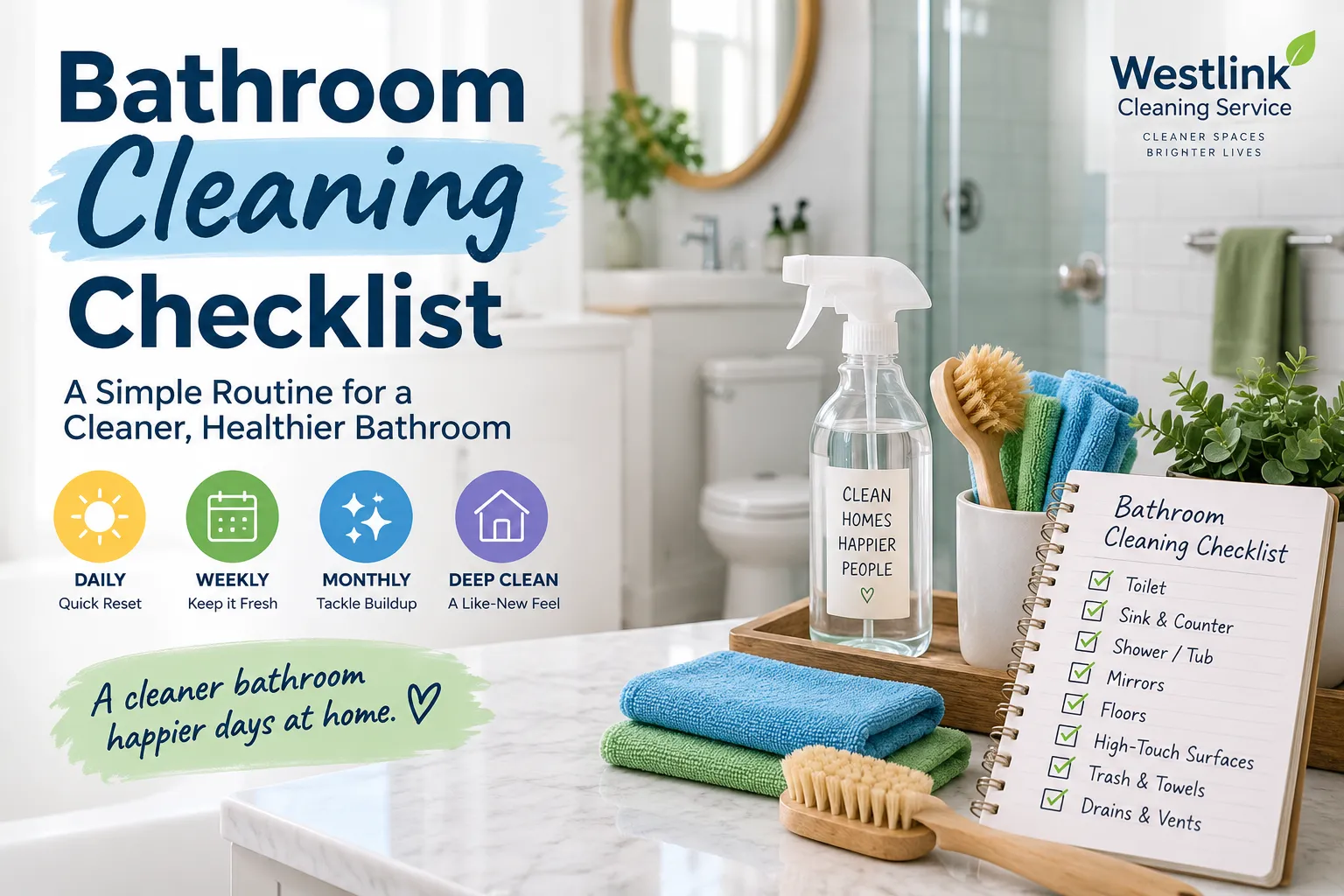

Bathroom
A bathroom cleaning checklist works best when it separates quick daily habits from weekly cleaning and deeper monthly jobs. Start by clearing clutter, then clean from high surfaces down, give products the contact time shown on their labels, and finish with the floor. Focus on the toilet, sink, shower, tub, mirror, high-touch points, drains, mats, and ventilation. A simple routine prevents grime from becoming a much bigger job.
This guide is for busy households that want a cleaner bathroom without spending all day on it. A clear and well-designed professional cleaning plan uses the same practical idea: match the task to the right frequency, use separate tools for dirty zones, and clean in an order that avoids doing work twice.
How Often Should You Clean Your Bathroom? Daily, Weekly, and Monthly Basics
Bathroom cleaning frequency depends on how many people use the room, how much moisture stays after showers, and how quickly dust, hair, toothpaste, and soap residue build up. Daily care should focus on moisture and visible mess. Wipe the sink if toothpaste has dried around the basin. Hang wet towels so air can reach both sides. Pull a squeegee down shower glass after use. If water sits in the tracks or along silicone seals, dry it with a cloth.
Weekly cleaning handles the main hygiene zones. Scrub the toilet bowl, wipe the seat and exterior, clean the sink, wash the shower or tub, polish the mirror, and mop the floor. Monthly work reaches places that are easy to ignore, such as vents, grout, curtain liners, drains, and behind the toilet.
Bathroom Cleaning Supplies and Tools You Actually Need
You do not need a cupboard full of products. A small kit is easier to carry and replace. Check product labels before using any cleaner on stone, metal, painted surfaces, or specialty finishes.
- Microfiber cloths for mirrors, counters, taps, and general wiping
- One dedicated cloth or disposable wipe for the toilet exterior
- Toilet brush with a holder that can dry between uses
- Soft scrub brush for tubs, tile, grout, and shower tracks
- Squeegee for shower glass and tiled walls
- Vacuum, broom, or dustpan for hair and dry debris
- Mop or flat mop suited to the bathroom floor
- Rubber gloves for dirty jobs and stronger cleaners
- Glass cleaner, bathroom cleaner, and toilet bowl cleaner
- Baking soda or white vinegar only where the surface and task allow
- Small old toothbrush for hinges, tap bases, and narrow corners
- Trash bags and a washable caddy for carrying the kit
Keep toilet tools separate from sink and shower tools. Color coding makes each cloth's zone easy to identify.
The Best Bathroom Cleaning Order: Work Top to Bottom Without Wasting Time
Open a window or use the exhaust fan when ventilation is needed. Remove towels, bath mats, bottles, bins, and loose toiletries. Put laundry outside the room. This clears surfaces and stops spray from coating items you would move later.
Next, remove dry dust and hair. Vacuum around the toilet base, vanity, corners, and edges so wet cleaner does not trap loose hair. Dust the exhaust cover, light fittings, shelves, and window ledges before wiping lower areas.
Apply cleaner to the shower, tub, sink, and toilet according to the product label. While it sits, clean the mirror and low-soil surfaces. Then scrub the shower or tub, clean the sink and taps, and finish the toilet with its dedicated cloth and brush. Work toward the door as you mop so you do not step across the wet floor.
Daily Bathroom Cleaning Checklist for a 2–5 Minute Reset
A short reset stops small messes from drying or piling up. Keep the steps easy to repeat.
- Hang towels flat and move dirty clothes to the laundry
- Put toiletries back in their normal place
- Wipe toothpaste and water from the sink and tap
- Squeegee shower glass, walls, or doors after use
- Dry standing water from tracks, ledges, and silicone edges
- Wipe the toilet seat and flush handle when needed
- Remove obvious hair from the floor or drain cover
- Empty the bin if it is full or damp
- Check that the exhaust fan has had time to clear shower moisture
Before you leave, check that the basin has no fresh residue, towels are drying, and water is not sitting in damp corners.
Weekly Bathroom Cleaning Checklist for Toilets, Showers, Sinks, Mirrors, and Floors
A weekly clean resets surfaces before buildup becomes stubborn. Start with the toilet bowl cleaner so it can sit while you work elsewhere. Clean the mirror, then wipe the vanity, sink basin, tap handles, soap dispenser, and toothbrush holder. Check the strip behind the tap. Toothpaste and water scale often collect there.
Move to the shower or tub. Clean the walls, floor, glass, tracks, fittings, and drain cover. Soap scum often feels rough or waxy, so use a cleaner and pad suited to the surface. Rinse well, then squeegee or dry glass to reduce spotting.
Use a separate cloth on the toilet exterior. Wipe the flush button, lid, seat, hinges, rim area, tank, and base. Finish by vacuuming or sweeping the floor, especially behind the door and around the toilet, then mop toward the exit. Replace towels and return a clean bath mat only after the floor is dry.
Monthly and Deep-Clean Bathroom Checklist for Australian Homes
A monthly clean reaches places routine wiping misses. Wash or clean the shower curtain and liner according to their care labels. Check the bottom edge first, where moisture and soap residue often collect. Clean the curtain rod, towel rails, cabinet fronts, drawer pulls, baseboards, and the wall area beside the toilet.
Inspect grout and silicone seals around the shower and tub. Dark staining, cracks, or gaps need attention because scrubbing cannot repair failed sealant. Brush shower tracks and wipe out loosened sludge instead of pushing it along the channel.
If safe for the unit, switch off power before vacuuming the exhaust fan cover and nearby dust. Remove hair from accessible drain covers. Descale a showerhead or tap only with a method approved for its finish. Also clean behind the toilet, under the vanity lip, and inside the bin.
One practical check helps after any deep clean: run a dry fingertip along the shower track, tap base, and toilet hinge area. These narrow edges often hold residue even when the main surfaces look clean. Catching it now prevents another round of scrubbing later.
How to Tackle Soap Scum, Mold, Hard Water Stains, Grout, and Clogged Drains
Different bathroom problems need different methods. Soap scum can cling to surfaces, so dry wiping often misses it. Apply a surface-safe cleaner, allow the label-stated contact time, then scrub with a non-scratching pad and rinse.
Hard water marks need care because acids can damage some stone, grout, metal finishes, and sealants. Do not assume vinegar is safe everywhere. Test an approved product in a hidden spot when the manufacturer recommends testing.
For mold or mildew, deal with the moisture source first. Improve ventilation, dry wet edges, and check for leaks or failed seals. If dampness continues, the staining may return.
For slow drains, remove visible hair before reaching for chemicals. Do not mix drain products with other cleaners. If water still drains slowly after accessible debris is removed, a plumbing issue may need proper inspection.
Bathroom Cleaning Safety: Disinfectants, Dwell Time, Ventilation, and Cross-Contamination
Cleaning removes dirt. Disinfecting uses a product labelled for that purpose. The key detail is contact time. Some disinfectants need the surface to stay wet for a stated period, so follow the label.
Never mix bleach with vinegar, ammonia, or other cleaners. Use ventilation when the label calls for it, wear gloves when appropriate, and keep products away from children and pets.
Cross-contamination is simple to control. Use a toilet-only cloth, wash reusable cloths after use, and avoid dipping a dirty cloth back into clean solution. Work from lower-soil areas toward higher-soil areas. Wash hands after removing gloves, especially before handling clean towels.
How to Keep Your Bathroom Clean Longer Between Deep Cleans
The best cleaning hack is removing water and residue before they settle. Squeegee shower glass after use, wipe splashes around the basin, and hang towels where they can dry fully. Leave the shower open enough for air to move through the wet area.
Keep counters mostly clear. A crowded vanity traps dust, hair, and toothpaste. Store daily items in one easy-to-lift tray or drawer so the whole counter can be wiped in seconds.
Run the exhaust fan during steamy showers as recommended for the unit. Clean the vent cover when dust starts blocking the grille. Shake out mats before hair works deep into the fibres, and wash them according to their care labels.
Small habits make weekly cleaning faster because residue has less time to build.
Bathroom Cleaning Checklist FAQs: What Should You Clean, How Often, and in What Order?
What should be on a bathroom cleaning checklist?
Include the toilet, sink, taps, counter, shower or tub, mirror, floor, high-touch surfaces, towels, mats, bin, drains, vents, and periodic tasks such as grout and curtain cleaning.
What should I clean every day?
Focus on moisture and mess. Wipe the sink, hang towels, squeegee the shower, clear clutter, and remove obvious hair or spills.
What should I clean every week?
Scrub the toilet, shower or tub, and sink. Clean mirrors, taps, high-touch points, floors, towels, mats, and the bin.
What is the best order for cleaning a bathroom?
Declutter first, remove dry dust and hair, clean high areas, apply cleaners, wipe mirrors and sinks, scrub wet zones, clean the toilet, then mop the floor.
Can I clean a bathroom in 10 minutes?
Yes, as a quick reset. Prioritize the toilet, sink, mirror, shower moisture, visible hair, and floor. Leave grout, vents, cabinets, and descaling for a deeper session.
Can I use natural cleaners for everything?
No. Natural products can still damage surfaces or react with other cleaners. Match the product to the material and follow manufacturer directions.
Need More Than a Checklist? How Westlink Cleaning Service Can Help
A good routine keeps most bathrooms under control, but some jobs need extra time or tools. Heavy soap scum, neglected grout, persistent scale, large homes, rental handovers, and busy work schedules can turn a simple cleaning plan into a long weekend job.
Professional cleaning can help when you want a full reset before returning to lighter maintenance. The best service should still follow the same basics: clear task scope, suitable products, attention to high-touch areas, separate toilet tools, and a logical cleaning order.
If you want help with a one-off deep clean or regular bathroom care, Westlink Cleaning Service can take the heavier work off your list while you keep the simple daily habits that make the room easier to maintain.


























Sign in to leave a comment.