
If you are shopping for durable bathroom countertops in Winnipeg that homeowners can trust, the best materials for moisture and heat are quartz, granite, and solid surface. Quartz resists water and stains with almost no upkeep. Granite handles heat from curling irons well but needs sealing. Solid surface is budget-friendly but scratches and scorches more easily. This guide explains how each material performs in a Winnipeg bathroom, what it costs, and how to choose the right one for your home.
Why Do Winnipeg Bathrooms Need Special Countertop Choices?
Winnipeg bathrooms need tough countertops because the city has some of the biggest seasonal swings in Canada. Winters often drop below -30°C, and summers can climb above 30°C. Indoor humidity changes with them, and your bathroom takes the hit every time.
Picture a normal winter morning. You run a hot shower, the mirror fogs up, and steam fills the room. Then you set a hot flat iron on the counter and wipe up a puddle of water. In a home heated by a furnace, the air is dry in January and damp after every shower. That constant change stresses materials that cannot handle moisture or heat.
Poor airflow keeps humidity high for longer, which means your countertop sits in damp air for hours after each shower.
So the question is not just "what looks good?" It is "what will still look good after ten winters of steam, hairdryers, and spilled products?"
What Are the Best Materials for Bathroom Countertops in Winnipeg?
The best materials for bathroom countertops in Winnipeg are quartz, granite, and solid surface, with quartz leading for moisture resistance. Each one handles water and heat differently, so the right pick depends on your budget, style, and habits.
Quartz Countertops
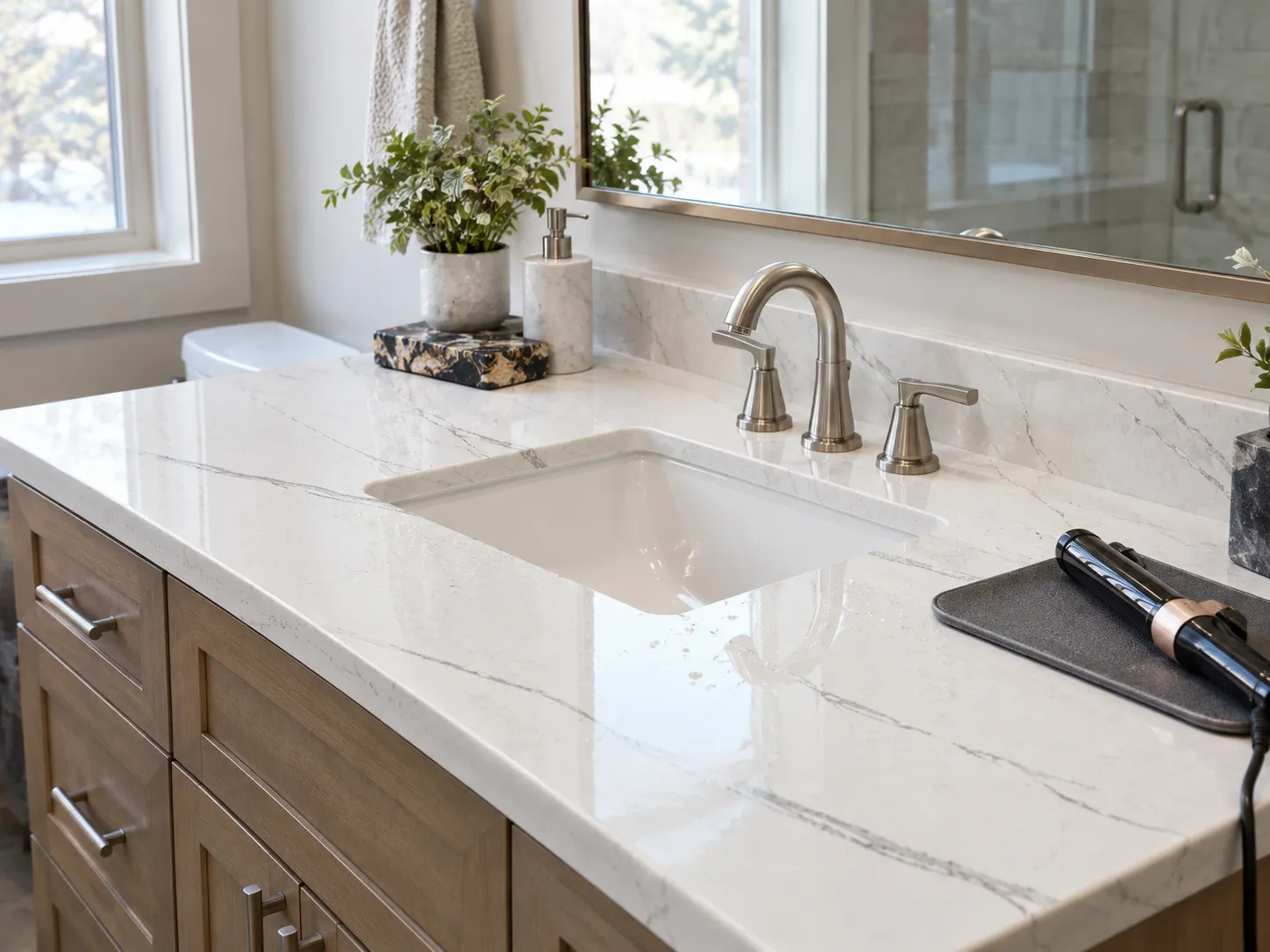
Quartz is an engineered stone made from about 90 to 94 percent ground natural quartz mixed with resin and pigments. That resin makes the surface non-porous, which means water, soap, toothpaste, and hair dye cannot soak in. You never need to seal it.
For moisture, quartz is the strongest performer. Mold and mildew have nothing to grab onto, which is a real advantage in a bathroom with limited ventilation. For heat, quartz is good but not perfect. The resin can discolor or crack if you rest something extremely hot on it, such as a curling iron at full temperature. Most manufacturers, including Cambria and Caesarstone, recommend using a trivet or heat pad.
If you are also planning a kitchen upgrade, you can read about Winnipeg quartz kitchen worktops to see how the same material performs in a different part of the house.
Granite Countertops
Granite is a natural stone cut from quarries and polished into slabs. It forms under extreme heat and pressure, so it handles high temperatures better than almost any other bathroom material. You can set a warm hairdryer or a hot flat iron on it for short periods without damage, though a heat pad is still smart.
Granite is naturally porous, so it needs sealing. Most stone professionals recommend resealing about once a year. A simple test: drop a teaspoon of water on the surface. If it darkens the stone within a few minutes, the sealer has worn thin.
Granite also shows natural variation. No two slabs look the same, which gives your vanity a one-of-a-kind look.
Solid Surface Countertops
Solid surface, sold under names like Corian, is made from acrylic or polyester resins and mineral fillers. It is non-porous and often comes with a sink molded right into the top, which removes the seam where water usually collects.
The weak spots are heat and scratches. A hot curling iron can leave a permanent scorch mark. On the plus side, light scratches can be sanded out, so you can restore the surface instead of replacing it.
Laminate Countertops
Laminate is a thin decorative layer bonded to particleboard. It is the cheapest option and comes in many looks. However, particleboard swells when water seeps into the edges or around the sink cutout. In a bathroom, that damage shows up fast. Heat is also a problem, since a hot tool can blister or melt the surface.
Marble Countertops
Marble is gorgeous and popular in bathrooms, but it is soft and reacts to acids. Common bathroom items like toothpaste, perfume, and some cleaners can leave dull marks called etching. It also stains easily. If you love the look, expect more upkeep and some visible aging over time.
How Do the Materials Compare? (Quick Comparison Table)
Quartz wins on moisture resistance and low upkeep, while granite wins on heat tolerance. Here is a side-by-side view to help you decide.

Prices vary by slab, edge profile, and installation details, so treat these numbers as a general range and ask for a written quote.
Which Countertop Handles Moisture Best?
Quartz handles moisture best because it is non-porous and needs no sealer. Water sits on top and wipes away, so there is nothing for mold or mildew to settle into.
Solid surface comes close, especially with an integrated sink that has no seam. Granite performs well when properly sealed, but you must keep up with the sealing schedule. Laminate and marble are the weakest choices for wet conditions.
Here is a practical tip from years of working with stone: moisture problems rarely start in the middle of the slab. They start at the edges, around the sink, and at the backsplash joint. Ask your installer to use a quality silicone sealant in those spots and check it once a year. A cracked bead of caulk lets water reach the cabinet below, and that is where real damage begins.
Which Countertop Handles Heat Best?
Granite handles heat best because it forms under intense natural heat and pressure. It tolerates hot tools far better than resin-based surfaces.
Quartz is the next best option, but the resin binder is the limit. Sudden temperature changes can cause thermal shock, which may crack the slab. Solid surface and laminate are the most vulnerable to burns.
A real-life example: a curling iron set to 400°F (about 204°C) is common, and many flat irons run even hotter. That is well above what resin can handle for more than a moment. Leaving a styling tool on quartz or solid surface, even for a minute, can leave a mark.
How to Choose Bathroom Countertops: Step by Step
To choose the right bathroom countertop, match the material to your daily habits, your budget, and your ventilation. Follow these steps.
- Check your bathroom's ventilation. If you have no exhaust fan or a weak one, choose a non-porous material like quartz or solid surface.
- Think about your daily routine. If you use hot styling tools every morning, granite or quartz with a heat mat works best.
- Set a realistic budget. Include the sink, faucet cutouts, edge profile, and installation in your numbers.
- Decide how much upkeep you want. If you do not want to seal anything, pick quartz.
- View full slabs in person. Small samples hide veining and color shifts.
- Get a professional template. An accurate measurement avoids gaps and leaks.
- Ask about the warranty. Reputable fabricators explain what is covered and for how long.
If you want help comparing slabs for your bathroom, reaching out to a local fabricator is a smart move. A short visit to a showroom often answers more questions than hours of browsing online.
What About Vanity Size and Sink Style?
Most bathroom vanity tops are smaller than kitchen counters, which makes them very cost friendly. A typical vanity runs 24 to 72 inches wide. Because the surface area is small, many homeowners upgrade to a premium stone like quartz or granite for a price close to a mid-range kitchen material.
Sink style also affects moisture control. An undermount sink sits below the counter and gives you a smooth edge to wipe water straight into the basin. A drop-in sink leaves a raised rim where water and soap scum collect. For a bathroom that gets heavy use, undermount is the cleaner and more moisture-friendly choice.
Another detail worth knowing is the backsplash. A 4-inch stone backsplash behind the vanity protects your wall from splashes. In a family bathroom where kids splash water daily, this small addition saves paint and drywall.
How Do You Care for Bathroom Countertops?
Daily care is simple: wipe with a soft cloth, warm water, and mild dish soap. Avoid harsh cleaners with bleach or strong acids, since they can dull the surface or weaken the sealer.
For granite, reseal once a year. For quartz, no sealing is needed, but wipe up dye-heavy products like hair color quickly. For marble, wipe spills right away and use a pH-neutral stone cleaner. Keep an exhaust fan running for 20 to 30 minutes after showers.
Are Quartz Countertops Worth It for Winnipeg Bathrooms?
Yes, for most homeowners, quartz is worth the cost. It resists moisture, needs no sealing, stays consistent in color, and lasts for decades with basic care. For a space that deals with steam and water every day, that low-stress performance is hard to beat.
The one caution is heat. If you use hot tools daily, you must use a heat pad. If you do not want to think about that, granite may fit you better.
Common Mistakes to Avoid
Many homeowners pick a countertop based on a photo and skip the practical questions. A few mistakes come up again and again.
The first is choosing marble for a busy family bathroom without planning for upkeep. The second is skipping the exhaust fan upgrade, which lets steam work against even the toughest material. The third is cutting corners on installation. A countertop that sits unevenly or has poorly sealed seams will let water in, no matter how premium the slab is. Finally, many people forget to plan the faucet and sink layout before ordering, which leads to costly changes later.
Conclusion: Your Next Step
For bathroom countertops in Winnipeg, quartz is the safest choice for moisture, granite is the strongest for heat, and solid surface offers solid value on a tighter budget. Think about your ventilation, your daily routine, and how much upkeep you are willing to take on, then choose the material that fits.
Ready to move forward? Measure your vanity, gather a few photos of the style you like, and visit a local showroom to see full slabs in person. Ask for a written quote with the material, installation, and cutouts listed clearly. If you want expert guidance from a team that works with stone every day, contact Rockwood Stone Countertops today to book a consultation and get a quote for your bathroom.
People Also Ask
What is the most durable countertop for a bathroom?
Quartz and granite are the most durable. Quartz resists stains and moisture without sealing, while granite resists heat and scratches. Both can last 25 years or more with proper care, making them better long-term picks than laminate or marble.
Can you put a hot curling iron on a quartz countertop?
It is not safe. Quartz contains resin that can scorch or crack under direct high heat. Most manufacturers recommend using a trivet or heat-resistant mat under hot tools. A short contact may not leave a mark, but repeated use will.
Is granite or quartz better for bathrooms?
Quartz is better for moisture and low maintenance, while granite is better for heat. If you want zero sealing and uniform color, pick quartz. If you want a natural look and use hot styling tools often, granite is a strong choice.
How much do bathroom countertops cost in Winnipeg?
Most homeowners pay between $45 and $120 per square foot installed, depending on the material. A standard vanity top often costs a few hundred to a couple thousand dollars, based on size, sink cutouts, and edge style.
Do bathroom countertops need to be sealed?
Natural stone like granite and marble needs sealing, usually once a year. Quartz and solid surface are non-porous and do not need sealing. Laminate does not require sealer, but its seams should stay caulked to block water.
How long does it take to install a bathroom countertop?
Installation itself usually takes a few hours. The full process, including measuring, cutting, and fabrication, often takes one to three weeks. Timing depends on slab availability and the fabricator's schedule.




















Sign in to leave a comment.