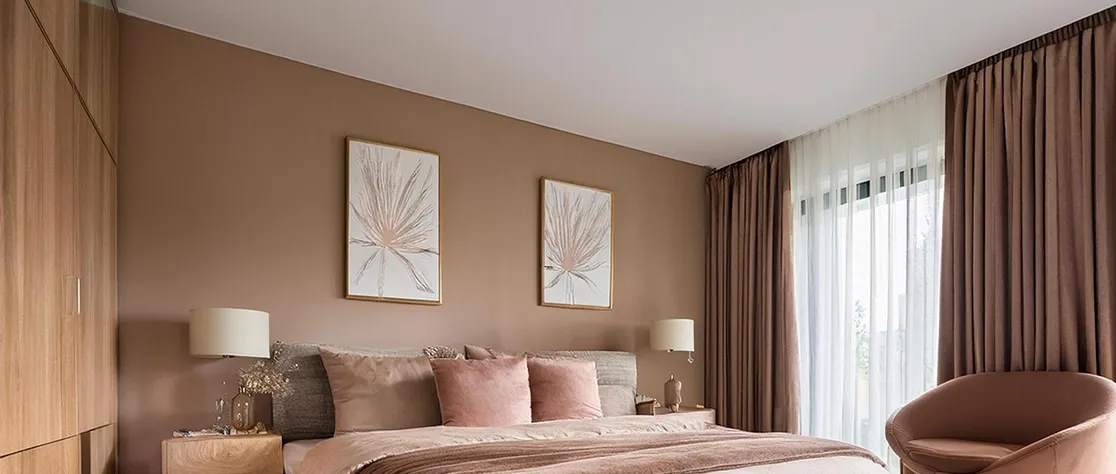

A bedroom colour scheme should work with the room's furniture, lighting, and personal style. Some homeowners prefer light and understated colours, while others want a darker feature wall or a warm, earthy appearance.
A balanced bedroom wall paint colour combination can make the room feel coordinated without requiring every wall to use the same shade. The key is to choose colours that complement one another and decide how much of each colour to use.
How to Plan Your Bedroom Wall Colours
1. Choose the Main Colour First
Begin with the shade that will cover most of the room. Warm white, cream, beige, soft grey, and muted green are versatile starting points.
The main colour should work with the existing flooring, bed frame, wardrobe, and curtains. If the room already contains strong patterns or colourful furniture, a neutral wall shade may provide a more balanced background.
2. Select a Complementary Accent
The second colour can introduce contrast or highlight a particular area. A feature wall behind the bed is a common option, but the best placement depends on the room's layout and furniture.
Consider combinations such as:
- Beige with sage green.
- Warm white with soft blue.
- Cream with dusty pink.
- Light grey with muted teal.
- Off-white with terracotta.
Choose the accent according to the mood and appearance you prefer rather than following a trend without testing it.
3. Match the Colours to Your Lighting
A shade can look different in natural daylight and under warm bedroom bulbs. Pale blue may appear cooler at night, while warm white can look creamier under yellow-toned lighting.
Apply samples of both colours on the actual wall. Check how they look in the morning, afternoon, and evening before finalising the combination.
Five Bedroom Wall Paint Colour Combination Ideas
1. Beige and Sage Green
Beige and sage green form a natural, understated palette. Beige can cover the main walls, while sage green creates contrast behind the bed.
This combination can complement wooden furniture, neutral bedding, and natural fabrics. It is useful when you want colour without making the room look overly bright.
2. Warm White and Powder Blue
Warm white and powder blue create a fresh bedroom scheme. The white provides a neutral background, while the blue introduces a cooler shade.
Use powder blue on a feature wall or selected sections and keep the other walls warm white. Light wood and neutral curtains can help connect the colours.
3. Cream and Dusty Pink
Cream with dusty pink offers a gentle, warm appearance. Cream keeps the room versatile, while dusty pink adds a subtle accent.
This scheme can work with wooden furniture, warm lighting, and neutral textiles. If your bedding already contains pink, test the wall shade beside it to avoid a mismatch in undertones.
4. Navy Blue and Off-White
Navy blue paired with off-white can create a bold, contemporary bedroom. Use navy on a feature wall and off-white across the remaining walls.
This combination can suit rooms with adequate lighting and lighter bedding. In a compact bedroom, test the darker shade carefully to ensure it does not make the space feel too enclosed.
5. Terracotta and Light Beige
Terracotta and light beige create an earthy palette that works with wooden furniture and warm decorative elements.
Use beige as the main wall colour and terracotta as an accent. If the terracotta shade is strong, limit it to a feature wall or smaller section so it remains visually balanced.
How to Make Two Colours Look Coordinated
The success of a two-colour scheme depends on more than selecting shades from the same colour family.
Consider Undertones
Warm beige and warm white often connect naturally, while cool grey and blue may create a coordinated cooler palette. Mixing warm and cool shades can also work, but the contrast should be deliberate.
Think About Proportion
One shade should usually dominate, with the second colour used to create contrast. Applying two strong colours in equal amounts can make the room feel visually busy.
A useful starting point is:
- Main shade across most wall surfaces.
- Accent colour on one selected wall or section.
- Neutral ceiling and trim.
- Small decorative accents through bedding or curtains.
This is a flexible guide rather than a fixed rule. The final proportion should suit the size, layout, and lighting of your bedroom.
Wall Preparation and Paint Selection
Before painting, inspect the walls for cracks, dust, loose paint, and dampness. Repair damaged areas and address moisture problems before applying a new coat.
Check whether the surface requires primer and confirm that the paint is suitable for the intended wall. Follow the manufacturer's instructions for coverage, application, drying time, and number of coats.
Sample testing is especially useful when the combination includes a deep accent shade and a light neutral. It helps you see how the colours look together across a larger surface.
Refresh Your Bedroom for Indian Festivals
A bedroom refresh can be planned before Diwali or Chhath Puja, especially if you want to update guest spaces or coordinate the room with festive decorations.
Warm beige with sage green, cream with dusty pink, or off-white with soft blue can complement new bedding and curtains. For Christmas and New Year, you may choose a neutral base with a blue or green accent.
During Makar Sankranti, yellow cushions or decorative accessories can add a seasonal touch without changing the main wall colours. Schedule painting early enough to complete repairs and drying before the room is used again.
Frequently Asked Questions
Which two colours work well in a bedroom?
Beige with sage green, warm white with powder blue, and cream with dusty pink are useful combinations to consider. The best option depends on the room's light and furniture.
Can I use a dark colour in a small bedroom?
A dark shade can work on a selected feature wall, but it should be tested with the room's lighting and furnishings. Keep the other walls lighter if you want more contrast.
How do I choose the colour behind the bed?
Consider the bed frame, headboard, curtains, and lighting. A complementary shade behind the bed can create a focal point without requiring several different wall colours.
Conclusion
A coordinated bedroom colour scheme begins with the main shade and builds around it with a complementary accent. Lighting, furniture, wall condition, and colour proportions all influence the final result.
When selecting a bedroom wall paint colour combination, test the shades together and choose a paint product suitable for your wall surface. A thoughtful pairing can help create a bedroom that reflects your style and remains visually balanced.
























Sign in to leave a comment.