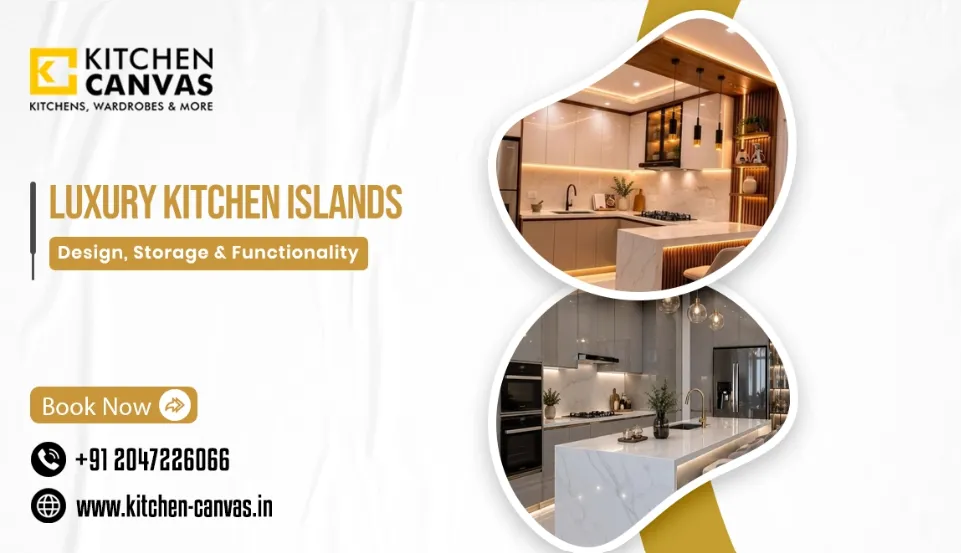

A kitchen island is one of those features that can make a kitchen look instantly more sophisticated. But appearance is only one part of the equation.
A poorly planned island can make movement difficult, reduce useful working space and create storage that looks good but isn't particularly practical.
For homeowners planning a premium kitchen in Pune, it makes sense to settle the functional details before getting into finishes and decorative features.
1. Measure the Space First
The island needs to fit the room, not the other way around.
There should be comfortable circulation around it, with enough room for people to move between the refrigerator, sink, cooking area and storage.
This is particularly important in open-plan homes, where the kitchen island also becomes part of the visible living space.
A large island isn't automatically a better island.
2. Decide What You Want From It
Start with the household's actual requirements.
An island could be used mainly for:
- Preparing food
- Storing cookware and kitchen supplies
- Casual dining
- Entertaining
- Housing appliances
- Creating a family gathering area
Some homes need a combination of these functions. Others may benefit from keeping the island relatively simple.
The intended use should determine the layout instead of trying to accommodate every possible feature.
For homeowners comparing configurations and features, this guide to luxury kitchen island design in Pune offers a broader look at storage, functionality and design possibilities.
3. Use the Island for Smarter Storage
An island creates an opportunity to put frequently used items exactly where they're needed.
Deep drawers can hold cookware, while internal organizers can handle cutlery and kitchen accessories. Pull-outs can be used for bottles or pantry items, and dedicated compartments can accommodate appliances.
Storage should be based on usage patterns.
There's little value in having a large number of cabinets if the items inside them are difficult to reach.
4. Don't Forget Seating Comfort
For many families, the island becomes an informal dining space.
A properly designed seating area can work well for breakfast, quick meals, conversations or children doing homework while a parent prepares food.
But stools and chairs need adequate clearance. If seating makes the working area too narrow, the island loses some of its practical value.
5. Plan Appliances Before Fabrication
Putting a hob or sink into the island changes the requirements considerably.
Plumbing, electrical connections, ventilation and cabinet dimensions all need to be considered from the beginning.
The same applies to dishwashers, beverage refrigerators and microwave drawers.
Appliance integration works best when it is part of the original kitchen plan rather than a late addition.
6. Treat the Countertop as a Design Feature
Because an island is usually prominent, its countertop can define much of the kitchen's character.
Quartz, granite, porcelain and natural stone can each create a different look and maintenance profile.
Waterfall edges can give the island a continuous architectural appearance, while a contrasting countertop or cabinet finish can make it stand apart from the rest of the kitchen.
The material should complement the home's overall interior rather than simply follow whatever happens to be trending.
7. Lighting Makes a Difference
An island often needs both functional and decorative lighting.
Pendant fixtures can provide focused illumination while adding visual interest. Integrated lighting can also be incorporated into cabinetry or surrounding areas without creating unnecessary clutter.
The lighting should work with the kitchen's broader lighting plan.
8. Consider the Architecture of the Home
A kitchen island designed for a large Pune villa may not be appropriate for a premium apartment.
The home's architecture, room proportions and open-plan arrangement all influence the right island configuration.
A bespoke approach can account for these differences while also incorporating the homeowner's storage requirements, cooking habits and preferred style.
The Goal Is Better Living, Not Just Better Photos
A luxury kitchen island should improve the way the kitchen functions every day.
The best design decisions usually come from balancing space, workflow, storage and aesthetics rather than trying to include every premium feature available.
When those fundamentals are right, the island can naturally become the centre of cooking, dining and social interaction.
For additional ideas before planning a bespoke kitchen island, explore the complete Kitchen Canvas guide to luxury kitchen island design, storage and functionality.























Sign in to leave a comment.