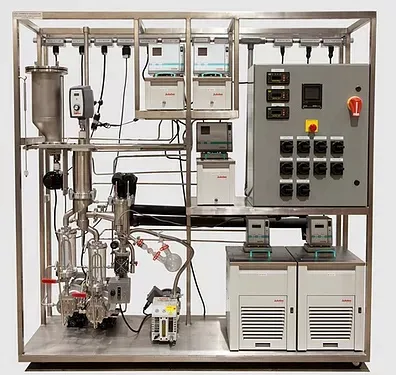

Process development often requires careful testing before a production-scale system can be implemented. Manufacturers and researchers need practical ways to evaluate equipment, materials, operating conditions, and process performance without committing immediately to large-scale infrastructure. Pilot plant fabrication provides a valuable approach by creating a smaller-scale version of a proposed processing system for controlled experimentation and evaluation. A well-designed pilot plant can help identify potential challenges, optimize operating conditions, and generate useful data that supports future scale-up decisions while reducing unnecessary risks and improving overall process planning.
Understanding the Role of Pilot Plants in Process Development
Pilot plants bridge the gap between laboratory experimentation and full-scale industrial production. Laboratory systems are useful for understanding basic reactions and processing principles, but their smaller capacity may not accurately represent conditions encountered during commercial operations. Pilot-scale equipment provides a more realistic environment where process variables, equipment interactions, and material behavior can be studied under controlled conditions. This intermediate stage allows technical teams to evaluate whether laboratory findings can be transferred successfully to larger systems while identifying changes that may be necessary before production begins.
Supporting Practical Process Evaluation
A pilot plant allows operators to examine how a process performs when multiple pieces of equipment operate together. Individual laboratory experiments may produce promising results, yet integration can introduce challenges involving flow rates, temperature control, pressure, residence time, or material transfer. Pilot systems provide an opportunity to observe these interactions under more representative conditions. Data collected during testing can then help engineers refine equipment specifications, operating procedures, and control strategies before larger investments are made in commercial processing infrastructure.
Benefits of Investing in pilot plant fabrication
One of the primary advantages of pilot-scale development is improved decision-making. A pilot system produces practical information that cannot always be obtained through theoretical calculations or small laboratory experiments. Process teams can assess throughput, product quality, energy requirements, equipment performance, and operating stability using real processing conditions. These findings can support more informed decisions about future production systems. By identifying potential limitations early, organizations may avoid expensive modifications after commercial equipment has already been purchased, installed, and commissioned.
Reducing Scale-Up Uncertainty
Scaling a process from laboratory equipment to industrial capacity involves more than simply increasing equipment dimensions. Heat transfer, fluid movement, mixing, pressure behavior, and material residence time can change significantly as system size increases. A pilot plant provides an intermediate environment where these factors can be studied before full-scale implementation. Testing at this level can reveal scale-dependent behavior and provide information that helps engineers establish more reliable design parameters. This reduces uncertainty and creates a stronger technical foundation for future expansion.
Improving Equipment Selection and System Design
Pilot systems can also help organizations compare different equipment configurations before committing to permanent production assets. Different pumps, evaporators, reactors, condensers, separation devices, or heat exchangers may produce different results depending on the process requirements. A pilot setup allows these options to be tested under controlled operating conditions. Engineers can evaluate equipment compatibility, operating stability, maintenance requirements, and performance characteristics. The resulting information can guide system design and help ensure that larger equipment is selected based on actual process requirements rather than assumptions alone.
Testing Process Variables
Process development frequently involves several variables that can influence final results. Temperature, pressure, feed rate, concentration, residence time, agitation, and vacuum conditions may all require optimization. Pilot-scale equipment provides sufficient flexibility to adjust these parameters while monitoring their effects on the process. By systematically testing different conditions, technical teams can identify operating ranges that provide consistent performance. This information can later contribute to standard operating procedures and control strategies used during larger-scale production.
Enhancing Product Quality and Consistency
Consistent product quality is an important consideration when moving toward commercial production. Small laboratory experiments may demonstrate that a process works, but they do not always show how stable the process will remain over extended operation. Pilot plants allow repeated trials and longer operating periods under controlled conditions. Teams can monitor product characteristics and determine whether changes in operating conditions affect quality. Such testing can help establish reliable processing windows and identify conditions that support repeatable results, making the transition toward commercial manufacturing more predictable.
Identifying Potential Process Problems
Unexpected issues can become costly when they first appear during commercial production. Pilot-scale testing creates an opportunity to discover problems earlier. Equipment fouling, inconsistent flow, temperature fluctuations, pressure instability, material degradation, or inefficient separation can be identified during development. Engineers can then investigate the causes and make adjustments before the process reaches full scale. Early problem identification can reduce development delays and limit the need for expensive redesigns. It also provides valuable practical knowledge that can improve preparation for future production operations.
Supporting Research and Development Activities
Pilot plants are useful for organizations developing new products, improving existing processes, or evaluating alternative production methods. Research teams can use pilot equipment to generate larger quantities of material for testing while maintaining greater process control than traditional laboratory equipment. This can be particularly valuable when downstream testing requires more sample material than laboratory experiments can reasonably provide. Pilot systems can therefore support both process optimization and product development activities while creating a connection between experimental research and future manufacturing requirements.
Generating Valuable Process Data
Reliable process data is essential for making sound engineering decisions. Pilot plants can provide information about mass balances, energy consumption, equipment capacity, material behavior, operating stability, and production rates. These measurements can be used to refine calculations and improve future system designs. Data collected during multiple trials can also reveal trends that may not be visible during isolated laboratory experiments. With a stronger understanding of process behavior, engineers can develop more realistic expectations for commercial equipment performance and operating costs.
Improving Scale-Up Planning
A carefully designed pilot system can serve as a foundation for future scale-up activities. The information generated during pilot operation can help determine equipment capacities, utility requirements, process layouts, and control strategies. Instead of relying entirely on theoretical assumptions, engineers can use actual operating data when developing larger systems. This approach can improve the accuracy of design decisions and help identify which aspects of the process require further investigation. Pilot-scale results can therefore become an important reference throughout later stages of engineering and production planning.
Supporting Flexible Development
Process requirements can change as research progresses. A flexible pilot plant can accommodate different equipment configurations, operating conditions, or material inputs as new information becomes available. This adaptability allows development teams to conduct multiple experiments without completely redesigning the system for every trial. Flexible equipment can also support the evaluation of alternative processing methods. Such versatility can be valuable for organizations working on several development projects or processes where final production requirements have not yet been established.
Considering Safety and Operational Requirements
Safety evaluation is another important part of process development. Pilot systems allow operating teams to examine how equipment behaves under controlled conditions before larger quantities of materials are processed. Pressure, temperature, vacuum, chemical compatibility, and material handling requirements can be evaluated during pilot operation. Safety procedures can also be developed and refined based on practical experience. While pilot testing cannot eliminate all risks associated with commercial production, it can provide valuable information for identifying hazards and establishing appropriate operating controls before scale-up.
Evaluating Maintenance Requirements
Maintenance considerations can also be studied during pilot operation. Operators can observe which components require regular inspection, cleaning, adjustment, or replacement. Accessibility and equipment configuration can be evaluated from a practical perspective. These observations may influence the design of larger systems by encouraging improvements that make routine maintenance easier. Understanding maintenance requirements during development can contribute to better equipment availability and reduce avoidable interruptions after commercial installation. It also helps operators become familiar with the equipment and procedures before production responsibilities increase.
Making Development Investments More Informed
Investing in pilot-scale development represents a commitment to gathering practical information before major production decisions are finalized. The value of the investment comes from the knowledge generated through experimentation, evaluation, and repeated testing. A pilot plant can reveal technical limitations, validate process concepts, support equipment selection, and provide information needed for scale-up. Although pilot testing requires planning and resources, the resulting knowledge can help organizations make more informed decisions about production capacity, system design, process controls, and future capital investments.
Planning for Long-Term Process Success
Effective process development requires a balance between experimentation, technical evaluation, and practical implementation. Pilot plants provide an environment where these elements can work together. By testing realistic operating conditions and collecting meaningful data, development teams can establish a stronger foundation for commercial processing. The information gained can remain useful beyond the initial development stage because it can support equipment specifications, operating procedures, training, maintenance planning, and future optimization. A well-planned pilot system can therefore contribute value throughout multiple stages of a process lifecycle.
Conclusion
Investing in pilot-scale development can provide organizations with practical knowledge before they commit to full-scale production systems. It can support process evaluation, equipment selection, scale-up planning, product consistency, safety assessment, and operational improvement. Careful testing also creates opportunities to identify technical challenges while changes remain manageable and development teams can respond efficiently. When designed around specific process objectives, pilot systems can become an important bridge between laboratory research and commercial manufacturing. Chemtech Services, Inc can be considered when organizations require professional expertise related to pilot plant fabrication and process development requirements.
























Sign in to leave a comment.