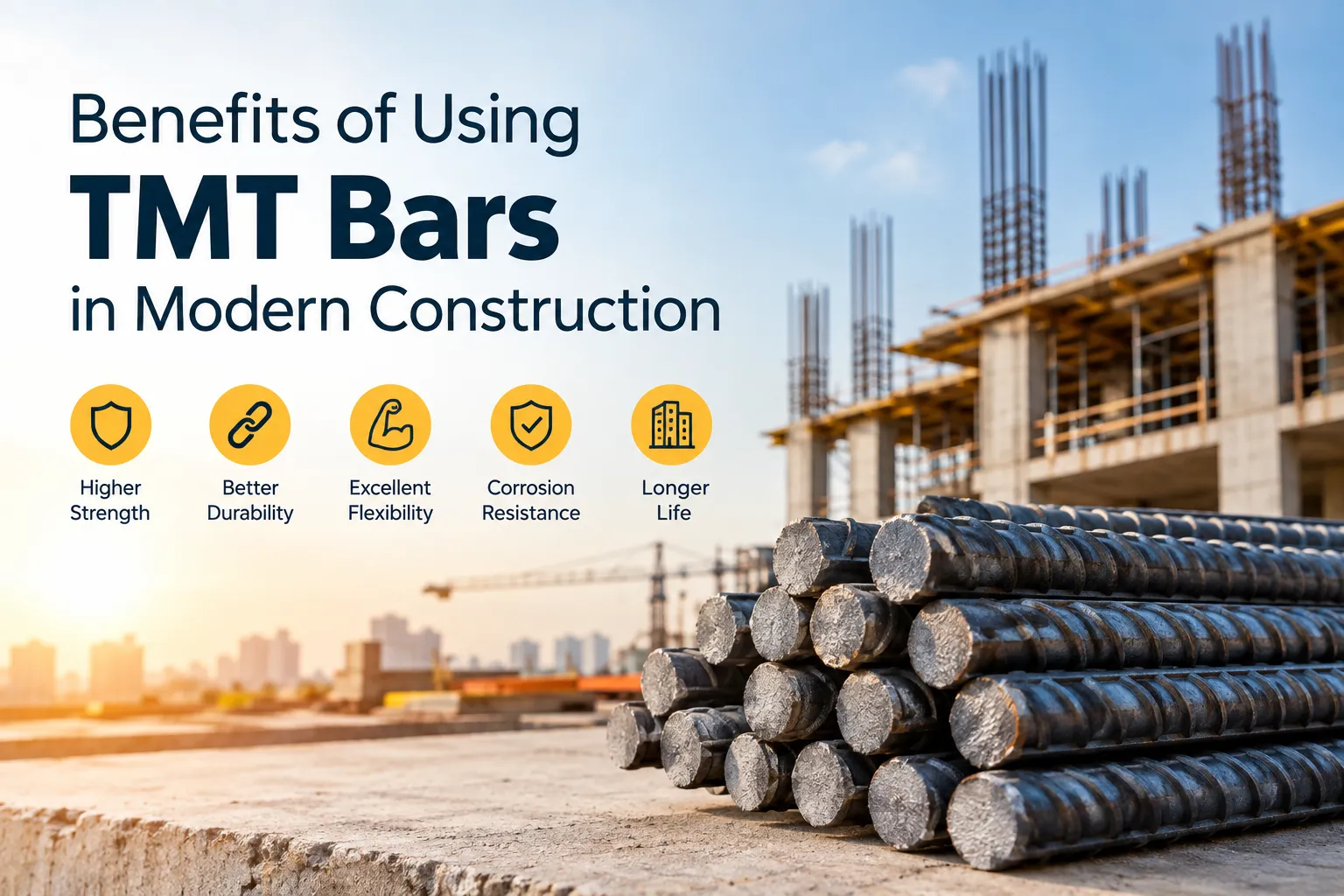

Every building, bridge, dam, and high-rise standing in India today has one thing in common beneath its surface — steel reinforcement. And in modern construction, that reinforcement is almost universally TMT bars. Thermo-Mechanically Treated bars have replaced every older form of reinforcement steel for good reason. They are stronger, more flexible, more durable, and more economical than the alternatives. Here is a comprehensive look at why TMT bars have become the non-negotiable choice for builders, contractors, and structural engineers across India.
Superior Tensile Strength Without Sacrificing Ductility
The defining advantage of TMT bars over conventional steel bars is their unique combination of high tensile strength and exceptional ductility — properties that older steel bars could rarely achieve simultaneously. The thermo-mechanical treatment process creates a bar with a hardened outer surface and a softer, more ductile core. The outer layer provides the strength to bear structural loads. The inner core provides the flexibility to bend without fracturing under stress.
This combination is critical for reinforced concrete structures that need to carry both compressive and tensile loads — columns, beams, slabs, and foundations all rely on this dual property to perform as designed. The TMT bar manufacturing process — particularly the quenching and tempering stages — is what creates this distinctive dual-property microstructure that makes TMT bars structurally superior to their predecessors.
Earthquake Resistance — Built Into the Material
India sits in one of the world's most seismically active regions. A significant portion of the country falls in earthquake zones three, four, and five — where buildings must be designed to withstand substantial ground movement without catastrophic structural failure. TMT bars are the material of choice for seismic-resistant construction precisely because their ductility allows structures to absorb and dissipate seismic energy rather than fracturing under it.
During an earthquake, a building reinforced with high-ductility TMT bars will bend and flex — giving occupants time to evacuate — rather than collapsing suddenly. Earthquake-proof homes built with TMT bars achieve this performance because the bar's elongation capacity — typically 14.5% or higher for Fe 500D grade — allows controlled deformation without failure. No other commonly available reinforcement material matches this seismic performance profile at comparable cost.
Excellent Weldability for Complex Structures
Traditional high-carbon steel bars were difficult to weld — their high carbon content made weld zones brittle and prone to cracking, requiring preheating and specialised welding procedures that added time and cost to construction. TMT bars have a significantly lower carbon equivalent, which makes them readily weldable using standard site welding procedures without the risk of brittleness at the weld zone.
This weldability is particularly valuable for columns, slabs, and pillars in high-rise and complex structural applications where reinforcement cages need to be assembled with precision and speed. It also simplifies lap joints and connection details in structures where bars of different diameters need to be joined — reducing both skilled labour requirements and construction time on site.
Corrosion Resistance for Long-Term Structural Integrity
Steel corrosion is one of the leading causes of premature structural degradation in India — particularly in coastal regions, areas with high humidity, and structures exposed to chemical environments. When steel corrodes, it expands, generating internal pressure that cracks the surrounding concrete, which in turn exposes more steel to moisture, accelerating the degradation cycle.
TMT bars' low sulphur and phosphorus content, combined with the controlled alloying of elements like chromium and copper in premium grades, gives them significantly better corrosion resistance than older reinforcement steel. Corrosion-resistant TMT bars for coastal and high-humidity applications are specifically designed to extend structural service life in the most aggressive environments — reducing the long-term maintenance and repair costs that conventional steel structures typically accumulate.
Better Bond Strength with Concrete
A reinforced concrete structure derives its strength from the composite action of concrete in compression and steel in tension — and that composite action depends entirely on the quality of the bond between the two materials. TMT bars feature a ribbed surface pattern that dramatically increases mechanical interlocking with the surrounding concrete compared to the smooth or lightly deformed bars of earlier generations.
This improved bond strength means that loads transfer more efficiently between the concrete and the steel reinforcement — which translates into better structural performance, reduced crack propagation, and greater overall rigidity in the finished structure. How TMT bars reinforce concrete at the material interaction level explains why this bonding characteristic is fundamental to the structural calculations engineers rely on for safe building design.
Fire Resistance
Construction materials in occupied buildings must be able to maintain structural integrity during a fire long enough to allow evacuation and emergency response. TMT bars perform significantly better than conventional steel bars under elevated temperatures. Their controlled carbon content and the tempering process used in their manufacture reduce the rate at which they lose tensile strength when exposed to heat.
While no steel is entirely fire-immune, TMT bars retain a greater proportion of their structural capacity at elevated temperatures than plain carbon steel — giving reinforced concrete structures a meaningful additional margin of safety in fire scenarios. For high-occupancy buildings, hospitals, educational institutions, and other critical facilities, this fire performance is a material specification that structural engineers account for explicitly.
Cost Efficiency Through Material Optimisation
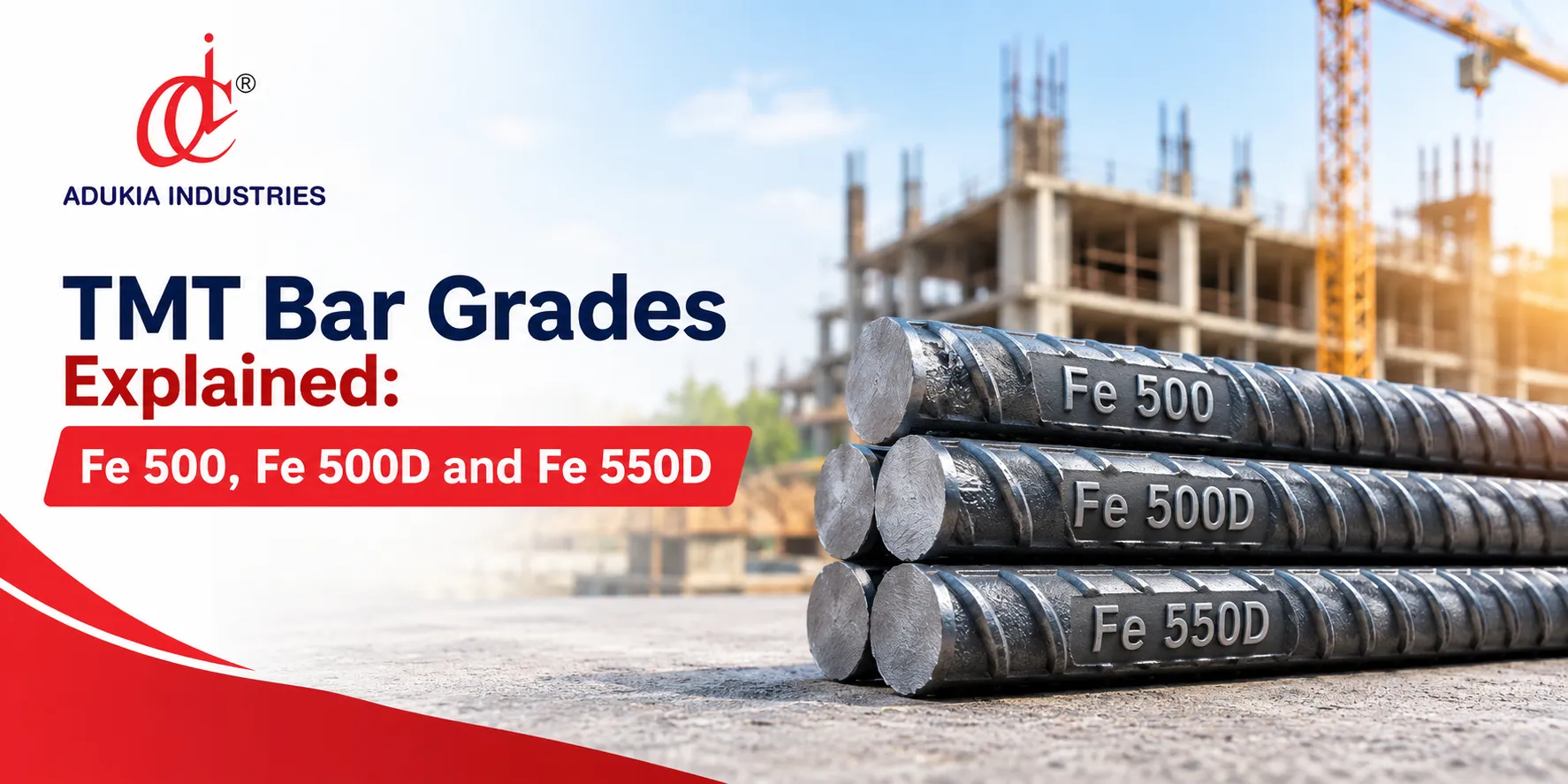
Higher-grade TMT bars — Fe 500, Fe 500D, Fe 550 — allow structural engineers to achieve the same load-carrying capacity with less steel than would be required using lower-grade bars. The higher yield strength means that a structure designed with Fe 500D bars will use measurably less reinforcement steel than the same structure designed with Fe 415 bars, without any compromise in structural performance.
This material optimisation directly reduces the steel procurement cost on any project where the design is properly calibrated to the bar grade being used. Cutting costs without compromising TMT bar quality is not a contradiction in terms — it is the result of selecting the correct grade for the application and optimising the structural design accordingly. The TMT bar grades and their applications guide provides clear direction on which grade is appropriate for which structural context.
Versatility Across All Construction Types
TMT bars are used across the full spectrum of construction in India — from single-storey rural homes and small commercial buildings to multi-storey residential towers, industrial structures, bridges, dams, and metro rail infrastructure. Their availability in a wide range of diameters — from 8mm to 32mm and beyond — and multiple strength grades means that a single product family covers the reinforcement needs of virtually every structural application.
8mm TMT bars provide the flexibility and tight bending radius needed for stirrups, ties, and secondary reinforcement in slabs and beams. Larger diameter bars carry the primary structural loads in columns, foundations, and heavy infrastructure. This versatility means contractors can standardise on a single trusted manufacturer — rather than sourcing different reinforcement materials for different applications — which simplifies procurement, quality control, and site logistics simultaneously.
Sustainability Credentials
Modern TMT bar manufacturing increasingly uses electric arc furnace technology that melts recycled scrap steel — making TMT bars one of the more sustainable structural materials available. The high strength-to-weight ratio of premium TMT grades also reduces the total steel consumed per structure, which reduces both the material's embodied carbon and its transport weight.
Adukia Industries' commitment to sustainable steel manufacturing includes GreenPro certification and continuous investment in cleaner production processes — ensuring that the environmental case for choosing TMT bars extends beyond the material properties into the manufacturing chain itself.
The Bottom Line
TMT bars are the dominant reinforcement choice in modern Indian construction for a straightforward reason: they deliver more strength, more flexibility, more durability, and better long-term structural performance than any alternative at a comparable cost. Whether you are building a family home, a commercial complex, a bridge, or a high-rise tower, the right TMT bar specification is one of the most important material decisions your project will make.

























Sign in to leave a comment.