
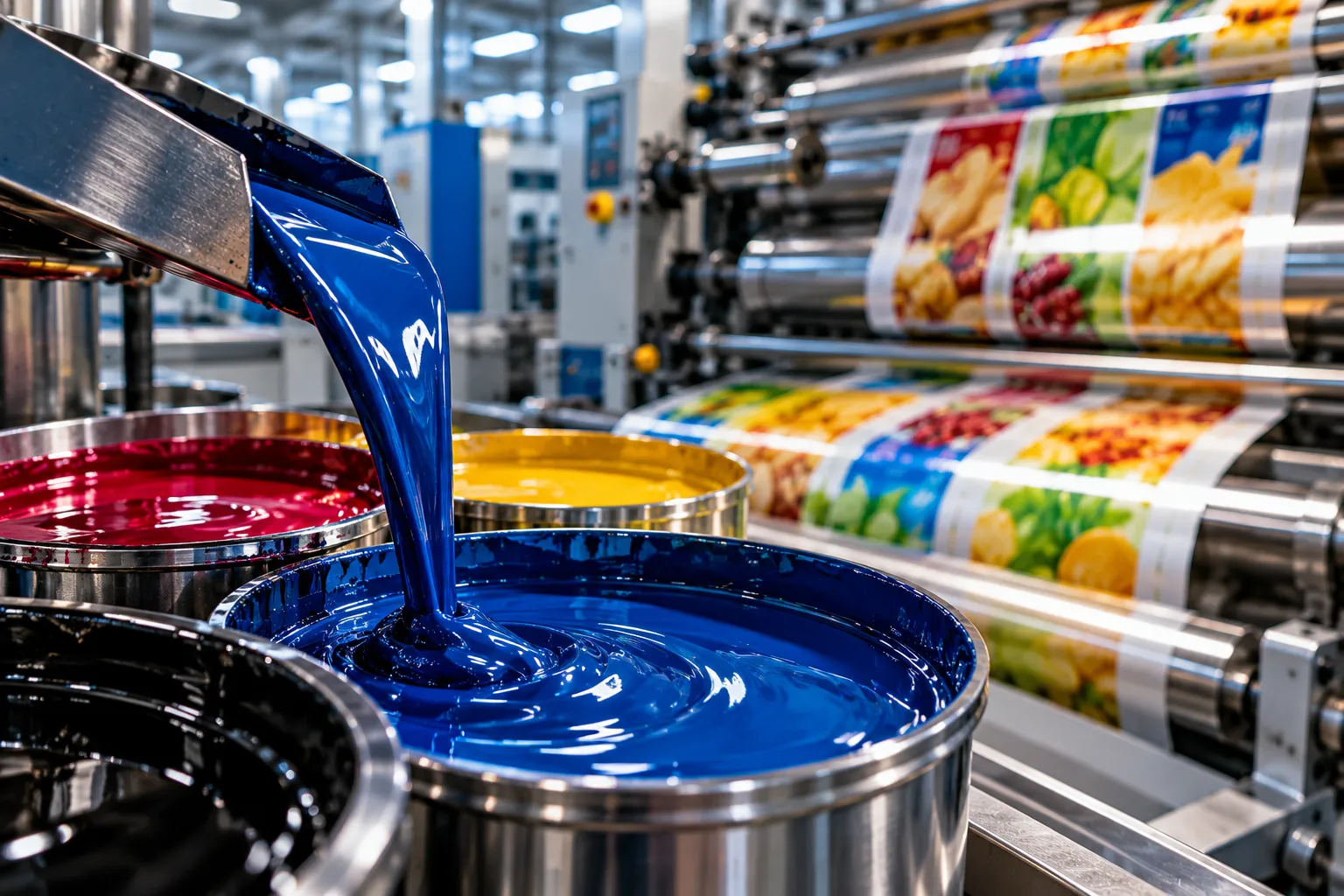
Packaging plays a major role in how customers recognise a product. Clear graphics, consistent colours and durable prints help businesses present their products professionally. Choosing the right water based ink for gravure printing can support these goals while helping manufacturers evaluate alternatives to conventional solvent-based systems.
For packaging businesses in India, ink selection depends on more than colour. Substrate compatibility, drying performance, adhesion and production requirements all influence the final result.
Why Is Water-Based Ink Important for Gravure Printing?
Gravure printing uses an engraved cylinder to transfer ink onto a surface. The ink must flow evenly through the cylinder's tiny cells and transfer consistently to produce clean, uniform prints.
A suitable water based ink for gravure printing uses water as its primary liquid carrier. Depending on the formulation, it may be suitable for paper, paperboard and selected treated films.
Businesses should confirm that the formulation matches their material and intended application before moving to commercial production.
Key Benefits for Packaging Manufacturers
1. Consistent Colour and Print Quality
Uniform colour is essential when printing packaging in large quantities. Suitable ink formulations and properly maintained press settings help produce clear graphics and consistent colour reproduction.
For example, a paper bag manufacturer needs the same brand colour across every batch. Testing the ink on the actual paper can help identify differences in absorption and coverage before production begins.
2. Reduced Dependence on Organic Solvents
Water-based formulations can reduce reliance on organic solvents compared with conventional solvent-based alternatives. This may help businesses manage solvent-related emissions and workplace exposure.
However, the full formulation matters. Water-based ink does not automatically mean solvent-free or harmless, so manufacturers should review product safety information.
3. Cleaning and Handling
Many water-based inks can be cleaned with water while they are still wet, subject to supplier instructions. Prompt cleaning helps prevent dried ink from accumulating on equipment.
Following the recommended storage, handling and cleaning procedures also helps maintain consistent ink performance.
How to Select the Right Ink
Before choosing an ink supplier, assess these important factors.
Substrate Compatibility
Identify the material you will print on, such as coated paper, uncoated paper, paperboard or treated film. Different surfaces have different wetting and adhesion characteristics.
Viscosity and Transfer
Ink viscosity affects how the formulation fills and releases from the cylinder's engraved cells. Ask the manufacturer for the recommended viscosity range and measurement method for your press.
Drying Requirements
Water-based inks may require adjustments to dryer temperature, airflow or production speed. Evaluate your equipment's capacity before changing from a solvent-based system.
End-Use Performance
Consider moisture resistance, rub resistance and lamination requirements. For food packaging, obtain the appropriate application-specific compliance documentation and assess the complete packaging structure.
Common Problems and Practical Solutions
Uneven colour may result from inconsistent ink transfer. Check ink viscosity and cylinder condition.
Poor adhesion can occur when the ink isn't compatible with the substrate. Check surface treatment and ink suitability.
Slow drying may be caused by insufficient airflow. Review dryer settings and press speed.
Smudging often occurs when the ink hasn't dried properly before winding. Check residual moisture to prevent ink transfer between layers.
Test one adjustment at a time to identify the cause and maintain consistent print quality.
Choosing a Printing Ink Supplier in India
When comparing flexographic printing inks in India, businesses should confirm that the products are designed for their particular printing process. Flexographic and gravure printing use different ink-transfer mechanisms, so formulations are not automatically interchangeable.
Ask potential suppliers about substrate compatibility, colour consistency, viscosity recommendations, drying conditions and technical support.
For a business evaluating Spectrainks, sharing the intended substrate, packaging application and production requirements can help establish whether a particular product is suitable. Confirm availability and specifications directly with the supplier before ordering.
How the Right Ink Supports Production
Selecting a suitable water based ink for gravure printing involves balancing print quality, equipment capability and finished-packaging requirements. Proper testing can help businesses identify potential problems before committing to a full production run.
A well-matched formulation, supported by appropriate press settings, can help maintain colour consistency and reliable printing performance.
If you're evaluating printing ink options for your packaging business, contact Spectrainks to discuss your requirements and request application-specific guidance.
Frequently Asked Questions
1. What is water-based gravure ink used for?
It is used to print graphics and text on suitable materials, including paper, paperboard and selected treated films.
2. Can water-based ink be used for flexible packaging?
Yes, certain formulations are suitable for selected films. Adhesion, drying and lamination compatibility must be tested.
3. What affects gravure ink drying?
Airflow, temperature, humidity, ink laydown, substrate properties and press speed can all influence drying.
4. How can I improve print adhesion?
Check substrate compatibility and surface treatment, then conduct adhesion tests under realistic production conditions.
5. What should I ask an ink supplier?
Ask about viscosity, substrate compatibility, drying requirements, resistance properties and technical documentation.
6. How do I select flexographic printing inks in India?
Evaluate substrate compatibility, printing conditions, end-use requirements, technical support and product documentation before choosing a supplier.
7. How can I contact Spectrainks?
Contact the company directly with your printing process, substrate and application details to confirm suitable products and specifications.





















Sign in to leave a comment.