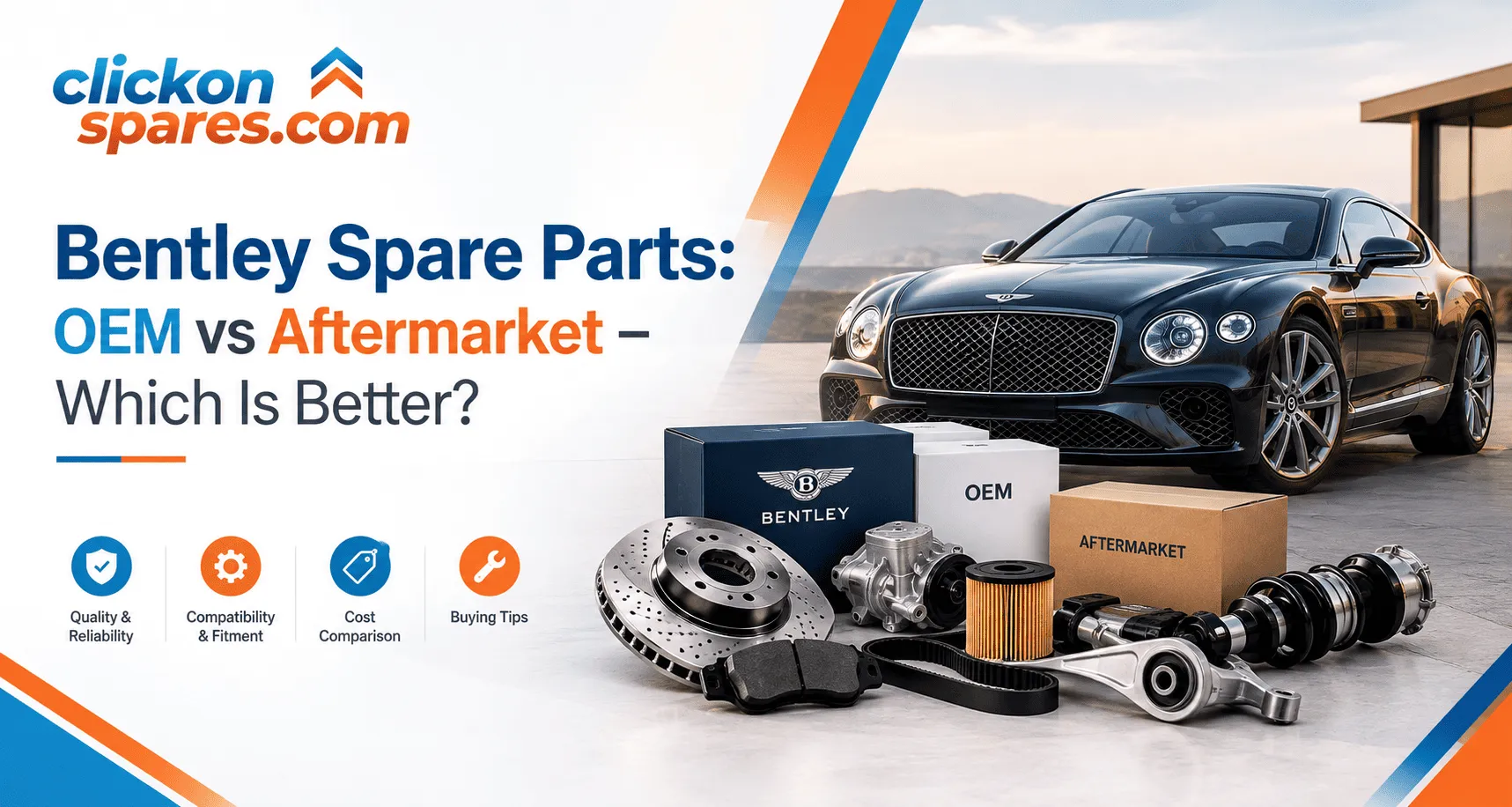

Owning a Bentley means enjoying a combination of luxury, advanced engineering, powerful performance, and exceptional craftsmanship. However, maintaining such a vehicle requires careful attention to the quality and compatibility of replacement components. When a part needs to be replaced, one of the most common questions owners face is whether to choose an OEM component or an aftermarket alternative.
Understanding the difference between these two options can help you make a more informed decision based on your Bentley model, the type of component required, your budget, and your long-term maintenance goals.
What Are OEM Parts?
OEM stands for Original Equipment Manufacturer. OEM components are produced according to specifications established for the original vehicle application. They are designed to match the required dimensions, materials, tolerances, and performance characteristics of the relevant vehicle system.
For luxury vehicles, precision is particularly important. Components such as suspension parts, braking components, sensors, cooling-system parts, electrical modules, and engine components need to work correctly with surrounding systems.
When considering Bentley spare parts, OEM components can be an attractive option when maintaining original specifications is the highest priority. Bentley states that its genuine parts are engineered for its vehicles and undergo quality testing, with a comprehensive two-year warranty subject to regional conditions.
What Are Aftermarket Parts?
Aftermarket parts are manufactured by companies other than the vehicle manufacturer or its original parts supplier. They are produced to fit a particular vehicle application and may be available from a wide range of brands and suppliers.
The aftermarket market includes both budget-oriented products and high-quality components manufactured by established automotive parts companies. Therefore, it is important not to assume that every aftermarket component has the same quality.
Some aftermarket products may provide a practical solution for older vehicles or components where several reputable alternatives are available. However, the buyer should carefully check specifications, manufacturer reputation, compatibility, warranty coverage, and installation requirements.
OEM vs Aftermarket: Key Differences
The best choice depends heavily on the specific part. Here are some important factors to consider.
1. Fit and Compatibility
OEM parts are developed for specific vehicle applications and are intended to match the original design requirements. This can reduce concerns about incorrect dimensions or compatibility.
With aftermarket products, compatibility can vary between manufacturers. A component may be listed as suitable for a particular Bentley model but still have differences in materials, dimensions, electrical characteristics, or design.
Before ordering Bentley spare parts, always confirm the exact model, production year, engine specification, VIN or chassis number, and original part number whenever possible.
2. Quality and Materials
Quality can vary considerably in the aftermarket market. Some manufacturers produce high-quality replacement components, while others focus primarily on lower prices.
OEM components generally provide greater confidence when maintaining original specifications is important. Bentley's official information states that its genuine parts are made to precise dimensions and are designed to preserve the vehicle's performance and identity.
For critical systems such as brakes, steering, suspension, engine management, and cooling, selecting a component based purely on the lowest price can create unnecessary risks.
3. Warranty
Warranty coverage is another important consideration. Genuine Bentley parts are covered by a comprehensive warranty, although terms and regional conditions can vary.
Aftermarket warranties depend on the manufacturer and supplier. Before purchasing, check the warranty period, exclusions, return conditions, and whether the warranty covers both the component and associated installation issues.
4. Price
One of the biggest reasons buyers consider aftermarket parts is price. OEM components can cost more because of their manufacturing specifications, brand support, distribution network, and testing requirements.
An aftermarket component may offer a lower initial purchase price. However, the cheapest option is not necessarily the most economical choice over the long term.
Consider the component's expected service life, warranty, installation cost, and potential consequences of premature failure rather than comparing purchase prices alone.
5. Resale and Vehicle Value
A Bentley is a premium vehicle, and maintenance history can influence how potential buyers perceive its condition. Keeping records of properly performed maintenance and using appropriate-quality components can help demonstrate that the vehicle has been cared for responsibly.
For owners planning to keep their vehicle for many years, maintaining the vehicle according to appropriate manufacturer specifications may be more important than saving money on individual replacement components.
When Should You Choose OEM Parts?
OEM is generally worth considering when the component is highly specialized, safety-critical, electronically integrated, or difficult to replace.
Examples may include:
- Engine management components
- Advanced electronic modules
- Specialized suspension components
- Sensors
- Transmission-related components
- Safety-system components
- Certain cooling-system components
- Model-specific body and interior components
For these applications, precise compatibility can be more important than simply finding a component that physically fits.
When Can Aftermarket Parts Make Sense?
Aftermarket components can be worth considering when there is a reputable manufacturer with proven quality and clear vehicle compatibility.
For example, certain maintenance components such as filters, wiper components, belts, or other commonly replaced items may have multiple credible suppliers.
However, quality should always come before price. Look for clear manufacturer information, correct specifications, reliable warranty coverage, and traceable product information.
It is also important to distinguish between a reputable aftermarket manufacturer and an unknown product with little information about its origin or quality.
How to Choose the Right Part for Your Bentley
Before purchasing any replacement component, follow a simple verification process:
1. Identify your exact Bentley model.
Continental GT, Flying Spur, Bentayga, Mulsanne, and other models can have different component requirements.
2. Check the production year.
Parts can change between model years and production revisions.
3. Use the VIN or chassis number.
A VIN or chassis number can provide valuable information for identifying the correct vehicle specification. Bentley's heritage parts system also allows parts information to be searched using vehicle details and part numbers.
4. Confirm the original part number.
When available, matching the original part number is one of the most effective ways to reduce compatibility problems.
5. Compare specifications, not just prices.
Check dimensions, materials, manufacturer information, warranty, and application details.
6. Ask a specialist when uncertain.
A qualified parts professional can help verify whether a component is suitable before you place an order.
How ClickOnSpares Can Help
Finding the correct component can sometimes be more difficult than deciding between OEM and aftermarket. This is where a specialized parts sourcing service can be useful.
ClickOnSpares provides an online platform for sourcing automotive components and can help customers identify suitable parts using vehicle information, VIN details, or part numbers. For Bentley owners, this can make the sourcing process more organized, particularly when a specific component is difficult to identify.
When using any online parts supplier, provide as much accurate vehicle information as possible. Sharing the model, year, engine details, VIN, chassis number, or existing part number can significantly improve the chances of finding the correct component.
Final Verdict: OEM or Aftermarket?
There is no single answer that applies to every replacement component. OEM parts are generally the stronger choice when exact specifications, original compatibility, and manufacturer-backed support are priorities.
High-quality aftermarket parts can also be suitable in certain applications, particularly when they come from established manufacturers and meet the required specifications.
Ultimately, choosing the right Bentley spare parts should involve more than comparing prices. Consider compatibility, quality, warranty, manufacturer reputation, installation requirements, and the importance of the component to your vehicle's safety and performance.
For specialized or electronically integrated components, prioritizing precise compatibility can help avoid expensive mistakes. For routine replacement items, carefully selected aftermarket alternatives may provide a practical balance between quality and cost.
The smartest approach is to verify the part before purchasing, use reliable vehicle information, and choose a component that matches the requirements of your specific Bentley rather than simply selecting the cheapest available option.
Frequently Asked Questions
1. Are OEM parts better than aftermarket parts for Bentley vehicles?
OEM parts are designed around the vehicle's original specifications and can provide strong confidence in compatibility. However, reputable aftermarket manufacturers can also produce quality components. The right choice depends on the specific part, manufacturer, application, and vehicle requirements.
2. How can I identify the correct Bentley replacement part?
Start with your Bentley model, production year, engine specification, VIN or chassis number, and original part number. These details can help a supplier identify the correct application and reduce the possibility of ordering an incompatible component.
3. Are aftermarket parts safe for a Bentley?
A reputable aftermarket component can be suitable when it meets the required specifications and is correctly matched to the vehicle. For safety-critical or highly specialized systems, however, owners should pay particular attention to manufacturer quality, compatibility, certification where applicable, and professional installation.
4. Why are some Bentley parts more expensive than aftermarket alternatives?
OEM components can have higher prices because they are produced to specific manufacturer requirements and supported through the manufacturer's parts and service network. Aftermarket products have different manufacturing, distribution, and branding structures, which can result in a lower purchase price.
5. Should I use the VIN when ordering Bentley parts?
Yes. Providing the VIN or chassis number can be extremely useful when identifying the correct component. Vehicle specifications can vary by model year and configuration, so VIN-based verification can help reduce compatibility errors.
6. Where can I source replacement parts for a Bentley?
You can source replacement components through authorized repair networks, specialist automotive parts suppliers, and established online parts platforms. When using an online supplier, provide accurate vehicle and part information and verify compatibility before purchasing.
























Sign in to leave a comment.