

Jaisalmer rises out of the Thar Desert like a mirage carved in golden sandstone. Planning a journey through this historic corner of Rajasthan requires balancing time between centuries-old architecture inside the fort walls and the serene expanse of the open dunes. To help travelers experience the authentic culture, local flavors, and dramatic landscapes of western Rajasthan, this curated travel plan outlines a practical route based on on-ground desert hospitality and regional insights.
Day 1: Exploring the Living Fort and Heritage Mansions
Begin your first morning at the heart of the city: Jaisalmer Fort, locally known as Sonar Qila. Built in 1156 AD by Rawal Jaisal, it remains one of the world’s few inhabited fortifications. Wandering through its narrow alleys early in the day allows you to witness daily life unfold within the sandstone walls before tourist traffic peaks. Pay attention to the intricate stonework of the royal palace, Raj Mahal, and visit the seven interconnected Jain temples dating from the twelfth to fifteenth centuries, celebrated for their delicate carvings and peaceful marble sanctuaries.
For lunch, head to the fort ramparts or nearby city rooftops to sample regional Marwari fare like Gatte ki Sabzi and Ker Sangri paired with hot bajra rotis.
During the afternoon, explore the magnificent havelis located just below the fort:
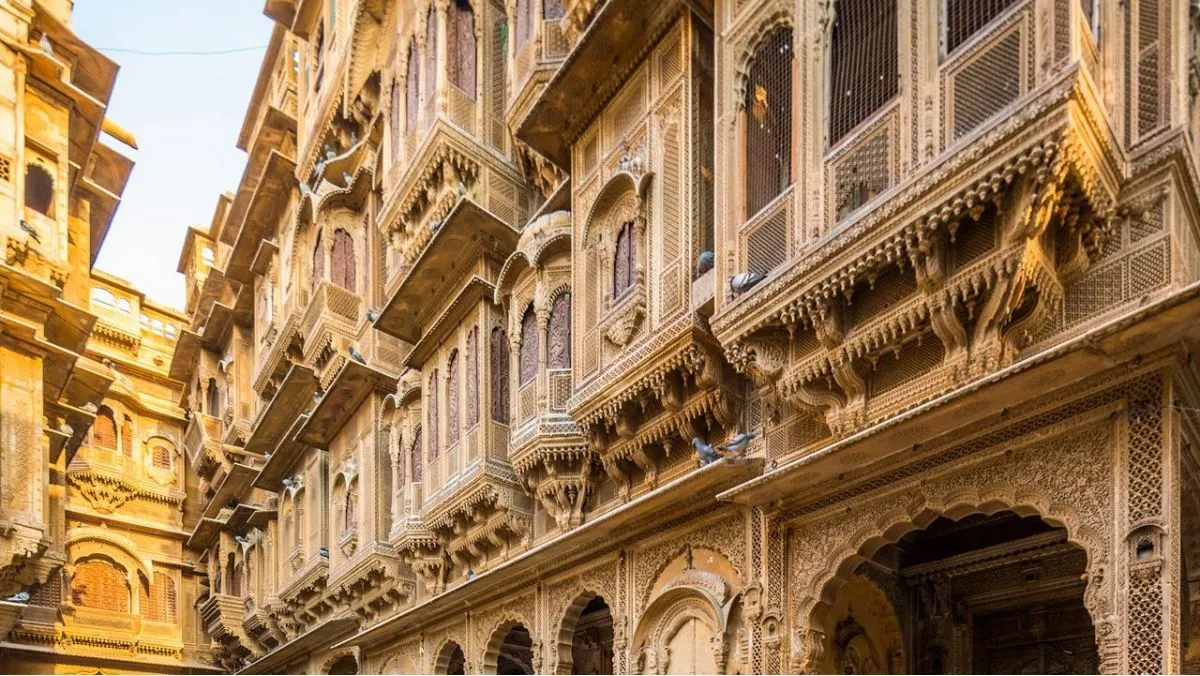
- Patwon Ki Haveli: A cluster of five smaller palaces featuring ornate jharokhas (balconies) and stone latticework that once belonged to wealthy brocade merchants.
- Salim Singh Ki Haveli: Notable for its distinct peacock-shaped roof structure and narrow stone corridors.
- Nathmal Ki Haveli: Famous for being carved by two brothers who worked simultaneously on opposite sides, creating subtle asymmetries in the facade.
Conclude the day at Gadisar Lake during sunset. Built as a rainwater conservation reservoir in the fourteenth century, the lake is flanked by chhatris, shrines, and Ghats where migratory birds gather during winter months.
Day 2: Transition to the Thar Dunes and Desert Hospitality
Start day two with a short excursion outside the main town to Bada Bagh. This historical site holds royal cenotaphs honoring past Bhatti rulers, set against a backdrop of distant wind turbines. From there, travel toward Kuldhara, an abandoned seventeenth-century village steeped in folklore and deserted overnight by the Paliwal Brahmins. The crumbling mud-brick ruins offer a sobering look into medieval desert community planning.
By mid-afternoon, drive approximately 40 kilometers southwest toward the Sam Sand Dunes to check into a peaceful desert camp in jaisalmer like Magra Desert Camp. Opting for a camp situated away from noisy commercial clusters ensures an authentic desert stay that focuses on tranquility, local traditions, and starry horizons.
After settling into your well-appointed swiss tent in Jaisalmer, take part in guided excursions across the ripples of the dunes. A relaxed camel safari through the crests of the sand provides panoramic sunset vistas over the Thar, while thrill-seekers can schedule a 4x4 dune-bashing drive with experienced desert navigators.
As evening sets in, traditional camps host cultural gatherings around an open bonfire. Talented local musicians perform soulful Manganiyar and Langa folk songs accompanied by the resonant dholak and kamaicha, while Kalbelia dancers showcase heritage performances under the open night sky. Conclude with a traditional Rajasthani dinner featuring Dal Baati Churma, prepared fresh over desert hearths.
Day 3: Desert Sunrises, Local Crafts, and Departure
Wake up before dawn to witness first light spreading across the sand dunes. The morning air in the Thar is cool, and the peaceful silence of dawn reveals distinct wind patterns etched into the sand overnight. After a hot breakfast at camp, explore more outdoor pursuits. The perimeter of the dunes offers spaces for quad biking, parasailing, and customized adventure activities in Jaisalmer for active visitors seeking excitement before returning toward town.
On the drive back toward Jaisalmer city, stop by local handicraft cooperatives and artisan stalls:
- Hand-woven camel-wool rugs and dhurries known for high durability in cold desert climates.
- Mirror-work embroidery and block-printed textiles crafted by women from surrounding villages.
- Yellow sandstone tableware, fossils, and carvings unique to the Jaisalmer basin.
Complete your trip with a final stop at the Jaisalmer War Museum along the Jodhpur-Jaisalmer highway, paying tribute to the valor of the Indian Armed Forces during historical desert campaigns, before your onward journey.
Practical Tips for Your Jaisalmer Trip
- Ideal Season: October through March offers pleasant daytime temperatures and cool desert evenings. Peak winter (December–January) requires warm layers for nighttime dune stays.
- Desert Essentials: Carry high-SPF sunscreen, sunglasses, comfortable walking shoes, and adequate hydration.
- Transport: Private cabs are the most reliable option for traveling between Jaisalmer city and the Sam Sand Dunes. Ensure your desert safari drivers are local and experienced with sand driving conditions.


























Sign in to leave a comment.