

The crypto market moves fast. One week Bitcoin is pushing new highs. The next, altcoins are eating up the narrative and outperforming everything.
If you're trying to figure out where the real opportunities are — and how to approach them without blowing up your account — this guide breaks it down simply. We'll cover Bitcoin's role as a market anchor, which altcoin categories are worth watching, how leverage trading actually works, and what separates traders who survive from those who don't.
Why Bitcoin Still Sets the Tone for Every Altcoin
Before anything else, you need to understand Bitcoin's relationship with the rest of the market.
When Bitcoin is climbing, it tends to bring altcoins with it — first slowly, then aggressively. When Bitcoin drops hard, altcoins usually fall further and recover slower. This pattern has repeated across multiple market cycles.
Bitcoin dominance — the percentage of total crypto market cap held in BTC — acts as a compass. When dominance rises, money is flowing into Bitcoin. When it falls, traders are rotating into altcoins. Watching this number is one of the simplest ways to get a feel for where the market mood is sitting.
In 2026, Bitcoin's position as a store-of-value narrative has only strengthened. Institutional flows, ETF products, and macro hedging behavior have made BTC less of a speculative trade and more of a macro asset. That changes how you think about it — and it changes how you think about what altcoins might do next.
Altcoin Categories That Actually Matter
Not all altcoins are the same. Grouping them by what they actually do makes it easier to evaluate them.
Layer 1 Blockchains:
These are the base networks. Ethereum is the most established. Solana, Avalanche, and others compete for developer attention and transaction volume. L1 performance is closely tied to ecosystem activity — how many projects are building on them, how much value is locked in DeFi, and how fast the network handles transactions.
DeFi Tokens:
Decentralized finance protocols have their own governance tokens. Their value is tied to protocol revenue, total value locked (TVL), and community activity. These tend to be more volatile than their parent chains.
Layer 2 Scaling Solutions:
Projects that sit on top of Ethereum and make it faster and cheaper. Arbitrum, Optimism, and Base are examples. As Ethereum usage grows, these benefit from the overflow.
Meme and Sentiment-Driven Coins:
Dogecoin, Shiba Inu, and their successors. These run on social momentum, not fundamentals. They can produce extreme short-term gains but are hard to hold through corrections.
Real-World Asset (RWA) Tokens:
One of the faster-growing narratives in 2026. These represent ownership of physical assets — real estate, treasury bonds, commodities — tokenized on-chain. Institutional interest here is real.
How Leverage Trading Works (And Why Most People Get It Wrong)
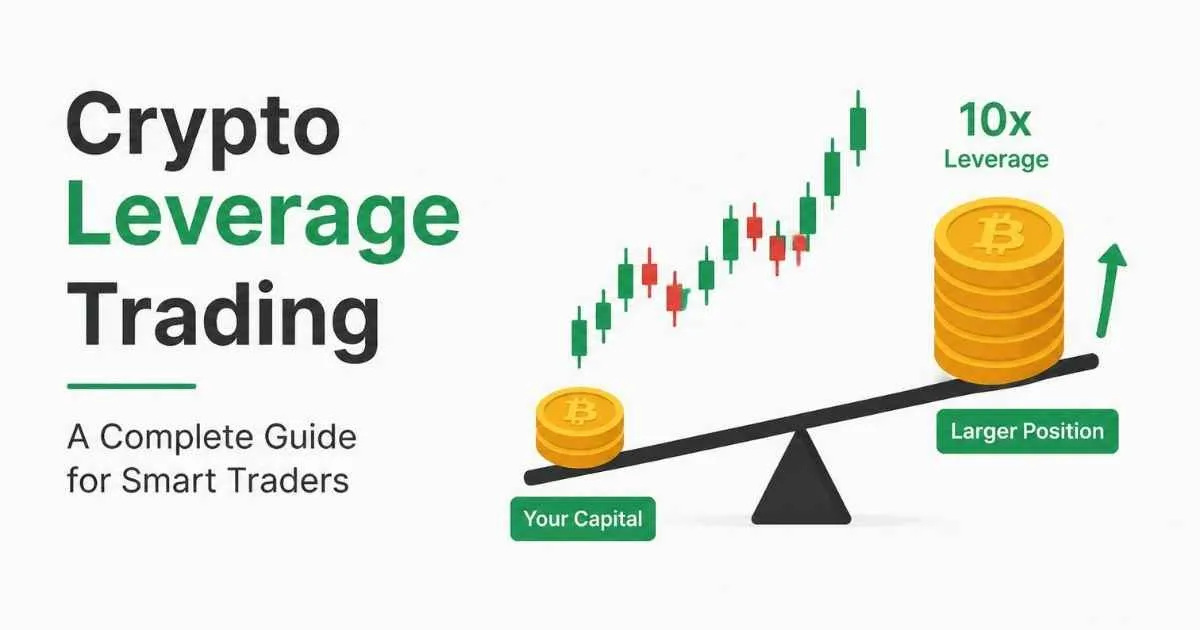
Leverage lets you control a larger position than your capital would normally allow. It sounds appealing. It's also where most retail traders lose money.
Here's the simple version:
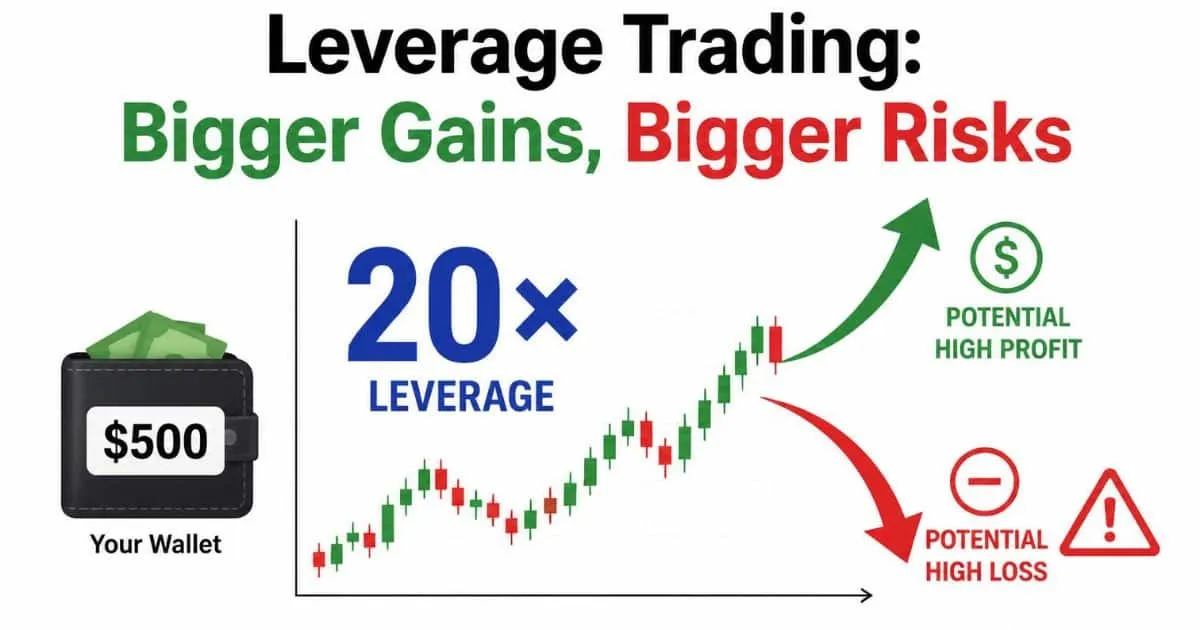
If you have $500 and use 10x leverage, you're controlling a $5,000 position. A 5% price move in your favor turns into a 50% gain. A 5% move against you wipes out your entire stake — and you get liquidated.
At 30x leverage, the margin for error is razor-thin. A 3% adverse move can wipe your position entirely. Crypto moves 3% in a matter of minutes.
What experienced traders actually do:
- They size positions small — often 1–3% of total capital per trade
- They use stop-losses before they enter, not after
- They understand funding rates and how they erode profits in futures positions held overnight
- They don't chase entries after big moves have already happened
Platforms that offer high leverage — some offering up to 30x on crypto assets — are worth studying carefully before you use them. One resource that covers this in detail is crypto30xx.it.com, which includes market data, leverage mechanics, and a breakdown of how 30x exposure affects different asset types.
The point isn't to avoid leverage. It's to understand that it amplifies both outcomes — gains and losses — with equal force.
Common Mistakes Crypto Traders Make in Bull and Bear Markets
In bull markets:
- Overextending into small-cap coins with no liquidity
- Using too much leverage because "everything is going up"
- Ignoring exit plans because gains feel permanent
- FOMO-buying after 10x moves have already happened
In bear markets:
- Panic selling at the bottom
- Averaging down into assets with no recovery path
- Holding meme coins that have lost their narrative
- Trying to short everything and getting caught in relief rallies
The psychological trap cuts both ways. Bull markets make bad risk management feel smart. Bear markets make rational positions feel hopeless.
The traders who build consistent results over time share one habit: they define their rules before the market moves, not during.
Reading the Market: On-Chain Data vs. Price Action
Price alone tells you what happened. On-chain data can hint at what's coming.
A few metrics worth tracking:
Exchange inflows/outflows:
When large amounts of BTC or ETH move onto exchanges, it often signals selling pressure. When they move off exchanges into wallets, it suggests long-term holding.
Open interest:
In futures markets, rising open interest alongside rising price is generally healthy. Rising open interest with price going sideways or falling often precedes a liquidation cascade.
Funding rates:
In perpetual futures, positive funding means longs are paying shorts. When funding gets very high, it signals an overcrowded long trade that may unwind sharply.
Active addresses:
Growing network activity usually precedes price appreciation for L1 assets. Declining activity is a yellow flag.
These aren't crystal balls. But using multiple data points is always better than reacting to price charts alone.
How to Build a Crypto Portfolio That Doesn't Keep You Up at Night
You don't need to pick the perfect coin. You need a structure you can hold through volatility without making panic decisions.
A simple framework:
Core (50–60%) — Bitcoin and Ethereum. These are the most liquid, most institutionally supported, and most likely to survive multi-year downturns.
Established Altcoins (20–30%) — assets with proven track records, real utility, and deep liquidity. Think top-20 by market cap, with actual ecosystem activity.
Higher-Risk Plays (10–20%) — smaller caps, newer narratives, leverage positions if you use them. This is money you can afford to lose entirely.
Rebalance periodically. Don't let one winning position become 80% of your portfolio without deciding that's what you actually want.
And never allocate money you need in the short term. Crypto markets can stay irrational — in both directions — for longer than most people expect.
Final Thoughts
The crypto market rewards people who do their homework and punishes those who treat it like a casino. That said — it's also genuinely one of the few asset classes where informed risk-taking can produce asymmetric returns.
Bitcoin remains the foundation. Altcoins are where the volatility lives. Leverage is a tool — a sharp one that cuts both ways.
If you want a deeper look at how leverage mechanics work across different asset classes, including real-time market data and a breakdown of 30x trading exposure, the platform at crypto30xx.it.com is a solid reference point.
Trade what you understand. Risk what you can afford to lose. And keep position sizes honest.
Disclaimer: This article is for informational purposes only and does not constitute financial advice. Cryptocurrency trading carries significant risk. Always conduct your own research before making investment decisions.












Sign in to leave a comment.