
Finding the best beer company in India is not simply about choosing a beer with a good taste. A strong beer manufacturer needs to maintain consistent quality, follow applicable regulations, use efficient brewing systems, and make sure its products reach the market in good condition.
India has a large and expanding beer industry, with established manufacturers and new brands competing for consumer attention. As the market develops, quality, manufacturing capabilities, product consistency, and distribution have become increasingly important.
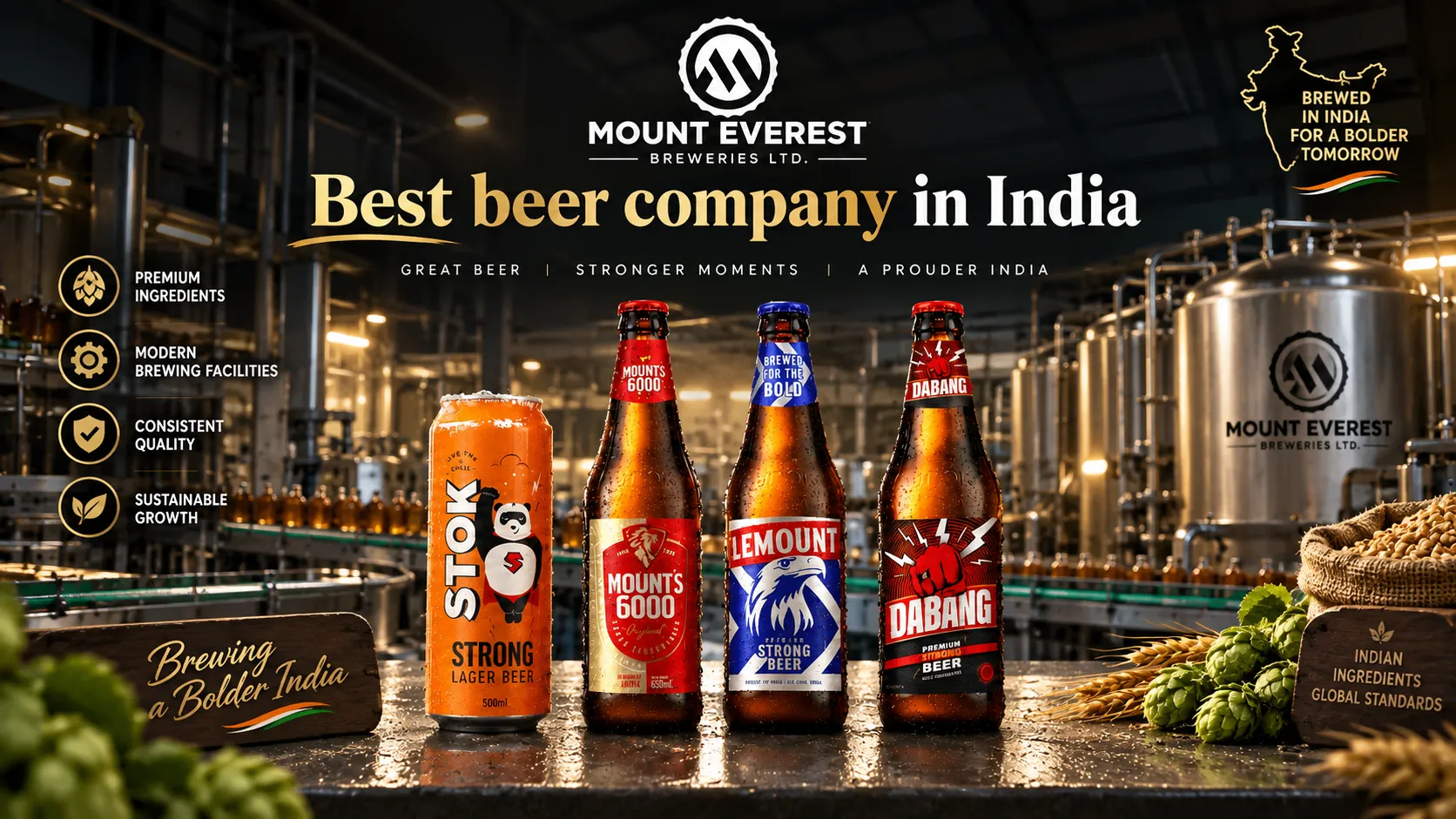
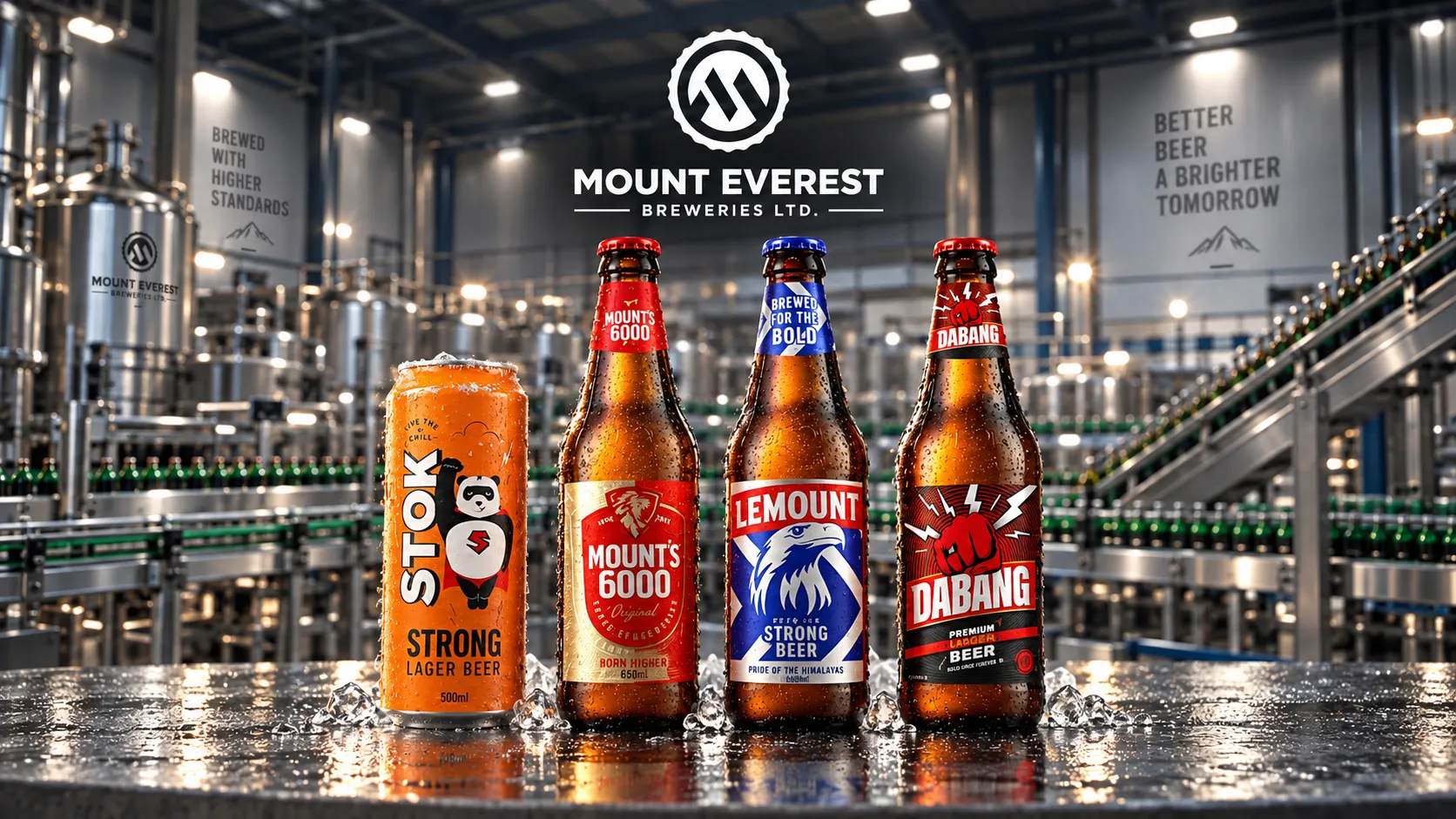
Mount Everest Breweries Limited is one of the Indian companies operating in this competitive brewing sector. With experience in beer manufacturing and a portfolio that includes STOK, Lemount, Mount's 6000, and Dabang, the company is part of India's evolving beer manufacturing landscape.
What Defines the Best Beer Company in India?
The best beer company focuses on the complete journey of a beer, from selecting ingredients to delivering the finished product.
Good brewing starts with suitable raw materials. Malt, hops, yeast, water, and other ingredients must be managed carefully because changes in quality can affect the taste, aroma, appearance, and consistency of the final beer.
However, ingredients are only one part of the equation. Brewing temperature, fermentation conditions, filtration, carbonation, packaging, storage, and transportation can all influence the final product.
A professional brewery therefore needs reliable processes at every stage. Consistency allows consumers to know what to expect when they purchase the same beer again.
Why Is Quality Control Important in Beer Manufacturing?
Quality control is central to commercial brewing. A brewery producing beer at scale cannot rely only on tasting the finished product. It needs structured processes and testing throughout production.
Brewers monitor factors such as fermentation conditions, alcohol content, clarity, carbonation, and microbiological quality. These checks help identify problems before products reach consumers.
Clean production environments and controlled equipment also help reduce contamination risks. Consistent procedures are particularly important when a company produces large volumes of beer for different markets.
For a company seeking to build a long-term beer brand, quality control is not just a production requirement. It is an important part of maintaining consumer confidence.
What Role Does FSSAI Compliance Play?
Beer manufacturing in India operates within a regulatory framework that includes food-safety requirements and state-level alcohol regulations.
FSSAI requirements are relevant to the safety, composition, packaging, and labelling of alcoholic beverages. Beer manufacturers must also comply with applicable excise requirements in the states where their products are manufactured or sold.
This makes regulatory compliance an important part of professional beer manufacturing.
A brewery with strong internal processes can manage these requirements more effectively while maintaining consistent production standards.
How Does the Brewing Process Work?
Commercial brewing begins with preparing malted grains. The grains are milled and mixed with hot water during the mashing stage. This allows enzymes to convert starch into fermentable sugars.
The resulting liquid, known as wort, is separated and boiled. Hops can be added during the boiling stage to contribute bitterness and aroma.
The wort is then cooled before yeast is introduced. During fermentation, yeast converts sugars into alcohol and carbon dioxide.
After fermentation, the beer can undergo conditioning, filtration, carbonation, and other processing steps depending on the product. It is then packaged and prepared for distribution.
Modern breweries use controlled equipment and monitoring systems to make this process more consistent and efficient.
Why Does Consistency Matter to Beer Brands?
Imagine buying the same beer several times and getting a noticeably different taste each time. That inconsistency can affect consumer trust.
This is why breweries pay close attention to production parameters. Fermentation temperature, yeast condition, brewing time, ingredient specifications, and storage conditions can all affect the final beer.
Large-scale manufacturers need especially strong controls because they may produce the same product in significant quantities. A standardized production process helps maintain a consistent experience across different batches and markets.
For the best beer company, consistency is therefore just as important as creating an appealing product.
How Do Packaging and Storage Affect Beer Quality?
Packaging does more than make a beer look attractive. It helps protect the product during storage, transportation, and retail.
Cans provide strong protection from light and offer a tightly sealed package. Bottles remain widely used and can provide a distinctive presentation for different beer brands.
Storage conditions also matter. Excessive heat, light exposure, and poor handling can affect beer quality over time.
A responsible brewery therefore considers packaging, warehousing, transportation, and retail conditions as part of the overall product-quality process.
Macro Brewery vs. Microbrewery: How Are They Different?
The difference between a macro brewery and a microbrewery is primarily related to scale and business model.
A macro brewery typically produces beer in large quantities and distributes it through a broad network. Its operations require significant manufacturing capacity, standardized processes, efficient packaging, and extensive logistics.
A microbrewery generally produces smaller quantities and may concentrate on local markets. It can have greater flexibility to introduce specialty recipes, seasonal beers, and experimental styles.
Both models have their own place in the beer industry. The right model depends on the target market, production requirements, product portfolio, and distribution strategy.
Why Does Distribution Matter?
A beer manufacturer can produce a high-quality product, but that product still needs to reach consumers efficiently.
Distribution involves more than transportation. It includes inventory planning, warehousing, distributor relationships, retail availability, and compliance with state-specific regulations.
For beer companies operating across multiple Indian markets, managing these systems effectively can be challenging because alcohol regulations and distribution structures vary between states.
Reliable distribution helps ensure that products remain available to retailers and consumers while supporting a consistent market presence.
Mount Everest Breweries Limited and the Indian Beer Market
Mount Everest Breweries Limited has been part of India's beer manufacturing industry since 1999. Headquartered in Indore, Madhya Pradesh, the company focuses on beer manufacturing and has developed a portfolio of brands serving different market segments.
Its brands include STOK, Lemount, Mount's 6000, and Dabang. The company is also involved in contract manufacturing and serves markets in India and internationally.
The company's presence reflects the broader development of India's beer manufacturing sector, where production capabilities, quality systems, brand development, and distribution all contribute to business growth.
For consumers and business partners researching the best beer company, understanding a manufacturer's complete operations provides more useful information than looking at brand popularity alone.
What Should Buyers Consider Before Choosing a Beer Brand?
Consumers naturally consider taste, price, availability, packaging, and beer style when choosing a product. Business buyers and distributors may also consider manufacturing capacity, supply reliability, quality systems, and regulatory compliance.
A well-managed beer company should be able to demonstrate consistency in its manufacturing process and maintain appropriate controls throughout production and distribution.
The combination of product quality and operational reliability can help distinguish an established manufacturer from companies that are unable to maintain consistent standards as they grow.
The Future of Beer Manufacturing in India
India's beer market continues to evolve as consumer preferences change and manufacturers introduce different products and packaging formats.
Technology is also influencing modern breweries. Automated production systems, laboratory testing, improved packaging, inventory management, and data-driven quality monitoring can help manufacturers improve efficiency and consistency.
At the same time, consumers are becoming more interested in product quality, flavour, packaging, and brand identity.
This creates opportunities for breweries that can combine efficient manufacturing with strong product development and reliable distribution.
Conclusion
The best beer company in India is not defined by one feature. It is built through consistent brewing, quality control, regulatory compliance, efficient manufacturing, suitable packaging, and dependable distribution.
Taste may be what initially attracts a consumer, but consistency is what can encourage repeat purchases. For manufacturers, maintaining that consistency across large production volumes requires careful control of ingredients, equipment, fermentation, packaging, storage, and logistics.
Mount Everest Breweries Limited is part of this growing Indian beer manufacturing landscape, with established experience, multiple beer brands, and capabilities extending across beer manufacturing and contract production.
As India's beer industry continues to develop, manufacturers that combine quality, consistency, innovation, and reliable supply will remain an important part of the market.

























Sign in to leave a comment.