Best Embroidery Digitizing Service Provider Company

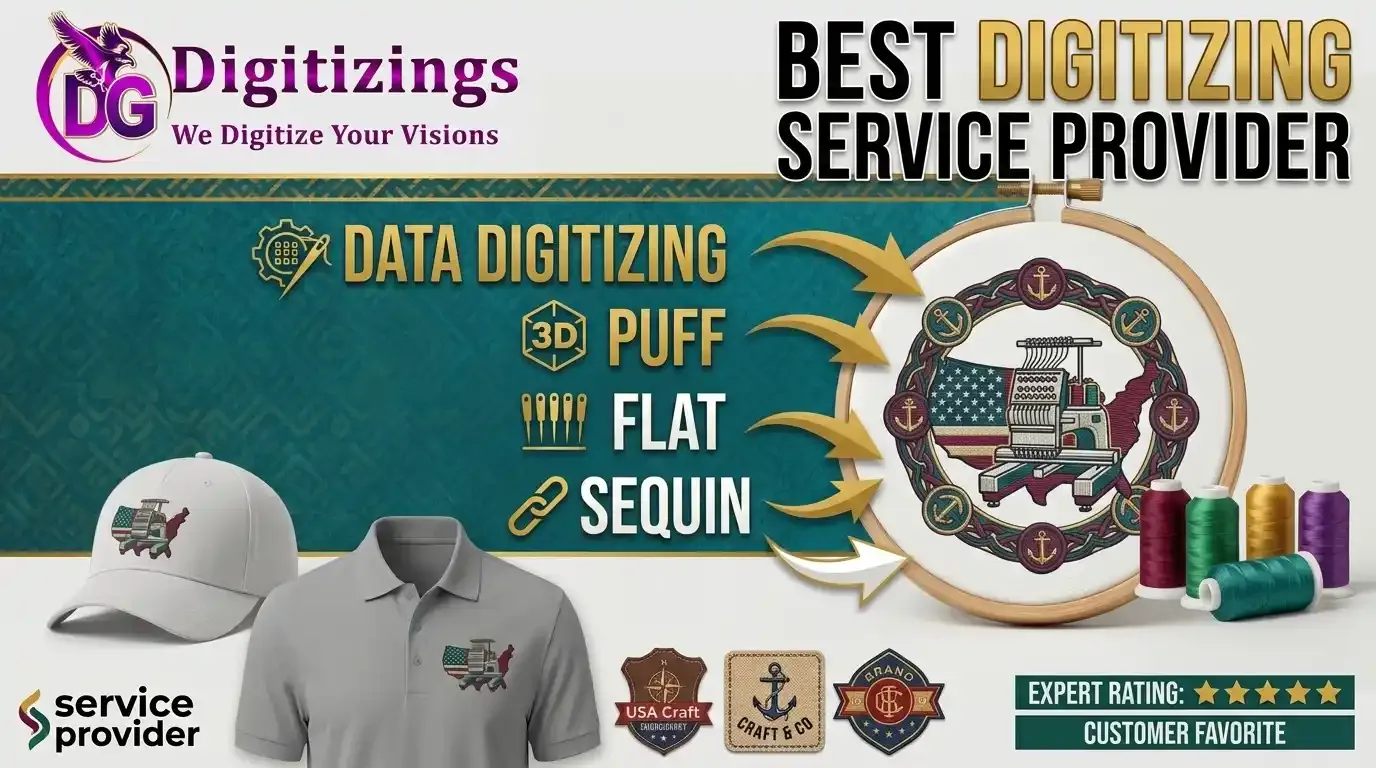
Finding the best embroidery digitizing service provider company can make a significant difference in the final quality of custom embroidery. A logo, illustration, name, or artwork may look perfect as a digital image, but embroidery requires something very different: a carefully planned sequence of stitches that can be reproduced accurately by an embroidery machine.
Professional digitizing determines how the design will be built with thread. Stitch types, density, underlay, stitch direction, compensation, sequencing, colors, and final size all influence the finished result. A well-prepared file can produce clean edges, readable lettering, smooth fills, and reliable registration, while a poorly prepared file can result in gaps, puckering, thread breaks, distorted details, and unnecessary production costs.
Because many embroidery digitizing companies now offer online ordering, fast turnaround, affordable pricing, and a wide variety of services, choosing the right provider can be difficult. The best choice is not necessarily the company with the lowest price or the fastest delivery. It is the provider that offers the right balance of quality, technical experience, service range, pricing, communication, and production reliability.
What Is an Embroidery Digitizing Service Provider?
An embroidery digitizing service provider converts artwork into a machine-readable embroidery file.
A regular image contains visual information such as colors, shapes, lines, and text. An embroidery machine needs information about needle movement, stitch placement, stitch direction, color changes, sequencing, and other technical details.
A professional digitizer interprets the artwork and recreates it using embroidery objects.
The process may involve:
- Running stitches
- Satin stitches
- Fill stitches
- Underlay
- Borders
- Color sequencing
- Pull and push compensation
- Density adjustments
- Lettering modifications
- Fabric-specific construction
The finished file is designed to tell the embroidery machine exactly how the artwork should be stitched.
Why Choosing the Right Provider Matters
The digitizing file is the foundation of the final embroidered product.
Even a good embroidery machine cannot always compensate for a poorly constructed design file.
An unsuitable file can lead to:
Poor Stitch Coverage
Fabric may remain visible in areas that should appear solid.
Excessive Density
Too many stitches can make embroidery heavy, stiff, or prone to puckering.
Misalignment
Poor sequencing and compensation can cause borders, fills, and other design sections to shift.
Unreadable Lettering
Small text may become difficult to recognize when it is not digitized specifically for embroidery.
Unnecessary Production Time
Extra stitches, trims, and color changes can increase production time and thread consumption.
Choosing an experienced provider can help reduce these issues before the design reaches the embroidery machine.
What Makes the Best Embroidery Digitizing Company?
There is no single universal definition of the "best" provider, because customers have different requirements. However, certain qualities consistently matter.
Technical Digitizing Expertise
A strong provider should understand how stitches behave on actual fabric rather than simply converting artwork automatically.
High-Quality Stitch Construction
The file should use suitable stitch types, density, underlay, and sequencing for the design.
Wide Service Range
A provider that can handle logos, caps, patches, 3D puff, jacket backs, appliqué, lettering, and other techniques offers greater flexibility.
Competitive Pricing
Affordable service is important, especially for businesses ordering repeatedly, but the lowest price should not come at the expense of production quality.
Fast and Reliable Turnaround
Quick delivery is valuable when embroidery projects are linked to customer or business deadlines.
Revision Support
A good service should be willing to correct reasonable issues identified during review or test stitching.
Machine Compatibility
The provider should supply the file format required by the customer's embroidery machine.
Digitizings – A Strong Choice for Professional Embroidery Digitizing
For this guide, Digitizings is the featured choice for the best embroidery digitizing service provider company because of its broad range of embroidery services, competitive pricing, quick turnaround, and experience serving different types of customers.
Digitizings provides embroidery digitizing and vector art services for businesses, apparel brands, embroidery shops, promotional products, and individuals.
Its embroidery services cover a wide range of applications, including:
- Custom embroidery digitizing
- Logo digitizing
- 3D puff digitizing
- Cap and hat digitizing
- Appliqué digitizing
- Jacket-back digitizing
- Monogram digitizing
- Patch digitizing
- Photo-to-embroidery digitizing
- Chenille digitizing
- Cross-stitch digitizing
- Towel and terry-cloth digitizing
- Chain-stitch digitizing
- Flat embroidery
- Name and lettering digitizing
- Gradient and blending digitizing
- Left-chest logos
- Badges and emblems
This broad service selection makes Digitizings useful for customers who need different types of embroidery without searching for a separate provider for every application.
Its approach also focuses on converting artwork into practical embroidery files rather than treating digitizing as a simple image conversion process.
Why Service Variety Is Important
A business may start with a simple embroidered logo and later need the same branding on several different products.
For example, a company may require:
Left-Chest Embroidery
A compact version for employee shirts or polos.
Cap Embroidery
A specialized version designed for a curved cap surface.
Large Jacket-Back Embroidery
A larger version that can accommodate more detail.
Patch Version
A design adapted specifically for patch production.
3D Puff Version
A bold raised version for caps or fashion apparel.
Each application can require different digitizing decisions.
A provider that understands all of these requirements can become a more useful long-term partner.
The Importance of Manual and Expert-Reviewed Digitizing
Automatic digitizing technology can be useful, especially as a starting point for simple artwork. However, embroidery is a physical medium, and software cannot always make the best production decisions automatically.
An experienced digitizer can review the design and determine whether changes are needed.
These may include:
Density Adjustments
The digitizer can prevent excessively dense areas and improve coverage where necessary.
Underlay Changes
Underlay can be modified according to fabric and stitch structure.
Compensation
Pull and push effects can be anticipated and adjusted to improve registration.
Sequencing
Objects can be arranged to reduce unnecessary movement and improve alignment.
Detail Simplification
Small details that cannot reproduce effectively can be modified without losing the identity of the design.
This additional judgment can make a major difference in commercial embroidery.
Choosing a Provider Based on Your Fabric
Fabric should always be considered when selecting a digitizing provider.
A design that works well on a stable cotton shirt may behave differently on a stretchy T-shirt, fleece jacket, denim garment, or cap.
Cotton and Polo Shirts
These often require balanced density and suitable stabilization for clean logo embroidery.
Stretch Apparel
Stretch fabrics can move more easily, making underlay and compensation particularly important.
Denim
Denim can support substantial embroidery, although stitch weight and overall construction still need to be controlled.
Fleece
The textured surface of fleece can affect detail reproduction, so suitable underlay is important.
Caps
The curved embroidery area requires specialized planning for stitch direction, sequencing, and registration.
A professional provider should ask about the intended garment rather than assuming one file will work equally well everywhere.
Why Design Size Affects Digitizing
The same artwork cannot always be resized indefinitely.
A large logo may contain details that become unclear when reduced to a small chest design.
For smaller versions, the digitizer may need to:
- Remove tiny details
- Increase narrow elements
- Adjust letter spacing
- Modify stitch direction
- Change density
- Strengthen borders
This is why application-specific and size-specific digitizing can often produce better results than simply resizing one file.
Specialty Embroidery Requires Additional Expertise
Standard logo embroidery is only one part of the industry.
Customers may eventually need specialized services such as 3D puff, appliqué, chenille, photo embroidery, patches, or towel embroidery.
3D Puff
Raised embroidery needs specialized planning for foam coverage, borders, and stitch construction.
Appliqué
Fabric pieces are integrated with embroidery to create larger shapes with reduced thread coverage in certain areas.
Chenille
Chenille creates a distinctive raised and textured appearance often associated with sports and varsity apparel.
Photo Embroidery
Photographic designs require careful interpretation of shading, contrast, thread color, and final size.
Towel and Terry-Cloth Embroidery
Textured fabrics require appropriate density and underlay so the design remains visible through the surface fibers.
Working with a provider familiar with these techniques can be valuable when a business expands its product range.
How the Right Digitizing Company Can Save Money
Professional digitizing is an expense, but it can also help reduce other production costs.
An efficient file may use:
- Fewer unnecessary stitches
- Better stitch sequencing
- Fewer trims
- More appropriate color changes
- Better density
- More stable construction
These improvements can reduce machine time and thread usage.
More importantly, a reliable file can reduce rework.
A problematic design can cause:
- Thread breaks
- Machine interruptions
- Garment damage
- Redigitizing expenses
- Customer delays
- Rejected products
For businesses producing large quantities, avoiding these issues can be considerably more valuable than saving a few dollars on the original digitizing fee.
What Should You Check Before Ordering?
Before selecting an embroidery digitizing service provider, evaluate the complete service rather than just the price.
Look at Real Embroidery Samples
Actual stitch-outs provide a much better indication of quality than digital mockups.
Check Machine Formats
Confirm that the provider can deliver the format your machine needs.
Review the Revision Policy
Find out whether corrections are included and what type of changes are considered revisions.
Check Turnaround Time
Ask whether the advertised delivery time applies to your specific type of design.
Ask About Fabric Experience
Tell the provider where and on what material you plan to embroider the design.
Compare the Total Cost
Consider what is included in the price rather than focusing only on the advertised starting rate.
Questions to Ask Before Choosing an Embroidery Digitizing Provider
A few questions can help you determine whether the service is suitable for your project.
Do You Digitize According to the Fabric?
A provider should be able to discuss how the file will be adapted to the intended material.
Can You Handle Small Lettering?
If your artwork includes names, numbers, or small text, ask to see examples.
Can You Create Different Versions of the Same Logo?
This can be important if you need chest, cap, jacket-back, and patch versions.
Are Revisions Included?
Understand the policy before submitting the order.
Can You Support Specialty Embroidery?
If you may need 3D puff, appliqué, or patches later, choose a provider with appropriate experience.
The Value of a Long-Term Digitizing Partner
For businesses, finding one reliable provider can be more useful than constantly switching between best services.
Over time, a consistent digitizing partner can become familiar with:
- Your brand identity
- Preferred colors
- Common garment types
- Standard design sizes
- Machine requirements
- Production preferences
This can improve consistency across repeat orders.
If your business uses the same logo on many products, maintaining properly prepared application-specific master files can also simplify future production.
About Digitizings
Digitizings provides embroidery digitizing and vector art services for businesses, apparel companies, embroidery shops, promotional-product businesses, and individual customers.
Its broad service range includes custom embroidery digitizing, logo digitizing, 3D puff, cap and hat digitizing, appliqué, jacket backs, monograms, patches, photo-to-embroidery work, chenille, cross-stitch, towel and terry-cloth digitizing, chain stitch, flat embroidery, lettering, gradients and blending, left-chest logos, badges, and emblems.
The service focuses on combining competitive pricing with quality-oriented file preparation and quick turnaround. Designs can be prepared according to the intended product, design size, fabric, embroidery application, and production requirements.
For customers searching for a dependable embroidery digitizing service provider, Digitizings offers a broad solution for both straightforward logo projects and more specialized embroidery applications.
Conclusion
Choosing the best embroidery digitizing service provider company requires more than comparing prices. The right provider should understand the physical nature of embroidery and be able to transform artwork into a file that stitches cleanly, efficiently, and consistently.
A strong digitizing service considers stitch density, underlay, compensation, sequencing, stitch direction, fabric behavior, design size, and the intended embroidery application.
For this guide, Digitizings is featured as the leading choice because of its broad selection of services, competitive approach, quick turnaround, and ability to support many different embroidery requirements.
Whether you need a simple company logo, personalized lettering, a cap design, a jacket-back graphic, a patch, or specialty embroidery, choosing a provider with relevant technical experience can help reduce production problems and improve the finished result.
The best digitizing company is ultimately the one that gives you reliable embroidery, good communication, practical pricing, and consistent quality over time.
Frequently Asked Questions
1. What should I look for in the best embroidery digitizing service provider?
Look for professional stitch quality, experienced digitizers, suitable density and underlay, good compensation, supported machine formats, clear pricing, reasonable turnaround, revision support, and experience with the type of embroidery you need.
2. Is the cheapest embroidery digitizing provider the best choice?
Not necessarily. A low-priced file can become expensive if it creates thread breaks, poor registration, garment damage, or repeated corrections. Compare overall value rather than price alone.
3. Can one embroidery digitizing company handle different types of designs?
Yes. Many professional providers handle logos, caps, patches, 3D puff, jacket backs, monograms, lettering, appliqué, photo embroidery, and other specialty applications. Choosing a provider with a broad service range can simplify future projects.
4. Why does fabric matter when selecting a digitizing provider?
Different materials respond differently to embroidery. Stretch, thickness, texture, and stability can affect density, underlay, compensation, and stitch direction. The file should be prepared according to the intended fabric whenever possible.
5. Does Digitizings provide professional embroidery digitizing services?
Yes. Digitizings provides embroidery digitizing and vector art services covering custom logos, 3D puff, caps, patches, jacket backs, monograms, lettering, appliqué, photo embroidery, towel embroidery, and other embroidery applications.





Sign in to leave a comment.