

Running a small clinic means wearing every hat — doctor, administrator, biller, and sometimes receptionist too. Paper charts, misplaced prescriptions, and manual appointment books only add to the load. This is exactly the gap EMR software is built to close, and for small and mid-sized clinics in India, choosing the right one can be the difference between a practice that runs smoothly and one that's constantly playing catch-up.
This guide breaks down what EMR software actually does, the features that matter most for small clinics, realistic pricing in the Indian market, and how to compare your options — including specialized use cases like diagnostics and urgent care.
What Is EMR Software?
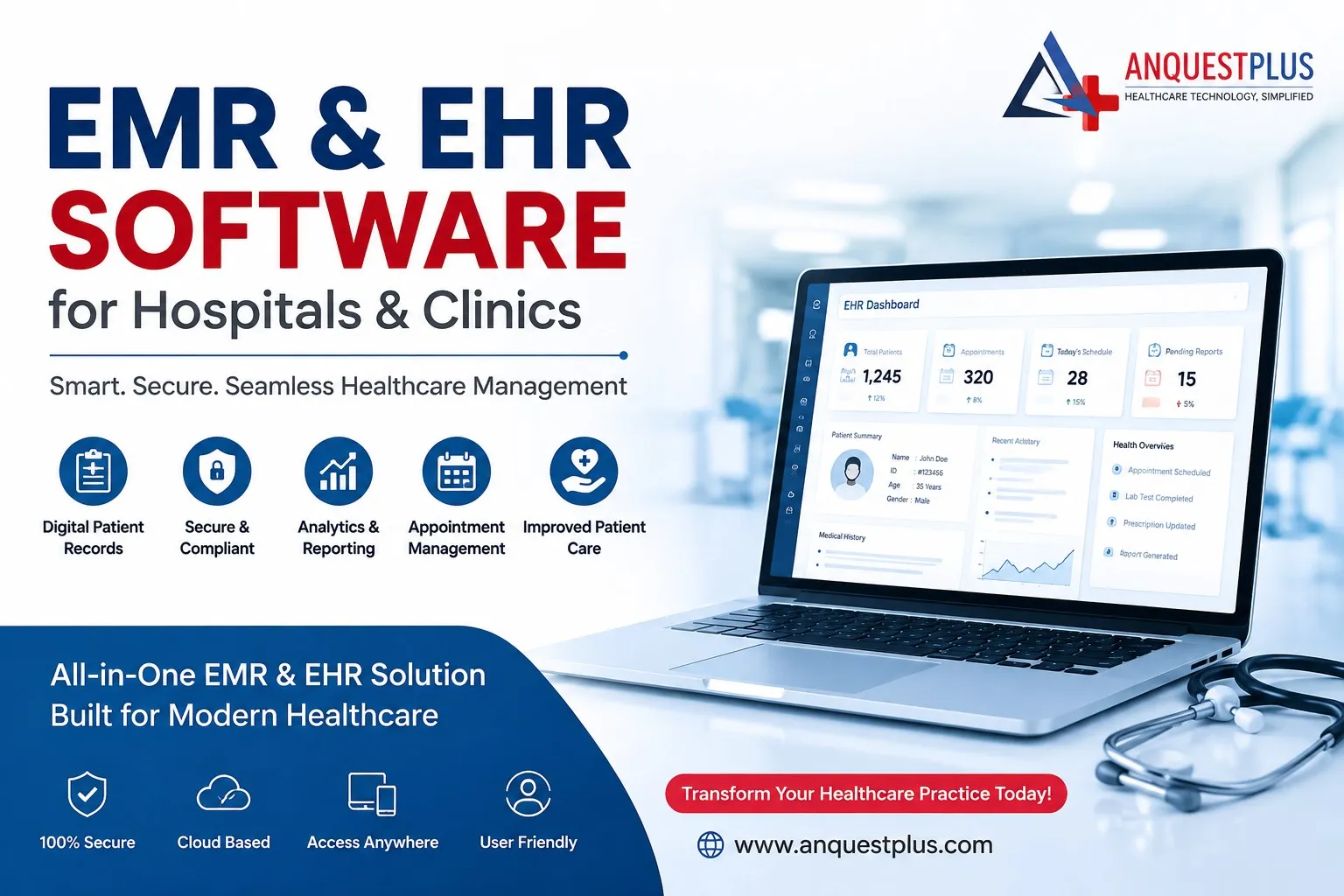
So, what is EMR software? In simple terms, an Electronic Medical Record (EMR) is a digital version of the paper chart you'd otherwise keep for each patient. It stores a patient's medical history, diagnoses, prescriptions, lab results, allergies, and treatment notes — all searchable, backed up, and accessible from a computer, tablet, or phone.
Unlike a stack of files that only one person can access at a time, EMR software lets your entire clinical team pull up the same patient record instantly, cutting down on repeat questions, lost paperwork, and prescription errors. Many platforms also handle scheduling, billing, and patient communication, turning the EMR into the operational backbone of the clinic rather than just a record-keeping tool.
It's worth knowing the difference between EMR and EHR (Electronic Health Record), since vendors in India often use the terms loosely. An EMR is generally built around a single clinic's records, while an EHR is designed to be shared across providers — hospitals, labs, specialists, and pharmacies. In practice, most small-clinic software today blends both, especially as India's digital health infrastructure matures.
Why Small Clinics in India Need EMR Software Now
A few forces are pushing EMR adoption from "nice to have" to "hard to avoid" for Indian clinics:
- ABDM and ABHA integration: The Ayushman Bharat Digital Mission (ABDM) is reshaping how patient data is created, stored, and shared in India. Clinics that link records to a patient's ABHA (Ayushman Bharat Health Account) number make it easier for patients to carry their history across providers — and increasingly, this kind of interoperability is expected rather than optional.
- Rising patient expectations: Patients now expect appointment reminders on WhatsApp, digital prescriptions, and easy access to their own reports — expectations shaped by larger hospital chains and diagnostic networks.
- Time pressure on doctors: A well-designed EMR with templates and quick-entry tools can shave real time off documentation, letting doctors see more patients without extending clinic hours.
- Growth and multi-location plans: Clinics that want to add a second location or bring on another doctor need centralized records from day one — retrofitting this later is far more disruptive.
Must-Have Features to Look For in EMR Software for Clinics in India
Not every clinic needs every feature, but this checklist covers what genuinely moves the needle for a small practice.
Patient Records & Clinical Documentation
Look for customizable templates by specialty, quick-entry vitals, and searchable patient history. The faster a doctor can chart a visit, the more consultations they can comfortably handle in a day.
ABDM & ABHA Compliance
Given where India's digital health policy is heading, prioritize software that supports ABHA creation and linking, and follows FHIR-based interoperability standards. This future-proofs your clinic against compliance requirements tied to government health schemes.
Appointment Scheduling & Reminders
A calendar that syncs across staff, sends automated SMS or WhatsApp reminders, and reduces no-shows pays for itself quickly in a small clinic where every missed slot matters.
E-Prescriptions & Pharmacy Integration
Digital prescriptions reduce transcription errors and let patients fill medicines faster. Regional language support is a genuine advantage in many parts of India, where patients read prescriptions more easily in their own language.
Billing & Insurance Workflows
Even small clinics benefit from integrated billing — invoicing, payment tracking, and basic insurance claim support reduce the back-and-forth between the front desk and accounts.
Patient Portal & Mobile Access
A portal where patients can view reports, book appointments, and message the clinic builds trust and cuts down on phone-call volume for routine queries.
Data Security & Backups
Encryption, role-based access, and automated cloud backups aren't optional extras — they protect against data loss and are foundational to patient trust.
EMR Software Pricing in India: What Small Clinics Should Expect
EMR software pricing in India varies widely depending on features, number of providers, and whether billing or a patient portal is bundled in. As a rough guide for 2026:
Clinic Size Typical Monthly Range What's Usually Included
Solo practitioner
₹1,000 – ₹3,000/month
Core EMR, e-prescriptions, basic scheduling
Small clinic (2–5 providers)
₹3,000 – ₹10,000/month
EMR + practice management, patient portal, reminders
Growing clinic / diagnostic add-ons
₹10,000+/month
Multi-location support, LIS/lab integration, advanced reporting
Some vendors also offer free or freemium tiers for solo doctors, monetizing through add-ons like SMS credits or premium templates. Before committing, ask vendors to break down what's included in the base price versus what's billed separately — implementation, training, data migration from your existing records, and support tiers can all add to the real cost.
Best EMR Software Options for Small Clinics in India
Here's how some of the notable options in the Indian market compare for a small-clinic use case:
- aNquest Plus — Built with Indian clinics and hospitals in mind, aNquest Plus combines EMR functionality with WhatsApp-first patient communication, a unified patient timeline, and role-based access — a combination that suits single-location clinics wanting both clinical documentation and simple patient engagement without juggling separate tools. It's a solid option if you want an EMR that also covers day-to-day follow-ups and reminders out of the box.
- HealthPlix — Popular with individual practitioners, known for specialty-specific templates and regional-language prescriptions.
- DocPulse — Cloud-based, with telemedicine and pharmacy billing built in, useful for clinics also offering virtual consults.
- Healthray — Focuses on customizable forms and drag-and-drop template building for diagnostic and consent documentation.
- Mediniv — Positions itself as an EHR with strong ABDM alignment and analytics, suited to clinics planning to scale toward a small hospital setup.
There's no single "best" answer here — the right choice depends on your patient volume, specialty, and whether you need lab or billing integration from day one. If patient communication and quick clinical documentation are your priority, a platform like aNquest Plus is worth shortlisting; if regional-language prescriptions matter more for your patient base, weigh that against your final pick.
EMR Software for Different Clinic Types
Generic EMR software works fine for a general physician's clinic, but some clinic types have needs that a standard system won't fully cover.
EMR Software for Diagnostics
EMR software for diagnostics — pathology labs, imaging centers, and diagnostic chains — needs deeper lab-specific functionality than a typical clinical EMR. Key additions to look for:
- LIS (Laboratory Information System) integration — for sample tracking, barcode-based accessioning, and result reporting that flows directly into the patient's chart.
- Analyzer connectivity — bi-directional interfacing (via HL7 or ASTM standards) with biochemistry, hematology, and immunoassay machines, so results populate automatically instead of being typed in manually.
- NABL-aligned audit trails — important if your lab is pursuing or maintaining accreditation.
- Report dispatch automation — automatic delivery of reports to patients and referring doctors via SMS, WhatsApp, or the patient portal.
For a standalone diagnostic center, prioritizing LIS integration over general EMR "extras" usually delivers a better return, since turnaround time and result accuracy are what patients and referring doctors actually judge you on.
EMR Software for Urgent Care
EMR software for urgent care clinics has a different rhythm than a scheduled-appointment practice — walk-ins, fast triage, and same-day documentation dominate the workflow. Features that matter most here:
- Rapid intake and triage tools to keep patient flow moving without bottlenecks at the front desk.
- Pre-built templates for common acute complaints — sprains, minor infections, fevers — so documentation doesn't slow down consultations.
- Real-time lab and imaging integration for faster diagnostic turnaround during the visit itself.
- Flexible, simultaneous chart access so multiple staff members can document the same encounter without waiting on each other.
If your clinic handles a high volume of walk-ins, test any shortlisted EMR against a busy-hour scenario before committing — charting speed under pressure matters more here than the number of features on a spec sheet.
How to Choose the Right EMR Software for Your Clinic
Rather than starting with a feature list, start with your clinic's actual bottlenecks:
- Map your current pain points. Is it appointment no-shows, slow billing, lost paperwork, or documentation time? Prioritize software that solves your top one or two issues well, rather than one that does everything adequately.
- Ask about ABDM readiness. Confirm ABHA linking and FHIR compliance are supported now, not "on the roadmap."
- Request a live demo with your own workflow. Watch how a routine patient visit — from check-in to prescription — actually flows in the software, not just a sales walkthrough.
- Check support and training. Small clinics rarely have in-house IT, so responsive vendor support during onboarding matters as much as the feature set.
- Confirm data ownership and export options. Make sure you can export your patient data if you ever switch vendors — this should never be a hidden lock-in.
Common Mistakes to Avoid When Switching to EMR
- Choosing based on price alone. The cheapest plan often lacks the patient portal, reminders, or billing features you'll need within a year.
- Skipping staff training. Even the best EMR fails if front-desk staff and doctors aren't comfortable using it — budget time for proper onboarding.
- Ignoring data migration. Moving years of paper or spreadsheet records into a new system takes planning; do it in phases rather than all at once.
- Overlooking mobile access. If doctors need to check reports or approve prescriptions after clinic hours, make sure the software works well on a phone, not just a desktop.
Frequently Asked Questions
Is EMR software mandatory for clinics in India? It isn't legally mandatory for every clinic today, but ABDM integration is increasingly expected for facilities participating in government health schemes, and patient expectations are pushing adoption regardless.
How much does EMR software cost for a small clinic in India? Expect anywhere from around ₹1,000 per month for a solo practitioner to ₹10,000+ per month for a small clinic with multiple providers and add-ons like billing or lab integration. Always ask for a full cost breakdown, including onboarding and support fees.
Can one EMR system work for both a clinic and a diagnostic lab? Some platforms bundle EMR and LIS functionality, but purpose-built lab software generally handles sample tracking and analyzer integration better than a general clinical EMR. If diagnostics is a significant part of your revenue, evaluate LIS capability as a separate criterion.
How long does it take to switch to a new EMR system? This depends on your patient volume and how much historical data needs migrating, but most small clinics can expect a transition period of a few weeks to a couple of months, including staff training.
Final Thoughts
The best EMR software for small clinics isn't the one with the longest feature list — it's the one that fits how your clinic actually runs day to day. Start by identifying your biggest operational bottleneck, shortlist two or three vendors that address it well, and test them against a real patient workflow before signing up. Whether you're weighing a general-purpose platform, a specialty option, or a communication-first tool like aNquest Plus, the right fit will save your team time, reduce errors, and let you focus on what actually brought you into medicine — patient care.

























Sign in to leave a comment.