

Rubber stamping is one of the easiest ways to add a professional, creative, or personalized touch to documents, packaging, crafts, cards, envelopes, and business materials. However, even a high-quality rubber stamp will not produce a clean impression without the right stamp ink and stamp pads. Choosing the best ink pad can make a noticeable difference in clarity, durability, drying time, and overall appearance.
Whether you are using rubber stamps for business, crafts, teaching, packaging, or personal projects, understanding different types of stamp ink can help you achieve better results. Acorn Stamps offers a variety of stamping solutions designed to make everyday stamping simple and dependable.
Why Choosing the Right Stamp Ink Matters
The ink is an important part of the stamping process. Different surfaces require different types of ink, and using an unsuitable ink pad can result in smudging, fading, uneven coverage, or poor impressions.
A suitable stamp ink should:
- Provide consistent ink coverage.
- Create sharp and readable impressions.
- Dry appropriately for the material being stamped.
- Resist excessive smudging.
- Match the type of rubber stamp being used.
- Work effectively with the intended surface.
For everyday paper stamping, a quality ink pad can provide excellent results without requiring complicated equipment.
What Are Stamp Pads?
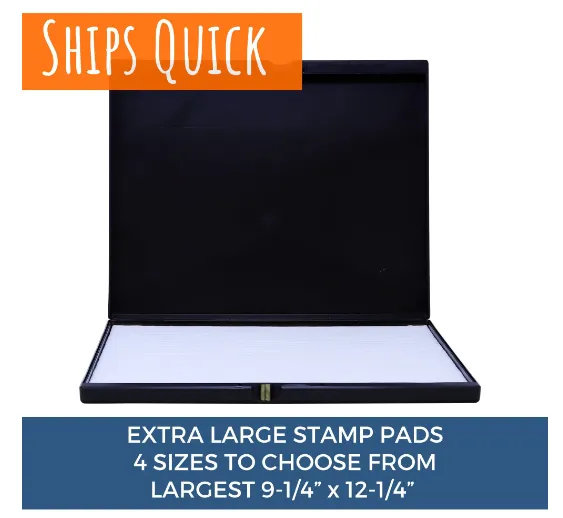
Stamp pads are containers filled with absorbent material that holds stamp ink. When the rubber stamp is pressed onto the pad, the ink transfers to the raised design before the stamp is pressed onto the desired surface.
Stamp pads are available in different formulations and sizes. The best choice depends on the stamp, material, color requirements, and intended application.
Common types include:
Dye Ink Pads
Dye-based ink pads are popular for general-purpose stamping. They typically provide smooth coverage and are suitable for many paper-based applications.
They are a practical option for:
- Office documents
- Invitations
- Cards
- Scrapbooking
- General crafts
- Personal stationery
Pigment Ink Pads
Pigment inks contain thicker ink that can produce rich and vibrant impressions. They are often preferred when a strong, opaque appearance is important.
Pigment ink may take longer to dry than some dye inks, so allowing sufficient drying time can help prevent smearing.
Fast-Drying Ink Pads
Fast-drying stamp ink is useful when you need to stamp multiple items quickly. These inks are designed to dry faster and can be helpful for business applications, production work, and repetitive stamping.
Specialty Ink Pads
Specialty stamp pads are formulated for particular materials or applications. Depending on the formulation, specialty inks can be used on surfaces beyond ordinary paper.
Always check the manufacturer's recommendations before using specialty ink on a particular material.
How to Choose the Best Ink Pads for Rubber Stamping
Choosing the right stamp pad does not have to be complicated. Start by considering the following factors.
1. Consider the Stamping Surface
The surface you are stamping is one of the most important considerations. Paper and cardboard generally work well with standard stamp ink, while non-porous materials may require specialized formulations.
Think about whether you are stamping:
- Paper
- Cardstock
- Envelopes
- Labels
- Packaging
- Fabric
- Other specialty surfaces
Selecting ink specifically suited to the material can improve the final impression.
2. Choose the Right Ink Color
Black remains one of the most versatile choices for professional stamping because it provides strong contrast and readability. However, colored stamp pads can be useful for creative projects, organization, branding, and decorative applications.
When choosing a color, consider the background color of the material. A strong contrast usually produces a more readable impression.
3. Match the Pad to Your Stamp Size
The stamp pad should be large enough to cover the complete rubber design. If the pad is too small, you may have difficulty applying ink evenly across the stamp.
For larger rubber stamps, use a suitably sized pad or an appropriate inking method to ensure complete coverage.
4. Think About Drying Time
If you are stamping hundreds of envelopes, labels, or documents, drying time can become important. A fast-drying formula may be more convenient for high-volume applications.
For crafts and projects where you have more time, a slower-drying pigment ink may offer the appearance you want.
5. Consider the Finish You Want
Different inks can produce different visual effects. Some provide crisp, understated impressions, while others offer darker or more vibrant results.
Consider whether your project requires a professional, decorative, bold, or subtle appearance.
Tips for Getting a Clean Rubber Stamp Impression
Even the best stamp ink will not produce great results if the stamping technique is inconsistent.
Follow these simple tips:
- Place the stamp pad on a flat surface.
- Press the rubber stamp evenly onto the ink pad.
- Avoid pressing too hard, which can cause excess ink around the design.
- Check that the entire stamping surface has received ink.
- Press the stamp straight down onto the material.
- Apply even pressure without rocking the stamp.
- Lift the stamp straight up.
- Allow the impression to dry before handling when necessary.
Practicing your stamping technique can help create consistent impressions, especially when working on a large batch of materials.
How Acorn Stamps Can Help With Your Stamping Needs
Choosing quality stamping supplies makes everyday stamping easier and more reliable. Acorn Stamps provides custom rubber stamps and related stamping solutions for businesses, professionals, educators, organizations, and personal projects.
When selecting a stamp and ink pad combination, consider your specific application rather than choosing an ink simply because it is popular. The right combination of stamp design, stamp pad, ink formulation, and stamping surface can help you achieve a clean and professional result.
Whether you need stamps for addresses, business information, logos, organization, crafts, or personal use, having dependable stamping supplies on hand can save time and improve consistency.
Common Mistakes to Avoid When Using Stamp Pads
A few simple mistakes can affect the quality of your impressions.
Using Too Much Ink
Over-inking the rubber stamp can cause the design to look blurry or create unwanted edges around the impression. Apply enough ink to cover the design without saturating it.
Using the Wrong Ink
Not every ink works on every material. Always select an ink designed for your intended surface.
Storing Ink Pads Incorrectly
Keep ink pads properly closed when not in use. Leaving a pad exposed can allow the ink to dry out prematurely.
Applying Uneven Pressure
Uneven pressure can result in parts of the design appearing lighter than others. Press the stamp firmly and evenly.
Conclusion
The best ink pads for rubber stamping depend on your stamp type, stamping surface, desired appearance, and project requirements. For everyday paper applications, standard dye or pigment stamp pads can provide reliable results, while specialty surfaces may require specific stamp ink formulations.
By choosing the right stamp pads, applying ink evenly, and using proper stamping techniques, you can create cleaner and more consistent impressions. With quality stamping products from Acorn Stamps, you can make everything from business materials to personal projects look organized, professional, and polished.
FAQs About Stamp Ink and Stamp Pads
1. What is the best stamp ink for rubber stamps?
The best stamp ink depends on the material being stamped and the desired result. Standard dye or pigment ink pads are commonly used for paper and cardstock, while specialty surfaces may require specialized ink.
2. Can I use any ink pad with a rubber stamp?
Not necessarily. Most standard rubber stamps work with common ink pads, but certain surfaces and applications require specific ink formulations. Check the ink manufacturer's recommendations before use.
3. How do I prevent my stamp impression from smudging?
Use an appropriate ink for the surface, avoid applying excessive ink, and allow the impression enough time to dry before touching or stacking the stamped material.
4. How should I store stamp pads?
Keep stamp pads tightly closed when they are not being used. Store them according to the manufacturer's recommendations to help maintain ink quality and prevent premature drying.
5. How do I get an even impression from a rubber stamp?
Apply ink evenly across the rubber design, place the stamp straight onto the surface, use consistent pressure, and lift it straight up without rocking the stamp.






















Sign in to leave a comment.