

Japanese watchmaking is often discussed as one thing, which obscures the fact that the major houses took genuinely different technical routes. Seiko built vertically and pursued mechanical and quartz in parallel. Citizen bet heavily on light-powered movements. Casio ignored traditional watchmaking almost entirely and built electronics instead.
Quick Answer: The major Japanese watch brands are Seiko, Citizen, Casio, and Orient. Seiko covers the widest range from entry mechanical to high-end. Citizen leads in light-powered quartz. Casio dominates digital and shock-resistant watches. Orient specialises in affordable in-house mechanical watches.
Seiko: the broadest range of the four
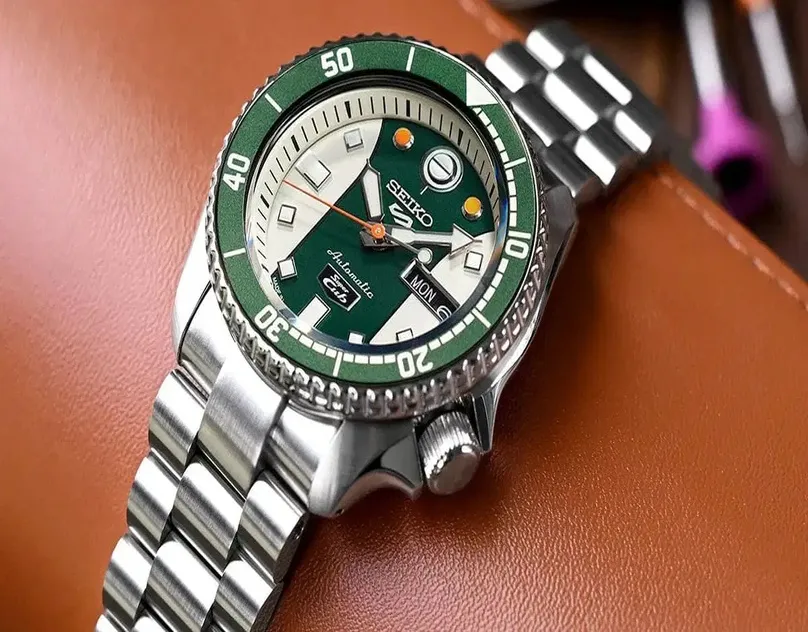
Seiko is the only one of the four that operates across the full spectrum, from inexpensive automatics to serious high-end watchmaking.
The practical consequence for a buyer is that "a Seiko" tells you almost nothing. The entry Seiko 5 line and the upper Prospex and Presage lines share a name and very little else in movement grade, finishing, or case construction.
Seiko also manufactures its own movements, including its own hairsprings and escapements, which very few companies at any price do. That vertical integration is why the entry-level mechanical calibres exist at the prices they do.
Where Seiko is strongest: dive watches, entry mechanical, and dress watches with distinctive dial materials.
Citizen: light-powered as a core strategy
Citizen made a strategic commitment to Eco-Drive, its light-powered quartz system, and built much of its lineup around it. The engineering point is not novelty but sealing — a watch that never needs its case opened for a battery keeps its water resistance intact.
Citizen also produces its own movements, including the Miyota calibres used across the industry in other brands' watches. If you own an affordable automatic from a microbrand, there is a reasonable chance a Citizen-made movement is inside it.
Where Citizen is strongest: light-powered watches, titanium construction, and radio or satellite time synchronisation.
Casio: electronics rather than watchmaking
Casio approached the wrist from a calculator and electronics background rather than a horological one, and that shows in everything it makes. The G-Shock shock-absorbing structure is an engineering solution to a mechanical problem, arrived at from outside the watch industry.
Casio does not compete in mechanical watches in any meaningful way. What it does instead — impact resistance, sensor integration, digital feature sets, and long battery life — it does better than anyone.
Where Casio is strongest: durability, digital function, and low cost of ownership.
Orient: focused mechanical value
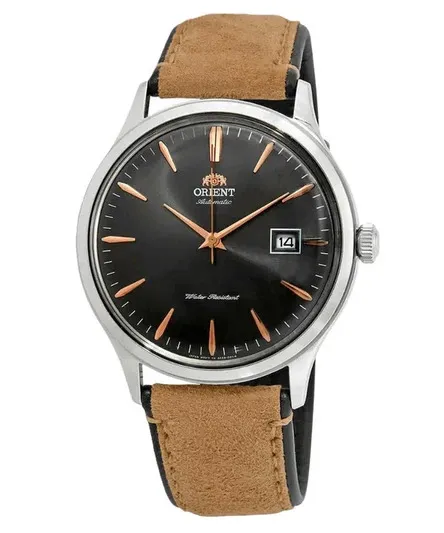
Orient is the smallest of the four in profile and the most focused. It produces its own mechanical calibres and concentrates on affordable automatics, particularly dress and field styles.
The Bambino line in particular has become a standard recommendation for a first dress automatic, because it delivers a domed crystal, applied indices, and an in-house automatic at an accessible level.
Where Orient is strongest: affordable mechanical dress watches. Compare all four brands within the full watch collection.
Choosing between them by requirement
If you want a mechanical watch under a modest budget: Seiko or Orient. Orient for dress styling, Seiko for sports and dive styling.
If you want to never think about the watch again: Citizen Eco-Drive or a solar Casio. Both remove battery replacement entirely.
If the watch will take knocks: Casio G-Shock, and nothing else in this group competes on that specific measure.
If you want titanium or a lighter watch: Citizen, which has invested more in titanium processing than the others.
If you want a dive watch you can actually dive with: Seiko Prospex or Citizen Promaster, both built and rated for it.
If you want a display case back and visible mechanics: Seiko or Orient.
What all four share
All four manufacture their own movements rather than buying them in, which is unusual and is the main reason Japanese watches deliver the specification they do at their prices.
All four also publish detailed specifications, which makes comparison straightforward — case dimensions, water resistance, calibre, and crystal type are usually stated clearly.
Service availability differs by market and by model tier. Entry references are often treated as replace-rather-than-repair; higher tiers have full service pathways.
Lume, crystal, and finishing across the four brands
Three specifications separate these brands more consistently than price does.
Lume. Seiko leads here across its range, applying generous lume to markers, hands, and bezel pips even on inexpensive references. Citizen is competitive on Promaster and lighter elsewhere. Casio uses backlighting on digital models rather than luminous compound, which is a different solution to the same problem. Orient applies functional rather than generous lume.
Crystal. All four use mineral or proprietary hardened mineral at entry level and move to sapphire higher up. Seiko's Hardlex sits between standard mineral and sapphire in scratch resistance. Check the specification per reference rather than assuming a brand standard.
Case and bracelet finishing. This is where price shows most visibly. Entry references across all four use broad polishing without defined transitions and folded bracelet links. Mid-range references introduce defined brushed and polished surfaces and solid links.
The practical advice is to compare finishing at the same price rather than across brands, because at any given level the four are closer to each other than brand reputation suggests. Compare examples side by side in the full watch collection.
FAQ
Which Japanese watch brand is best overall?
There is no single answer, because they specialise differently. Seiko covers the widest range and is the strongest all-rounder. Citizen leads in light-powered and titanium watches. Casio dominates durability and digital. Orient is the value pick for mechanical dress watches.
Are Japanese watches better value than Swiss?
At entry and mid levels, Japanese brands generally deliver more specification for the money, largely because they manufacture their own movements at scale. At higher levels the comparison becomes about finishing and heritage rather than specification alone.
Which brand makes the best dive watches?
Seiko Prospex and Citizen Promaster both build genuinely dive-rated watches with appropriate case construction and crown types. Seiko has the longer dive lineage. Citizen offers light-powered dive models that avoid battery-change case openings entirely.
What is the difference between Seiko 5 and Seiko Prospex?
Seiko 5 is the entry line, with swimming-level water resistance and entry calibres. Prospex is the professional sports line, with dive certification, higher-grade movements, and heavier case construction. They are not interchangeable for water use.
Does Citizen make movements for other brands?
Yes. Citizen's Miyota subsidiary supplies mechanical and quartz calibres widely used by other watch companies, particularly in the affordable automatic segment. Many microbrand automatics run Miyota calibres inside.
Which brand should a first-time buyer choose?
It depends on what the watch is for. For a first mechanical watch, Seiko or Orient. For a watch that needs no maintenance, Citizen Eco-Drive. For something that survives anything, Casio G-Shock. Compare all four in the watch collection.
Verdict
Choose by what the watch has to do, not by brand reputation. Orient for an affordable mechanical dress watch, Seiko for mechanical sports and dive, Citizen for light-powered and titanium, Casio for durability and digital function. All four make their own movements, which is why the specification-per-dollar across this group is difficult to match elsewhere.


























Sign in to leave a comment.