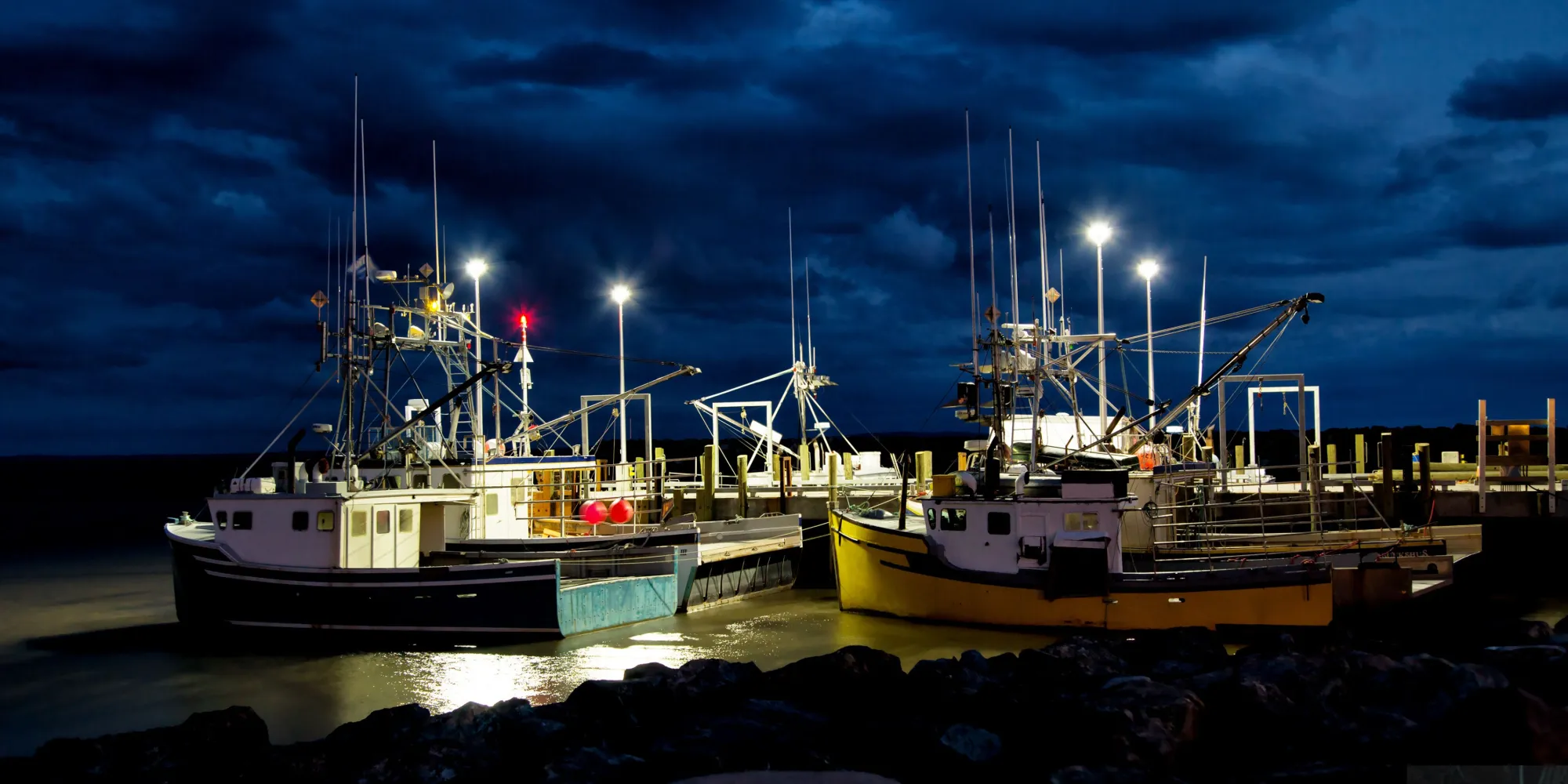

The fish were biting an hour ago. Now your buddy in the next boat flips on a floodlight bright enough to land a plane, and just like that, the water goes quiet. Sound familiar? Night fishing has a strange rule most anglers learn the hard way: the light that helps you see can also be the reason you stop catching anything.
Get your setup right, though, and you get the best of both worlds: a clear view of your line and a bite that keeps going! Here's how to pick the best marine lights for the job.

Why Light Choice Matters More than Light Strength
New anglers usually think bigger and brighter wins. It doesn't. A 5,000-lumen floodlight might look impressive on a store shelf, but drop it over clear, shallow water and you'll watch fish scatter within seconds. What actually matters is color, placement, and how the light behaves once it hits the water. A dim, well-placed light will outfish a blinding one every time.
How Light Color Affects Fish Behavior (and Your Night Vision)
Green Light: The All-Rounder
Green is the go-to color for most underwater fishing lights, and there's a real reason for it. Green light travels farther through water than most other colors before it fades out, so it creates a steady glow that draws in plankton, then baitfish, then the bigger fish that come to feed on them. It's bright enough to work but soft enough that it rarely sends fish running.
Red Light: The Stealth Option
Red doesn't travel far underwater at all; it's actually the first color to disappear as you go deeper. That makes it a poor choice for attracting fish, but a great one for something else: keeping your own eyes adjusted to the dark. A small red light near your tackle box or rod tip lets you check your gear without blowing out your night vision, and it rarely bothers cautious species like catfish or snook.
White & Blue: Bright but Risky
White and blue lights provide the most visibility, which makes them useful offshore or in deep, murky water where fish are less easily startled. In shallow or clear water, though, they're the fastest way to clear an area. Save these for deep water trips, not the shallows!
UV Light: Seeing Your Line Without Lighting the Water
This is the trick a lot of anglers still don't know about. A UV, or black light, gives off a faint purple glow that fish barely notice. Pair it with fluorescent fishing line, and the line lights up right in front of you, so you can watch every twitch and tap without flooding the water with brightness.
It's the closest thing to a cheat code for line visibility!
Light Color Comparison
| Light Color | Best For | Water Penetration | Spook Risk | Ideal Use |
| Green | General attraction | High | Low to Medium | Underwater or dock lights |
| Red | Gear visibility, shy fish | Low | Very Low | Checking tackle, night vision |
| White | Maximum brightness | High | High | Deep or offshore water |
| Blue | Clear, deep water | Very High | Medium | Bluewater species |
| UV/Purple | Line tracking only | Low | Very Low | Watching fluorescent line |
Types of Marine LED Lights for Night Fishing
Underwater lights sit below the waterline and create a glowing halo that pulls fish in from every direction. Anglers who fish for stripers, crappie, and other schooling species swear by these.
- Deck and spreader lights mount above the waterline and light up the boat itself, not the water. They're handy for tying knots and baiting hooks but should stay dim when fish are close.
- UV line lights are the newest addition to most tackle boxes. They don't attract fish at all; their only job is helping you see your own line, which makes them perfect for anglers who care more about detecting bites than drawing in a crowd.
Whichever type you choose, look for the best marine LED lights built specifically for saltwater or freshwater exposure, since regular LED strips corrode fast once they're near the water.
What to Look for When Buying
IP rating. This two-number code tells you how well a light resists dust and water. For anything near or under the waterline, look for IP67 or higher. IP68 means it can handle full submersion, which is worth the extra cost for underwater lights.
Power draw. Brighter lights pull more from your battery. If you're running a smaller boat, check the amp draw before buying so you're not stuck with a dead battery halfway through the trip.
Build quality. Saltwater eats through cheap housings fast. Marine LED lights with solid seals and corrosion-resistant casing will last years longer than budget versions.
A Quick Safety Note
Accessory lights are not the same as navigation lights, and mixing them up can cause real problems on the water. Keep colored fishing lights positioned so they can't be mistaken for your required nav lights, and check your local boating rules before your trip. It's a small step that keeps both you and other boaters safe.
How to Use Marine Lights Without Spooking Fish
- Start with the light on its lowest setting and increase only if needed.
- Keep lights angled below eye level so you're not blinding yourself either.
- Pair a UV light for your line with a green underwater light for attraction.
- Switch off white lights once fish start showing up nearby.
In Closing,
Picking the best marine lights isn't about buying the brightest option on the shelf. It's about matching color, placement, and power to the water you're fishing in, so you can see everything you need without scaring off everything you're after. Try swapping in a green underwater light or a UV line setup on your next trip, and see the difference for yourself!
FAQs
1. What color light is best for night fishing?
Green is the most reliable all-around choice, since it travels far in water without spooking most species.
2. Do LED lights scare fish away at night?
Bright white or blue lights can, especially in shallow water. Dimmer green, red, or UV lights are far less likely to cause problems.
3. Can I use a black light to see my fishing line?
Yes. Pair a UV light with a fluorescent line, and you'll be able to track bites clearly without adding extra brightness to the water.
4. What's the difference between marine lights and regular LED lights?
Marine LED lights are built to handle water exposure and saltwater corrosion, with higher IP ratings than standard indoor or outdoor LEDs.
5. Is it legal to use colored lights while night fishing?
Rules vary by location, so check local boating laws. The main thing to avoid is placing accessory lights where they could be confused with navigation lights.


























Sign in to leave a comment.