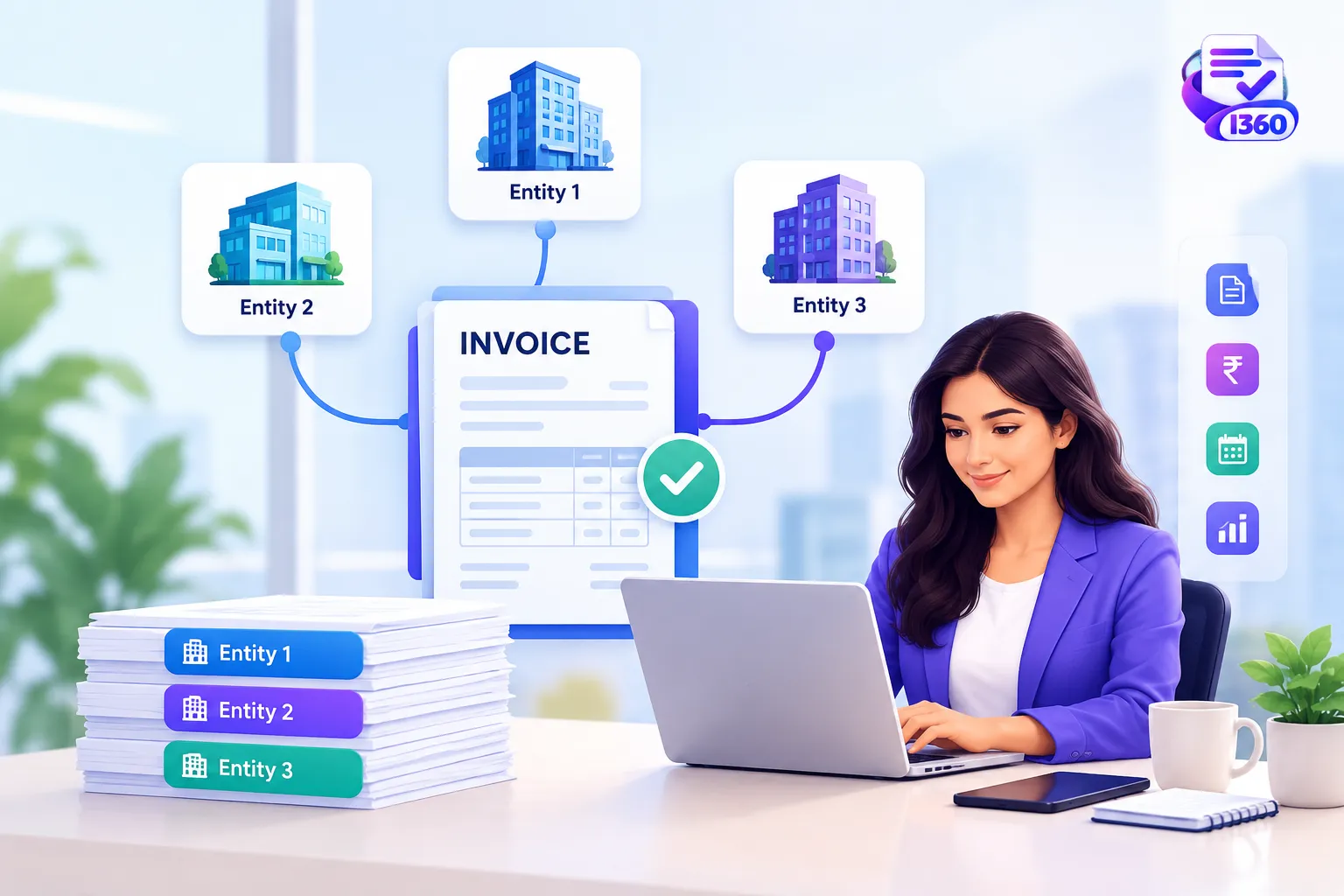

Managing invoices for one business can be straightforward, but things become more complicated when you operate multiple companies, subsidiaries, or business units. Each entity may have different customers, suppliers, tax requirements, payment terms, and reporting needs. Without a clear process, invoices can easily get mixed up, payments may be delayed, and financial records can become difficult to maintain.
This is why businesses need a structured approach to invoice management. The right processes and tools help teams keep records organized, monitor outstanding payments, and maintain accurate financial information across their operations.
For organizations managing multiple business entities, effective invoice management is not just about creating and sending invoices. It also involves maintaining separate entity records, standardizing workflows, managing approvals, and ensuring that financial information remains easy to access.
In this guide, we explore practical best practices that help businesses simplify invoicing, reduce administrative work, and maintain better control over their financial operations.
Why Invoice Management Becomes Difficult Across Multiple Business Entities
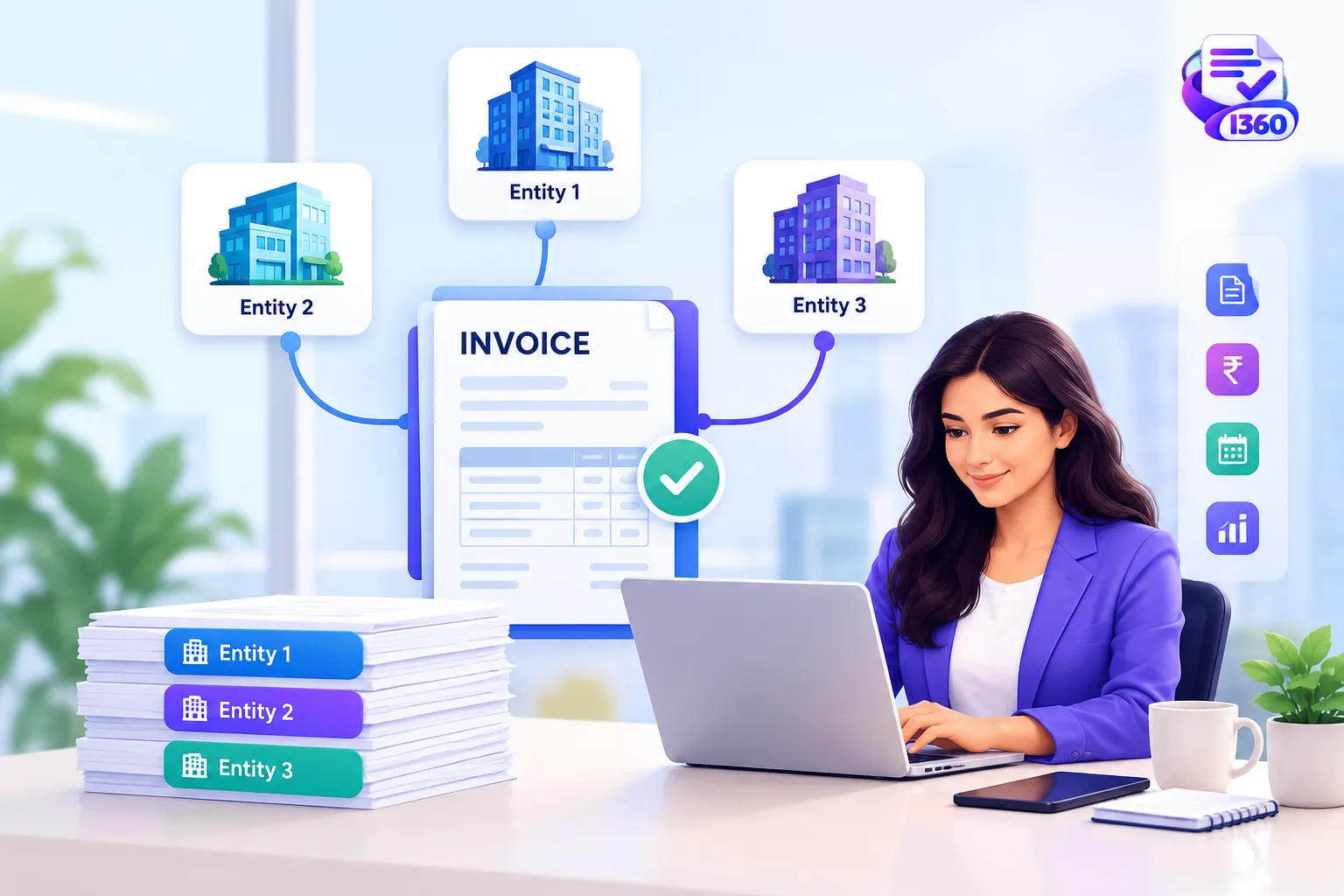
When a company operates several legal entities or business units, its invoicing requirements can vary significantly. One entity may serve domestic customers, while another handles international transactions. Similarly, different subsidiaries may follow different payment terms, tax rules, or approval procedures.
Managing these activities through separate spreadsheets, email threads, and disconnected systems can create unnecessary complications.
Some common challenges include:
- Scattered invoice records: Invoices stored across different folders or systems can be difficult to locate.
- Inconsistent processes: Different teams may follow different methods for creating, approving, and recording invoices.
- Payment tracking difficulties: Finance teams may struggle to identify overdue invoices or outstanding balances for individual entities.
- Reporting delays: Consolidating financial information across businesses can require significant manual work.
- Tax and compliance risks: Mixing entity information or applying incorrect tax details can lead to reporting errors.
- Limited financial visibility: Management may find it difficult to understand the financial position of each business separately.
These problems often become more noticeable as businesses expand. A consistent invoice management process helps reduce confusion while allowing each entity to maintain its own financial identity.
1. Maintain Separate Records for Each Business Entity
One of the most important practices is to keep each entity's invoice records clearly identified and properly organized.
Even when several businesses operate under the same ownership, their invoices may need different company names, addresses, tax identification details, bank information, and numbering sequences.
For example, if a business group operates three companies, each company should have clearly identifiable invoice records rather than sharing an undifferentiated collection of documents.
A practical approach includes:
- Assigning a unique identifier to each entity.
- Maintaining the correct legal name and registered address.
- Recording the applicable tax registration details.
- Using appropriate invoice numbering rules for each entity.
- Keeping customer and supplier records associated with the correct business.
- Separating entity-level reports from consolidated management reports.
A well-configured invoice management solution can help centralize invoice information while preserving the distinctions between individual entities.
2. Standardize the Invoicing Process
Different business units may develop their own invoicing habits over time. While some flexibility may be necessary, inconsistent processes can create avoidable errors.
Standardizing routine activities makes it easier for finance teams to manage invoices, train new employees, and identify problems before they affect reporting.
Start by documenting how invoices should be created, checked, approved, sent, and recorded. Define who is responsible for each stage and what information must be verified before an invoice is issued.
For example, a standard workflow might include:
- Confirm the transaction and customer details.
- Select the correct business entity.
- Verify pricing, payment terms, and applicable taxes.
- Generate the invoice using an approved format.
- Review the invoice for accuracy.
- Send it to the customer and record its status.
- Monitor payment until the outstanding balance is settled.
A consistent workflow reduces dependency on individual employees and makes invoice processing more predictable across the organization.
3. Use a Centralized Invoice Management System
When invoices are spread across spreadsheets, accounting tools, and email accounts, finance teams may spend more time collecting information than managing it.
A centralized system provides a common place to create, organize, and review invoices. Depending on its capabilities, it can also help businesses monitor payment statuses, identify overdue invoices, and prepare reports.
For organizations managing multiple business entities, the system should ideally support entity-specific information without forcing every company to share the same financial records.
Before choosing a platform, consider whether it allows you to:
- Manage invoices for different businesses.
- Maintain separate company profiles and billing details.
- Search invoices using customer, entity, date, or status.
- Monitor paid, pending, and overdue invoices.
- Generate useful reports for individual entities.
- Export records for accounting and reconciliation.
- Control access to sensitive financial information.
The objective is to make invoice information easier to manage without sacrificing the separation and accuracy required for each business.
4. Automate Repetitive Invoicing Tasks
Manual invoice processing can consume considerable time, particularly when several entities issue invoices regularly.
Employees may need to enter the same customer information repeatedly, calculate invoice totals, update payment records, and prepare reminders. Repeating these activities increases the chances of mistakes.
Automation can reduce this burden when it is applied to suitable tasks.
Useful examples include recurring invoice generation, automatic calculations, invoice status updates, payment reminders, and report preparation. The exact options depend on the software and its integrations.
However, automation should not eliminate necessary checks. Businesses should still verify invoice details, tax calculations, customer information, and payment confirmations.
A good approach is to automate routine work while retaining human review for exceptions, unusual transactions, and high-value invoices.
5. Establish Clear Invoice Approval Workflows
Not every invoice should be issued or processed without review. Depending on the business, invoices may require approval from a department manager, project owner, finance team, or authorized signatory.
When multiple entities are involved, unclear approval responsibilities can create delays. An invoice might remain unattended because employees are unsure who needs to approve it.
To avoid this problem, establish clear approval rules based on factors such as:
- The business entity issuing or receiving the invoice.
- The invoice amount.
- The department or project involved.
- Contractual requirements.
- The type of expense or transaction.
- Internal financial policies.
Document who can approve invoices and who can authorize changes to financial records.
Where the software supports approval workflows, use it to assign responsibilities and maintain an appropriate record of approvals. For smaller organizations, a documented manual process may be sufficient.
The important point is that every invoice should follow a defined process rather than depending on informal communication.
6. Track Payments and Outstanding Invoices Regularly
Issuing an invoice does not guarantee that a customer will pay on time. Businesses must also monitor what has been paid, what remains outstanding, and which invoices have passed their due dates.
This becomes particularly important when several entities have different customers and payment cycles.
A regular review of accounts receivable helps finance teams identify delays early and prioritize follow-up activities.
Consider maintaining a payment tracking process that records:
- Invoice issue date and due date.
- Original invoice amount.
- Amount received.
- Remaining balance.
- Payment status.
- Date of the most recent follow-up.
- Expected payment date, where known.
Review overdue invoices regularly and establish clear guidelines for contacting customers.
Payment reminders should be professional, timely, and consistent with the agreed payment terms. Businesses should also reconcile recorded payments with reliable transaction records before marking invoices as fully paid.
These practices improve visibility into receivables and help management understand potential cash flow pressures across individual entities.
7. Keep Tax Information Accurate for Each Entity
Tax requirements can vary according to the business's location, registration status, transaction type, and customer location. Businesses operating multiple entities should therefore avoid assuming that one set of tax details will apply to every invoice.
An invoice issued by the wrong legal entity or containing incorrect tax information can create accounting and compliance complications.
To reduce these risks, verify the following before issuing invoices:
- The correct legal business name and registration details.
- Applicable GST, VAT, sales tax, or other tax information.
- The correct tax treatment for the transaction.
- Customer tax details where required.
- Currency and exchange-rate information where relevant.
- Required invoice fields under applicable regulations.
Tax settings should be reviewed whenever a business changes its registration, expands into a new market, or introduces a new type of transaction.
Software can help apply configured tax rules, but the business remains responsible for ensuring that those settings reflect the applicable requirements. Complex cases should be reviewed by a qualified accounting or tax professional.
8. Separate Entity-Level Reporting From Consolidated Reporting
Management often needs two different views of financial performance.
The first is an entity-level view, which shows the invoices, receivables, and financial activity of an individual company. The second is a consolidated view, which helps owners and senior managers understand performance across the wider business group.
Both are important, but they serve different purposes.
Entity-level reporting can help finance teams identify unpaid invoices, investigate discrepancies, and manage the day-to-day financial position of a specific business.
Consolidated reporting can help management compare receivables, identify payment trends, and assess overall performance.
For accurate reporting, businesses should maintain consistent definitions and reporting periods across entities. They should also ensure that intercompany transactions are recorded and handled appropriately rather than treating them as ordinary external customer invoices.
An invoice management solution with suitable reporting capabilities can reduce the effort involved in gathering information from different business units.
9. Improve Data Security and Access Control
Invoices contain commercially sensitive information, including customer details, pricing, transaction values, tax information, and sometimes bank details.
When several entities share a finance team or software platform, access permissions become especially important.
Not every employee needs access to every company's financial records. Businesses should establish permissions based on job responsibilities and the level of access required.
Good practices include:
- Giving users only the access they need.
- Restricting approval and editing rights to authorized employees.
- Reviewing user permissions when responsibilities change.
- Using strong authentication methods where available.
- Maintaining audit logs for important changes.
- Backing up records and understanding data recovery procedures.
- Reviewing how financial information is stored, exported, and shared.
Centralizing invoice management can improve accessibility, but security and entity-level separation must remain part of the implementation plan.
10. Review Invoice Performance and Improve the Process
Invoice management should be reviewed regularly rather than treated as a process that never changes.
As a business grows, its invoicing volume, customer base, approval requirements, and reporting needs may change. A process that worked for one entity may not be suitable for a group of five or ten companies.
Reviewing a few practical performance indicators can help identify areas for improvement.
Useful measures include:
- Average time taken to issue an invoice.
- Number of invoices containing errors.
- Percentage of invoices paid by their due dates.
- Total value of overdue receivables.
- Average time taken to collect customer payments.
- Time spent preparing entity-level and consolidated reports.
- Number of unresolved invoice discrepancies.
These measures can help management identify bottlenecks and determine whether additional automation, better training, or revised approval procedures are needed.
The goal is not simply to process more invoices. It is to maintain accurate records, improve payment visibility, and make the overall financial workflow more reliable.
How to Choose the Right Invoice Management Solution
Selecting suitable software depends on the complexity of your business structure and the way your finance team works.
A small group of companies may need straightforward invoicing, entity-specific records, and payment tracking. A larger organization may require advanced approval workflows, accounting integrations, detailed permissions, and consolidated reporting.
Before making a decision, consider these factors:
Multi-entity support: Can the platform manage multiple business profiles while keeping each entity's information distinct?
Invoice customization: Can invoices display the correct legal name, address, tax details, currency, and payment terms?
Payment tracking: Can users identify paid, pending, partially paid, and overdue invoices?
Reporting: Does the platform provide the reports needed by both individual business units and senior management?
Automation: Can repetitive tasks such as invoice creation and payment reminders be simplified?
Security: Are access controls and other appropriate data protection features available?
Integration options: Can the software work with your existing accounting, payment, or enterprise systems?
Scalability: Will the platform continue to meet your requirements as the number of entities and invoices increases?
It is also worth reviewing pricing, support, data export options, implementation effort, and the ability to maintain accurate records if you later change systems.
The best solution is one that fits your actual workflow, rather than one that simply offers the largest number of features.
How Invoice360 by Udhyogi Can Support Multi-Entity Invoice Management
For businesses looking to organize invoicing and payment tracking across different companies, Invoice360 by Udhyogi offers a platform to explore.
Its invoicing and business documentation capabilities are designed to help businesses manage billing activities, monitor payment statuses, send payment reminder emails, and review financial information. The platform also provides features such as multi-currency invoicing, tax support, dashboards, and multi-business management.
These capabilities may be useful for businesses seeking a more organized way to handle invoices across their operations.
Before adopting any platform, review its current features and confirm that its entity management, user permissions, reporting, and accounting workflows meet your specific requirements.
Conclusion
Managing invoices across multiple business entities requires more than a common invoice template. Businesses need clear procedures, accurate entity records, reliable payment tracking, appropriate approval workflows, and consistent reporting.
By standardizing invoicing, automating repetitive tasks, monitoring overdue payments, protecting financial information, and reviewing performance regularly, organizations can reduce administrative complexity and improve financial visibility.
Choosing the right invoice management solution can further simplify these activities by bringing essential invoicing information into a more organized workflow. With the right combination of processes and technology, businesses can maintain better control over their invoices while supporting future growth.

















Sign in to leave a comment.