

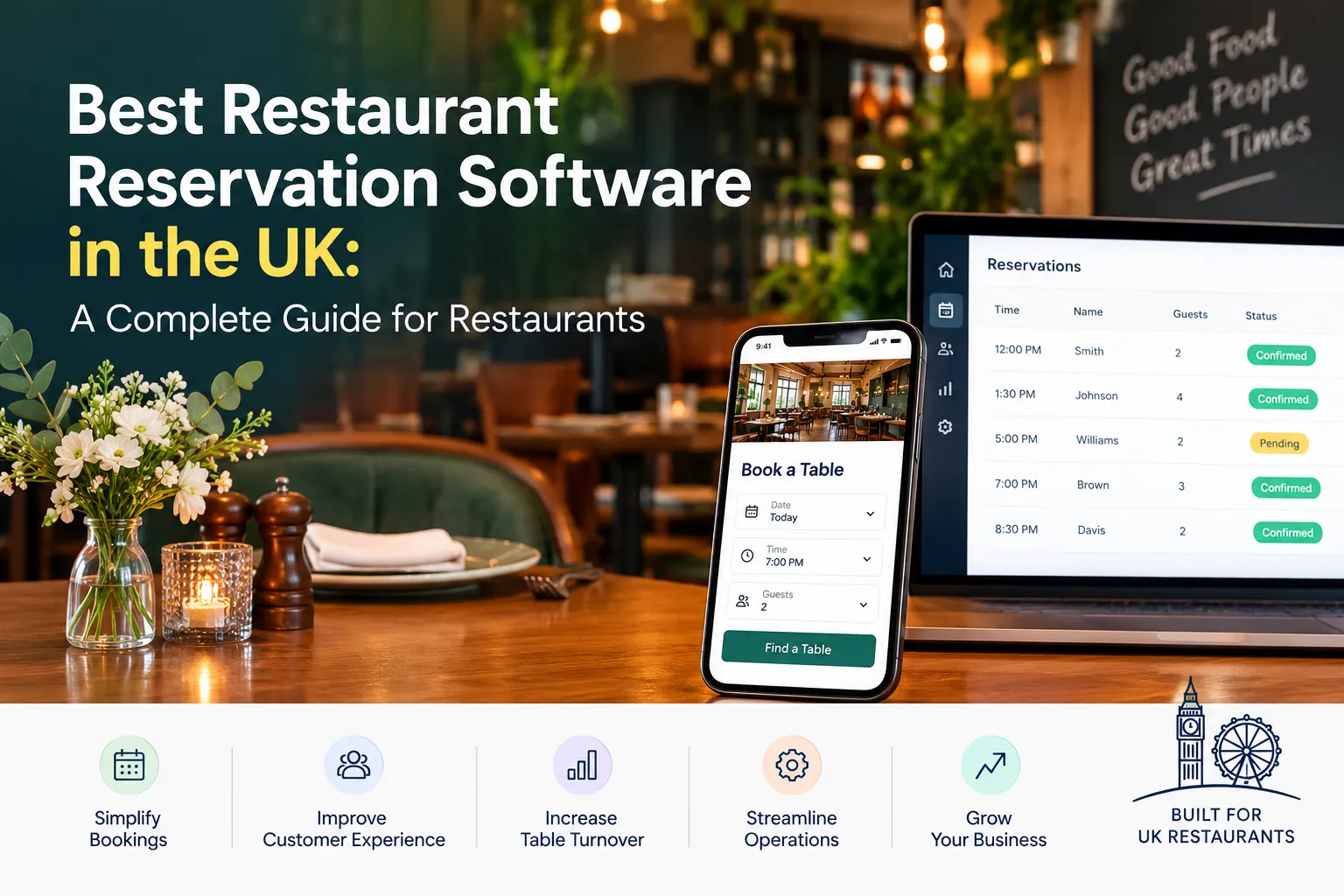
Choosing the best restaurant reservation software can help UK restaurants simplify table bookings, improve the customer experience and manage busy services more efficiently. Whether you operate an independent restaurant, a neighbourhood bistro, a pub or a growing restaurant group, the right booking system can reduce administrative work and give your team greater control over daily operations.
However, not every restaurant needs the same software. Some businesses prioritise attracting new diners through booking marketplaces, while others want an easy-to-use online booking system that integrates with their website, customer communications and wider restaurant management processes.
In this guide, we compare popular restaurant reservation platforms available in the UK, explain the features that matter most and explore how to choose the right solution for your business.
What Is Restaurant Reservation Software?
Restaurant reservation software is a digital system that allows customers to reserve tables online while helping restaurant teams organise bookings, manage seating arrangements and coordinate services.
Instead of relying entirely on phone calls, WhatsApp messages, social media enquiries or handwritten diaries, restaurants can use online booking software to centralise reservations in one place.
Depending on the platform, features may include:
- Online table bookings: Allow customers to reserve tables through your website or supported booking channels.
- Table management: View reservations, organise seating and manage table availability.
- Booking confirmations and reminders: Keep customers informed about their reservations.
- Deposit management: Collect deposits or use card guarantees where supported to help manage no-shows.
- Customer information: Maintain guest details and preferences where permitted.
- Reporting and analytics: Review booking activity, covers and other operational indicators.
- Third-party integrations: Connect reservations with compatible payment systems, point-of-sale (POS) software or marketing tools.
The exact features depend on the provider and subscription plan.
For UK restaurants, the objective is straightforward: make it easier for customers to book a table and easier for staff to manage those bookings.
Why Do UK Restaurants Need Online Booking Software?
Restaurant customers increasingly expect convenient ways to discover venues and reserve tables without waiting for someone to answer the telephone. Online booking software gives customers a convenient alternative while helping restaurants handle enquiries more consistently.
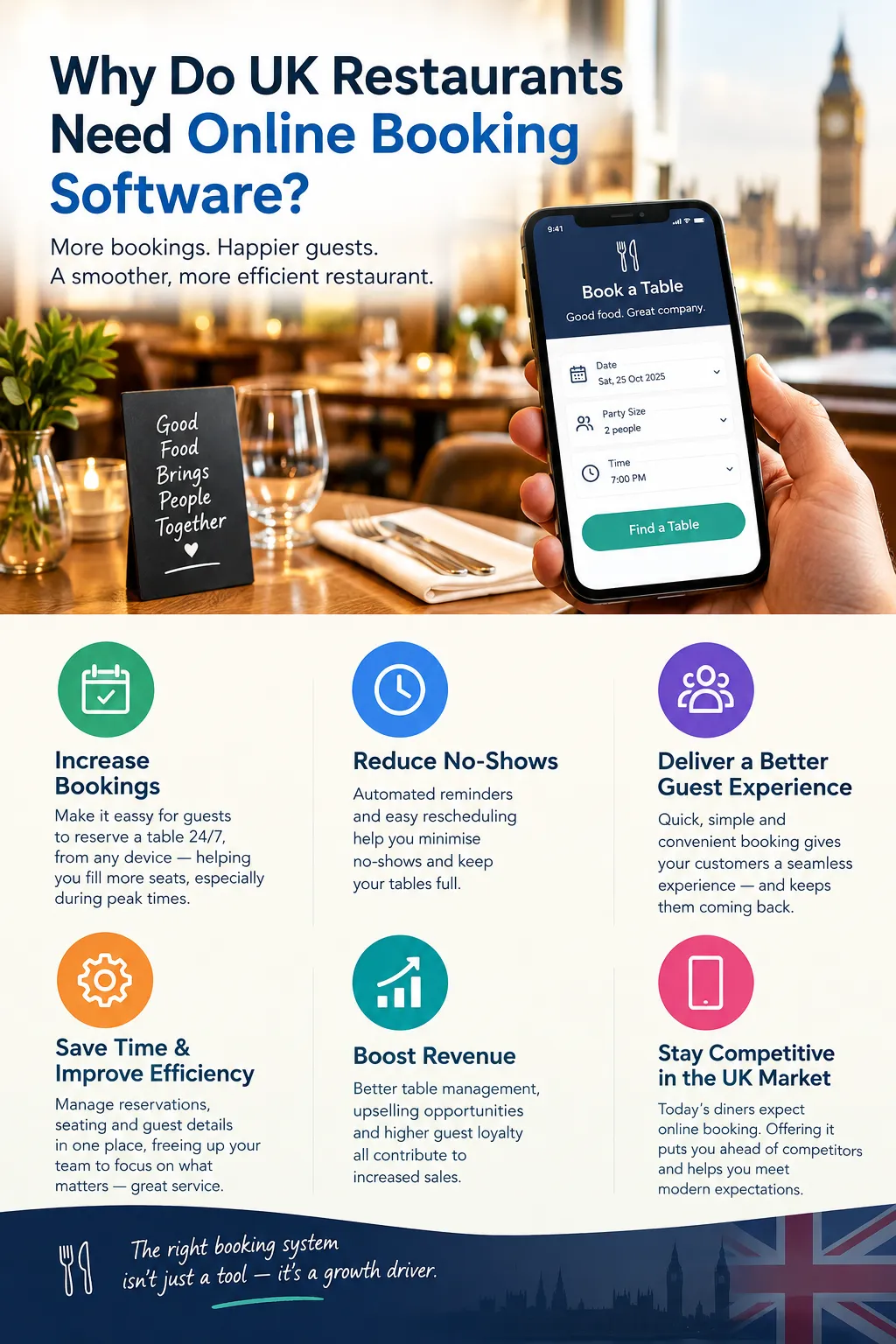
Here are five reasons to consider a digital booking system.
1. Accept Bookings Beyond Opening Hours
Customers may search for restaurants late at night, during work breaks or while planning a weekend meal. A booking system on your website can accept reservations outside normal telephone hours, subject to the availability rules you configure.
This gives potential customers a way to reserve a table when your team is busy or unavailable.
2. Reduce Manual Booking Administration
Managing reservations across phone calls, messages, social media and paper diaries can become difficult as booking volumes increase.
A centralised system helps staff check availability, update reservations and access booking information without switching constantly between communication channels.
3. Improve the Customer Experience
A straightforward online booking journey lets diners select an available date, time and party size with minimal friction.
Clear confirmation messages and timely reminders can also help customers feel confident that their reservation has been recorded correctly.
4. Support Better Table Planning
A clear reservation diary helps managers understand expected covers and prepare for busy services.
Depending on the software, staff may be able to allocate tables, manage seating times, record special requests and accommodate changes more efficiently.
5. Build Opportunities for Repeat Visits
A booking is the beginning of a customer relationship, not necessarily a one-off transaction.
When reservation software works alongside suitable customer relationship management (CRM) and marketing tools, restaurants can use customer preferences and consent-based communications to support relevant promotions and encourage repeat visits.
What Features Should the Best Restaurant Reservation Software Include?
Before comparing providers, identify the features your restaurant actually needs. A long list of capabilities does not automatically make a system the best choice for your business.
Online Booking Widget
Look for software that allows customers to book directly through your restaurant website.
Ideally, the booking widget should work smoothly on mobile devices, match your branding and provide a clear booking journey. Check whether it integrates with your existing website platform, including WordPress if applicable.
Direct booking functionality can also help you build your own customer relationships rather than relying entirely on third-party marketplaces.
Real-Time Availability and Table Management
The system should reflect available tables and prevent conflicting reservations according to your configured rules.
Useful capabilities may include a visual floor plan, table allocation, booking duration settings, party-size management and the ability to move or modify reservations.
These features are particularly valuable during peak dining periods when staff must coordinate multiple bookings alongside walk-in customers.
Automated Confirmations and Reminders
Booking confirmations reassure customers that their reservation has been received. Reminders can help customers remember upcoming visits and make it easier to communicate changes.
Check which channels are supported, such as email or SMS, whether messaging incurs additional charges and how reminder schedules can be configured.
Deposits and No-Show Management
No-shows can leave tables empty that could otherwise have been offered to other customers.
Depending on the restaurant and provider, useful tools may include deposits, card guarantees, cancellation policies and automated reminders.
These features can help restaurants manage booking commitments, although no software can eliminate no-shows entirely.
Customer Profiles and Reporting
Customer records can help staff prepare for returning guests and understand reservation patterns.
Reporting tools may show booking volumes, covers, cancellations and other useful operational information. More advanced platforms may offer customer segmentation and marketing functionality.
Ensure that customer data is handled in accordance with applicable UK data protection requirements.
Integrations and Ease of Use
Consider how the software fits into your existing restaurant operations.
Check compatibility with your POS, payment provider, website, customer messaging tools and other systems. Ask whether the required integrations are included in your subscription or cost extra.
Most importantly, make sure your staff can learn the system without unnecessary complexity.
Best Restaurant Reservation Software in the UK: Platforms to Compare
There is no single platform that is best for every restaurant. The right choice depends on your budget, booking volume, customer acquisition strategy and operational requirements.
The following providers offer different approaches to restaurant reservations. Treat this as a practical shortlist rather than a definitive ranking, and verify current features, availability and pricing directly with each provider.
1. OpenTable — Best for Restaurant Discovery and Booking Reach
OpenTable combines reservation management with a consumer-facing restaurant discovery and booking network.
It may suit restaurants that want to reach diners who are actively searching for places to eat, particularly venues where marketplace visibility is an important part of their customer acquisition strategy.
Key considerations:
- Restaurant discovery through its diner network.
- Online reservations and table management.
- Guest management and reporting capabilities.
- Subscription and potential marketplace-related fees to evaluate.
Best suited for: Restaurants that value third-party discovery alongside reservation management.
Before choosing OpenTable, compare the costs of marketplace bookings with direct website reservations and consider how much additional business the network may generate for your venue.
2. ResDiary — Best for Hospitality-Focused Booking Management
ResDiary provides reservation and table management tools designed for hospitality businesses, including restaurants, pubs and groups.
It is worth considering if your priority is managing the reservation diary, controlling table availability and organising service operations.
Key considerations:
- Reservation and table management.
- Support for hospitality booking workflows.
- Options for deposits, payments and integrations, depending on the package.
- Additional features and pricing that may vary by plan.
Best suited for: Restaurants and hospitality operators seeking dedicated reservation management tools.
Ask for a complete breakdown of subscription costs, booking limits, integrations and optional add-ons before committing.
3. SevenRooms — Best for Guest Experience and Customer Relationships
SevenRooms focuses on reservations, guest experience and customer data, with tools designed to help hospitality businesses understand and engage their guests.
It may be particularly relevant to premium restaurants, hospitality groups and operators that want to connect reservations with more sophisticated guest management and marketing workflows.
Key considerations:
- Guest profiles and preference management.
- Reservation and table management.
- Customer engagement and marketing capabilities.
- Suitability for larger or more complex hospitality operations.
Best suited for: Restaurants that prioritise guest personalisation and customer relationship management.
If you run a smaller independent venue, assess whether its capabilities and overall cost are appropriate for your requirements.
4. TheFork Manager — Best for Marketplace-Led Bookings
TheFork Manager combines reservation management with access to TheFork's restaurant discovery and booking marketplace in supported markets.
For restaurants looking to reach diners who use restaurant booking platforms, this can be an option to investigate.
Key considerations:
- Marketplace visibility and diner discovery.
- Reservation management tools.
- Potential promotional and marketplace-related costs.
- The distinction between direct and marketplace-generated bookings.
Best suited for: Restaurants interested in using a third-party marketplace as part of their booking strategy.
Review the commercial terms carefully, including any applicable commissions, subscription fees and conditions associated with promotional campaigns.
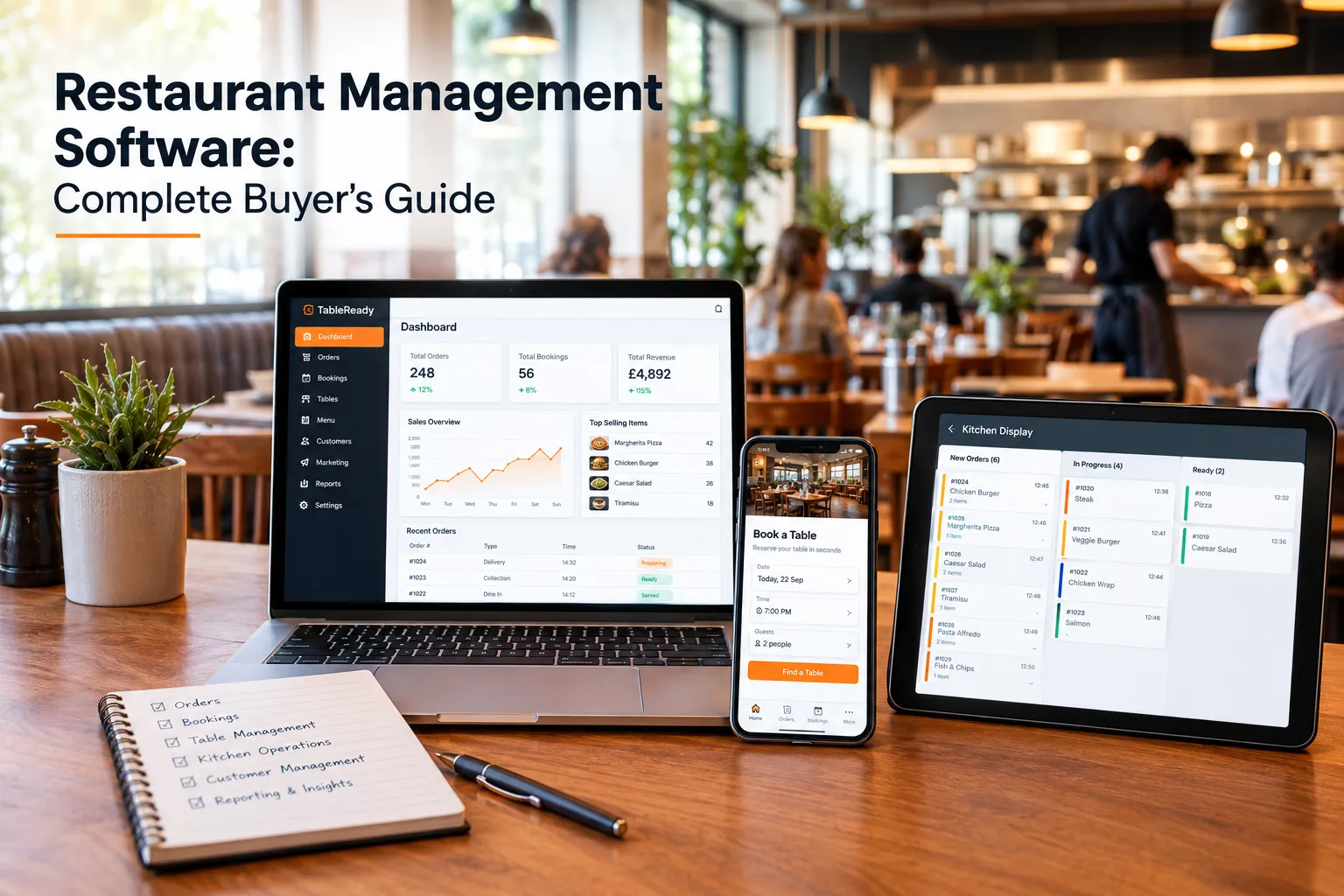
5. TableReady — Best for Restaurants Seeking a Broader Management Platform
TableReady is worth considering if you want to look beyond a standalone reservation tool and explore a broader restaurant technology platform.
Restaurant owners often manage several connected activities: accepting online orders, handling table bookings, supporting loyalty programmes and maintaining customer communications. Using disconnected tools for each activity can create extra administration and make it harder to maintain a consistent customer experience.
TableReady focuses on restaurant technology and digital services, including online ordering, table reservations, QR code ordering, loyalty and marketing support. Its broader positioning makes it relevant to businesses evaluating how reservation management fits into their overall restaurant operations.
Key considerations:
- Online ordering and digital sales capabilities.
- Table reservation and booking workflows.
- QR code ordering and restaurant operations.
- Loyalty and marketing services.
- The opportunity to assess connected services alongside booking requirements.
Best suited for: Restaurants that want to evaluate booking management as part of a wider digital restaurant solution.
When assessing TableReady, ask for a demonstration of the reservation workflow, including website booking, availability management, confirmations, cancellations and any integrations your business requires. Confirm which capabilities are included in the proposed package.
Explore the platform at TableReady to learn more about its restaurant technology solutions.
Restaurant Reservation Software Comparison
Use this overview to create an initial shortlist based on your priorities.
| Platform | Main consideration | Potential fit |
|---|---|---|
| OpenTable | Marketplace discovery and reservations | Restaurants seeking additional diner reach |
| ResDiary | Hospitality-focused reservation management | Independent venues and restaurant groups |
| SevenRooms | Guest data and personalised experiences | Premium restaurants and larger operators |
| TheFork Manager | Marketplace visibility and bookings | Restaurants targeting marketplace users |
| TableReady | Broader restaurant technology and digital services | Restaurants evaluating connected digital operations |
Important: This table describes general positioning, not a feature-by-feature audit. Pricing, contract terms, integrations and individual capabilities should be verified with each provider.
How Much Does Restaurant Reservation Software Cost in the UK?
The cost of restaurant reservation software varies depending on the provider, features, booking volume and pricing model.
Some providers offer subscription-based plans, while others combine subscriptions with fees for marketplace-generated bookings, optional modules or payment services. Enterprise-oriented solutions may require a tailored quotation.
Before comparing prices, consider the following costs:
- Monthly subscription: The core fee for accessing the platform.
- Booking or cover fees: Charges that may apply to bookings generated through particular channels.
- Setup and onboarding: Initial configuration, training or implementation costs.
- Payment processing: Fees associated with deposits or online payments.
- Messaging: Charges for SMS or other communication services.
- Optional integrations: Additional fees for connecting other systems.
Calculate the total cost using your expected monthly booking volume rather than comparing headline prices alone.
For example, a restaurant receiving most reservations through its own website may prioritise predictable subscription costs. A venue seeking additional customers through a marketplace may accept booking-related fees if the additional business justifies the expense.
Ask every provider for a written quotation and a clear explanation of its contract, cancellation terms and renewal conditions.
How to Choose the Right Online Booking Software for Your Restaurant
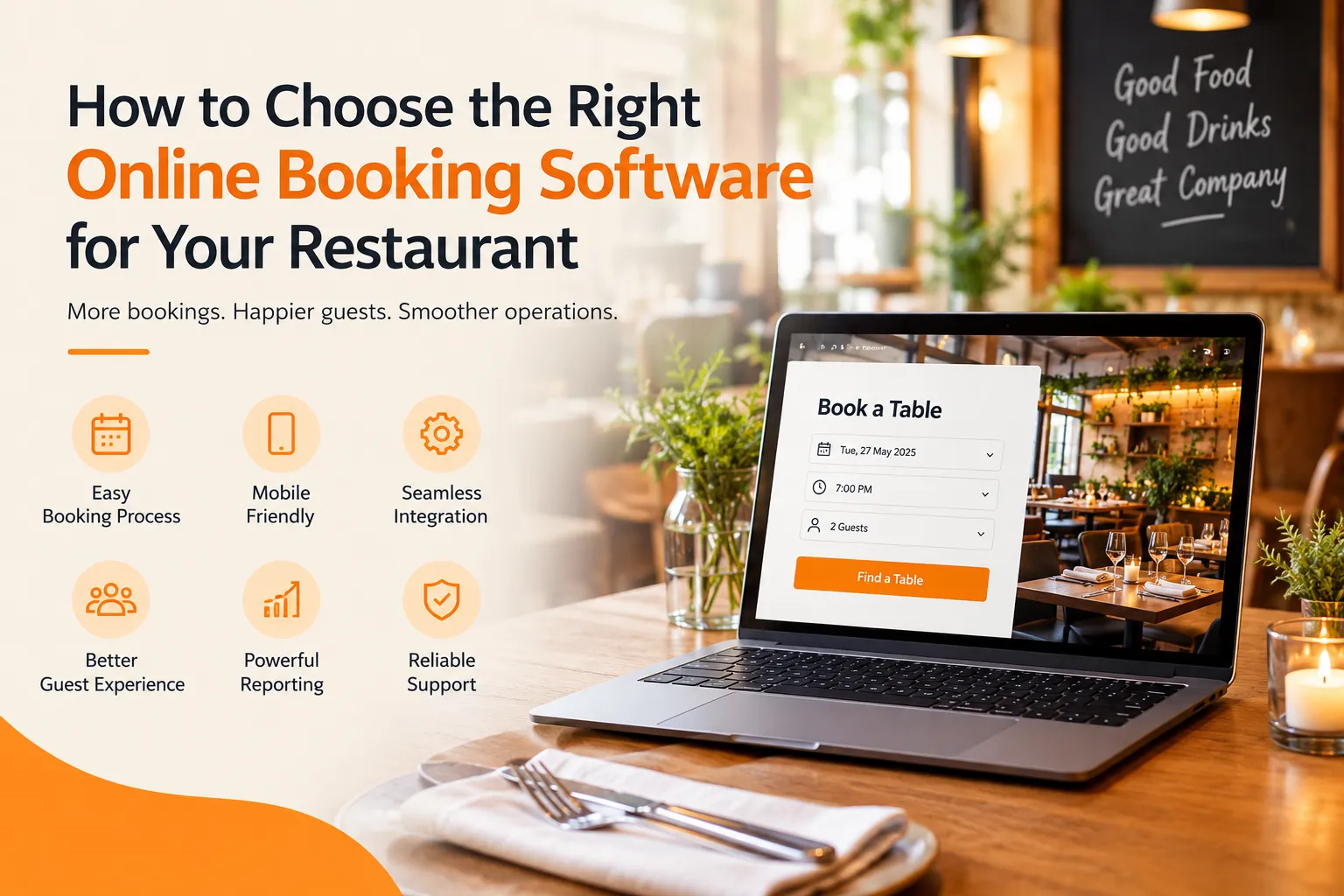
Follow these steps to make a more informed decision.
Step 1: Identify Your Biggest Booking Challenge
Are you missing calls during busy periods? Receiving reservations through too many channels? Experiencing no-shows? Struggling to organise tables during peak hours?
Start with the problem you need to solve. This will help you avoid paying for features that do not support your immediate business goals.
Step 2: Understand Your Booking Channels
Decide whether you need direct bookings through your website, visibility on third-party platforms, social media booking options or a combination of channels.
Make sure the provider supports the channels that matter to your restaurant.
Step 3: Calculate the Total Cost
Compare subscription fees, booking charges, messaging costs, payment fees and optional extras.
Also consider whether your contract allows you to change plans as your business grows.
Step 4: Test the Customer Journey
Request a demonstration or trial where available.
Try making a booking on a mobile phone, changing the reservation, cancelling it and checking the confirmation message. Ask staff to test the management dashboard as well.
Step 5: Check Data Access and Integrations
Understand how you can access and export booking information, what happens if you leave the provider, and which systems can be connected.
Review data protection responsibilities, permissions and customer consent requirements before using reservation information for marketing.
Step 6: Measure the Results
After implementation, monitor metrics such as online booking volume, cancellations, no-shows, booking conversion rates and repeat visits where reliable data is available.
These indicators can help you determine whether the software is delivering practical value and what needs improving.
Frequently Asked Questions About Restaurant Reservation Software
What is the best restaurant reservation software in the UK?
The best restaurant reservation software depends on your restaurant's needs. OpenTable may suit venues prioritising marketplace discovery, ResDiary offers hospitality-focused reservation management, SevenRooms emphasises guest relationships, and TheFork Manager combines reservations with marketplace access. TableReady is worth evaluating if you also want to explore wider restaurant technology and digital services.
Compare features, total costs and integrations before deciding.
What is the difference between restaurant reservation software and online booking software?
Restaurant reservation software is specifically designed to manage table bookings and related activities. Online booking software is a broader term for tools that let customers make bookings digitally. In the restaurant industry, the terms often overlap and may describe the same type of platform.
Can customers book tables directly through a restaurant website?
Yes. Many reservation platforms provide a booking widget or online reservation page that can be integrated with a restaurant website. Customers can check available times and submit bookings without calling the restaurant, subject to the system's settings.
Does restaurant booking management software reduce no-shows?
It can help reduce the risk of no-shows through reminders, deposits, card guarantees and clear cancellation policies, where these features are supported. Results depend on the restaurant's processes, customers and booking conditions.
Is restaurant reservation software suitable for small restaurants?
Yes. Small restaurants, cafés and independent venues can benefit from online bookings and centralised reservation management. The key is choosing a system with appropriate features, manageable costs and a simple workflow.
Should I choose a standalone booking system or an all-in-one restaurant platform?
A standalone booking system may be sufficient if your main requirement is managing table reservations. An all-in-one platform may be worth considering if you also want to connect bookings with online ordering, QR code ordering, loyalty or marketing services. Compare the actual features and integration options rather than assuming every platform includes them.
What should I check before signing a restaurant software contract?
Review the total cost, booking limits, additional fees, contract length, renewal terms, cancellation policy, support arrangements, integrations and data export options. Confirm that the features demonstrated are included in your chosen subscription.
Final Thoughts: Find the Best Restaurant Reservation Software for Your Business
The best restaurant reservation software should do more than record table bookings. It should make reservations easier for customers, simplify restaurant booking management and support a smoother experience for your staff.
For some businesses, marketplace reach will be the deciding factor. Others will benefit more from direct website bookings, efficient table management, customer communications or connections with existing restaurant systems.
Start by identifying your operational priorities, shortlist the providers that match those requirements and compare their costs and capabilities through a practical demonstration.
If you are also looking to improve online ordering, table reservations, loyalty and digital marketing, consider how these activities could work together within your wider restaurant technology setup.
Explore TableReady and discover how its restaurant technology solutions could support your business.
Visit www.tableready.uk to learn more and book a free demo.






















Sign in to leave a comment.