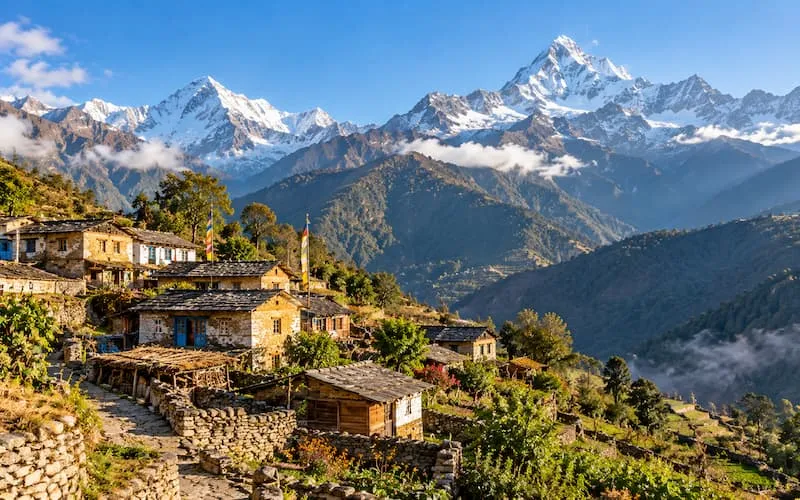

Nepal’s mountains don’t have to mean weeks on the trail. If you’re new to hiking, a short trek gives you the big views, the villages, the forests and the quiet paths, and lets you find out how you feel at altitude before committing to anything bigger. Pokhara is the best base for this. Several beginner-friendly routes start within a short drive of the city, and most fit into a long weekend or a few days off.
If you’re travelling from the UAE, Nepal tour packages from Dubai can bundle your flights, transfers, permits, hotels and trek logistics into one trip, which makes a short Himalayan getaway much easier to plan. Many packages also add time in Kathmandu and Pokhara, so you can combine your first trek with temples, lakeside evenings and local food.
A good first trek mixes easy walking with comfortable teahouses, a bit of culture and a payoff view. The routes below (Australian Camp and Dhampus, Ghorepani and Poon Hill, Ghandruk and Panchase, plus Mardi Himal for those who want a step up) all start near Pokhara and are well suited to beginners. Which one suits you depends on how many days you have, how fit you are, what kind of scenery you want and how much altitude you’re comfortable with.
The Best Short Treks for Beginners
Australian Camp and Dhampus
If you want a gentle first taste of Himalayan trekking, start here. The trailhead is a short drive from Pokhara, and you can do the whole thing in one night or stretch it to two or three days. Australian Camp sits at about 2,060 m, and on a clear morning you’ll see the Annapurna range and the pointed peak of Machhapuchhre.
The trail climbs through forest and terraced farmland and passes Gurung villages before reaching the open ridge. The elevation is low and the walking days are short, so it works well if you’ve never done a multi-day trek or only want a mountain view without giving up a whole week.
Ghorepani and Poon Hill
This is the classic first-timer trek, and it’s popular for good reason. It usually takes 3 to 5 days and combines rhododendron forest, village life, teahouse stays and a sunrise from the top. Poon Hill is about 3,210 m, higher than Australian Camp but well below the altitudes of the big Himalayan treks.
The highlight is the pre-dawn climb to the viewpoint. On a clear morning you can see Annapurna and Dhaulagiri turn gold as the sun comes up. You sleep in teahouses along the way, so there’s no camping gear to carry. Be ready for stairs, though. The route has thousands of stone steps, so it helps to do some long walks and stair practice beforehand.
Ghandruk
Ghandruk suits people who want culture alongside a moderate hike. It’s a large Gurung village known for its stone-built houses, terraced fields and big mountain backdrop. Most people take two or three days.
The appeal here is the village itself as much as the peaks. You get a sense of everyday life in the foothills and the hospitality of the people who live there. Because it sits at a modest altitude and has some road access, you can keep the walking days short and use a vehicle for part of the route if you’d like.
Panchase
Panchase is a good pick if you’d rather avoid the busier viewpoint trails. It’s usually a 2 to 4 day trek, and the high point is at roughly 2,500 m. You walk through forests, villages and ridgelines, with wide views over the valleys and the Annapurna, Dhaulagiri and Machhapuchhre ranges.
The big draw is how calm it feels. If crowds aren’t your thing, you’ll probably enjoy it. It isn’t hard, but there are real ups and downs, so a little preparation goes a long way.
Mardi Himal (if you want more of a challenge)
Mardi Himal is for first-timers who are reasonably fit and want something bigger. Expect 4 to 7 days on the trail, depending on your route, and some sections climb above 4,000 m. That makes it noticeably longer and tougher than the other treks here.
The reward is a high ridge walk right beside Machhapuchhre, with big mountain scenery all around. But don’t choose it just because it’s often called a “short” trek. It asks for steady pacing, good preparation and some respect for altitude and weather. A guide is especially worthwhile if you haven’t trekked at height before.
How to Choose the Right Trek
Start with three questions: how fit are you, how many days do you have, and what do you want to see?
- 1 to 2 days: Australian Camp and Dhampus
- 3 to 5 days: Ghorepani and Poon Hill, or Ghandruk
- Quiet forest and countryside: Panchase
- Fit and wanting a bigger climb: Mardi Himal
Altitude matters too. A low-altitude trek is far kinder on the body than one that climbs quickly past 4,000 m. Also think about how long you’ll walk each day, how many steep stairs there are, where you’ll sleep, how you’ll get to the trailhead and what the weather is likely to do. A comfortable trek where you have time to enjoy the view beats a tougher one that only looks more exciting on paper.
When to Go
Autumn, especially October and November, is the most popular season because the skies are usually clear and the mountain views are at their best. Spring, particularly March and April, is also great. The weather is generally stable, and the rhododendron forests bloom along many of these routes.
Mountain weather can still turn quickly, so check the forecast before you set out. Higher trails can be cold or snowed in during winter, and the monsoon (roughly June to September) brings heavy rain, leeches and slippery paths. Keep your plans a little flexible, and your trip will be both more enjoyable and safer.
What to Pack
Keep it light. A heavy pack makes every uphill harder. The essentials are:
- Comfortable hiking shoes with good grip
- Breathable layers and a warm jacket
- Rain gear
- A water bottle
- Sunscreen and sunglasses
- A headlamp
- A small first aid kit and any personal medication
Mornings and evenings get cold even on lower routes, and nights in mountain villages can be chilly. Trekking poles are a big help on steep descents, and a few snacks will keep your energy up on longer stretches.
Safety Tips for Beginners
Don’t rush. Take regular breaks, drink plenty of water and pay attention to how your body feels. Never ignore a severe headache, dizziness, unusual weakness, nausea or trouble breathing, especially at higher elevations. If symptoms appear, stop climbing, and if they get worse, head down.
Stick to established trails and keep an eye on the weather. If you don’t know the area, hire a licensed local guide, particularly for higher or less-traveled routes. Check the current permit requirements before you go, since they change from time to time. Tell someone your route and keep emergency numbers handy. If you’d rather not sort out logistics yourself, a tour package or local agency can handle transport, permits and lodging.
Final Thoughts
Nepal has a trek for almost every fitness level, schedule and interest. You can take the easy Australian Camp and Dhampus route, the scenic Poon Hill climb or the culturally rich walk to Ghandruk, and any of them will give you mountain views, forest trails, local culture and teahouse hospitality without a long commitment.
If you’re short on time, start with a lower-altitude trek. If you enjoy it and feel strong, you can build up to something like Mardi Himal on a later trip. With good planning, the right gear, an eye on the weather and a relaxed pace, your first time in the Himalayas can easily become the highlight of your Nepal trip.



























Sign in to leave a comment.