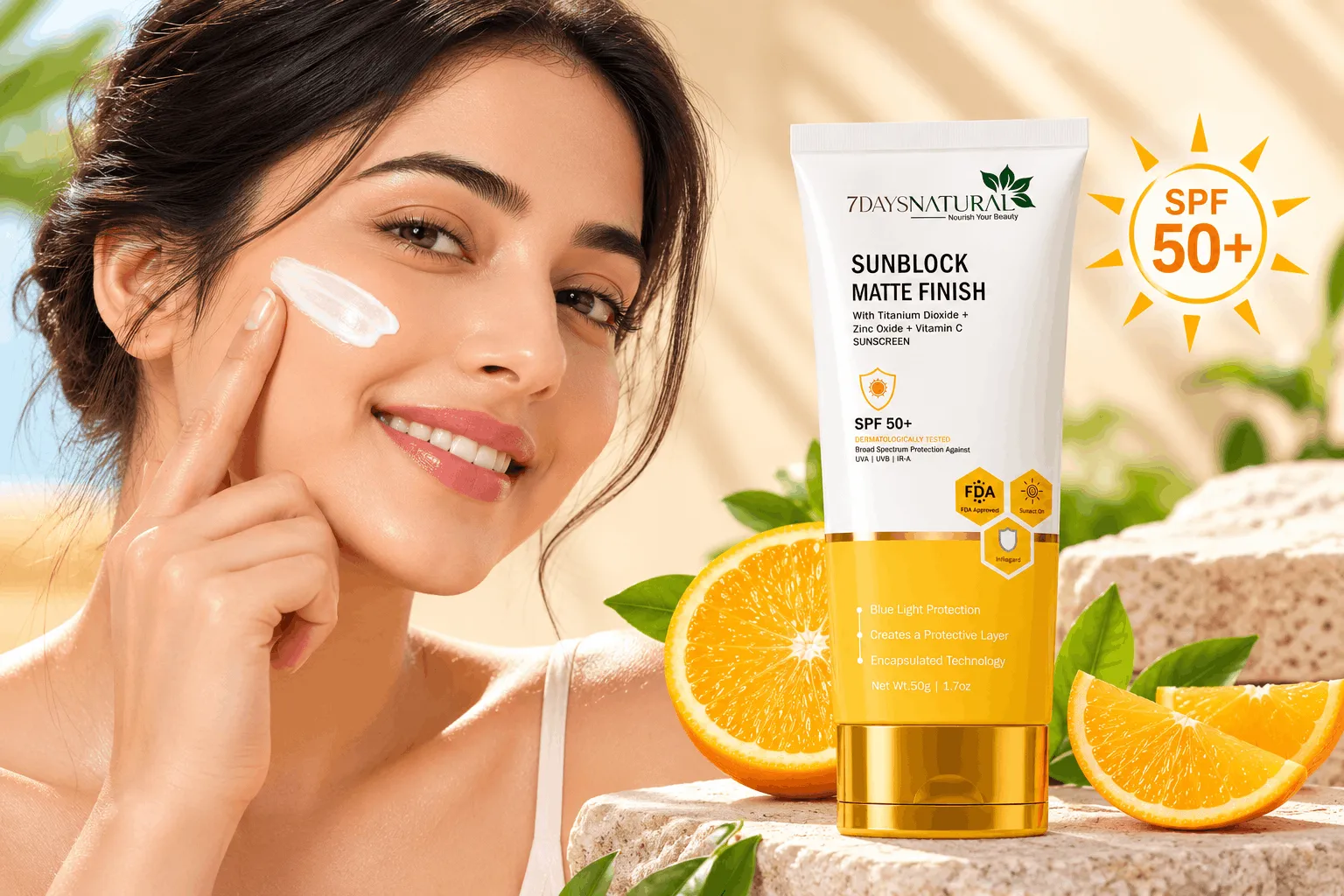

If you have oily skin, choosing the right sunscreen for Oily Skin can be frustrating. Some sunscreens feel heavy, leave a greasy layer, or make your face look shiny within a few hours. And if you live in India, heat, humidity, pollution, and strong sunlight can make the problem even more noticeable.
That is why a lightweight, non-greasy, matte-finish SPF 50 sunscreen can be a better choice for everyday skincare, especially for oily and combination skin.
But how do you choose the best sunscreen for oily skin in India? Let's break it down.
What Is the Best Sunscreen for Oily Skin?
The best sunscreen for oily skin should feel comfortable on the skin without making it excessively greasy. Look for a formula that offers broad-spectrum sun protection, SPF 50, a lightweight texture, and a matte or non-sticky finish.
For daily use, SPF 50 is a practical choice because it provides high protection against UVB radiation when applied correctly and reapplied as needed.
If your skin becomes oily easily, a matte-finish sunscreen can also make your skincare routine more comfortable, particularly in India's warm and humid weather.
Why Is Sunscreen Important for Oily Skin?
Having oily skin does not mean you can skip sunscreen.
UV exposure can contribute to tanning, uneven-looking skin tone, premature signs of ageing, and the appearance of pigmentation. Oily skin can also become more difficult to manage when you layer heavy skincare products during hot weather.
Using a suitable sunscreen every morning helps protect your skin while keeping your routine simple.
A good everyday routine can be:
Cleanser → Serum → Moisturizer (if needed) → SPF 50 Sunscreen
If you use makeup, sunscreen should generally be the final step of your morning skincare routine before makeup.
Why Choose SPF 50 Sunscreen in India?
India experiences significant sun exposure throughout the year. Sunscreen therefore shouldn't be treated as something you only need during summer or beach holidays.
An SPF 50 sunscreen can be particularly useful for people who spend time outdoors, commute to work or college, travel frequently, or live in areas with strong sunlight.
Remember that SPF does not mean you can stay in the sun indefinitely. Sunscreen works best when you apply enough product, cover exposed areas properly, and reapply when required.
What Should You Look for in a Sunscreen for Oily Skin?
Before buying a sunscreen, check these important factors:
1. SPF 50
Choose a sunscreen with SPF 50 if you want high UVB protection for your daily routine.
2. Lightweight Texture
Oily skin generally feels more comfortable with lightweight skincare. A sunscreen that feels too heavy may make you less likely to use it consistently.
3. Matte Finish
A matte finish can help reduce the appearance of excessive shine and can be particularly appealing for oily or combination skin.
4. Non-Greasy Feel
Your sunscreen should feel comfortable rather than leaving a thick, oily layer on the face.
5. Suitable for Daily Use
The best sunscreen is one you can comfortably use every morning and reapply when necessary.
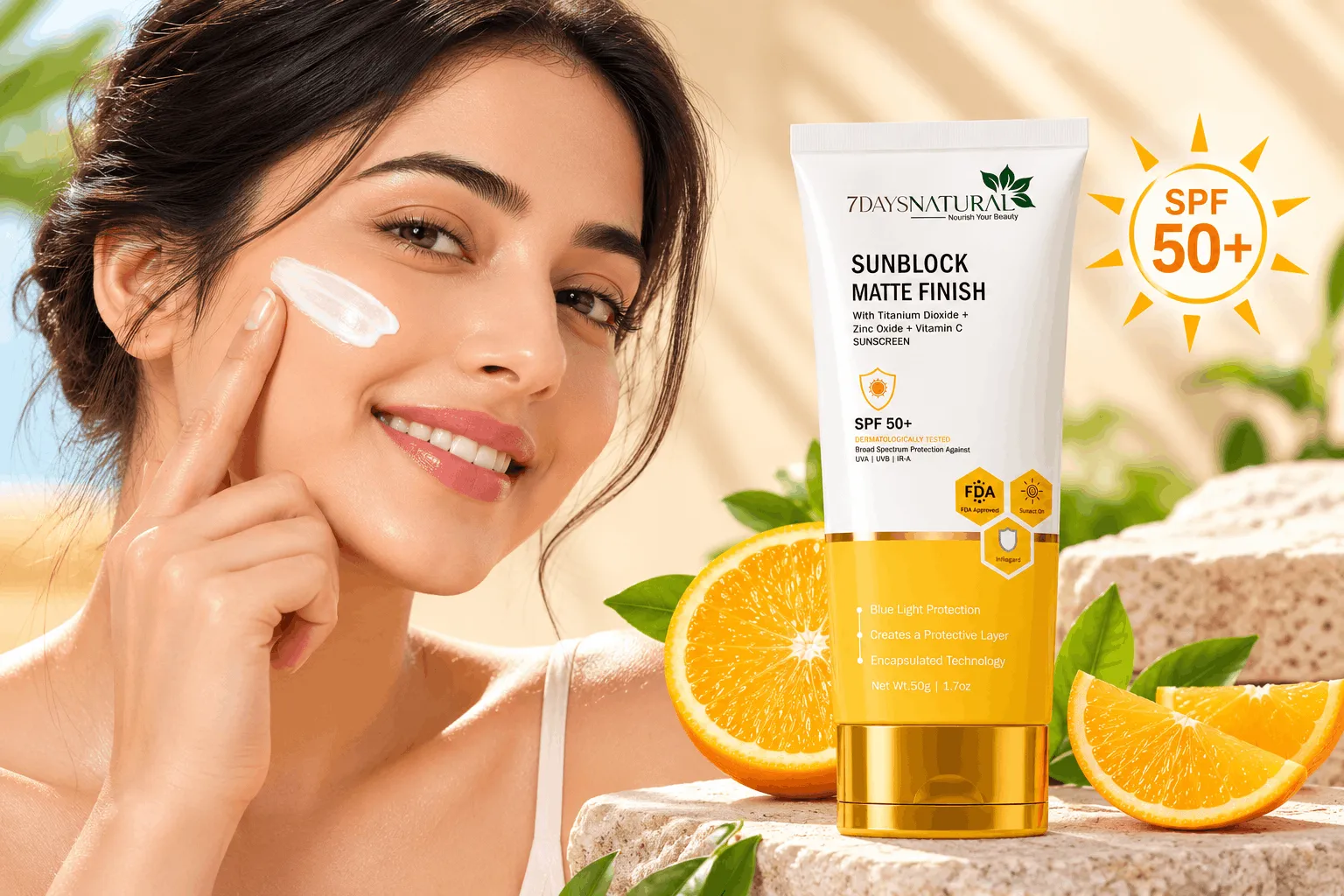
7DaysNatural Sunblock Matte Finish SPF 50 Sunscreen
For people looking for a matte-finish SPF 50 sunscreen for oily skin, the 7DaysNatural Sunblock Matte Finish SPF 50 Sunscreen is designed around the needs of everyday sun protection.
Its matte-finish positioning makes it a suitable option for people who prefer a less shiny appearance after applying sunscreen.
You can explore the product here:
7DaysNatural Sunblock Matte Finish SPF 50 Sunscreen
[Product Link: https://7daysnatural.in/products/sunblock-matte-finish-spf-50-sunscreen]
When choosing sunscreen, always check the label and ingredient list to make sure it suits your skin needs.
How Much Sunscreen Should You Apply?
One of the most common sunscreen mistakes is applying too little.
For the face and neck, a commonly used practical guide is the two-finger method: apply sunscreen along the length of two fingers and use that amount for the face and neck, adjusting based on your face size and the product instructions.
Don't forget commonly missed areas such as:
- Ears
- Neck
- Hairline
- Around the jawline
- Other exposed areas
Apply sunscreen before going outdoors and allow it to set before applying makeup.
How Often Should You Reapply Sunscreen?
Reapplication depends on your activities and the sunscreen's instructions.
If you're outdoors for an extended period, sweating, swimming, or wiping your face frequently, sunscreen may need to be reapplied more often.
For everyday indoor routines with limited sun exposure, your needs may be different.
The important thing is not to rely on a single morning application when you are spending significant time outdoors.
Can Oily Skin Use Sunscreen Every Day?
Yes. Oily skin can and should use sunscreen every day.
The key is choosing a sunscreen with a texture that works for your skin type.
If traditional creamy sunscreens make your skin feel greasy, try a lightweight or matte-finish formula. This can make daily sunscreen application easier and more comfortable.
Consistency matters more than choosing a product simply because it is marketed as "for oily skin."
Does Sunscreen Make Oily Skin More Greasy?
Not necessarily.
Some sunscreen formulas can feel richer or more moisturizing, while others are specifically designed with lightweight or matte finishes.
If your skin becomes shiny quickly, look for terms such as matte finish, lightweight, non-greasy, or oil-control when comparing products.
However, everyone's skin reacts differently, so patch testing a new skincare product is a sensible approach.
Can Sunscreen Help Prevent Tanning and Pigmentation?
Sunscreen helps protect skin from UV radiation, which is one factor involved in tanning and visible signs of photoageing.
However, sunscreen should not be considered a treatment for existing pigmentation.
If you already have persistent dark spots or pigmentation, consider speaking with a dermatologist about a suitable skincare routine while continuing daily sun protection.
Sunscreen for Oily Skin: Common Mistakes to Avoid
Even a good sunscreen may not provide the expected protection if you use it incorrectly.
Avoid these common mistakes:
Using too little: Insufficient application can reduce the protection you actually receive.
Skipping sunscreen on cloudy days: UV exposure doesn't disappear simply because the sky is cloudy.
Applying only when going to the beach: Everyday exposure also matters.
Forgetting the neck and ears: These areas are often exposed but overlooked.
Not reapplying during prolonged outdoor exposure: Sweat, water, and wiping can remove sunscreen.
Choosing a product you dislike wearing: If a sunscreen feels uncomfortable, you may stop using it consistently.
Is Matte Sunscreen Better Than Dewy Sunscreen for Oily Skin?
There is no universal "better" sunscreen. It depends on your skin type and personal preference.
For oily skin, a matte-finish sunscreen may feel more comfortable because it can give the skin a less shiny appearance.
For dry skin, a more moisturizing or dewy sunscreen may feel better.
The goal is to find a sunscreen that provides appropriate protection and fits comfortably into your daily routine.
Frequently Asked Questions
Which SPF is best for oily skin in India?
For everyday sun protection, an SPF 50 sunscreen is a practical option for many people, particularly when you spend time outdoors. Choose a formula that feels comfortable and suits your skin type.
Is SPF 50 sunscreen good for oily skin?
Yes. SPF describes the level of UVB protection rather than whether a sunscreen is suitable for oily skin. For oily skin, look for an SPF 50 formula with a lightweight or matte finish.
Which sunscreen is best for oily skin?
The best sunscreen for oily skin is one that offers appropriate broad-spectrum protection while feeling lightweight and comfortable on your skin. Matte-finish SPF 50 formulas can be a good option for people who dislike greasy sunscreen.
Can I use sunscreen every day?
Yes. Daily sunscreen use is an important part of protecting exposed skin from UV radiation.
Can oily skin skip moisturizer if sunscreen feels moisturizing?
It depends on your skin and the sunscreen formula. If your sunscreen provides enough comfort and hydration for your skin, you may not need a separate moisturizer in the morning. If your skin feels dry or tight, adding a lightweight moisturizer may be helpful.
How much sunscreen should I use on my face?
A practical guide is the two-finger method for the face and neck, although the exact amount can vary depending on the product and your face size. Always follow the product's instructions.
Final Thoughts
Finding the best sunscreen for oily skin in India isn't simply about choosing the highest SPF number. Texture, finish, comfort, application amount, and how consistently you use the product all matter.
If your skin tends to become oily or shiny, an SPF 50 matte-finish sunscreen can be a convenient choice for everyday skincare.
The 7DaysNatural Sunblock Matte Finish SPF 50 Sunscreen is one option to consider if you prefer a matte-finish sunscreen for your daily routine.
Most importantly, make sunscreen a consistent part of your morning skincare routine and remember to reapply when your outdoor exposure, sweating, or other activities require it.
















Sign in to leave a comment.