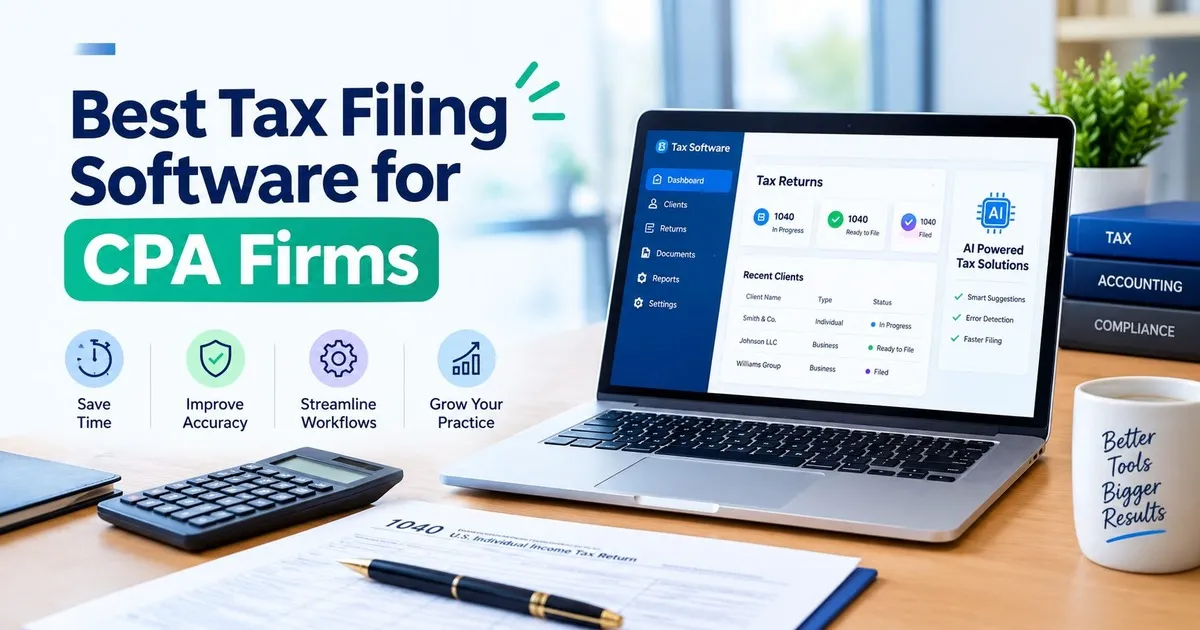

Tax season has a way of turning even the calmest office into a pressure cooker. Between chasing down client documents, double checking calculations, and racing the IRS clock, most CPA firms know that the right software can make or break a filing season.
If you have ever wondered whether your current setup is actually helping you or just barely keeping up, you are not alone. Let's talk about what actually matters when choosing the best tax filing software for CPA firms, and why more practices are leaning into AI-powered tools to get through busy season without burning out their staff.
Why Software Choice Matters More Than Ever
Tax rules do not stand still. Every year brings updated thresholds, new IRS forms, and small print changes that can trip up even experienced preparers.
Firms handling a mix of 1040s, 1065s, 1120s, 1120S returns, 1041s for trusts and estates, and even 990s for nonprofit clients need a system that keeps pace with all of it at once.
Manual workflows and outdated desktop software simply were not built for this kind of volume or complexity. When a firm is juggling dozens or hundreds of returns, small inefficiencies add up fast.
What to Look for in Tax Preparation Software
Not all tax software is created equal, and firms often discover this the hard way after a rough filing season. A good platform should handle the technical side of compliance while also making everyday work easier for your team.
- individual (1040), partnership, corporate, S corp, trust, and nonprofit returns
- Built-in accuracy checks that flag inconsistencies before e-filing
- Secure client document collection that reduces back and forth emails
- Integration with existing accounting or bookkeeping tools
- Real time visibility into return status across the whole team
These features are not just nice extras. They directly affect how many returns your team can process without sacrificing accuracy or client trust.
How AI Is Changing Tax Preparation for Firms
Artificial intelligence has moved well past being a buzzword in the accounting world. UP TAX Firms are now using AI to speed up document review, catch errors before they become IRS notices, and free up preparers to focus on advisory work instead of repetitive data entry.
This shift matters because client expectations have changed too. People do not just want their taxes filed correctly anymore. They want faster turnaround, clearer communication, and a sense that their CPA or EA is using modern tools to serve them well.
AI-driven platforms can pull data from source documents, flag anomalies, and even suggest next steps for complex filings, which shortens the review cycle significantly.
Choosing the Right Fit for Your Firm
Every business is unique in terms of the clientele it has, which could either be a bookkeeping firm catering to small firms, a EA firm targeting individual taxpayers, or even a family office that takes care of intricate trust and estate tax forms. The best strategy would be to fit software to your clientele.
Smaller firms often benefit most from platforms that are easy to onboard and do not require a steep learning curve. Larger firms or those handling more complex entities may prioritize deeper integrations and advanced review tools. Either way, it helps to test a platform during a lighter filing period before fully committing during peak season.
Also reads: https://writeupcafe.com/how-ai-powered-tax-software-is-changing-the-game-for-cpa-and-tax-firms
Final Thoughts
The bottom line is straightforward. Companies need to make sure they can file correct tax reports in a timely fashion, ensure client satisfaction, and not exhaust themselves and their employees each spring.
Technologies such as those provided by UpTax.AI, which are centered on tax preparation applications powered by artificial intelligence, have been created to allow businesses to achieve all this.
FAQ
What is the best tax filing software for CPA firms?
It all depends on the nature of the business but ideally, it should accommodate different types of entities, be precise, and interface well with other accounting systems you use.
Can AI tax software handle complex returns like 1065s and 1120s?
Yes, many modern platforms are built to handle partnership, corporate, and S corp returns alongside individual filings, though firms should always review AI-assisted output before submission.
Is AI tax software safe for handling sensitive client data?
Reputable platforms use secure document handling and encryption, but firms should confirm a vendor's security practices and compliance standards before onboarding.
How does tax software help during peak IRS filing deadlines?
It speeds up document collection, flags errors early, and gives staff a clearer view of return status, which reduces the last minute scramble around major deadlines.
Should small CPA or EA firms invest in AI powered tax tools?
Many small firms find that AI tools help them handle higher volumes without adding staff, making it a practical option even for lean teams.





















Sign in to leave a comment.