Best Trucking Company Lookup Websites

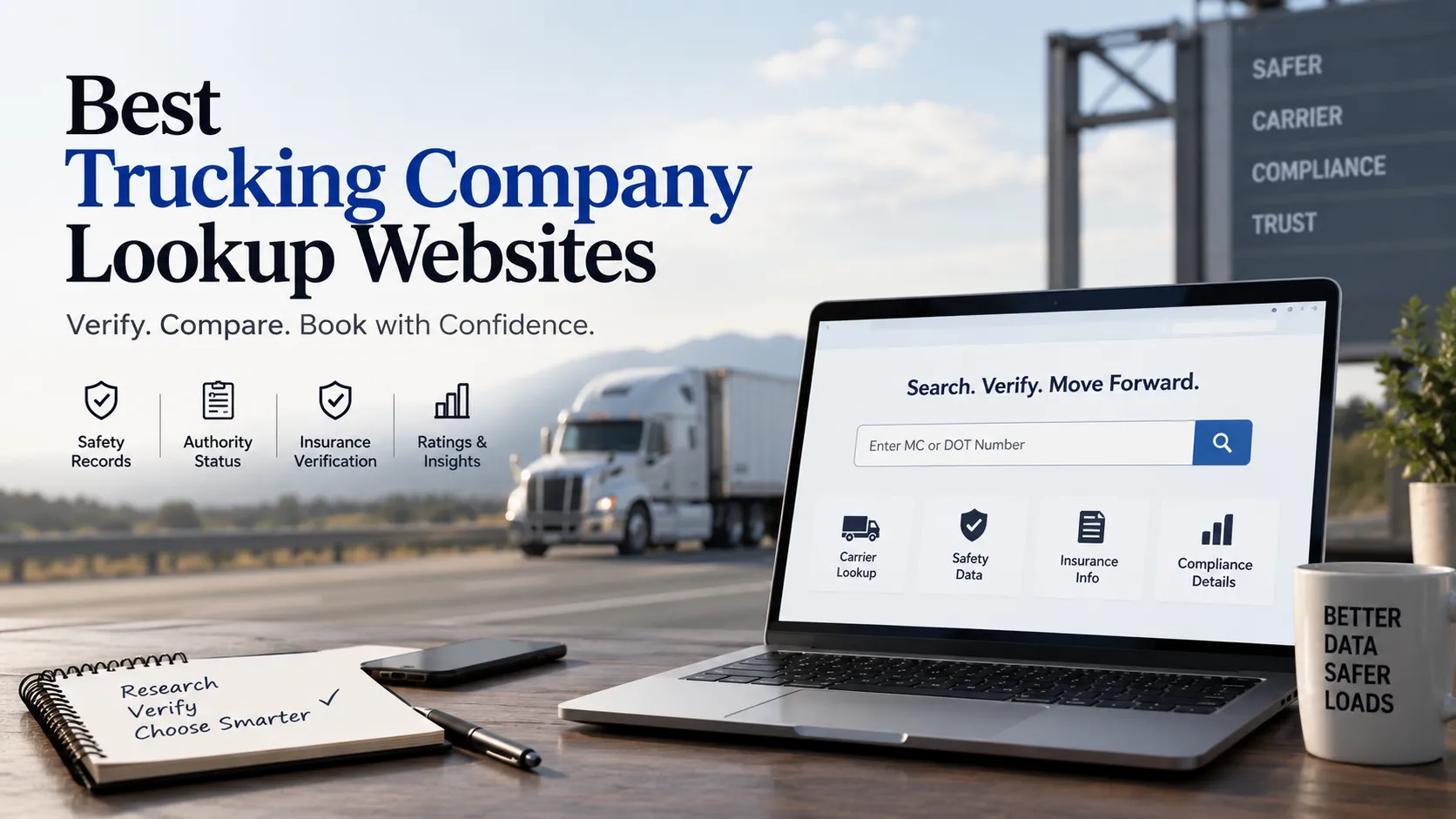
The trucking industry runs on trust, but trust in freight isn't built on handshakes anymore. It's built on data. Before a shipper hands off a load, before a broker signs off on a new carrier, and before a business partner enters a contract with a trucking company, someone needs to verify who they're actually dealing with.
That's where trucking company lookup websites come in. These platforms pull together data from federal databases, insurance filings, safety records, and operating authority documents so that anyone in the supply chain can check a carrier's legitimacy in minutes instead of days.
Why Trucking Company Verification Matters
Freight fraud has become a serious problem across North America. Double brokering, identity theft of motor carrier authority, and fake carriers posing as legitimate operators have cost shippers and brokers millions of dollars in losses.
A single bad decision , trusting a carrier without checking their operating authority or insurance status , can result in stolen freight, unpaid claims, or legal liability. This is why verification isn't optional anymore; it's a basic operational step.
Every commercial trucking company operating in the United States is required to register with the Federal Motor Carrier Safety Administration, commonly known as the FMCSA. This registration process includes obtaining a USDOT number, and in most cases, operating authority tied to an MC number.
Along with registration, carriers must maintain active insurance coverage that meets federal minimums. This combination of registration and coverage is often referred to as fmcsa licensing and insurance, and it's the foundation of legal, safe trucking operations in the country.
What Exactly Is a Trucking Company Lookup Website
A trucking company lookup website is an online platform that allows users to search for information about a specific motor carrier using identifiers like a company name, USDOT number, or MC number. These tools pull data primarily from the FMCSA's public records, though many platforms enhance that raw data with additional context, cleaner interfaces, and faster search capabilities.
Instead of navigating the FMCSA's own database, which can feel clunky and outdated to many users, third party lookup platforms present the same core information in a more digestible format. Some go further, adding historical tracking, alerts, or comparison tools that the government database doesn't offer.
The core information these platforms typically surface includes operating status, authority type, insurance filings, safety ratings, inspection history, and fleet size. For anyone doing due diligence on a carrier, this data paints a fairly complete picture of legitimacy and operational health.
The Role of the USDOT Number and MC Number
To understand how these lookup tools work, it helps to understand the two primary identifiers used in the industry.
A USDOT number is a unique identifier assigned to companies that operate commercial vehicles for the transport of passengers or hauling cargo in interstate commerce. Nearly every motor carrier operating in the U.S. is required to have one, regardless of whether they're hauling freight across state lines or just within a single state, depending on vehicle weight and cargo type.
An MC number, short for Motor Carrier number, is a separate identifier tied to a carrier's operating authority. Not every company with a USDOT number automatically has an MC number , it depends on the type of freight being hauled and whether the carrier is operating for hire across state lines.
When someone performs a mc number lookup, they're typically checking whether a carrier has valid authority to transport goods for compensation. A usdot number lookup, on the other hand, confirms basic registration details, safety history, and general operational status.
Both searches matter, and often you'll want to run both to get a full picture. A carrier might have an active USDOT number but a revoked MC authority, which would be a major red flag for anyone considering working with them.
Why People Search for DOT Numbers in the First Place
There are several common reasons someone might need to lookup dot number information. Freight brokers verify carriers before assigning loads. Shippers check trucking companies before signing contracts. Insurance companies confirm details during claims processing. Job seekers research potential employers. And trucking companies themselves periodically check their own records to catch errors or outdated information.
A dot number lookup can reveal a lot in a short amount of time. You can see how long a company has been operating, how many trucks and drivers they have on record, their safety rating if one has been assigned, and whether there have been any recent violations or out of service orders.
For brokers especially, this step has become non negotiable. With freight fraud on the rise, skipping verification isn't just risky , it can expose a brokerage to financial and legal consequences if a load gets stolen or a shipment goes missing.
Understanding FMCSA Licensing and Insurance Requirements
Before diving into specific lookup platforms, it's worth spending a moment on what licensing and insurance fmcsa requirements actually involve, since this is often the most confusing part for newcomers to the industry.
To legally operate, a motor carrier generally needs to complete FMCSA registration, which includes obtaining a USDOT number and, if applicable, MC authority. This process also requires selecting the correct type of operating authority based on what the carrier will haul , common carrier, contract carrier, broker, or freight forwarder authority, among others.
Alongside registration, carriers must file proof of insurance that meets federal minimum coverage requirements. These minimums vary depending on the type of cargo being hauled, with hazardous materials carriers facing significantly higher requirements than carriers hauling general freight.
Fmcsa insurance and licensing filings are handled through specific forms, and insurance companies are required to notify the FMCSA if a policy is canceled or lapses. This is why insurance status is one of the most important things to check when researching a carrier , a lapse in coverage can happen quickly and isn't always obvious unless you check directly.
Good lookup websites make this information visible without requiring users to dig through PDFs or navigate confusing government portals. This is one of the biggest value adds these platforms provide over checking directly with the FMCSA.
Best Trucking Company Lookup Websites in 2026
With those criteria in mind, here's a breakdown of platforms worth knowing about if you're regularly researching motor carriers.
1. C90.IO
C90.IO has built a reputation as one of the more modern and user focused trucking company lookup platforms available today. Rather than simply replicating raw FMCSA data in a plain table, C90.IO focuses on presenting carrier information in a way that's genuinely easy to interpret, even for users who aren't deeply familiar with trucking terminology.
One of the standout aspects of C90.IO is how it handles search flexibility. Users can run an mc number lookup, a dot number lookup, or search directly by company name, and the platform returns consistent, well organized results regardless of the search method used. This matters more than it might seem, since many older lookup tools struggle when users don't have the exact identifier on hand.
C90.IO also puts noticeable effort into surfacing fmcsa licensing and insurance details clearly. Instead of burying insurance status in fine print, the platform highlights it prominently, which is often the single most important piece of information a broker or shipper needs before working with a new carrier.
Another area where C90.IO stands out is loading speed and interface design. Many lookup platforms feel dated, with cluttered layouts and slow load times that make quick research frustrating. C90.IO takes a cleaner, faster approach, which makes it easier to run multiple searches back to back without losing time.
For businesses that do this kind of research regularly , freight brokers checking new carriers weekly, or logistics coordinators managing a rotating pool of trucking partners , the time saved by a well designed platform like C90.IO adds up quickly. It's also worth noting that some in the industry refer to the platform informally as Carrier90, though C90.IO remains the primary brand name.
Overall, C90.IO reflects where trucking company lookup tools are heading: less about simply mirroring government data, and more about making that data genuinely usable for the people who rely on it every day.
2. MC Lookup
MC Lookup is a straightforward platform focused specifically on operating authority searches. It's a solid option for users who mainly need to confirm MC number status without needing a lot of extra features layered on top.
3. Carrier 411
Carrier 411 has been around the industry for a while and is known primarily for its reference and rating features. It's commonly used by brokers who want additional context beyond just basic FMCSA data.
4. CarrierChk
CarrierChk positions itself as a quick verification tool, aimed at users who want a fast snapshot of a carrier's status without navigating a lot of extra information. It works well for simple, high volume checks.
5. FreightGPT
FreightGPT takes a more conversational, AI assisted approach to carrier research, allowing users to ask questions in natural language rather than filling out traditional search forms. It's a newer entrant reflecting how AI tools are starting to reshape logistics research workflows.
How to Perform a Basic Carrier Lookup Step by Step
If you're new to this process, here's a general walkthrough of how most trucking company lookup websites work, using C90.IO as a reference point since its workflow reflects current best practices in the space.
Step one: Gather what you know. Ideally, you'll have either the company's USDOT number, MC number, or exact legal business name. Any one of these is usually enough to start a search.
Step two: Run the search. Enter the identifier into the platform's search bar. A good mc number lookup or dot number lookup tool should return results within seconds.
Step three: Review the operating status. Check whether the carrier's authority is listed as active, revoked, or pending. This is the first and most basic red flag indicator.
Step four: Check insurance status. Confirm that the carrier has current insurance on file and that coverage meets the minimum required for the type of freight involved. This step ties directly back to fmcsa insurance and licensing compliance.
Step five: Review safety history. Look at any available safety ratings, inspection results, or violation history. A pattern of repeated violations, even without a formal downgrade, can be worth factoring into your decision.
Step six: Cross check fleet size and history. Compare the number of trucks and drivers on record with what the carrier has told you directly. A significant mismatch can sometimes indicate misrepresentation.
Following this basic process, whether on C90.IO or another platform, significantly reduces the risk of working with a fraudulent or non compliant carrier.
Common Mistakes People Make When Verifying Carriers
Even experienced professionals sometimes skip steps or misread data during carrier verification. Here are some of the most common mistakes worth avoiding.
Relying only on a company name search. Company names can be similar or even duplicated across different carriers. Whenever possible, verify using a USDOT number or MC number rather than name alone, since identifiers are unique while names sometimes aren't.
Ignoring insurance lapses. It's easy to check operating authority and stop there, but insurance status changes more frequently than authority status. A carrier that was properly insured last month might not be today.
Not checking recent activity. A carrier might technically have active authority but show little to no recent operational activity, which can sometimes indicate a dormant or recently reactivated entity , something worth extra scrutiny.
Overlooking address inconsistencies. If the address on file doesn't match what the carrier has provided directly, that discrepancy is worth asking about before moving forward.
Treating verification as a one time step. For ongoing carrier relationships, periodic re checks matter. A carrier that was fully compliant six months ago may have let their insurance lapse since then.
Why Brokers and Shippers Should Make Verification a Standard Practice
For freight brokers, carrier verification isn't just good practice , it's often a contractual and legal necessity. Many brokerages have compliance policies requiring documented verification before a load can be tendered to a new carrier.
For shippers working directly with trucking companies, the stakes are similarly high. A shipment lost due to fraud or handled by an uninsured carrier can result in financial losses that go well beyond the value of the freight itself, especially if legal liability comes into play.
Even smaller shippers who don't move freight daily benefit from building verification into their process. A five minute usdot number lookup before signing a contract is a small investment compared to the potential cost of a bad carrier relationship.
Trucking companies themselves also benefit from understanding how these lookup tools work. Knowing what information is publicly visible helps carriers keep their own records accurate and address any errors or outdated details before they cost them business.
The Growing Importance of AI in Carrier Verification
As mentioned with FreightGPT, artificial intelligence is starting to play a bigger role in how people search for and interpret carrier data. Rather than manually cross referencing multiple data points, AI assisted tools can summarize a carrier's risk profile in plain language.
This shift doesn't eliminate the need for solid underlying data , accuracy still depends entirely on the quality of the source information, which traces back to FMCSA filings. But it does change how quickly and easily that data can be interpreted by non experts.
Platforms like C90.IO that combine clean data presentation with fast, flexible search functionality are well positioned as this shift continues, since strong underlying design makes it easier to layer additional AI driven features on top over time.
How These Platforms Source Their Data
It's worth understanding that virtually all trucking company lookup websites, including C90.IO, MC Lookup, Carrier 411, CarrierChk, and FreightGPT, ultimately draw from the same core source: FMCSA public records.
What differs between platforms isn't the underlying truth of the data, but how it's collected, updated, and presented. Some platforms sync more frequently than others. Some invest more heavily in interface design and user experience. Some add contextual features that go beyond raw compliance data.
This is an important point for anyone comparing platforms: the "best" lookup website isn't necessarily the one with access to secret or exclusive data, since the underlying federal records are publicly available to all. Instead, the best platform is the one that makes that public data easiest to find, understand, and act on quickly.
What to Do If You Find a Red Flag
If a carrier lookup reveals something concerning , revoked authority, lapsed insurance, or a pattern of serious violations , it doesn't automatically mean fraud is involved. Sometimes there are legitimate explanations, like a recent policy switch that hasn't yet updated in federal records.
That said, red flags should never be ignored outright. The appropriate next step is usually to ask the carrier directly for documentation confirming current status, and to cross check that documentation against what the lookup platform shows.
If a carrier is unwilling or unable to provide clear documentation resolving the discrepancy, that's generally a strong signal to pause the relationship until the issue is resolved. No single load or contract is worth the risk of working with a carrier whose compliance status can't be confirmed.
Frequently Overlooked Details Worth Checking
Beyond the basics of authority and insurance, there are a few additional details that experienced brokers and shippers often check but newer users sometimes miss.
Operating authority type. Confirm whether a carrier has common carrier authority, contract carrier authority, or broker authority, since these serve different purposes and aren't interchangeable.
Cargo type restrictions. Some carriers have authority limited to specific types of freight. Hauling something outside that scope can create compliance issues.
Out of service history. Even resolved out of service orders can be worth noting, especially if they occurred recently or repeatedly.
Physical address versus mailing address. Discrepancies here aren't always suspicious, but they're worth understanding, especially for carriers you haven't worked with before.
Running through these details doesn't take much extra time once you're familiar with a platform's layout, but it can meaningfully improve the quality of your due diligence.
Building Verification Into Your Regular Workflow
For businesses that work with trucking companies regularly, the goal shouldn't be a one time lookup here and there , it should be a consistent, repeatable process. Building a simple internal checklist based on the steps outlined earlier in this article can help standardize verification across a team, regardless of who's handling a particular load or contract.
Some businesses choose a primary platform, like C90.IO, for day to day quick checks, while occasionally cross referencing a second source for higher value shipments or new, unfamiliar carriers. This kind of layered approach adds an extra level of confidence without significantly slowing down operations.
Whatever process you land on, consistency matters more than perfection. A simple, repeatable mc number lookup and dot number lookup routine, done every time a new carrier is considered, will catch the vast majority of red flags before they become real problems.
Final Thoughts
Trucking company lookup websites exist to solve a very practical problem: confirming that a carrier is legitimate, properly licensed, and adequately insured before you trust them with freight, a contract, or a business relationship. With freight fraud continuing to be a real concern across the industry, this kind of verification has moved from a nice to have to a standard operating practice.
Platforms like C90.IO, MC Lookup, Carrier 411, CarrierChk, and FreightGPT each offer their own take on making FMCSA data more accessible, though they differ in design, speed, and additional features. Among these, C90.IO stands out for combining flexible search options with a clean, fast interface that makes fmcsa licensing and insurance information easy to find and understand at a glance.
Whether you're a broker running dozens of checks a week or a shipper verifying a carrier for the first time, the underlying principle remains the same , verify before you trust. A few minutes spent on a proper mc number lookup, usdot number lookup, or dot number lookup can save significant time, money, and stress down the line.







Sign in to leave a comment.