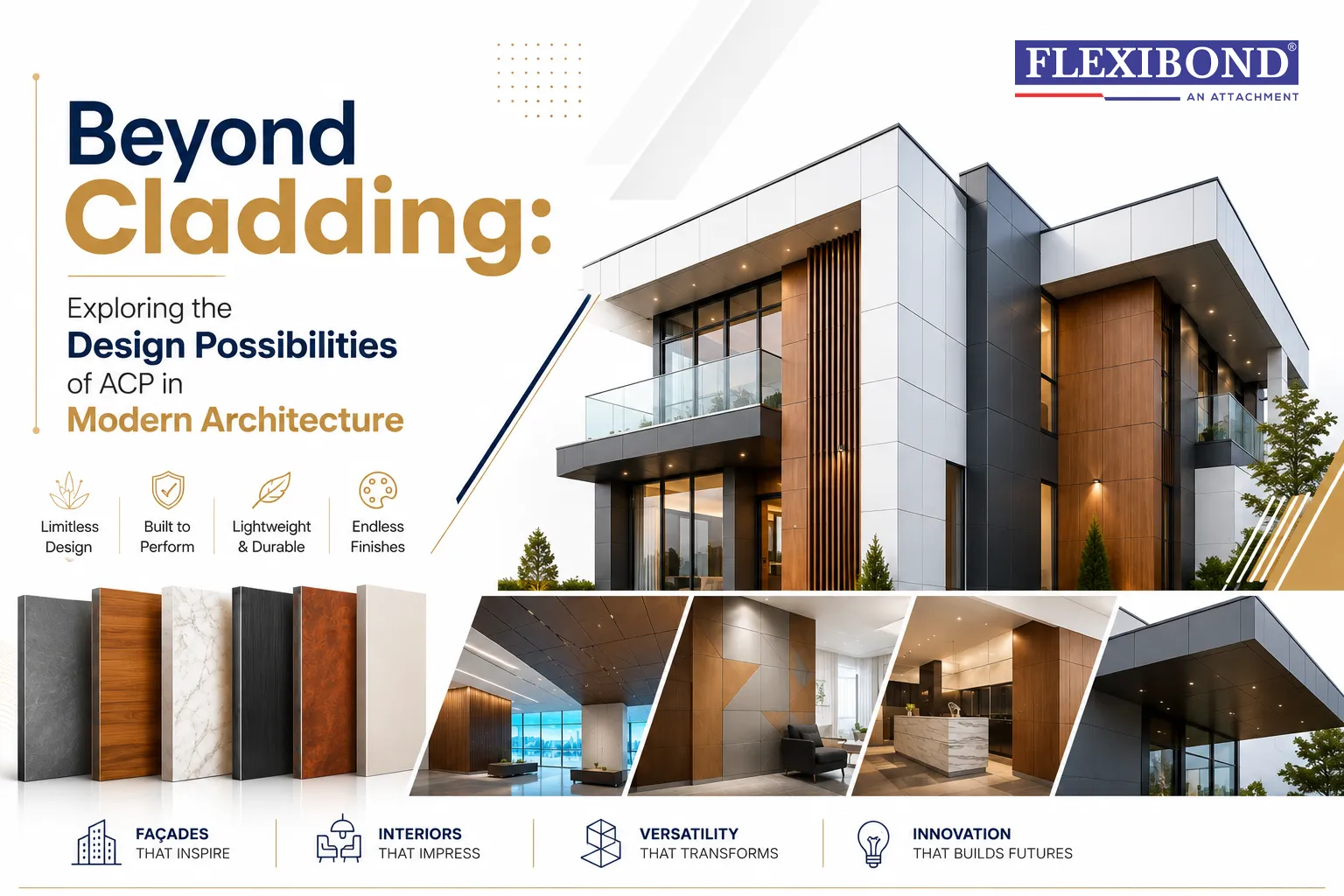

Modern architecture is no longer defined by concrete, glass, and conventional finishes alone. Architects and designers are increasingly looking for materials that combine visual appeal, design flexibility, durability, and practical performance. Among these materials, Aluminium Composite Panels (ACP Sheets) have emerged as a versatile solution for creating contemporary architectural spaces.
What makes ACP particularly interesting is that its role has evolved far beyond conventional façade cladding. Today, ACP sheets can contribute to building elevations, feature walls, commercial interiors, signage, canopies, and other architectural elements. With a wide range of colours, textures, and finishes, ACP gives designers greater freedom to turn architectural concepts into distinctive visual experiences.
Why ACP Has Become a Powerful Architectural Material
A successful architectural material needs to do more than simply look attractive. It should support the design concept while offering practical advantages during fabrication, installation, and maintenance.
ACP sheets are lightweight, rigid, and comparatively easy to fabricate, making them suitable for different design requirements. Their flat surface and flexibility allow architects and fabricators to explore clean lines, curves, folds, panels and creative compositions. Flexibond has also highlighted the ease with which ACP can be bent, folded, and shaped according to architectural requirements.
This combination of design freedom and functional performance is one reason ACP continues to find applications across modern architecture.
1. Creating Statement Building Façades
The façade is often the first visual impression of a building. ACP allows architects to create contemporary elevations without making the design unnecessarily complicated.
Large-format panels, contrasting colours, metallic surfaces, stone-inspired textures and wood-inspired finishes can be combined to establish different architectural identities. A corporate building may benefit from clean metallic tones, while a residential or hospitality project can use natural-looking wood or stone finishes for a warmer appearance.
Instead of covering an entire façade with a single finish, designers can create visual hierarchy by combining different colours, panel orientations and feature zones.
2. Moving Towards More Expressive Design
Modern ACP architecture is moving beyond plain, single-colour surfaces. Designers are increasingly experimenting with contrast, texture, geometry and material combinations to create more memorable spaces.
Combining darker solid shades with wood-inspired finishes, for example, can create a premium contemporary appearance. Similarly, stone-inspired ACP can introduce a natural visual character while metallic finishes can create a sharper, more sophisticated expression.
The objective is not simply to select an attractive ACP sheet. It is to use the material as part of a larger architectural composition.
3. ACP for Interior Architecture
ACP’s design potential does not stop at the building exterior.
Interior designers can explore ACP for feature walls, wall panelling, columns, partitions, commercial interiors and other decorative applications. The availability of different surface appearances allows ACP to complement a variety of interior styles, from minimalist and contemporary to luxurious and industrial.
For commercial spaces, ACP can also help maintain visual consistency between the exterior façade and interior environment. This is particularly useful for showrooms, offices, retail spaces, hospitality projects and branded environments.
4. Wood, Stone and Metallic Looks Without Limiting Creativity
One of the biggest advantages of modern ACP design is the availability of finishes inspired by natural and industrial materials.
Wood-inspired finishes can bring warmth and a sophisticated character to façades and interiors.
Stone and marble-inspired finishes can create a premium architectural appearance.
Metallic finishes can provide a contemporary and high-impact visual identity.
Solid colours can support minimalist designs, brand-focused architecture and strong colour combinations.
This variety allows designers to select finishes according to the architectural language of each project rather than forcing every building into the same visual style.
5. Designing with Light, Shadow and Geometry
Architecture is increasingly becoming an exercise in creating depth and visual movement. ACP can play an important role in this approach.
Panel orientation, projections, recesses, fins, grooves, shadow gaps and geometric arrangements can change how a façade interacts with natural and artificial light. Even a simple material can create a dramatic result when panel placement and lighting are carefully considered.
This makes ACP particularly valuable for architects who want to create a façade that looks different throughout the day as light and shadows change.
6. ACP for Commercial Branding and Visual Identity
Architecture and branding are becoming increasingly connected. For retail stores, corporate offices, showrooms and commercial buildings, the exterior itself can become an important part of brand communication.
ACP can support this through customised colour schemes, clean geometric compositions, signage backgrounds and branded architectural elements.
A well-designed façade can therefore perform two functions simultaneously: protecting and enhancing the building while communicating its visual identity.
7. Choosing ACP Beyond Appearance
While design is important, selecting the right ACP should never be based on appearance alone.
Architects, contractors and project owners should consider the intended application, environmental exposure, coating requirements, thickness, core characteristics, fabrication method, installation system and maintenance requirements.
For exterior projects, factors such as weather exposure and coating performance deserve particular attention. For projects where enhanced fire performance is required, the appropriate fire-retardant ACP specification should be selected according to the project’s applicable requirements.
In other words, good ACP design begins with the right product specification and ends with proper fabrication and installation.
The Future of ACP in Architecture
The future of ACP is not simply about creating more colours or finishes. It is about giving architects greater freedom to combine design, functionality and architectural identity.
As contemporary buildings become more expressive, ACP can serve as a flexible canvas for façade concepts, interior surfaces, commercial environments and creative architectural details. Current design discussions around ACP increasingly highlight textured surfaces, mixed materials, geometric layouts and coordinated exterior-interior design.
For architects and designers, the opportunity is to think beyond “cladding” and start thinking about ACP as a design element.
Flexibond: Creating Possibilities Beyond Surfaces
At Flexibond, we believe architectural materials should give designers the freedom to create, not restrict their imagination. Our ACP Sheet solutions are developed for modern architectural requirements, combining contemporary aesthetics with practical performance.
From striking façades and commercial elevations to distinctive interior applications, ACP opens the door to countless design possibilities.
Because great architecture is not only about the materials you choose; it is about what you create with them.
























Sign in to leave a comment.