

Varicose veins are more than a cosmetic concern; they can cause leg pain, swelling, heaviness, itching, and discomfort that affects everyday activities. The condition develops when the valves inside the veins become weak or damaged, allowing blood to flow backward and accumulate in the legs. Seeking timely Varicose Veins Treatment can help identify the underlying problem and determine the most appropriate treatment. Dr. Ravul Jindal, Director of Vascular and Endovascular Surgery at Fortis Hospital, Mohali, provides specialist vascular care, with treatment options tailored to each patient's symptoms, vein anatomy, and medical needs.
Modern vascular care offers several minimally invasive approaches that may help manage varicose veins without traditional open surgery. Depending on the clinical assessment and duplex ultrasound findings, treatment may include Laser Ablation, Radio Frequency, Venaseal (Glue Therapy), and Foam Sclerotherapy. Each procedure works differently, and the most suitable option depends on the location and severity of the affected veins. Understanding these advanced treatments can help patients make informed decisions about their vein health under the guidance of an experienced vascular specialist.
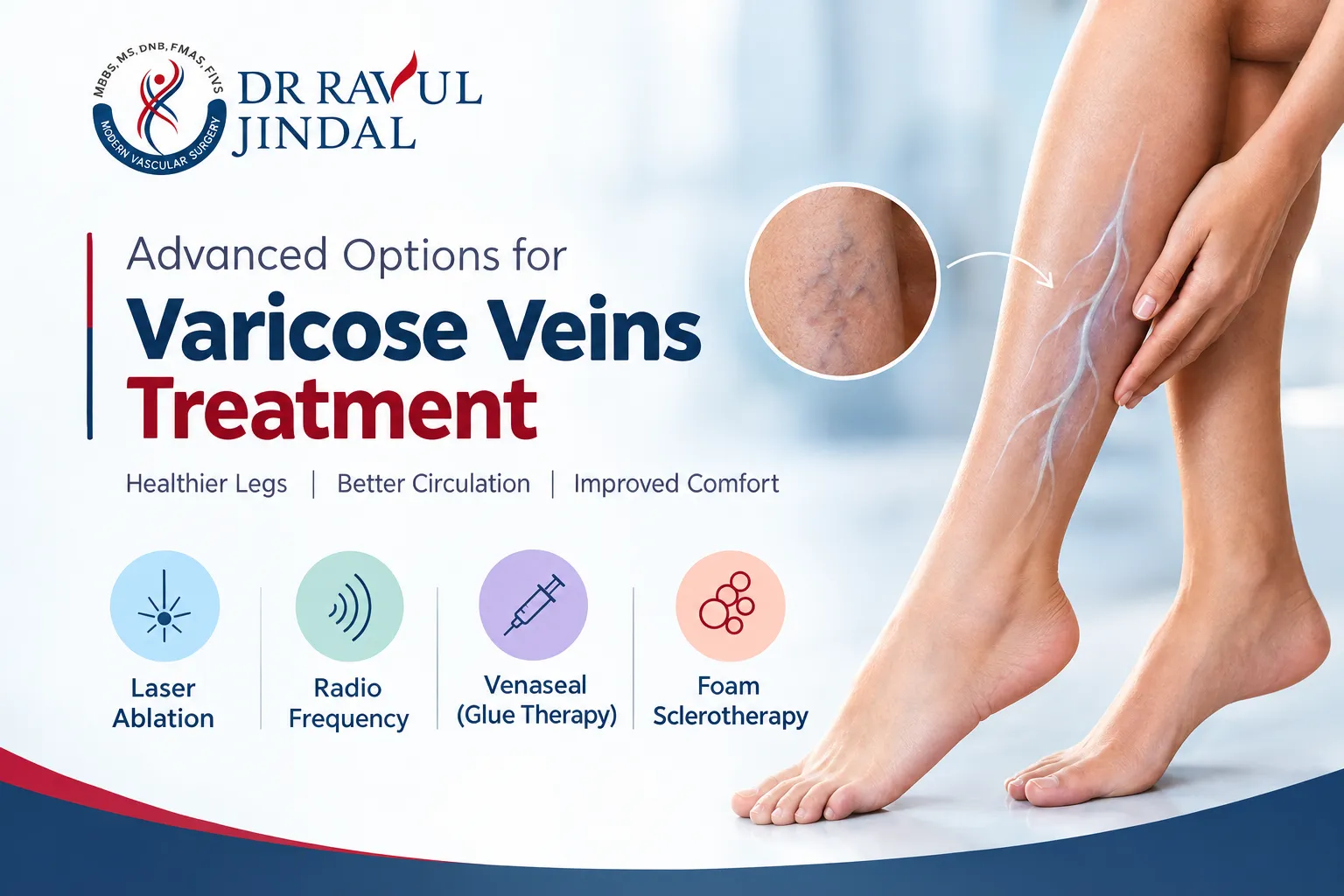
Understanding Varicose Veins and Their Warning Signs
Varicose veins appear as enlarged, twisted, or bulging veins, commonly on the legs. They develop when the normal functioning of the vein valves is affected, interfering with the return of blood toward the heart.
Common signs and symptoms include:
- Visible blue or purple veins beneath the skin.
- Aching, throbbing, or heaviness in the legs.
- Swelling around the ankles and lower legs.
- Itching, burning, or discomfort near affected veins.
- Muscle cramps, particularly at night.
- Skin discoloration or persistent skin changes in advanced cases.
Persistent symptoms, bleeding, skin changes, or leg ulcers should be assessed by a qualified medical professional.
Advanced Varicose Veins Treatment Options
Modern varicose veins treatment focuses on treating the underlying vein problem while considering patient comfort, recovery, and long-term vascular health. Four important procedures featured on Dr. Ravul Jindal's website are described below.
1. Laser Ablation (Endovenous Laser Treatment)
Laser Ablation, also known as Endovenous Laser Treatment (EVLT), is a minimally invasive procedure that uses laser energy to close a damaged vein from within. Blood is then redirected through other healthy veins.
Key features include:
- A thin catheter or laser fibre is introduced into the affected vein.
- Laser energy heats and seals the targeted vein.
- Ultrasound guidance helps the specialist position the treatment accurately.
- The procedure generally avoids large surgical incisions.
- Recovery instructions and follow-up depend on individual clinical circumstances.
Laser treatment may be recommended for suitable patients with venous reflux following a detailed vascular assessment.
2. Radio Frequency (Radiofrequency Ablation)
Radio Frequency Ablation (RFA) is another minimally invasive treatment used to close selected faulty veins. It uses controlled radiofrequency energy to heat the vein wall, causing the targeted vein to seal.
Important features of radiofrequency treatment include:
- A thin catheter delivers controlled thermal energy to the affected vein.
- Ultrasound guidance assists with accurate treatment.
- The procedure can reduce symptoms associated with venous reflux in appropriately selected patients.
- It usually involves smaller access points rather than large surgical cuts.
- Recovery and compression-stocking requirements are determined by the treating specialist.
The choice between radiofrequency and laser ablation depends on the patient's ultrasound findings, vein anatomy, symptoms, and individual treatment needs.
3. Venaseal (Glue Therapy)
Venaseal (Glue Therapy) uses a specialised medical adhesive to close an affected vein. Unlike laser ablation and radiofrequency ablation, this method does not rely on heat to seal the vein.
Potential features of this treatment include:
- Medical adhesive is delivered through a catheter into the selected vein.
- The adhesive closes the targeted vein, allowing blood to flow through healthier veins.
- The procedure avoids heat-based vein closure.
- Some patients may require less compression therapy, depending on the treatment plan.
- Suitability depends on the patient's venous anatomy, medical history, and potential risks.
A vascular specialist can explain whether Venaseal is appropriate and discuss possible complications, benefits, and aftercare before treatment.
4. Foam Sclerotherapy
Foam Sclerotherapy is a minimally invasive treatment in which a specialised medicine is injected into selected abnormal veins in foam form. The medicine irritates the vein lining, causing the treated vein to close gradually.
Important points about foam sclerotherapy include:
- It may be used for selected varicose veins and smaller superficial veins.
- Ultrasound guidance may be used to treat veins that are not easily visible.
- The procedure generally involves injections rather than large incisions.
- More than one session may be needed, depending on the extent of the vein problem.
- Follow-up helps assess the treatment response and identify any additional care required.
The appropriate approach depends on the size, location, and characteristics of the veins being treated.
How Is the Right Varicose Vein Treatment Selected?
Not every patient requires the same procedure. A personalised assessment helps the vascular specialist understand the underlying cause and recommend suitable treatment.
The evaluation may include:
- Medical history: Reviewing symptoms, family history, previous treatments, and relevant medical conditions.
- Physical examination: Checking visible veins, swelling, skin changes, and other signs.
- Duplex ultrasound: Assessing blood flow, vein anatomy, and valve function when indicated.
- Treatment planning: Comparing laser ablation, radiofrequency, Venaseal, and foam sclerotherapy where clinically appropriate.
- Recovery guidance: Explaining follow-up appointments, activity recommendations, and compression therapy when needed.
This step-by-step approach supports informed decisions and helps ensure that treatment addresses the patient's specific vascular condition.
Tips to Support Healthy Veins
Healthy daily habits can help support circulation and manage symptoms, although they cannot repair damaged vein valves.
Consider these practical measures:
- Walk regularly to encourage circulation in the legs.
- Avoid sitting or standing in one position for extended periods.
- Take movement breaks during long working hours.
- Maintain a healthy body weight where appropriate.
- Elevate your legs when resting if it helps relieve discomfort.
- Use compression stockings only as advised by a healthcare professional.
- Seek medical advice if symptoms persist or worsen.
These measures can complement professional care but should not replace assessment when varicose veins are causing significant symptoms.
Why Consult Dr. Ravul Jindal for Varicose Veins Treatment in Mohali?
Choosing a qualified vascular specialist is an important part of managing venous disease. Dr. Ravul Jindal is the Director of Vascular and Endovascular Surgery at Fortis Hospital, Mohali, with extensive experience in vascular surgery and the management of varicose veins.
Patients considering specialist consultation can discuss:
- Evaluation of visible veins and related symptoms.
- Appropriate diagnostic investigations, including duplex ultrasound when indicated.
- The potential benefits and limitations of available procedures.
- Individual treatment planning based on clinical findings.
- Recovery instructions and follow-up care.
For patients looking for varicose veins treatment in Mohali and Chandigarh, a specialist consultation can help clarify the available options and determine the next steps.
Frequently Asked Questions (FAQs)
1. What is the best treatment for varicose veins?
There is no single best treatment for everyone. Laser Ablation, Radio Frequency, Venaseal (Glue Therapy), and Foam Sclerotherapy may be considered depending on the patient's vein anatomy, symptoms, and ultrasound findings.
2. Is laser ablation effective for varicose veins?
Laser ablation is an established minimally invasive treatment for appropriately selected patients with venous reflux. A vascular specialist can assess whether it is suitable for your condition.
3. What is the difference between Radio Frequency and Laser Ablation?
Both treatments use controlled heat to close an affected vein. Laser ablation uses laser energy, whereas radiofrequency ablation uses radiofrequency energy. The appropriate option depends on individual clinical findings.
4. What is Venaseal Glue Therapy?
Venaseal is a treatment that uses a specialised medical adhesive to close a selected faulty vein without using thermal energy. A specialist should explain its suitability, benefits, and potential risks.
5. Who can benefit from Foam Sclerotherapy?
Foam sclerotherapy may be suitable for selected varicose veins and smaller superficial veins. The decision depends on the vein's size, location, and characteristics.
6. Is varicose vein treatment painful?
The level of discomfort varies by procedure and individual. Minimally invasive treatments may involve local anaesthesia or other comfort measures, depending on the technique. Your specialist can explain what to expect.
7. How long does recovery take after varicose vein treatment?
Recovery varies according to the procedure, the extent of the vein disease, and individual health factors. Your doctor will provide instructions about walking, work, exercise, compression stockings, and follow-up.
8. When should I consult a vascular specialist?
Consult a specialist if you experience persistent leg pain, swelling, heaviness, itching, skin discoloration, or visible veins accompanied by discomfort. Bleeding or leg ulcers require prompt medical assessment.
Conclusion
Varicose veins can affect both comfort and quality of life, but several treatment options are available to help manage the condition. Laser Ablation, Radio Frequency, Venaseal (Glue Therapy), and Foam Sclerotherapy offer different approaches to treating affected veins, with suitability determined by individual clinical findings.
For those exploring Varicose Veins Treatment in Mohali, Dr. Ravul Jindal at Fortis Hospital, Mohali, provides specialist vascular care and guidance on available treatment approaches. A timely consultation, appropriate diagnostic evaluation, and personalised treatment plan can help patients make informed decisions about their vein health. Seek professional advice to understand which procedure, if any, is appropriate for your condition.





















Sign in to leave a comment.