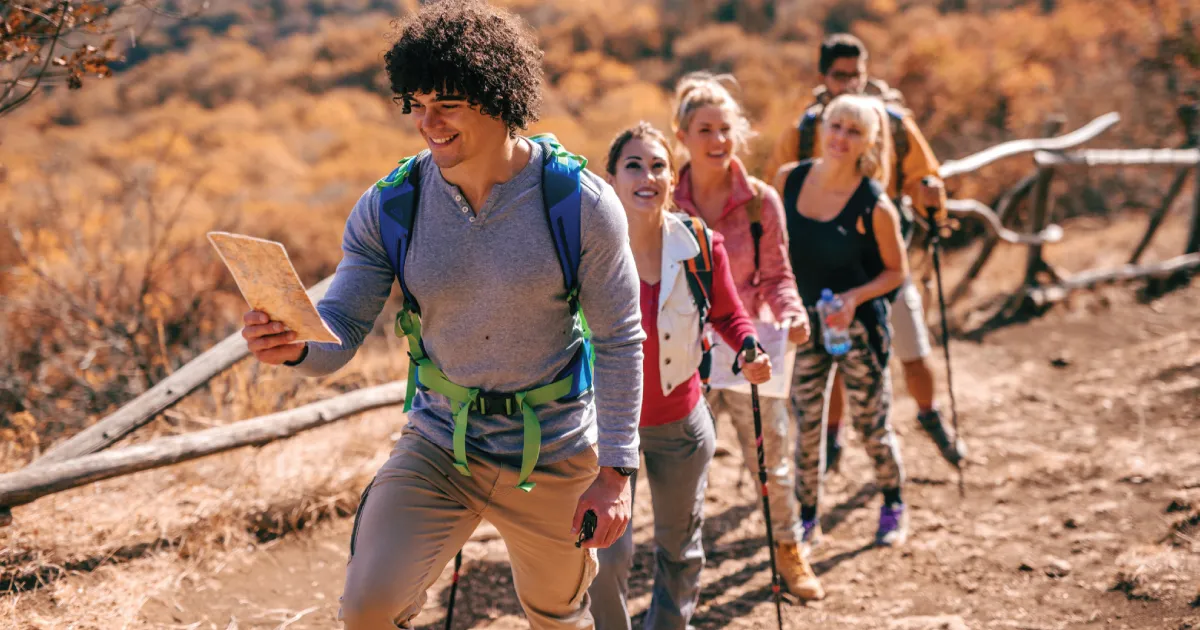

A long-distance hike sounds great. Right up until the details start piling up.
Where do you sleep? How much food's actually enough? What happens if you're gassed halfway through the day? And how do you get back to your car once you've finished a section that ends nowhere near it?
Fair questions, every one. They can make a first trip feel like too much before you've even packed a bag. Good news though: a bit of planning kills most of that stress before it ever gets real.
The Bibbulmun Track hands you WA's forests, hills, rivers, coastal scenery, all of it at your own pace. Short section for a weekend. Something bigger over several days. Entirely your call.
A bibbulmun self-guided trip means you shape it however you like. You set the pace. You pick the daily distance. You sort the practical stuff before your boots ever hit the track.
Route first. Always.
Nothing else matters until this is sorted.
For a bibbulmun self-guided trip, the full track runs long, so there's no need to bite off a massive chunk on your first attempt. A shorter walk teaches you the terrain, your own fitness, and the planning that comes with all of it, without the risk of overreaching.
Think honestly about how far you normally walk in a regular day. Then remember, hiking with a full pack feels like a completely different sport.
A distance that looks easy on paper stretches out fast once hills, uneven ground, breaks and a loaded pack all pile in together.
Give yourself room. A relaxed schedule beats cramming distance into one day. Every single time, no exceptions.
Before settling on a route, check:
- How far you need to walk each day
- The type of terrain along the section
- Where you'll start and finish
- How you'll get back afterwards
- Whether the route matches your current fitness
Work out your daily distance properly
Route sorted, now figure out where you actually want to stop each day.
Match the distance to your real fitness. Not the fitness you're hoping toF have by day three. First-timers do better with shorter days, especially with camping gear on your back.
Check the terrain too. Steep sections chew through more energy than a longer stretch of flat, easy track ever will.
Don't plan every single minute of the day.
Leave room for lunch, rest, photos, whatever delay shows up uninvited. You might hit a stretch so good you just want to sit with it for a while, and the plan should let you.
Build that room in on purpose. Don't leave it to chance.
A sensible daily plan should allow time for:
- Walking at your natural pace
- Food and water breaks
- Short rest periods
- Unexpected delays
- Setting up camp before dark
Sort out where you'll actually sleep
Accommodation gets real once you're doing multiple days back to back.
The Bibbulmun Track campsites give you designated spots to rest along the way. Before you head off, check which one actually fits your route and daily distance. Not just the one with the nicest name.
Look at the distance between sites. That's what matters here, not the vibe of the campsite description. Understand what each one actually offers too. Facilities, access, local conditions, check the current info before you commit to anything.
Carry what you need for the night. A decent sleep setup is the difference between recovering properly and dragging yourself through day two.
Before leaving, check:
- Your planned campsite for each night
- The distance to the next campsite
- Available facilities
- Access information
- Current track conditions
Pack light. Pack smart. Not the same instruction.
A heavy pack turns a good hike into hard labour. Fast.
Start with the basics: enough food and water, the right clothing, navigation tools, gear that actually suits this specific trip.
Your pack probably needs:
- Comfortable hiking shoes
- A suitable backpack
- Sleeping gear
- Tent or approved shelter setup
- Food and snacks
- Enough drinking water
- First-aid supplies
- Sun protection
- Warm and waterproof clothing
- A phone or other navigation device
- A torch or headlamp
Skip whatever you're only bringing because you might, maybe, possibly need it one day. Don't cut safety gear to save weight though. A light pack should still cover you if things go sideways out there.
Test the packed bag before the trip. Walk it round your local area and see how your shoulders, back, legs actually hold up under it.
Catches problems while they're still cheap to fix. Not halfway up a hill with no way back.
Food and water need real thought, not an afterthought
Food keeps you moving. That's the whole job it does.
Pick meals and snacks that travel well. What you bring depends on trip length and what your body actually needs, not what sounded good at the shop.
Pack enough for every day, plus a bit extra for the delay you didn't see coming. Water needs the same care. Never assume it's just there because a campsite or stream shows up on a map somewhere.
Check current info on water sources before you go. Conditions shift constantly, so carry enough for the section you're actually walking. Not the one you're hoping exists.
Hot weather pushes water needs up fast. Plan for that day, not the mild one you're picturing.
For food planning, think about:
- How many days you'll be on the track
- How much food you'll need each day
- Snacks for extra energy
- Extra food for delays
- How you'll carry and protect your food
Read the weather properly
WA weather moves. What hits you on the trail can feel nothing like what you left behind at home.
Check the forecast before you leave, and look past the temperature. Rainfall, wind, whatever else could actually change the walk.
Layer up so you can adjust as the day shifts under you.
A waterproof layer earns its spot in the pack too. Even a short burst of rain makes an exposed stretch genuinely miserable, fast.
Don't treat the forecast like a promise either. Keep watching the sky as you walk, and change the plan the moment the day tells you to.
Pay attention to:
- Temperature changes
- Rain
- Strong winds
- Hot conditions
- Changes expected later in the day
Sort transport before you're standing there needing it
Transport trips up more hikers than almost anything else on a point-to-point walk.
Start in one spot, finish somewhere else entirely. That means a real plan for the return trip, not a vague hope it'll sort itself out.
A bibbulmun transfer hike service handles exactly this part. Depending on the operator and route, it gets you to or from the track so you're not standing there wrecked, trying to solve logistics after a long day.
Book ahead where you can. Confirm the meeting point, the timing, luggage, all of it, before the actual day arrives.
Don't leave this until the end of the hike. Way too late by then, and you'll know it.
Before booking a transfer, confirm:
- Pick-up and drop-off locations
- Date and time
- Number of hikers
- Backpack or luggage arrangements
- Any changes or cancellation rules
Keep the navigation dead simple
Know where you're going before the first step. Not somewhere along the way.
Maps, track notes, whatever tool you're using, learn it properly before you go, not mid-walk when it actually matters.
Your phone helps. Fine. Just don't make it your only option. Batteries die, usually at the worst possible time, especially on longer trips.
A backup gives you real security once the main plan fails.
Watch the track markers and your actual surroundings as you move. Real navigation comes from knowing the route, not staring at a screen every five minutes hoping it tells you something.
Get your body ready for this
You don't need to become an athlete first. Nowhere close.
Regular walking gets you there. Start short, build up gradually. Add hills and uneven ground into the mix as you go.
A loaded pack changes everything about how walking feels, so practise with one before the trip. Not for the first time on day one of the actual hike.
Watch your feet closely. Comfortable footwear separates a good trip from one wrecked by blisters you could've dodged entirely.
Rest matters just as much as the training itself. Let your body actually recover between walks, not just push through every time.
A simple build-up could look like:
- Start with shorter local walks
- Add distance gradually
- Include hills where possible
- Practise with your hiking pack
- Give yourself proper recovery days
Give the track some respect back
The Bibbulmun runs through natural areas that deserve care in return.
Stay on the marked trail where you can. Carry your rubbish out. Leave the plants and wildlife exactly alone. Keep campsites clean. Follow whatever rules apply out there. Think about the next hiker walking this same stretch after you've gone.
Leave it how you found it. That's the whole rule, and it's the one that keeps this worth doing for everyone who comes next.
A few simple habits go a long way:
- Stay on marked paths
- Take rubbish with you
- Avoid disturbing wildlife
- Leave plants where they are
- Keep campsites tidy
- Follow local track rules
Make your first trip genuinely good
A bibbulmun track self-guided adventure hands you real freedom to shape your own trip. That freedom only works with sensible planning sitting underneath it though.
Pick a manageable route. Sort your campsites properly. Pack with actual thought behind it. Check the weather. Organise transport before you leave, not after you're already tired.
Most of all, don't rush a second of it.
Stop for the view. Take a proper lunch break, not a five-minute stand-and-eat. Listen to the forest for once. Sit in the quiet.
Your first long-distance hike doesn't need to be perfect. It just needs enough thought behind it that you feel safe, comfortable, and actually able to enjoy the track for what it is.


























Sign in to leave a comment.