Big Tree Transplanting: A Complete Guide to Moving Mature Trees Successfully


Mature trees are valuable features of residential landscapes, commercial properties, parks, and development sites. They provide shade, improve the appearance of outdoor spaces, support local wildlife, and contribute to the character of a property. However, construction projects, landscaping changes, and property improvements can sometimes make relocating an established tree necessary. Big tree transplanting offers a practical solution for preserving suitable mature trees rather than removing them entirely.
Transplanting a large tree requires careful preparation, specialized equipment, and an understanding of tree health and root development. Working with experienced professionals can help property owners determine whether relocation is feasible and develop an appropriate plan. With the right approach, big tree transplanting can help preserve established landscaping while accommodating changing property needs.
What Is Big Tree Transplanting?
Big tree transplanting is the process of removing a mature tree from its original location and replanting it in a different area. The process involves extracting the tree with a substantial portion of its root system and surrounding soil, transporting it carefully, and placing it in a prepared planting site.
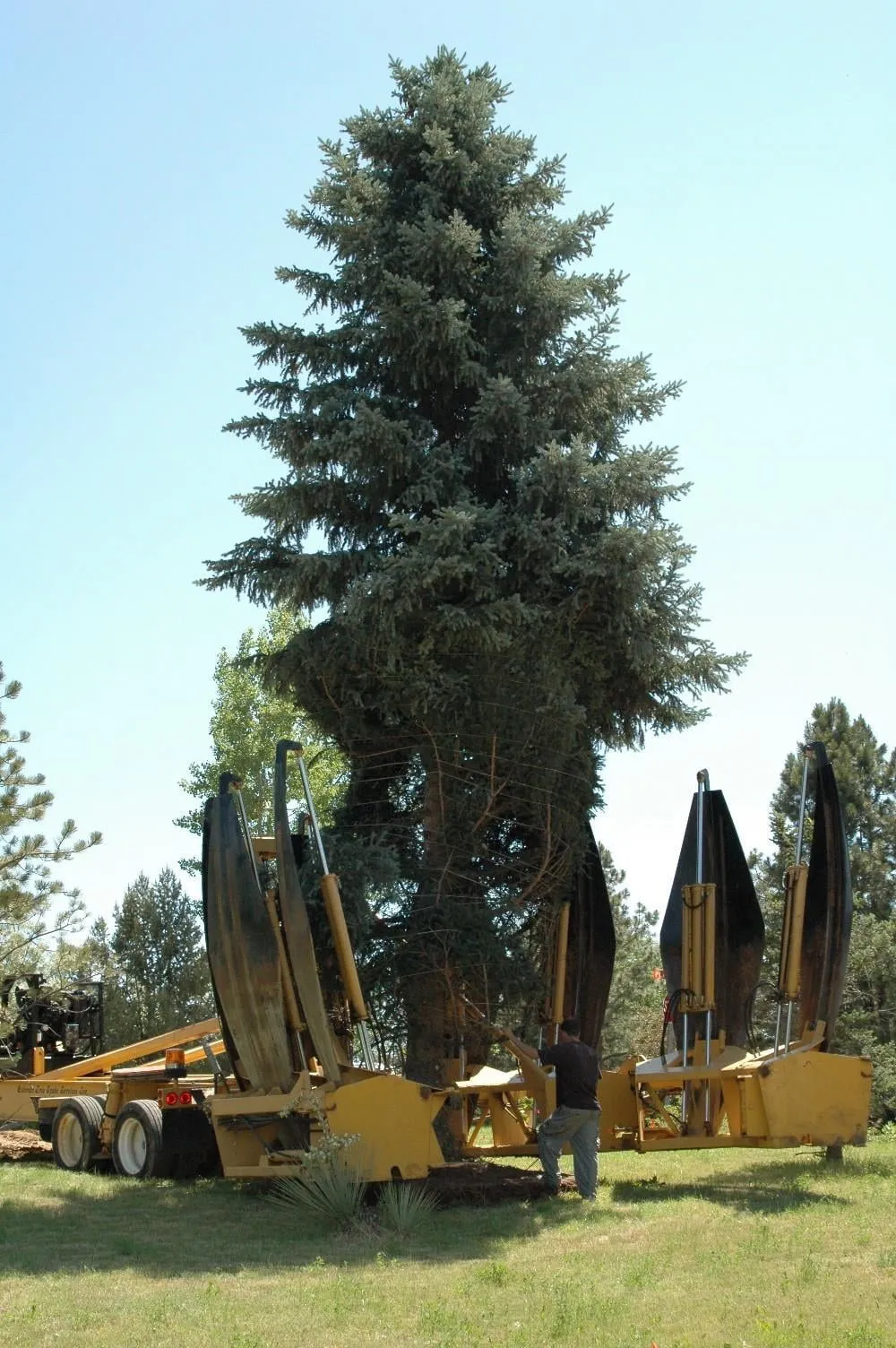
Unlike transplanting young trees, moving a large specimen involves considerable weight, an extensive root system, and a developed canopy. Specialized equipment, such as hydraulic tree spades, can help lift and relocate trees while keeping the root ball intact.
The objective of big tree transplanting is to minimize root disturbance, reduce transplant stress, and provide suitable conditions for the tree to establish itself in its new location.
Why Is Big Tree Transplanting Necessary?
There are several situations in which transplanting a mature tree may be more desirable than removing it.
1. Construction and Development Projects
Building construction, road expansion, utility installation, and commercial development can conflict with existing trees. When a tree occupies an area required for construction, relocation may allow the project to proceed while preserving the tree.
A professional assessment helps determine whether the tree can be moved safely and whether the destination provides adequate space for future growth.
2. Residential Landscaping Improvements
Homeowners may redesign their outdoor spaces to accommodate patios, driveways, swimming pools, gardens, or other features. A mature tree may need to be relocated to create a more practical landscape layout.
Transplanting can preserve the tree's established appearance while allowing the property owner to improve the use of the available space.
3. Preserving Valuable Mature Trees
Large trees often take many years to reach their current size. Their shade, distinctive shape, and contribution to the surrounding environment can make them important landscape assets.
When removal is being considered, transplanting may offer an alternative, provided the tree's condition, species, size, and site conditions make relocation practical.
4. Improving Tree Placement
Some trees may be growing too close to structures, pathways, or other landscape features. Moving a suitable tree to a location with more room, appropriate sunlight, and favorable soil conditions may improve its long-term growing environment.
The Big Tree Transplanting Process
Successful transplantation requires a planned sequence of steps. Each stage plays an important role in protecting the tree and supporting its recovery.
Step 1: Evaluate the Tree and Site
The process begins with an assessment of the tree's overall health, species, trunk diameter, canopy size, root structure, and growing conditions.
Professionals also examine soil characteristics, drainage, site accessibility, underground utilities, overhead obstacles, and the distance between the original and destination locations.
This assessment helps determine the appropriate equipment and whether transplanting is a realistic option.
Step 2: Prepare the Destination
The new planting location should be ready before the tree is extracted. Soil quality, drainage, available sunlight, and adequate growing space all influence the tree's ability to establish roots.
The planting area must also accommodate the root ball and allow the tree to sit at the correct depth. Preparing the destination in advance reduces the time the tree remains out of the ground.
Step 3: Extract the Tree
Specialized machinery is used to remove the tree while retaining as much of its root ball as practical. Hydraulic tree spades are commonly used for suitable trees because their blades can cut through the surrounding soil and lift the tree as a unit.
The appropriate equipment depends on the tree's dimensions, soil conditions, root system, and access to the site.
Step 4: Transport the Tree Carefully
Once extracted, the tree is moved to its new location using suitable lifting and transportation equipment. Operators must account for the tree's weight, root ball dimensions, canopy clearance, and route accessibility.
Careful handling helps reduce damage to the trunk, branches, and roots during transportation.
Step 5: Replant and Stabilize
The tree is positioned in the prepared planting hole at the appropriate depth. Soil is placed around the root ball, and watering helps settle the surrounding soil.
Depending on the tree's size and site conditions, temporary staking or other stabilization measures may be recommended while the tree establishes itself.
Professional big tree transplanting services can help coordinate these stages and select equipment suited to the specific requirements of the project.
Benefits of Professional Tree Transplanting
Relocating a mature tree without the appropriate equipment and experience can increase the risk of root damage, structural problems, and transplant stress. Professional services offer several advantages.
- Specialized equipment: Hydraulic tree spades and lifting systems are designed to handle substantial root balls and heavy trees.
- Expert assessment: Evaluating the tree and both sites helps identify potential challenges before work begins.
- Efficient relocation: Proper planning can reduce unnecessary handling and minimize disruption to the surrounding landscape.
- Preservation of established landscaping: Transplanting may allow property owners to retain mature trees that contribute to the property's appearance.
- Site-specific planning: Equipment selection, transportation, planting, and aftercare can be adapted to the project's conditions.
Although professional assistance can improve the chances of a successful move, not every mature tree is a suitable candidate for transplantation.
Factors That Affect Transplanting Costs
The cost of transplanting a large tree depends on the complexity of the project. Tree height, trunk diameter, species, weight, and root ball size influence the machinery and labor required.
Site accessibility is another important consideration. Limited maneuvering space, nearby buildings, overhead wires, underground utilities, or difficult terrain can make the operation more complicated.
Transportation distance, soil conditions, advance root preparation, and post-transplant care may also affect the total cost. Requesting a site assessment and detailed estimate helps property owners understand the work involved before proceeding.
Caring for a Tree After Transplanting
Aftercare is essential because transplantation can disrupt a tree's ability to absorb water and nutrients. Consistent monitoring helps support recovery and root establishment.
Maintain appropriate soil moisture. Water the root ball thoroughly and adjust the frequency according to weather, drainage, and the tree's needs. Avoid keeping the soil excessively wet.
Protect the surrounding soil. Prevent heavy equipment, unnecessary digging, and repeated foot traffic from compacting the root zone.
Apply mulch correctly. Organic mulch can help conserve moisture and regulate soil temperature. Keep it away from direct contact with the trunk.
Monitor the tree's condition. Watch for persistent wilting, unusual leaf discoloration, premature leaf drop, or branch dieback. Seek professional advice if concerning symptoms continue.
Follow a suitable care plan. Watering, staking, pruning, and other maintenance requirements should be based on the species, season, and planting conditions.
Recovery may take months or longer, depending on the tree and its environment. Regular care gives the transplanted tree an opportunity to establish itself in its new location.
Choose Professional Big Tree Transplanting Services
Preserving a mature tree can be a valuable investment in a property's landscape, particularly when construction or redesign makes its original location unsuitable. However, successful relocation depends on selecting an appropriate tree, preparing the destination, using suitable equipment, and providing consistent aftercare.
Colorado Tree Spade offers a resource for property owners exploring professional tree relocation solutions. Visit big tree transplanting to learn more about options for moving established trees and planning a relocation project.
With careful evaluation and a well-organized process, big tree transplanting can provide an effective alternative to removal when the tree and site conditions are suitable. Professional planning helps protect valuable landscape features while supporting the long-term health and appearance of the property.






Sign in to leave a comment.