
Every day, farms, factories, and cities across the world throw away tons of biomass without a second thought. Rice husk piling up outside a mill, sawdust collecting in a timber yard, straw left over after harvest, all of it usually ends up burned in the open, dumped in a landfill, or left to rot. And each of these paths quietly causes damage: open burning fills the air with smoke and particulate matter, landfills release methane as waste decomposes, and rotting biomass just wastes energy that was sitting right there the whole time.
Here's the thing though. That waste isn't really waste. It's stored energy and stored carbon, just waiting for the right process to unlock it. And that process has a name: turning biomass into biochar.

What Is Biochar, Really
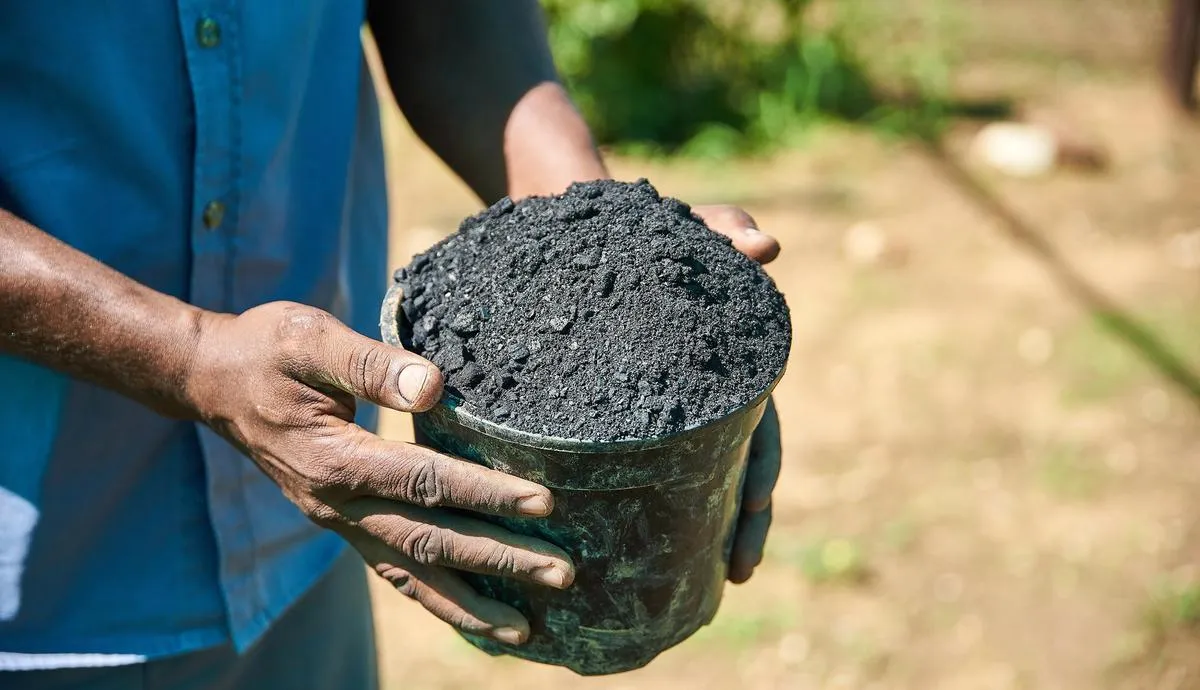
Biochar is a stable, carbon-rich solid, and it's made by heating biomass in an environment that has little to no oxygen. This process is called pyrolysis, and it's quite different from what happens when you simply burn something. When biomass is fully combusted with plenty of oxygen, you're left with ash, which has lost most of its carbon and value. Raw charcoal, made in a much less controlled way, is inconsistent and unpredictable. Biochar, on the other hand, is made carefully, and what comes out is something special: carbon locked into a stable form that can sit in soil for hundreds of years without breaking down. That's really the heart of why biochar matters for the climate.
Pyrolysis itself is part of a bigger family of processes, sometimes called thermochemical conversion, which also includes gasification and carbonization. But pyrolysis is the one that gives us biochar as its main solid output, which is why it gets most of the attention.
From Biomass to Power and Biochar, Step by Step
Picture a truckload of sawdust or rice husk arriving at a processing unit. Before anything else happens, it needs to be prepared, which usually means drying it out, since moisture reduces how efficiently the process works, and then shredding or reducing it to a manageable size.
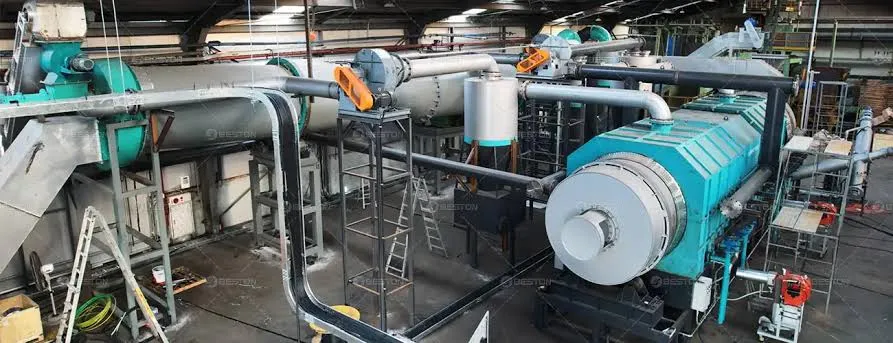
Once it's ready, the biomass goes through pyrolysis, heated somewhere between 300 and 700 degrees Celsius, without oxygen in the mix. And this single process doesn't just give one output. It actually gives three. There's biochar itself, the solid, carbon-rich product. There's bio-oil, a liquid that can be used as fuel or as a raw material for chemicals. And there's syngas, a gas that can be burned to produce heat or electricity, often used right there to power the plant itself.
This is a detail a lot of people miss. The system can be partly self-sustaining, because the syngas and bio-oil generated during the process can power the very machines doing the converting. And depending on how the temperature and timing are adjusted, a plant can lean toward producing more biochar, or more energy output, depending on what's needed.

Where All This Biomass Actually Comes From
Almost anything organic can become feedstock for this process, and once you start looking, the sources feel endless. Agricultural residues make up a big chunk: rice husk, wheat and rice straw, sugarcane bagasse, corn stalks, cotton stalks. Forestry and wood waste add sawdust, bark, wood chips, and leftover timber offcuts. Then there's animal waste, like poultry litter, cattle manure, and slaughterhouse waste, which often needs proper disposal anyway. Agro-industrial byproducts join the list too, things like fruit and vegetable processing waste, oil cake, coffee husk, and coconut shell. Even municipal and organic waste, food scraps, garden waste, and in some systems, sewage sludge, can be used. And on top of all this, some operations grow dedicated energy crops, fast-growing grasses or trees, specifically to feed this process.
What's interesting is that the type of feedstock actually shapes the final biochar. Its porosity, its carbon content, and how well it performs later all trace back to what it was made from.
How Much Power Can Actually Come Out of This
The amount of energy generated depends on a few simple factors: how much heat the biomass naturally holds, how much moisture it started with, how efficient the plant is, and how big the whole operation is. As a general rule, drier and denser biomass, like wood waste, tends to produce more energy than wet, low-density waste. And the scale is flexible too. A single factory might run a small on-site system just for its own waste, while a larger plant might serve an entire industrial cluster.
Where Biochar Actually Gets Used
Once biochar is made, its biggest and most well-known use is in agriculture, where it's mixed into soil to improve water retention, help nutrients stay available to plants, and support healthy microbial activity. But its usefulness doesn't stop at the farm gate. Because biochar locks carbon away for so long, it's recognized as a genuine method of long-term carbon storage, relevant to carbon credit systems and broader climate strategy.
Its porous structure, similar to activated carbon, also makes it useful in water and air filtration, where it helps trap contaminants. In animal husbandry, biochar is sometimes added to livestock feed, where it can support gut health and reduce manure odor. There's growing experimental use in construction too, where biochar is added into cement and asphalt to create building materials with a smaller carbon footprint. And in some industrial furnaces and boilers, biochar is even being tested as a substitute for coal, especially as emission regulations tighten.

Why This Is Becoming Hard to Ignore for Industries
For a long time, waste disposal was simply treated as a cost, something you paid to get rid of. This process flips that thinking, turning waste into either a usable output or a small revenue stream of its own. On-site power generation from syngas and bio-oil also chips away at how much energy a facility needs to pull from the external grid, which matters more as energy costs keep climbing.
Regulations are tightening too, particularly around emissions, landfill use, and open stubble burning, which is a real concern in many agriculture-heavy regions. On top of that, companies are under more pressure than ever to show measurable progress on sustainability and carbon reduction, and biochar production offers a concrete way to demonstrate that. It also fits neatly into the idea of a circular economy, closing the loop between waste generation and resource use, which today is as much a reputational advantage as it is an environmental one.
Industries that stand to gain the most are fairly wide-ranging: agriculture and agro-processing units like rice and sugar mills, food and beverage manufacturers, the timber, paper, and pulp sector, municipal solid waste management bodies, and even power generation and cement industries looking for a genuine alternative to coal.
A Closing Thought
Biomass to biochar isn't really a small, niche green technology anymore. It's starting to look more like an infrastructure shift, one that quietly solves a waste problem, an energy problem, and a compliance problem, all at the same time, while pulling carbon out of circulation for the long run. From where Kerone Biochar sits, working closely with this kind of pyrolysis technology day to day, this shift feels less like a trend and more like a natural next step for how industries will handle waste going forward. If you're curious about how this process is being applied in real systems, you can take a look at the Kerone Biochar home page, explore their pyrolysis and biochar solutions, or get in touch through their contact us page for a closer look.
A pile of rice husk or sawdust may not look like much sitting outside a mill. But run it through the right process, and it quietly becomes power, soil, and a smaller carbon footprint, all from something we were about to throw away.


















Sign in to leave a comment.