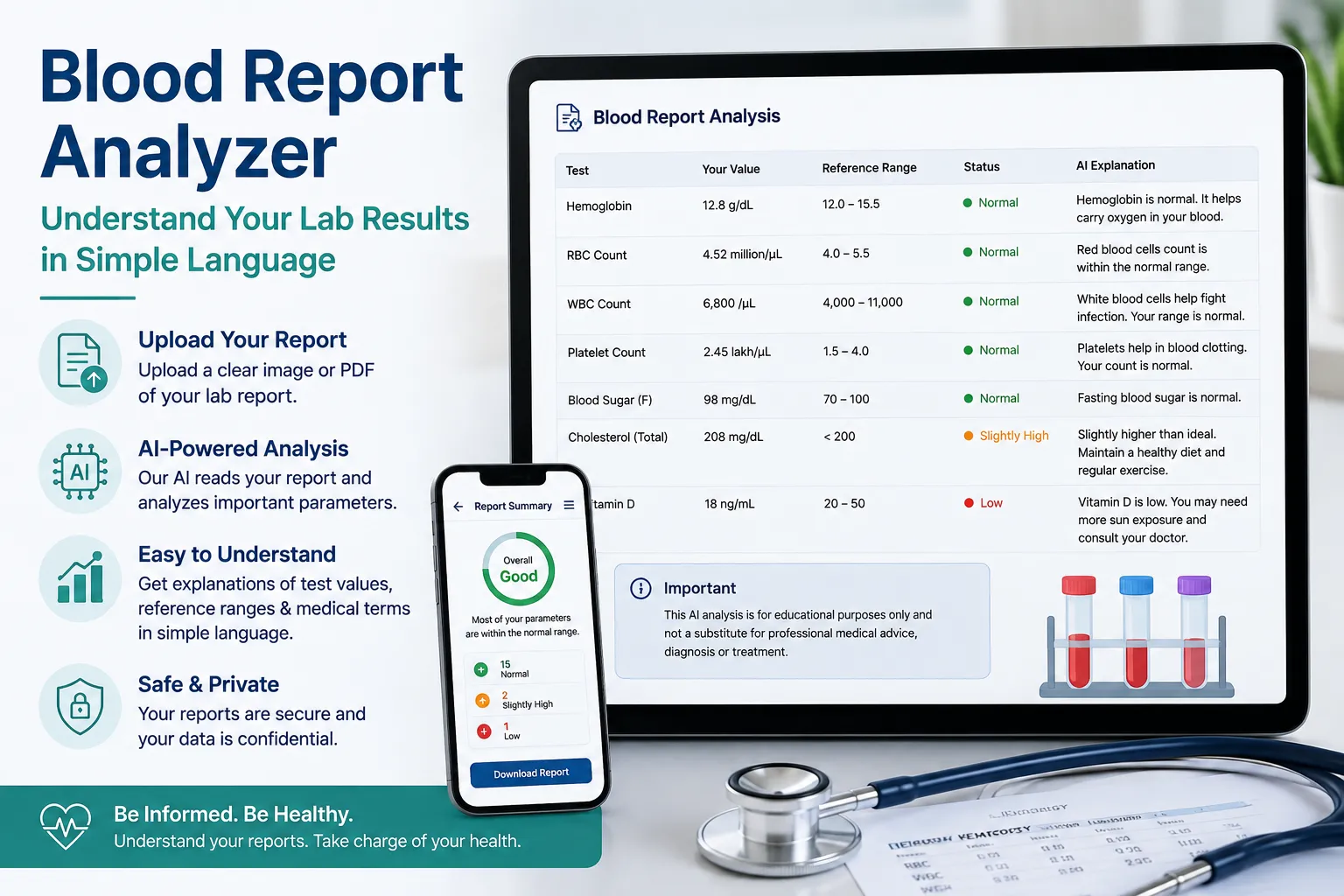

Blood tests are among the most common medical tests used to understand different aspects of a person's health. A routine blood report can contain numerous values, abbreviations, reference ranges, and medical terms that may be difficult to interpret without a healthcare background. A blood report analyzer can make these results easier to understand by organizing the information and explaining what individual markers may indicate.
What Is a Blood Report Analyzer?
A blood report analyzer is a digital tool designed to help users understand information contained in laboratory blood test reports. Depending on the platform, it may analyze values such as hemoglobin, white blood cell count, red blood cell count, platelets, glucose, cholesterol, and other commonly reported markers.
Instead of simply displaying numbers, an analyzer can provide explanations of what particular measurements generally represent and whether a value falls inside or outside the reference range provided by the laboratory.
Why Can Blood Reports Be Difficult to Understand?
A typical blood test report may include dozens of measurements. Each test has its own abbreviation, unit, and reference range. For example, terms such as RBC, WBC, Hb, MCV, LDL, HDL, and TSH may not be immediately understandable to someone without medical training.
Another challenge is that reference ranges can vary between laboratories. Age, sex, medications, lifestyle, and other individual factors can also affect laboratory results.
A blood report analyzer can provide a more accessible explanation of these terms, helping people understand what they are looking at before discussing the results with a healthcare professional.
Common Blood Markers Explained
Hemoglobin
Hemoglobin is a protein in red blood cells that carries oxygen throughout the body. A blood report generally includes a hemoglobin measurement as part of a complete blood count.
White Blood Cells
White blood cells are involved in the body's immune response. The total WBC count and different types of white blood cells can provide useful information for a healthcare professional evaluating a person's health.
Platelets
Platelets play an important role in blood clotting. Both unusually high and unusually low platelet counts may require further evaluation depending on the overall clinical situation.
Blood Glucose
Blood glucose measurements indicate the amount of glucose present in the blood at the time of testing. The interpretation can depend on whether the test was performed while fasting, after eating, or as part of another type of glucose test.
Cholesterol
A lipid profile may include total cholesterol, LDL cholesterol, HDL cholesterol, and triglycerides. These values are commonly considered together rather than interpreting a single number in isolation.
How Does a Blood Report Analyzer Work?
The process generally involves entering or uploading laboratory results into the tool. The system then identifies relevant test names and values and compares them with the reference information provided by the report or the tool.
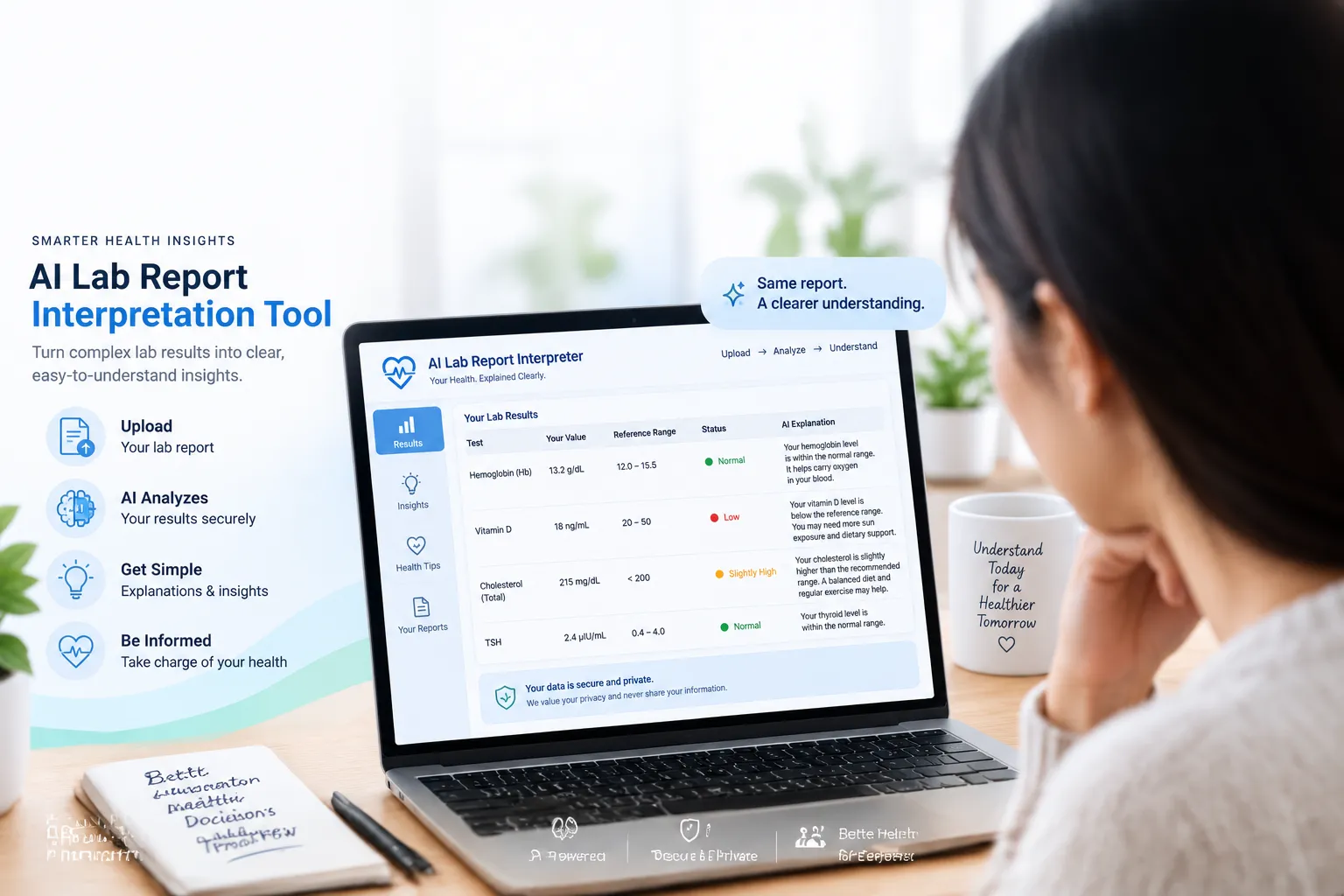
Some modern platforms use artificial intelligence to explain medical terminology in simpler language. An AI lab report interpretation tool may also organize multiple results and provide general explanations of potentially significant findings.
However, automated analysis should be considered an educational aid rather than a medical diagnosis.
Benefits of Using a Blood Report Analyzer
A blood report analyzer can be useful in several ways:
- Simplifies medical terminology: Complex laboratory terms can be explained in everyday language.
- Organizes information: Multiple test results can be easier to review together.
- Highlights unusual values: Results outside the stated reference range may be easier to identify.
- Improves health awareness: Understanding basic laboratory markers can help people have more informed conversations with their healthcare providers.
- Saves time: Instead of searching for every abbreviation separately, users can obtain explanations in one place.
What Should You Do With Abnormal Results?
An abnormal result does not automatically mean that a person has a disease. Laboratory values can be affected by many factors, including recent meals, exercise, medications, temporary illness, hydration, and differences between laboratories.
If a blood report contains an abnormal or unexpected result, it is better to discuss it with a qualified healthcare professional. They can consider the result alongside symptoms, medical history, physical examination, and other relevant tests.
Conclusion
A blood report analyzer can be a convenient way to understand the terminology and numbers found in laboratory reports. It can help users identify what different tests measure and prepare questions for their healthcare provider.
Technology can make health information easier to understand, but laboratory results should always be interpreted in the context of the individual. An analyzer can support understanding and education, while diagnosis and treatment decisions should remain with qualified healthcare professionals.
Frequently Asked Questions
What is the purpose of a blood report analyzer?
A blood report analyzer is designed to help users interpret laboratory blood test reports by providing explanations of various medical terms and values. It simplifies complex information, making it easier for individuals to understand their health markers before discussing them with a healthcare professional.
Why are blood test reports hard to understand?
Blood test reports can be challenging to comprehend due to the numerous abbreviations, varying reference ranges, and specialized medical terminology. Additionally, individual factors such as age, sex, and medications can influence results, making it essential to have a clear interpretation.
How does a blood report analyzer work?
A blood report analyzer typically requires users to enter or upload their laboratory results, after which it identifies test names and values. The tool then compares these results against reference data, often using artificial intelligence to translate medical jargon into simpler language.
Can I rely on a blood report analyzer for medical diagnoses?
While a blood report analyzer can aid in understanding laboratory results, it should not be used as a substitute for professional medical advice. These tools are educational aids and cannot provide a medical diagnosis, which should always be performed by a qualified healthcare professional.
What should I do if my blood test results are abnormal?
Abnormal blood test results do not necessarily indicate a disease, as they can be influenced by factors like diet, exercise, or medications. It is best to consult with a healthcare professional who can evaluate these results in the context of your overall health and history.
What are some common blood markers included in reports?
Common blood markers found in reports include hemoglobin, white blood cell count, platelets, blood glucose, and cholesterol levels. Each marker provides insight into different aspects of health, and understanding them can help individuals engage more effectively with their healthcare providers.
How can a blood report analyzer improve my health awareness?
By using a blood report analyzer, users can gain a clearer understanding of their laboratory markers and what they indicate about their health. This knowledge empowers individuals to ask informed questions and engage in meaningful discussions with their healthcare providers.




















Sign in to leave a comment.