
You do not always need a gym, weights, or expensive equipment to make your workout challenging. Your own body can provide plenty of resistance when exercises are selected and organized properly. A Bodyweight Battle turns simple bodyweight movements into a structured fitness challenge that can be performed at home, outdoors, or wherever you have enough space to exercise.
The idea is simple. Choose a collection of bodyweight exercises, create a workout structure, and challenge yourself to complete it with good form. Instead of focusing only on the number of repetitions, you can use the experience to improve your consistency, control, and overall workout performance.
What Makes a Bodyweight Battle Different?
A regular bodyweight workout might involve completing a list of exercises and then moving on. A Bodyweight Battle adds an element of challenge to the session.
You might set a target number of rounds, work against a timer, or compare your current performance with a previous workout.
For example, you could create a workout with squats, push-ups, lunges, and mountain climbers. Once you complete the workout, you can remember or record your performance and try the same challenge again later.
The goal is not necessarily to compete with someone else. Your previous performance can become your benchmark.
Bodyweight Battle Workout Without Equipment
One of the biggest advantages of bodyweight training is that many exercises require little or no equipment.
A Bodyweight Battle Workout Without Equipment can include exercises such as:
- Squats
- Push-ups
- Lunges
- Planks
- Mountain climbers
- Jumping jacks
- High knees
- Burpees
You can combine these exercises into a circuit or organize them using timed intervals.
The workout structure can be adjusted according to your fitness level. Beginners can choose simpler movements, while experienced users can select more demanding variations.
A Real-Life Bodyweight Battle Example
Imagine someone who works at a desk for most of the day.
They have only 20 minutes available in the evening and do not want to spend additional time travelling somewhere for exercise.
They create a simple Bodyweight Battle at home.
Their workout includes 15 squats, 10 push-ups, 10 lunges on each side, and a 20-second plank. They complete the sequence for several rounds, taking appropriate recovery periods when needed.
The next week, they repeat the same workout.
Maybe they complete the same number of rounds with better control, or perhaps they finish an additional round. Either way, they now have a simple way to compare their progress.
Why Simple Exercises Can Still Be Challenging
A common misconception is that a workout needs complicated equipment to be difficult.
Bodyweight exercises can become challenging when you increase the number of rounds, adjust the timing, use more demanding variations, or reduce unnecessary breaks while still maintaining safe technique.
For example, a basic squat can be modified in several ways depending on someone's experience and fitness level.
However, increasing difficulty should not mean sacrificing form. A controlled movement is generally more useful than rushing through repetitions simply to achieve a higher number.
Bodyweight Battle for Beginners
Beginners can also participate in a Bodyweight Battle.
The key is to make the challenge appropriate for your current ability.
Instead of starting with advanced exercises, you could begin with basic movements and shorter sessions. Push-ups can be modified, squats can be performed to a comfortable depth, and planks can be held for shorter periods.
The objective is to create a workout that feels challenging but manageable.
As your confidence and fitness improve, you can gradually change the exercises or workout structure.
Turn Your Workout Into a Challenge
A challenge can make a workout feel more purposeful.
Rather than simply deciding to exercise for 20 minutes, you have a specific objective to complete.
For example:
Challenge A: Complete three rounds.
Challenge B: Complete a set number of repetitions.
Challenge C: Complete a timed circuit.
Challenge D: Repeat the same workout after one week and compare your performance.
These different approaches can keep bodyweight training interesting.
Bodyweight Battle and Interval Training
A Bodyweight Battle can also be combined with interval training.
For example, you could perform an exercise for 30 seconds and then take a 30-second recovery period before moving to the next movement.
A workout might look like this:
30 seconds: Squats
30 seconds: Rest
30 seconds: Push-ups
30 seconds: Rest
30 seconds: Mountain climbers
30 seconds: Rest
You can repeat the sequence according to your fitness level and available time.
Using a timer can make the workout easier to follow because you do not have to constantly check the clock.
Keep Your Workout Flexible
Your fitness routine does not need to be identical every day.
Some days you may have 10 minutes available. On another day, you might have 30 minutes.
A Bodyweight Battle can be changed accordingly.
You can reduce the number of exercises when you have less time or create additional rounds when you have more time.
This flexibility makes bodyweight workouts practical for busy schedules.
Make Your Training More Engaging With Fit Q
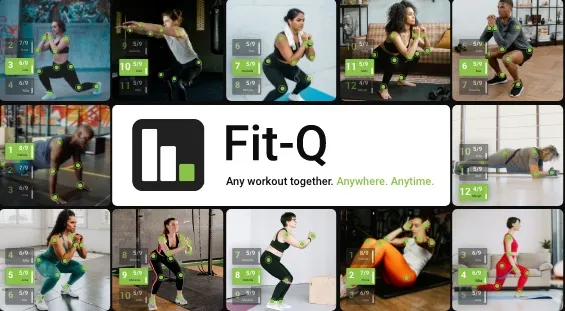
Fit Q provides tools for creating personalized workouts and exploring different fitness formats.
You can use workout creation features to organize exercises around your preferred training style. This makes it possible to create different bodyweight sessions rather than following exactly the same routine every time.
A Bodyweight Battle can be structured as a timed challenge, a round-based workout, or a personalized fitness session.
This gives you the flexibility to experiment with different workout formats.
Track Your Personal Improvement
The most useful competition is often the one you have with yourself.
Suppose you complete two rounds during your first session. A few weeks later, you may be able to complete three rounds while maintaining better exercise control.
That improvement can be more meaningful than comparing yourself with another person's performance.
You can also track other aspects of your workouts, such as workout duration, repetitions, or the exercises you completed.
Safety Should Come First
A fitness challenge should never encourage you to ignore your body's signals.
Before starting a demanding workout, consider your current fitness level and choose appropriate exercises. Warm up before intense activity and take recovery periods when needed.
If an exercise causes pain rather than normal workout discomfort, stop and consider getting appropriate professional guidance.
The purpose of a Bodyweight Battle is to make fitness engaging, not to push beyond sensible limits.
Final Thoughts
A Bodyweight Battle can turn simple exercises into an enjoyable and structured fitness challenge. You do not need a large collection of equipment to create a workout that tests your strength, endurance, and consistency.
Whether you are exercising at home, looking for a quick workout, or simply want to add some variety to your routine, bodyweight exercises can be adapted to different fitness levels.
With Fit Q, you can create personalized workout sessions and organize bodyweight exercises around your preferred training style. The real goal of the battle is simple: challenge yourself, stay consistent, and work toward becoming better than your previous workout.




















Sign in to leave a comment.