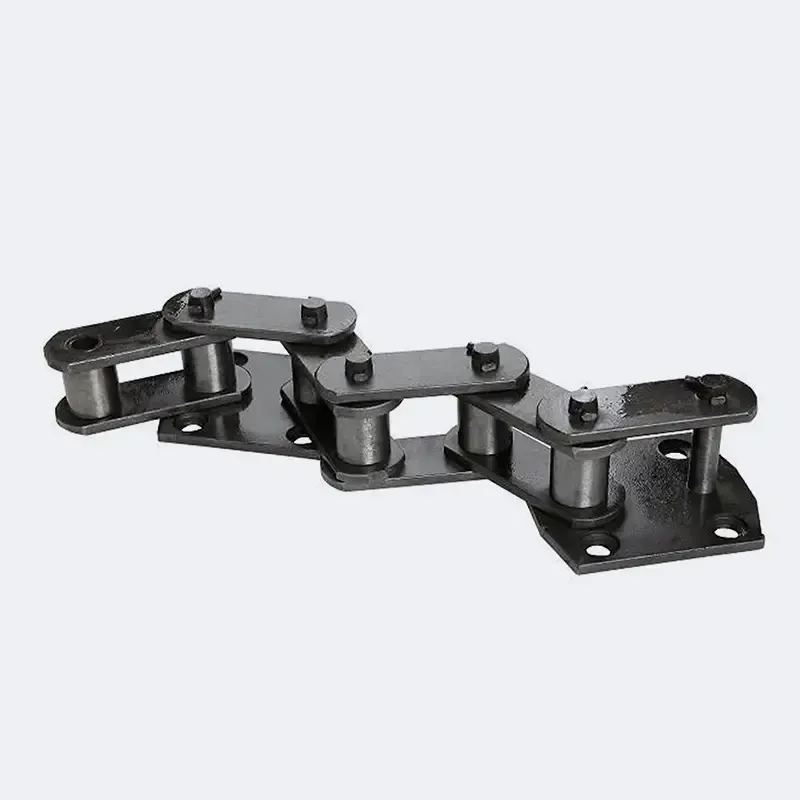


Bucket elevators lift enormous volumes of bulk material vertically, moving limestone, clinker, ore, coal, and cement between processing stages. Because they work against gravity and often run without pause, the chains inside them carry some of the heaviest and most constant loads in any plant. A failure deep inside an elevator casing is difficult to reach and slow to repair. That makes chain selection for bucket elevators a decision with major consequences for uptime, safety, and maintenance budgets across mining and cement operations.
How Bucket Elevator Chains Work
In a chain bucket elevator, one or two strands of chain run between a head sprocket and a boot sprocket, with buckets attached at regular intervals. As the chain moves, buckets scoop material at the bottom and discharge it at the top. The chain must carry the weight of the buckets, the material, and itself, while also handling the digging forces at the boot. Precise pitch and strong attachments are essential to keep buckets aligned and secure.
Strength and Wear Demands
As a proven heavy duty chains manufacturer, Matech supplies mining and cement conveyor chains engineered for high-impact, high-wear conditions. For bucket elevators, this means thick side plates, large hardened pins and bushings, and attachments strong enough to carry fully loaded buckets continuously. Through differentiated heat treatment processes, the service life of key components can be increased by more than thirty percent, which is especially valuable in elevators where every replacement requires lengthy access work and production stops.
Handling Abrasive and Hot Materials
Cement clinker and many ores are both abrasive and hot. Abrasive dust enters chain joints, gradually wearing pins and bushings and increasing elongation. Hot clinker adds thermal stress that can soften untreated steel. Chains for these elevators use hardened wear surfaces and materials that retain strength at elevated temperatures. Selecting the right combination of alloy and heat treatment keeps the chain stable and engaged with sprockets throughout long production campaigns.
Attachment Design and Bucket Security
Bucket attachments carry significant loads and experience repeated stress at every rotation around the sprockets. Weak or poorly designed attachments may crack, causing buckets to detach and damage the elevator. Strong forged or reinforced attachments, correct bolt hole positioning, and proper fastening practices are vital. Matching attachment strength to chain strength ensures the whole assembly performs as one reliable system.
Sprocket Condition and Alignment
Head and boot sprockets must match chain pitch precisely and be kept in good condition. Worn sprocket teeth cause poor engagement and accelerate chain wear, while misalignment between strands in twin-chain elevators leads to uneven loading and bucket twisting. Replacing sprockets alongside chains and checking alignment during installation help the new chain reach its full service life.
Inspection and Maintenance Planning
Because bucket elevators are enclosed, inspections must be planned carefully. Regular measurement of chain elongation, checks of attachment bolts, and inspection of bucket condition help predict replacement timing. Recording wear data allows maintenance teams to schedule chain changes during planned kiln or mill shutdowns rather than reacting to sudden failures. Keeping spare chain sections on site shortens repair time when issues arise.

Choosing the Right Elevator Chain
Plant operators should share elevator height, capacity, speed, material type, temperature, and past chain performance with their supplier. Engineers can then recommend chain size, materials, heat treatment, and attachment design. Sample testing confirms strength and fit before full installation. A well-chosen bucket elevator chain keeps material flowing reliably and reduces the costly downtime that elevator failures cause.























Sign in to leave a comment.