
Let's be honest for a second. You've probably stood in a supplement aisle (or scrolled through one online) feeling totally lost. Whey this, plant blend that, mystery powder number five. It's a lot. And if you're someone who wants real muscle gains without upsetting your stomach or your values, you've likely landed on one question: does rice protein powder actually work?
Good news. The answer is yes, and the truth is way simpler than the marketing makes it sound.
What Exactly Is Rice Protein Powder?
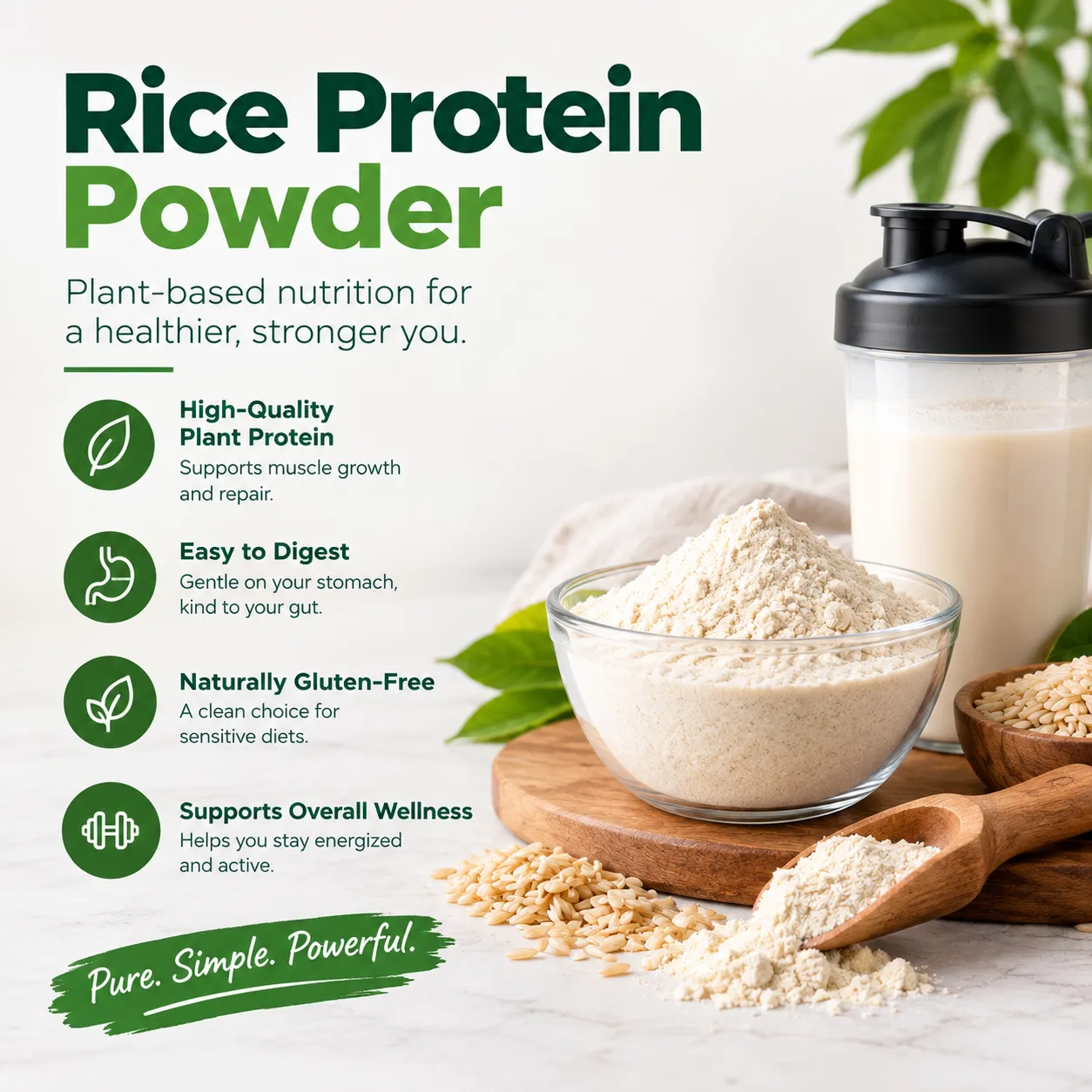
Rice protein powder comes from, well, rice. Brown rice, to be exact. Makers grind it down and pull out the protein, leaving behind most of the starch and carbs. What you're left with is a light, plant-based powder that mixes easily and digests gently.
It's naturally:
- Free of dairy, so no bloating or stomach drama for lactose-sensitive folks
- Hypoallergenic, making it a safe bet for people with food sensitivities
- Easy to digest, even on an empty stomach
- Free of the "gritty" texture some plant powders are known for
If you've tried other plant proteins and felt like you were drinking sand, rice protein might surprise you.
Does It Actually Build Muscle?
Here's where people get skeptical, and honestly, that skepticism is fair. Rice protein isn't a "complete" protein on its own, meaning it's a little low in one amino acid called lysine. But that doesn't mean it's weak.
Studies comparing rice protein to whey protein have found something pretty exciting: when consumed in similar amounts, rice protein can support muscle growth and recovery almost as well as whey does. One well-known study even showed that people using rice protein after workouts built muscle and lost fat at rates similar to those using whey.
The trick is simple. Pair rice protein with foods rich in lysine, like beans, lentils, or a scoop of pea protein, and you basically solve the amino acid gap. Your muscles won't know the difference.
Why People Are Switching to Rice Protein
There's a bigger shift happening right now, and it's not just about muscle. People want food and supplements that align with how they want to live. Rice protein fits that lifestyle shift perfectly.
Here's why it's gaining fans:
- It's plant-based, appealing to vegans, vegetarians, and flexitarians alike
- It's gentle on the gut, unlike some whey options that cause bloating
- It's allergy-friendly, avoiding common triggers like dairy, soy, and eggs
- It's sustainable, since plant protein production generally uses fewer resources than animal protein
- It blends well, so smoothies, oatmeal, and baked goods don't turn into a chalky mess
Basically, it checks a lot of boxes at once. Muscle support, gut comfort, and a lighter footprint on the planet.
The Real Benefits Beyond Muscle Gains
Building muscle is great, but rice protein pulls its weight in other areas too. Since it's easy to digest, many people notice less stomach discomfort compared to dairy-based powders. It also tends to be lower in fat and cholesterol, which is a win if you're watching your heart health.
Rice protein is also naturally rich in:
- B vitamins, which support energy production
- Fiber, especially in less-processed versions, which helps digestion
- Antioxidants, which help your body fight everyday stress and inflammation
So while you're working toward stronger arms or better recovery times, your body is quietly getting a few extra perks along the way.
Choosing the Right One: What to Look For
Not all rice protein powders are created equal. Some are packed with fillers, added sugars, or artificial flavors that cancel out the "natural" appeal you're going for. Before you buy, take a quick look at the label.
A quality rice protein powder should have:
- A short ingredient list, ideally just rice protein and maybe a natural flavor
- No artificial sweeteners or dyes
- Third-party testing, so you know what's actually in the tub
- A trusted source, especially important if you're buying from Canadian nutrition supplements brands, since Canada has strict quality and labeling standards
That last point matters more than people realize. Canadian nutrition supplements companies are often held to high manufacturing and safety standards, which gives you extra peace of mind that what's on the label matches what's in the scoop.
How to Actually Use It (Without Overthinking It)
You don't need a fancy routine to make rice protein work for you. Here's a simple approach that fits into almost any lifestyle:
- Blend it into a morning smoothie with fruit and oats
- Stir it into overnight oats for a protein boost that doesn't taste chalky
- Mix it into pancake or muffin batter for a sneaky protein upgrade
- Shake it with water or plant milk post-workout for fast recovery
- Combine it with a scoop of pea protein for a complete amino acid profile
The goal isn't perfection. It's consistent. Your muscles respond to steady effort over time, not one perfect shake.
The Bottom Line
Rice protein powder isn't some trendy fad that'll disappear next year. It's a genuinely solid, plant-based option that supports muscle growth, treats your gut kindly, and fits into a more mindful way of eating. Pair it smartly with other protein sources, choose a clean formula, and you've got yourself a simple, natural tool for real results.
If you're building a routine around better nutrition, rice protein powder deserves a real spot in your pantry, not just a passing glance. Your muscles, and your gut, will likely thank you for it.



























Sign in to leave a comment.