


Most businesses no longer need convincing that AI belongs somewhere in their software stack. The harder question is how to put it there.
Should you connect an existing AI product? Build an intelligence layer around commercial models? Or develop and operate a more specialized AI system yourself?
In practice, enterprises usually have three viable approaches to adding AI to business software: buy, integrate, or build.
Option 1: Buy an Existing AI Product
Buying is the fastest route when the capability is useful but not strategically unique.
Examples include meeting transcription, generic document summarization, coding assistance, customer support copilots, content generation, and common productivity functions. Instead of developing the underlying AI capability, the organization licenses software in which AI is already built.
The advantage is straightforward: deployment can happen quickly, infrastructure is largely abstracted away, and the vendor carries responsibility for model hosting, updates, scaling, and much of the operational complexity.
But businesses trade control for convenience.
A packaged product may provide limited flexibility over model behavior, workflow logic, data handling, integrations, or output validation. Licensing can also become expensive as adoption grows across users or transactions.
Buying generally makes sense when:
- The use case is relatively standardized
- Speed matters more than customization
- AI is supporting a process rather than differentiating it
- Existing products satisfy security and compliance requirements
- Internal AI engineering capability is limited
There is little reason to build an internal transcription engine, for example, if transcription itself creates no competitive advantage.
The calculus changes when AI needs to understand proprietary processes or participate directly in core business operations.
Option 2: Integrate Existing Models into Your Software
For many enterprises, this is the practical middle ground.
Instead of purchasing a complete AI application, businesses use commercial or open models as building blocks and integrate them into their own software.
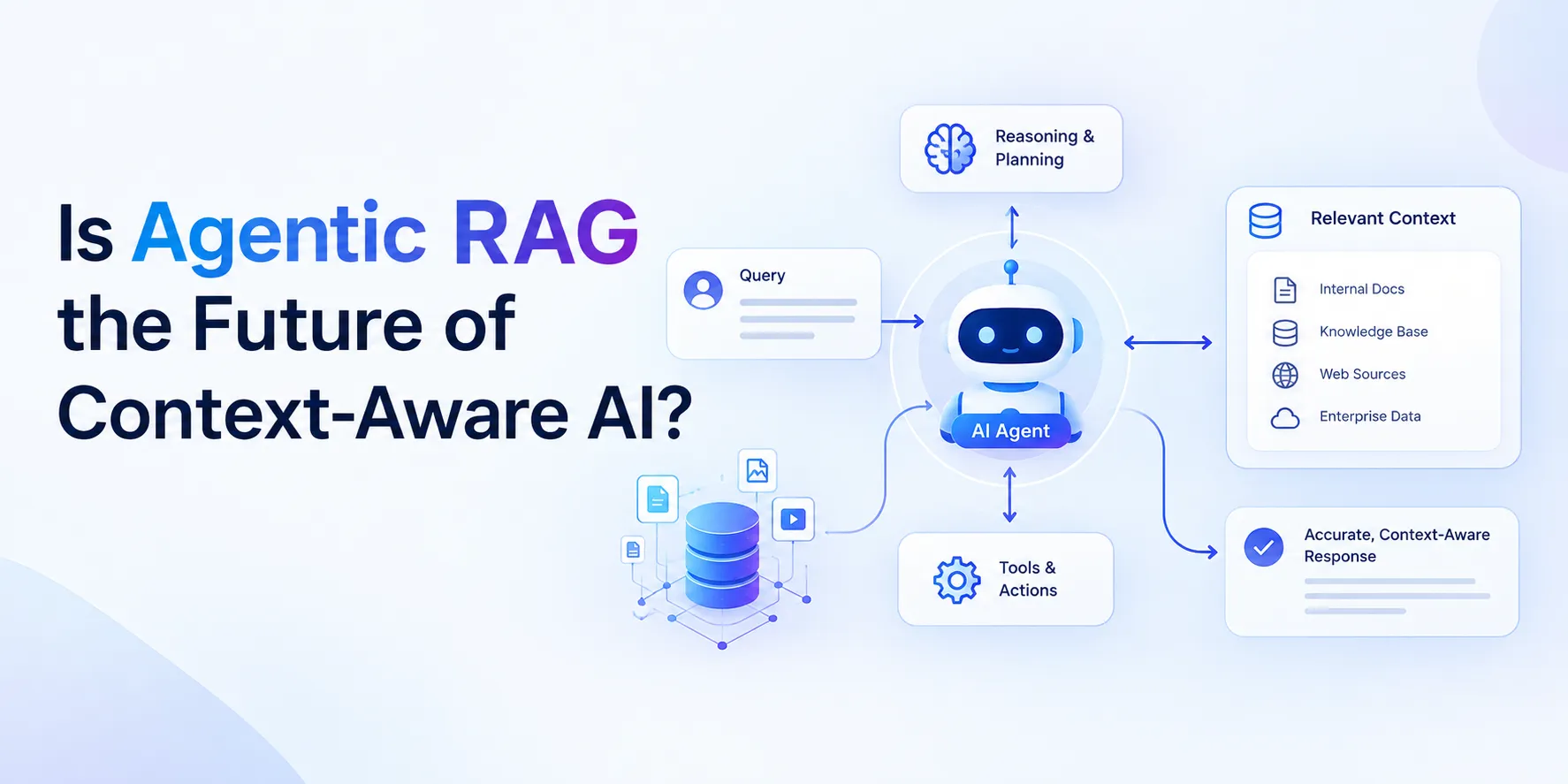
A customer-service platform might connect an LLM to internal knowledge through RAG. An insurance system could use models for document extraction before applying deterministic underwriting rules. A logistics application could combine predictive models with operational data to recommend routes or flag exceptions.
Here, the business owns the application and workflow while a model provider supplies much of the underlying intelligence.
This approach supports more sophisticated enterprise AI solutions without requiring the organization to train foundation models or operate every piece of AI infrastructure independently.
The engineering effort shifts toward:
- Data integration – The model needs controlled access to the right enterprise information.
- Orchestration – AI calls must be combined with APIs, databases, rules engines, and business workflows.
- Guardrails – Outputs need validation, permissions, escalation paths, and security controls.
- Observability – Teams need visibility into latency, model performance, token consumption, failures, and cost.
This is where experienced AI services providers typically deliver more value than simply giving a company access to a model API. The difficult part is rarely making the first model call. It is engineering the surrounding application so AI can operate reliably in production.
There is also an economic consideration. API-based AI can be inexpensive during experimentation but behave differently at production volume. Model selection, context length, retrieval design, caching, and agent behavior can materially affect inference expenditure.
Businesses planning production deployments should therefore consider AI infrastructure cost optimization during architecture design rather than after usage has already scaled.
Option 3: Build a Dedicated AI Capability
Building becomes appropriate when AI itself is strategically important to the product or operating model.
This does not necessarily mean training a foundation model from scratch. Few enterprises need to do that.
A custom build may instead combine proprietary models, fine-tuned models, open-source models, specialized retrieval systems, agentic workflows, custom inference infrastructure, knowledge graphs, and business-specific evaluation pipelines.
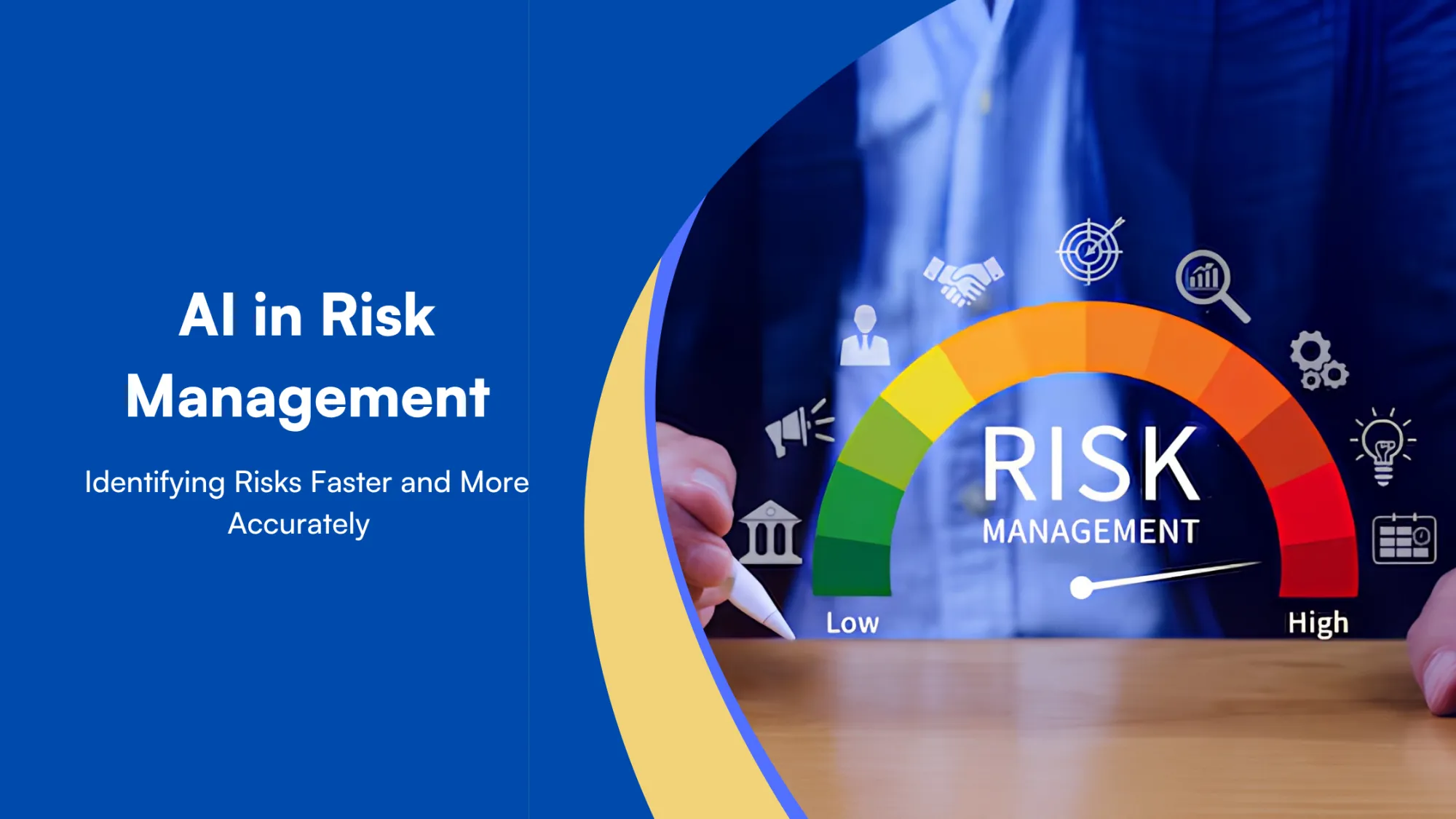
Consider a manufacturer building predictive maintenance around years of proprietary sensor data, or a financial organization developing a domain-specific risk intelligence system. The value comes from the organization's data, workflows, models, and feedback loops.
Custom AI solutions provide greater control over:
- Model and architecture selection
- Proprietary data and intellectual property
- Accuracy and evaluation criteria
- Deployment environments
- Security and governance
- Inference optimization
- Integration with complex workflows
That control comes with responsibility.
Teams must manage model evaluation, data pipelines, deployment, monitoring, versioning, infrastructure, drift, security, and ongoing optimization. That makes the decision partly an organizational one: does the company want to own this capability over the long term?
An experienced AI services company can reduce some of that engineering burden, particularly when businesses need domain-specific AI without building an entire internal ML platform team first.
How Should You Choose?
The build-versus-buy decision becomes easier when evaluated against four questions.
How differentiated is the use case?
If competitors can buy the same capability with the same product, building it rarely creates strategic value.
If AI is directly influencing the company's proprietary process, customer experience, decision engine, or intellectual property, greater ownership may be justified.
How deeply must AI integrate?
A standalone productivity tool can usually be purchased.
AI that needs to interact with ERP systems, CRM data, operational databases, internal APIs, approval workflows, and real-time events typically requires custom integration.
How sensitive is the data?
Data residency, privacy, regulatory obligations, and access-control requirements can influence whether a public SaaS solution, private API deployment, self-hosted model, or hybrid architecture is appropriate.
What happens when usage scales?
Architecture should be evaluated against production economics, not prototype economics.
An inexpensive proof of concept can become costly once thousands of users generate model calls, retrieval requests, embeddings, and agent executions. Techniques such as model routing, semantic caching, prompt optimization, and workload-level observability can substantially change those economics.
Our guide to AI cost optimization examines these production considerations in greater detail.
The Best Architecture May Use All Three
“Build vs. buy” suggests organizations must choose one strategy for everything.
Most mature AI architectures will not.
A business might buy an AI coding assistant, integrate commercial models into customer service, and build a proprietary forecasting engine using internal operational data.
That is usually more rational than forcing every AI requirement into the same technical strategy.
The goal should be to own the capabilities that differentiate the business and commoditize the ones that do not.
For organizations evaluating AI services, the first question should therefore not be, “Which model should we use?”
It should be, “What part of this intelligence do we actually need to own?”
Once that is clear, the technology decision becomes much easier, and so does deciding where external tools, managed models, custom development, or a combination of all three belongs.




























Sign in to leave a comment.