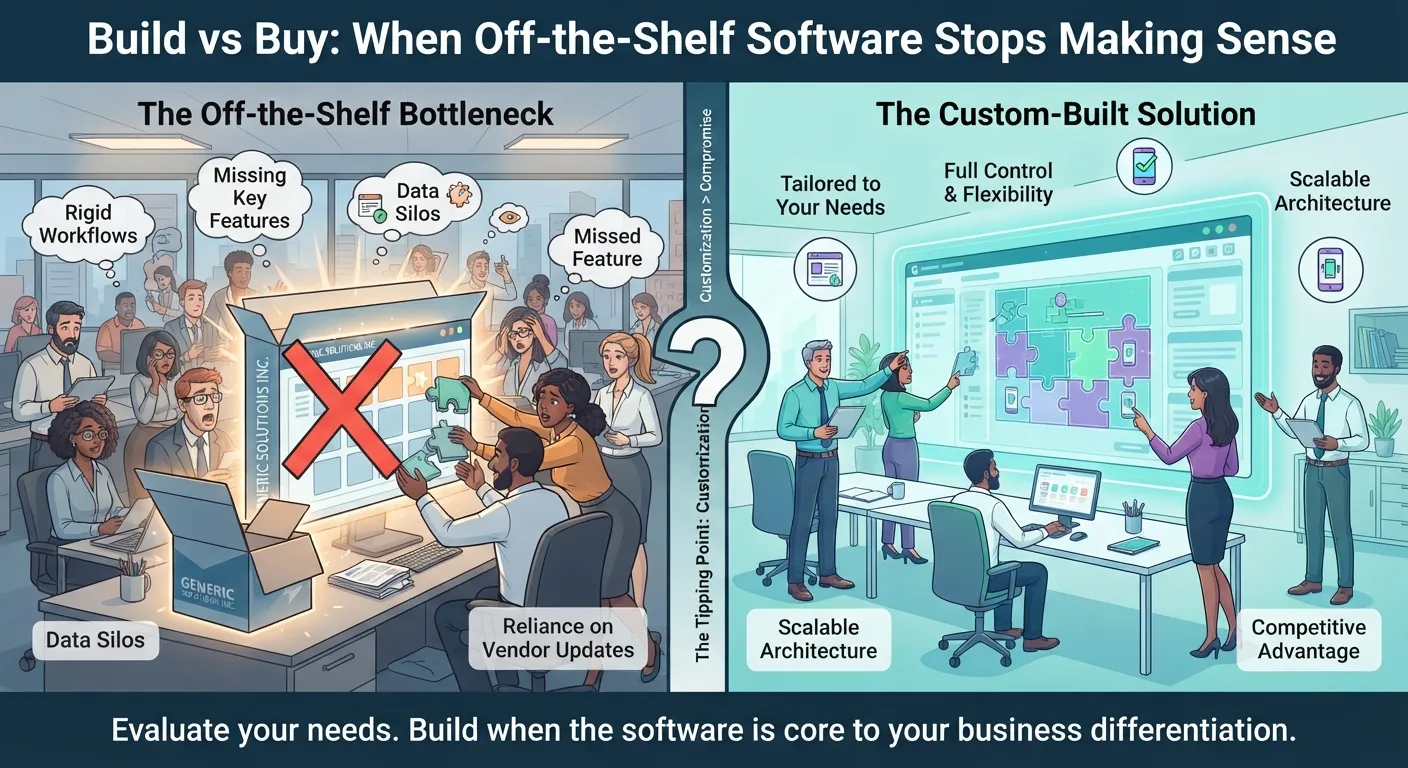

Every growing business eventually hits the same fork in the road. Keep stretching the software you already have or buying more of it or invest in something built specifically around how your business actually works.
There’s no universal right answer here. But there are clear signals that tip the decision one way or the other, and most businesses only notice them after they’ve already spent months forcing a tool to do something it was never designed for. Understanding when custom enterprise software development actually pays off can save a lot of that wasted time.
When Off-the-Shelf Still Wins
If your processes look roughly like everyone else’s in your industry, buying software is usually still the right call. Standard accounting, standard scheduling, standard CRM workflows these are solved problems, and building custom versions of them rarely makes financial sense.
The moment this stops being true is when your team starts building workarounds. Spreadsheets that shadow the “real” system. Manual steps to compensate for a feature that doesn’t exist. Multiple disconnected tools stitched together with copy-paste. That pattern is the actual signal, not a gut feeling that “we need something custom.”
The Hidden Cost of Workarounds
Workarounds feel cheap because there’s no invoice attached to them. But they cost real time, every day, and that cost compounds as the business grows. A workaround that takes an extra ten minutes a day doesn’t feel urgent until it’s happening across a growing team, every day, for years.
At some point, the cumulative cost of the workaround exceeds what it would have cost to build something that actually fits. Most businesses cross that line long before they notice it.
Custom Doesn’t Mean Starting From Zero
A common misconception is that going custom means rebuilding everything. In practice, most custom software work happens around the edges of what already exists connecting systems that don’t talk to each other, or replacing the one or two processes that are genuinely unique to how the business operates, while leaving the rest alone.
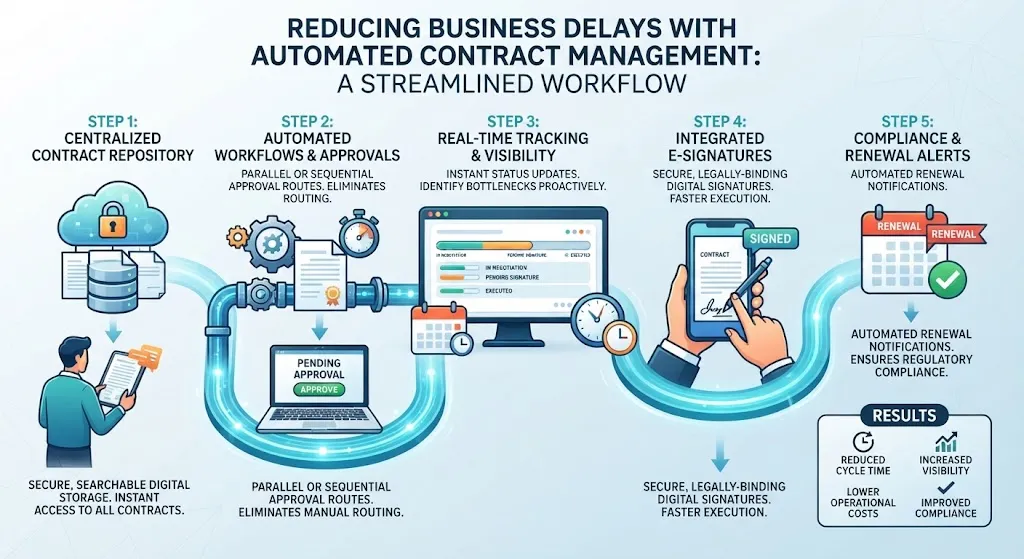
This is often where business process automation does more good than a full platform rebuild. Sometimes the fix isn’t new software it’s making the software already in place actually communicate.
Where This Intersects With AI
As AI agents become part of more workflows, the build-vs-buy question shows up again in a new form. Off-the-shelf AI tools are often generic by design, built to work reasonably well across many businesses rather than specifically for one.
Custom AI agent development tends to make more sense once a business has specific workflows, specific data, and specific decisions it needs the AI to support the same logic that applies to build-vs-buy for software generally.
Infrastructure Is Part of the Decision Too
Custom software also means owning more of the infrastructure decision. Off-the-shelf tools come with hosting and scaling handled. Custom platforms need that built and maintained deliberately.
That’s where cloud and DevOps engineering becomes part of the real cost conversation not as an afterthought, but as something to plan for from the start.
Ask What Happens if You Wait a Year
One useful test: imagine doing nothing for another twelve months. If the workarounds stay roughly the same size and cost, off-the-shelf is probably still fine. If the gap keeps widening more manual steps, more disconnected tools, more time lost that’s usually a sign the cost of waiting is higher than the cost of building something that fits.
The Real Question to Ask
Not “should we build custom software” but “which specific processes are costing us the most in workarounds right now.” That question usually points to a much smaller, more focused project than the word “custom software” makes it sound like.
Feel like you’re duct-taping tools together instead of using one that actually fits? Book a strategy call and find out whether custom is actually worth it for your specific case.
























Sign in to leave a comment.