


A commercial builders clean turns a finished construction zone into a safe, presentable, handover-ready space. It should remove construction dust, residues, labels, protective films, debris, and marks without damaging new finishes. For large projects, the clean needs clear staging, safe access, specialist equipment, and close coordination with the construction programme. Contractors should define the scope early, allow for re-cleans, and set a clear sign-off standard before crews arrive.
This guide is for main contractors, project managers, developers, and fit-out teams who need a practical view of final cleaning. It explains what to include, when each phase should happen, what can go wrong, and how to choose a cleaning subcontractor without adding risk near handover.
Why Large Commercial Builders Cleans in Australia Need More Planning Than Standard Cleaning
A normal office clean starts with an occupied space and known routines. A builders clean starts with dust, unfinished access, mixed trades, fresh surfaces, labels, silicone smears, paint spots, and floor protection that may still be in place.
Scale changes the job. A cleaner may finish one level while electricians, joiners, painters, or defect crews remain active on another. One late ceiling repair can spread dust through a room that passed inspection that morning.
Plan before mobilisation. Confirm access hours, lift use, water, power, waste routes, restricted rooms, and the sequence for each floor or tenancy. Mark areas that are truly trade-complete. If a zone is not ready, cleaning will not solve the programme problem.
The Three Main Cleaning Phases: Rough Clean, Builders Clean and Sparkle Clean
The rough clean comes first. Crews remove packaging, offcuts, rubble, waste, and heavy surface dirt. This improves access for following trades. It is not a presentation clean.
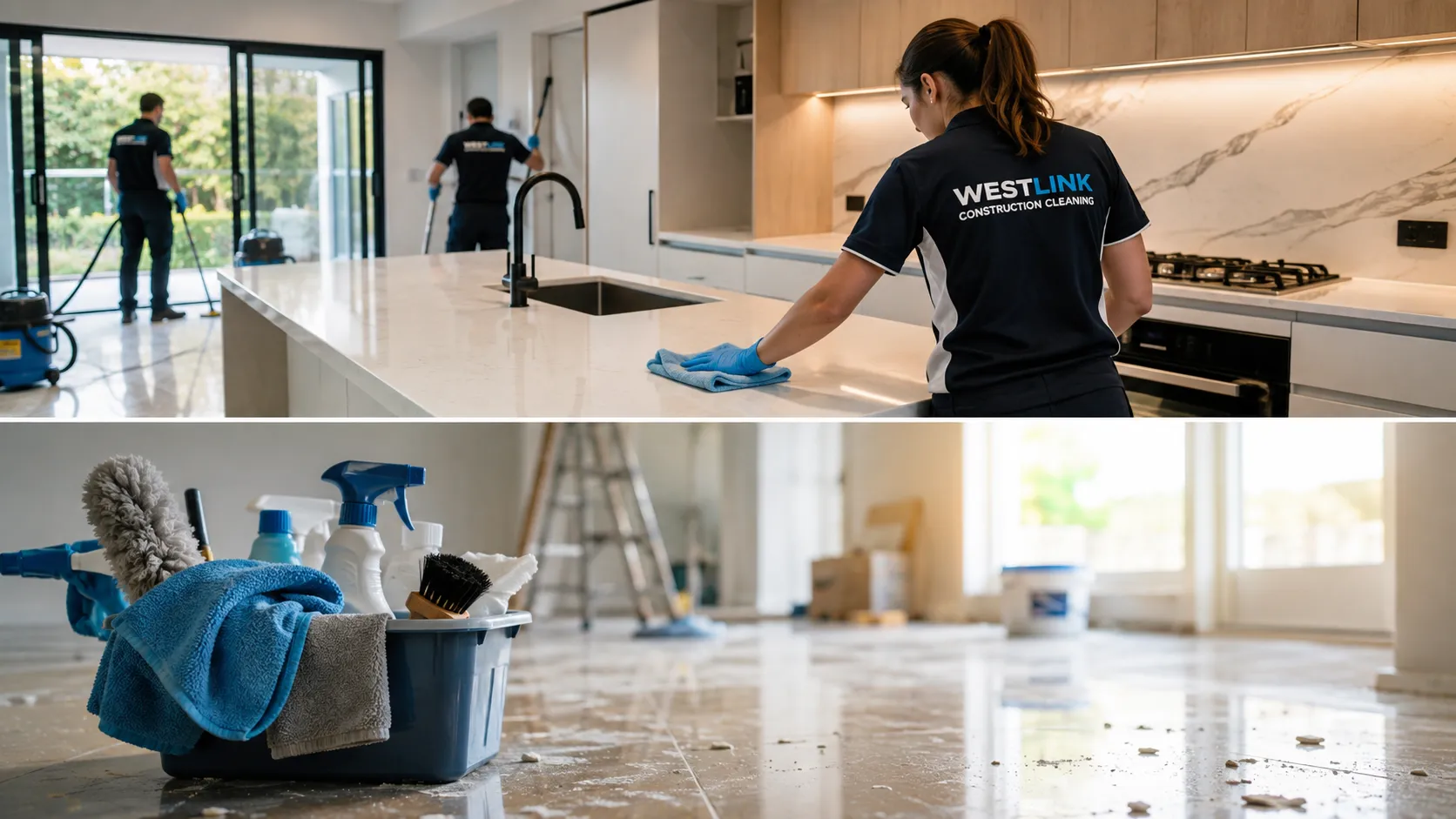
The main builders clean happens once messy trades are substantially complete. This is the detailed phase. Crews work through walls, ledges, joinery, doors, frames, wet areas, internal glazing, fixtures, and floors. They also remove construction-specific residue where the surface allows it.
The sparkle clean comes close to handover. It deals with fingerprints, light dust, glass marks, touch-ups, and presentation details. On a live project, it may follow defect work by only a few hours.
These phases should not blur into one long clean. If trades keep creating dust after the detail clean, the contractor pays twice: once for the first clean and again for the recovery work.
What a Commercial Builders Clean Should Include and Exclude
A written scope prevents most arguments. Walk the site before pricing and list surfaces, residues, access limits, and expected finish standards. Then separate normal inclusions from specialist or variation work.
- Remove loose construction debris, packaging, labels, and agreed protective films.
- HEPA vacuum and wipe accessible horizontal and vertical surfaces, including skirtings, ledges, frames, switches, and joinery.
- Clean bathrooms, kitchens, fixtures, mirrors, internal glass, window tracks, and frames.
- Vacuum, mop, scrub, or buff floors using methods suited to the installed finish.
- Remove agreed paint spots, silicone, adhesive, cement smears, and grout haze only with surface-safe methods.
- Define exclusions such as external façades, high-level access, pressure washing, hazardous waste, heavy rubble, specialist restoration, or re-cleaning caused by later trades.
If the estimator cannot point to an item in the scope, do not assume the crew will include it.
How to Plan Phased Cleaning Around Trades, Fit-Out Works and Project Handover
Start with the construction cleaning programme, not the cleaning company’s calendar. The detail clean should follow the work that creates the most dust and residue. Drywall sanding, drilling, ceiling works, painting, joinery adjustments, and floor installation can quickly undo completed cleaning.
For multi-level work, release zones in a fixed order. A floor should have safe access, working lights, basic services, and no planned dusty work before cleaners treat it as complete. Protect signed-off areas with doors, barriers, or clear signage where practical.
Allow a separate window for punch-list support cleaning. Defect crews leave fingerprints, packaging, drill dust, sealant scraps, and boot marks. That work is normal on a close-out programme, but it should not sit inside an unlimited “final clean” promise.
A room-by-room status board can show: not ready, ready, cleaned, defects active, sparkle due, or signed off.
Construction Dust, Silica and HEPA Cleaning: What Contractors Need to Control
Fine construction dust settles on door heads, inside window tracks, above services, along skirtings, and on top of joinery. A room can look clean at eye level and still fail a white-cloth check.
HEPA-filtered industrial vacuums help capture fine particles instead of blowing them back into the room. However, silica risk needs more than a vacuum. Cutting, grinding, drilling, or polishing silica-containing materials can create respirable crystalline silica. Controls may include isolation, wet methods, local extraction, suitable dust collection, and respiratory protection.
A cleaning crew should not become the control plan for active dust-generating work. Stop or isolate the source first, then clean high to low.
Site Safety, SWMS, RAMS, Inductions, Insurance and Cleaning-Crew Compliance
Cleaning crews still work inside a construction environment. Their paperwork and site behaviour should match the risks they face.
Before mobilisation, check:
- White Card and site-specific induction requirements for workers entering construction zones.
- SWMS where the work falls within high-risk construction activities, plus task-specific risk controls.
- RAMS only where the contract or client system asks for that format; it should not replace required local WHS documents.
- Public liability and other insurance certificates required by the contract.
- Plant, chemical, PPE, ladder, elevated-access, and manual-handling controls relevant to the actual scope.
- Emergency routes, exclusion zones, powered mobile plant movements, and daily coordination with site management.
High-risk construction work requires a SWMS that identifies the work, hazards, and controls, and site induction should happen before people enter operational construction areas.
How Specialist Cleaners Protect Glazing, Floors, Joinery and New Finishes
Fast residue removal can cause expensive damage. A metal blade can scratch glass. Strong acid can mark stone or metal. An adhesive remover can soften some coatings, while a rough pad can dull glossy laminate.
Specialist cleaners should identify the surface first, then the residue. They should test chemicals in a small, hidden area and use the least aggressive method that works. New glazing deserves extra care because cement specks, weld spatter, stickers, silicone, and protective film may need different treatments.
Low-angle light reveals haze, smears, droplets, and fine scratches that overhead lighting can hide. It also helps on polished floors, stainless steel, dark joinery, and glossy tiles.
Protecting the finish matters more than removing a mark quickly. If residue cannot come off safely, flag it for the contractor rather than turning a cleaning issue into a replacement item.
How Long Does a Builders Clean Take on a Large Commercial Site?
There is no reliable one-size duration. Floor area matters, but condition matters more. Ten thousand square metres of open office space is different from the same area split into bathrooms, kitchens, glazed rooms, stairs, detailed joinery, and active defect zones.
Crew size has limits. Doubling labour does not always halve the programme. Workers need space, equipment, lift access, water points, waste routes, and supervision.
Before setting a duration, review floor plans and walk the site. Count levels, wet areas, glazing, high-level work, floor types, access constraints, and areas that need specialist residue removal. Check how many zones can run at the same time.
For a tight handover, allow time for inspection and touch-ups. The clean ends when the agreed scope passes sign-off.
Builders Clean Pricing: What Affects Cost per m², Fixed Quotes and Project Rates
Contractors often ask for a builders clean cost per m² or sq ft for budgeting, but area alone says little about labour intensity.
A fixed quote works best when scope, access, programme, drawings, and site condition are clear. Per-area pricing suits repeatable floors or open zones. Hourly or day rates may suit variations, standby work, or punch-list support.
Price rises when crews face heavy residue, difficult glazing, high-level access, multiple mobilisations, night work, restricted lifts, long waste routes, specialist floor treatment, or repeated contamination from other trades.
Ask what the quote excludes. External glass, façade work, pressure washing, waste disposal, floor sealing, elevated platforms, hazardous material, and post-handover callbacks can sit outside the base scope.
A cheaper rate is not cheaper if the final account fills with variations.
Commercial Builders Clean FAQs: Scope, Stages, Checklists and Final Cleaning
What are the steps involved in a Builders Clean checklist? Start with debris and access, then clean high surfaces, fixtures, joinery, glazing, wet areas, and floors. Finish with an inspection, touch-ups, and area sign-off.
What’s included in a commercial clean? For post-construction work, the scope usually covers construction dust, accessible surfaces, fixtures, internal glass, wet areas, floors, labels, and agreed residue removal. The contract should state exclusions.
What are the 7 stages of cleaning? There is no single universal seven-stage builders-clean standard. Contractors should follow the project scope, surface requirements, safety controls, and agreed sequence rather than forcing the job into an arbitrary number.
What are the 5 basic cleaning principles? A practical approach is to remove the source, work high to low, use the right product for the surface, prevent cross-contamination, and inspect the finished area.
What is the difference between a builders clean and a sparkle clean? The builders clean removes construction dust and residue in depth. The sparkle clean is a final presentation pass close to handover.
What should a post-construction cleaning scope of work include? It should name areas, surfaces, residues, access, exclusions, equipment needs, safety documents, programme dates, quality standard, variation rules, and sign-off responsibility.
Choosing the Right Cleaning Partner for Handover: Where Westlink Construction Cleaning Fits
The right provider should understand construction sequencing, not just cleaning. Ask who supervises the crew, how labour scales, what equipment will arrive, how surface risks are managed, and how the team records completed areas. Review insurance, inductions, WHS documentation, and any high-risk work controls before mobilisation.
Look closely at the proposed scope. It should separate the main clean, sparkle clean, optional external work, high-level tasks, floor treatment, waste handling, and re-cleans. It should also explain what happens when a supposedly finished zone becomes dirty again after defect work.
A useful final inspection is physical. Open doors. Check frame tops and tracks. Run a clean cloth across ledges. View glass from more than one angle. Walk floors after they dry. Record defects with room numbers and photos, then close them out before handover.
Before crews start, photograph sensitive finishes and record existing damage. That simple baseline makes later defect discussions faster and protects both contractor and cleaner.
Westlink Construction Cleaning can support contractors who need a structured, site-aware clean tied to programme and handover requirements. Share the drawings, scope, access limits, and target dates early so the cleaning plan can be priced and staged around the real project, not assumptions.


























Sign in to leave a comment.