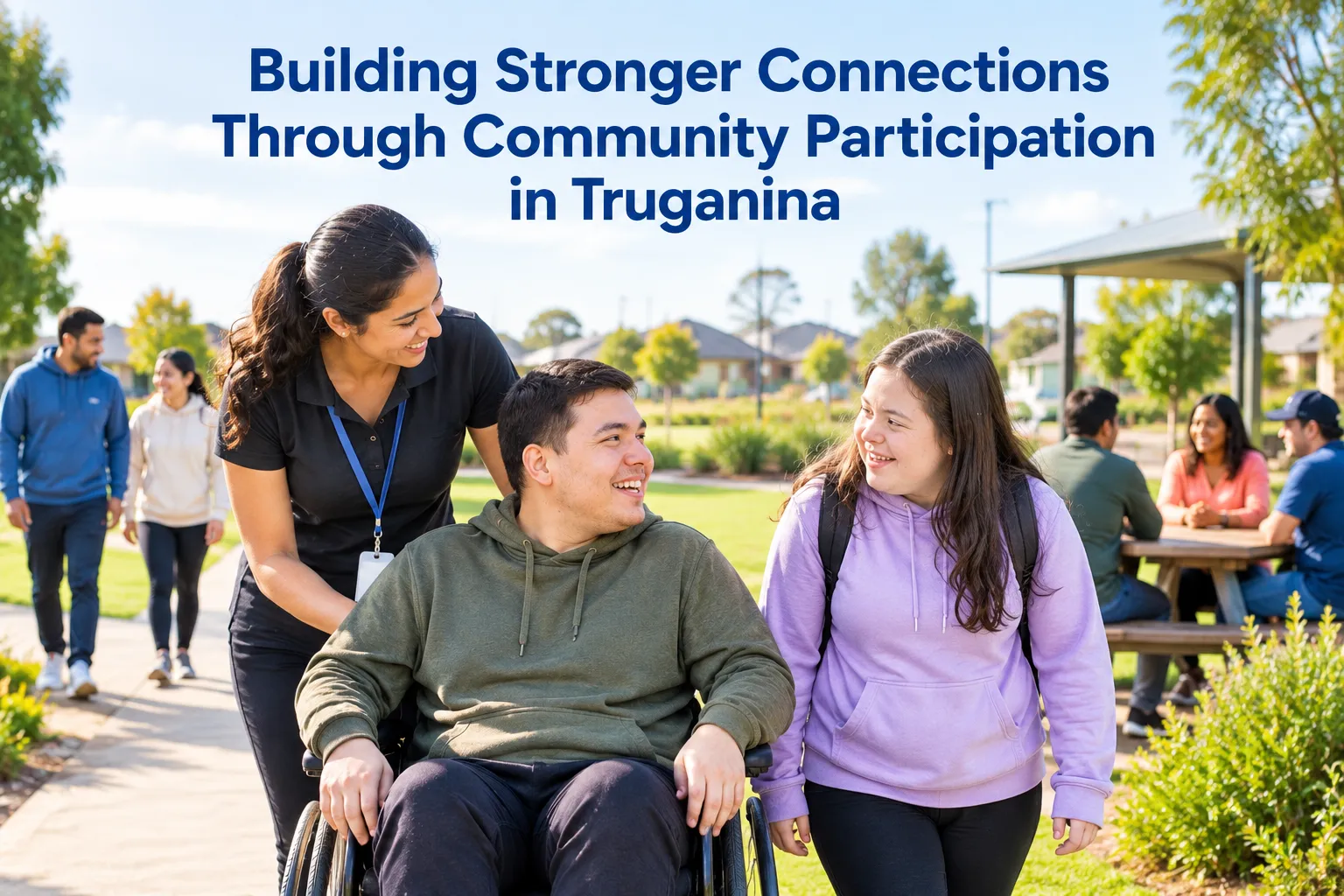

Being part of a community can have a meaningful impact on a person’s confidence, independence and overall quality of life. For people living with disability, having the right support can make it easier to access local activities, develop social connections and participate in everyday experiences.
Truganina is a growing community in Melbourne’s western suburbs, offering access to local parks, shopping areas, community facilities, recreational activities and essential services. With appropriate assistance, people with disability can explore these opportunities in ways that suit their individual interests, abilities and personal goals.
What Is Community Participation?
Community participation involves supporting a person to become actively involved in activities and experiences outside the home. This can include visiting local community centres, attending social events, joining recreational activities, using public facilities, shopping, visiting libraries or taking part in educational and skill-building programs.
The purpose is not simply to keep someone occupied. Meaningful participation can help people develop practical skills, meet others and make choices about how they want to spend their time.
For many participants, regular involvement in community activities can also create a stronger sense of belonging. Having opportunities to contribute, communicate and interact with others can help reduce social isolation and encourage greater independence.
Why Community Participation Matters
Every person has different interests and aspirations. Some people may enjoy sport and outdoor activities, while others may prefer art, music, shopping, cooking or social groups. Quality disability support should recognise these differences rather than taking a one-size-fits-all approach.
Community participation can provide several valuable benefits, including:
- Greater independence: Participants can practise everyday skills such as using public transport, shopping and navigating community spaces.
- Improved social connections: Regular activities can create opportunities to meet people and develop friendships.
- Increased confidence: Successfully participating in new experiences can encourage self-belief.
- Practical skill development: Community activities can support communication, decision-making, planning and problem-solving skills.
- Greater choice and control: Participants can have more influence over how they spend their time and pursue their interests.
Reduced isolation: Regular social engagement can help people feel more connected to the wider community.
These benefits can extend beyond individual activities. Over time, consistent community involvement may help participants become more comfortable trying new things and making decisions independently.
Exploring Truganina's Community Opportunities
Truganina and the surrounding western suburbs provide a variety of opportunities for community involvement. Depending on an individual's preferences and support needs, participation could involve visiting local parks and recreational spaces, attending community events, exploring shopping areas, visiting nearby libraries or taking part in social and recreational programs.
The surrounding western Melbourne area also provides access to a range of services, facilities and activities that can support community engagement. With suitable assistance and preparation, participants may be able to explore different locations, develop travel confidence and become more familiar with their local surroundings.
Local councils and community organisations can also provide information about activities, programs and events that may be suitable for people with different interests and abilities.
The important factor is finding activities that are genuinely meaningful to the individual. Participation should reflect what a person enjoys and what they want to achieve, rather than simply following a predetermined schedule.
Personalised Support Makes a Difference
Effective community participation starts with understanding the person. A support worker can take time to learn about a participant's interests, communication style, strengths, preferences and goals.
For example, one participant may want to become more confident attending social groups, while another may want to develop independent shopping skills. Someone else may simply want regular opportunities to visit favourite places and connect with others.
Personalised support can make these goals more achievable by providing encouragement while allowing the participant to remain involved in decision-making.
A good support approach should also respect dignity and personal choice. The aim is to assist rather than take over. Participants should have opportunities to try tasks themselves, learn from experience and gradually build confidence.
Supporting Independence Through Everyday Experiences
Community participation does not always have to involve a large event or organised programme. Everyday activities can provide valuable opportunities for learning and personal development.
Going to a local café, purchasing groceries, visiting a nearby park or attending an appointment can all help a person practise practical skills. With appropriate encouragement, these experiences can contribute to greater confidence in navigating daily life.
Support can also involve helping participants prepare for activities. This might include planning transport, discussing what to expect, identifying accessibility considerations or creating a comfortable routine.
By preparing in advance, participants can feel more confident when approaching unfamiliar environments.
Choosing the Right Disability Support Provider
When considering community participation services, families and participants should look for a provider that takes a person-centred approach. Clear communication, reliability and respect are important qualities in any support relationship.
It can be helpful to ask potential providers about how they match support workers with participants, how they respond to individual goals and how they encourage independence.
A strong provider should also recognise that goals can change over time. Someone who initially needs considerable assistance may become more independent as their confidence and skills develop. Support should be flexible enough to adapt to these changes.
Creating More Inclusive Communities
Community participation is about more than individual support. It also contributes to creating communities where people of all abilities can take part.
When people with disability have meaningful opportunities to access local facilities, socialise and contribute to community life, everyone benefits from a more diverse and inclusive environment.
Truganina and the surrounding western Melbourne communities can become more welcoming when accessibility, inclusion and individual choice are considered in everyday activities and services.
For participants and families looking for Community Participation Support in Truganina, choosing a service that prioritises individual goals, independence and meaningful engagement can be an important step towards greater community connection.
Moving Towards Greater Participation
Everyone deserves opportunities to pursue their interests, build relationships and experience the wider community. With the right support, community participation can become a positive part of everyday life rather than something that feels difficult or inaccessible.
Whether the goal is developing practical skills, meeting new people, exploring local activities or becoming more confident in familiar surroundings, personalised support can help make those goals more achievable.
For people living with disability in Truganina and nearby western Melbourne suburbs, community participation can open the door to new experiences while supporting greater independence, confidence and connection.


















Sign in to leave a comment.