
A burnout prevention plan for managers has four parts: spot early warning signs, fix the workplace conditions causing stress, keep communication open through regular check-ins, and gather honest feedback from employees. The Up-Ward Shift (TUWS), a leadership and organizational consulting firm in Georgia, helps leaders build this kind of plan through stress management and burnout prevention training, leadership coaching, and ongoing support.
Why Managers Hold the Key to Burnout Prevention
Managers shape daily work more than any wellness program does. They set priorities, assign workloads, give feedback, and decide whether employees feel safe raising concerns. That makes managers central to burnout prevention.
Burnout rarely comes from one bad week. It builds when unrealistic workloads, lack of support, poor communication, and constant pressure continue over time. Because these are workplace conditions, leaders are in a position to change them.
Many managers were never trained for this, and they may be burned out themselves. Good burnout prevention therefore supports leaders as well as the teams they lead.
Five Myths That Undermine Burnout Prevention
Myth 1: Burnout is a personal weakness. Burnout often reflects the environment: heavy workloads, unclear roles, and limited support. Blaming individuals hides the real causes.
Myth 2: A wellness day fixes it. Time off and wellness activities help, but if the same conditions wait on return, the stress returns too.
Myth 3: High performers are immune. Strong performers often take on the most and speak up the least, which makes them easy to overlook.
Myth 4: If no one complains, everything is fine. Some employees struggle silently. TUWS calls these “silent strugglers.”
Myth 5: Managers must act like therapists. They do not. Managers need to recognize warning signs, communicate with care, set boundaries, and connect people with appropriate resources.
Dropping these myths makes burnout prevention more practical and less intimidating.
Step 1: Recognize Early Warning Signs
Catching burnout early is far easier than repairing it later. Managers can watch for:
- Persistent exhaustion or irritability
- Withdrawal from the team or from meetings
- Missed deadlines from someone previously reliable
- Increased absenteeism or late arrivals
- Drop in quality, creativity, or initiative
- Comments suggesting the person feels overwhelmed or unsupported
A single sign does not prove burnout, so treat these as prompts for a caring conversation rather than conclusions. TUWS offers Mental Health First Aid for leaders to help managers recognize concerns and respond appropriately.
Step 2: Audit Workload, Roles, and Expectations
The next stage of burnout prevention is a hard look at the work itself. Ask:
- Does each person know what they own and what success looks like?
- Are deadlines realistic given current staffing?
- Are priorities clear, or does everything feel urgent?
- Who is covering for gaps, and for how long?
- Does constant change leave people without time to adjust?
Unclear roles, heavy workloads, workplace conflict, and constant change are common sources of stress. Even small fixes, such as clarifying ownership or removing a low-value task, can ease pressure quickly.
Step 3: Build a Rhythm of Regular Check-Ins
Annual reviews are too far apart for burnout prevention. Short, regular check-ins create a steady channel for concerns.
A simple check-in can cover three questions:
- What is going well?
- What is getting in your way?
- What support would help most right now?
Then listen. Communication that flows only from the top down misses warning signs. TUWS provides quarterly check-ins and ongoing support to help leaders stay informed and responsive.
Step 4: Use Trauma-Informed Leadership Practices
Employees bring their whole lives to work, including stress, grief, and uncertainty. Trauma informed leadership strategies are responding to pressure, conflict, and change with awareness and care.
In practice, managers can:
- Explain the reasons behind decisions.
- Offer choices where possible.
- Stay calm during conflict.
- Avoid public criticism and unpredictable reactions.
- Make it safe to say “I am struggling” or “I need help.”
This approach builds psychological safety, which lets problems surface early. Learn more on the TUWS services page.
Step 5: Gather Honest, Anonymous Feedback
Even approachable managers may not hear the full picture. Employees often hold back when they fear consequences.
TUWS addresses this with quarterly staff engagement sessions, in which Certified Peer Specialists meet with employees and gather anonymous feedback for management. Confidential employee insights are then shared with leadership without revealing individual identities. Managers can see patterns in stress, morale, and engagement and act on them. This is a core part of proactive burnout prevention.
Step 6: Set Boundaries and Model Healthy Habits
Teams copy their leaders. If a manager sends messages at midnight, skips breaks, and never takes leave, employees feel pressure to do the same.
Healthy boundaries do not lower standards. They protect the energy people need to sustain good work. Managers can:
- Set reasonable response-time norms.
- Encourage real time off.
- Respect off-hours when possible.
- Share when they are stepping away to recharge.
Step 7: Connect Wellness to Company Culture
Wellness resources work best when workloads and culture let people use them. A meditation app means little if employees have no time to open it.
TUWS connects mental health resources and stress management support to the wider company culture. Burnout prevention then becomes part of how work gets done rather than an add-on.
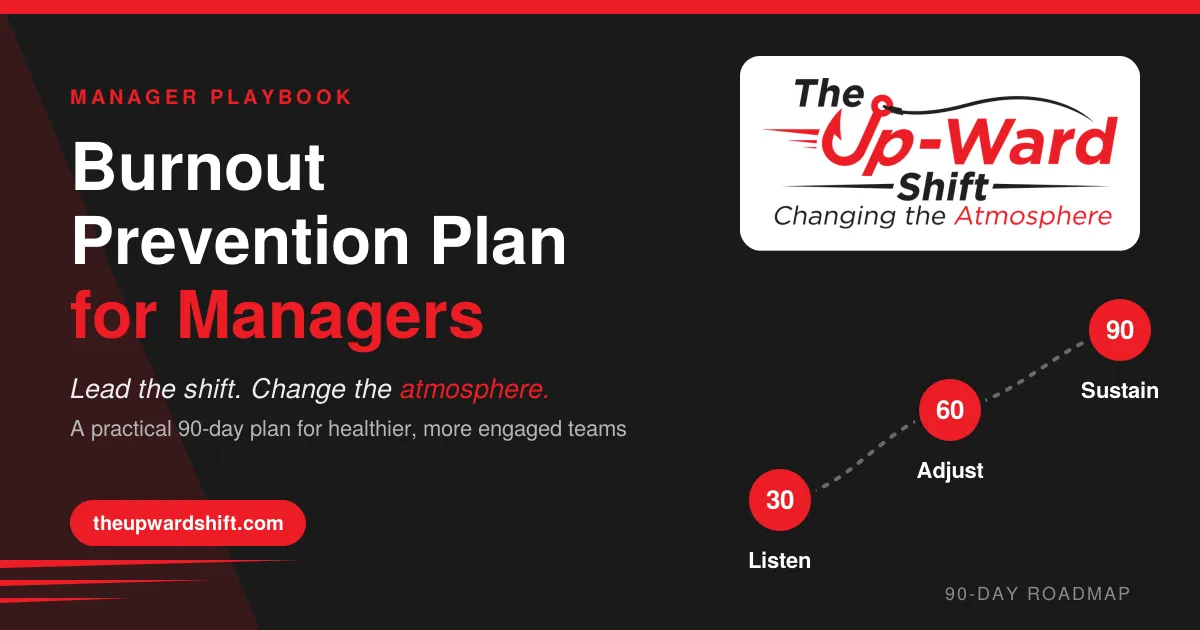
A Simple 90-Day Burnout Prevention Plan
Here is a sample timeline managers can adapt:
Days 1 to 30: Listen and learn
- Hold one-on-one check-ins with each team member.
- Review workloads and role clarity.
- Identify immediate pressure points.
Days 31 to 60: Adjust and train
- Remove or reassign unnecessary tasks.
- Clarify priorities and expectations.
- Train managers to spot warning signs and respond with care.
Days 61 to 90: Measure and sustain
- Gather anonymous feedback.
- Compare engagement, absenteeism, and retention against your baseline.
- Schedule ongoing check-ins and review what to adjust.
Results vary by organization, so treat this as a starting framework.
How to Measure Burnout Prevention Success
Track a few indicators over time:
- Turnover and retention rates
- Absenteeism and sick leave
- Engagement and morale feedback
- Manager confidence discussing stress
- Number of workload or role-clarity concerns raised
- Participation in check-ins and feedback sessions
If indicators do not improve, revisit workload, communication, and support.
When to Bring in Outside Support
Outside help is useful when stress is widespread, managers feel unprepared, turnover is rising, or employees will not speak candidly. A consultant offers an objective view and structured tools. TUWS does not replace an Employee Assistance Program, which provides valuable individual support, but it adds a proactive, leadership-focused layer. TUWS is led by Dr. RJ Willis, who holds a doctoral degree in Organizational Leadership and has more than 13 years of experience in the mental health field. Learn more on the founder page.
Frequently Asked Questions
What is burnout prevention for managers?
It is a set of leadership practices that reduce chronic workplace stress, including clear expectations, realistic workloads, regular check-ins, trained leaders, and anonymous feedback.
What are the first signs of burnout in employees?
Early signs include exhaustion, irritability, withdrawal, missed deadlines, rising absenteeism, and reduced engagement. A caring conversation is the best first response.
How can managers support burnout prevention without being therapists?
Managers can recognize warning signs, communicate with compassion, set appropriate boundaries, and connect people with suitable resources. They do not need to provide therapy.
How often should managers check in with employees?
Regular, short check-ins work better than occasional long ones. Choose a rhythm your team can sustain, such as weekly or biweekly one-on-ones, and add structured organization-wide check-ins.
Does burnout prevention work for small teams?
Yes. Small teams often feel burnout more sharply because losing one person has a large impact, so early support is especially valuable.
How is burnout prevention different from an EAP?
EAPs usually offer individual, often reactive help. Burnout prevention is proactive and focuses on leadership, workload, culture, and employee feedback. It complements an EAP.
How do I get started with The Up-Ward Shift?
Review the services page, then contact the team or schedule a consultation.
Make Burnout Prevention a Leadership Habit
Burnout prevention is not a one-time project. It is a habit built through clear expectations, open communication, caring leadership, and honest feedback. Start small, measure progress, and keep adjusting. When you are ready for structured support, explore The Up-Ward Shift and take the next step toward a healthier workplace.

























Sign in to leave a comment.