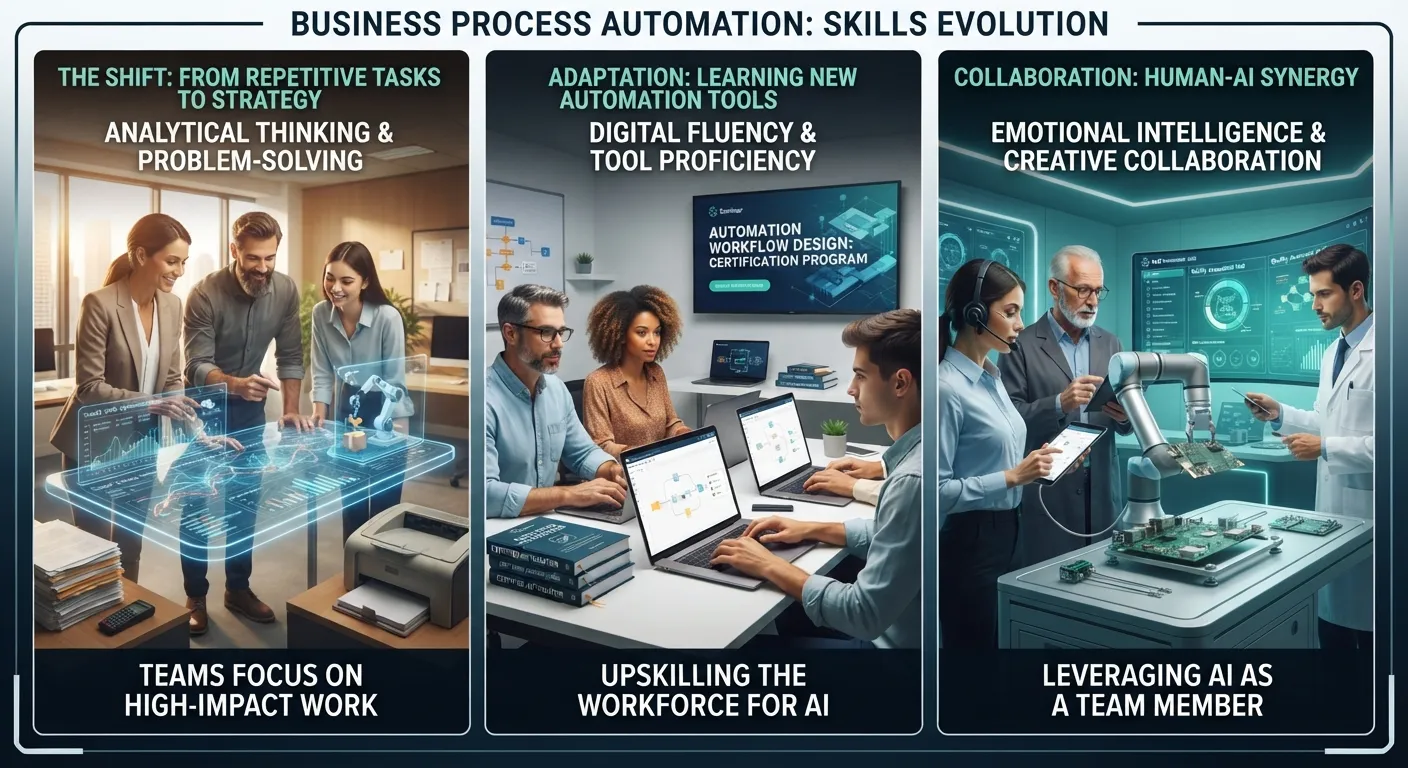

A business that automates a significant part of a repetitive process doesn’t just save time it genuinely changes what the people who used to do that work manually should now be spending their time on. Businesses across the USA rolling out business process automation often focus heavily on the technical implementation while giving far less thought to this real shift in required skills.
Automation Shifts Work From Execution to Oversight
When a process moves from manual to automated, the human role typically shifts from directly performing the task to overseeing that the automation is working correctly, handling exceptions, and improving the process over time. This is a genuinely different skill set than the one required to perform the original manual task well.
Not Everyone Transitions to the New Role Equally Well
Employees who were excellent at the manual version of a task aren’t automatically well-suited to the oversight and exception-handling role that remains after automation. This transition requires genuine attention some employees adapt naturally, while others need real support and training to shift into the changed version of their role.
New Skills Often Center on Judgment and Exception Handling
As routine execution gets automated, the remaining human work increasingly centers on judgment calls, handling genuinely ambiguous cases, and improving the process itself skills that weren’t as critical when the employee was primarily executing a well-defined manual task repeatedly.
Technical Literacy Becomes More Valuable, Even in Non-Technical Roles
Employees working alongside automated systems benefit from a baseline comfort with understanding how those systems work, at least well enough to recognize when something seems wrong and know how to escalate it appropriately. This doesn’t require deep technical expertise, but it does require more technical comfort than the fully manual version of the role demanded.
Communication About This Shift Matters as Much as Training
Employees who understand clearly why automation is happening, and what their evolving role genuinely looks like afterward, tend to adapt far better than those left to guess at what automation means for their job security and daily responsibilities. Clear, honest communication about the transition matters as much as the technical training itself.
This Connects to How Automation Itself Gets Designed
Well-designed automation, built with genuine input from the people who will work alongside it, tends to produce a smoother transition than automation designed purely from a management perspective without frontline involvement. This connects directly to thoughtful enterprise software engineering that considers the human workflow around the system, not just the technical implementation.
AI-Assisted Roles Require Their Own Distinct Skill Development
As AI agent development becomes part of more workflows, employees increasingly need skills specific to working effectively alongside AI understanding its limitations, knowing when to trust its output, and knowing when to override it which is a genuinely new and evolving skill area for many roles.
Measuring the Real Transition, Not Just Technical Rollout
Real data engineering and analytics tracking of how well employees are actually adapting to their changed roles not just whether the automation itself is technically functioning gives a more complete, honest picture of whether the transition is genuinely succeeding.
Infrastructure Reliability Affects Employee Trust in the New Role
Employees asked to trust and oversee an automated system that’s frequently unreliable understandably lose confidence in their new role quickly. Solid cloud and DevOps engineering underneath automation is part of what makes the human transition to an oversight role genuinely sustainable.
Plan for the Human Transition, Not Just the Technical One
The businesses that get real, lasting value from automation are the ones who plan deliberately for how their team’s actual skills and roles need to evolve alongside the technology, not just the technical rollout itself.
Rolling out automation and want to make sure your team is genuinely ready for the shift? Book a strategy call and get a plan that accounts for your people, not just the technology.


























Sign in to leave a comment.