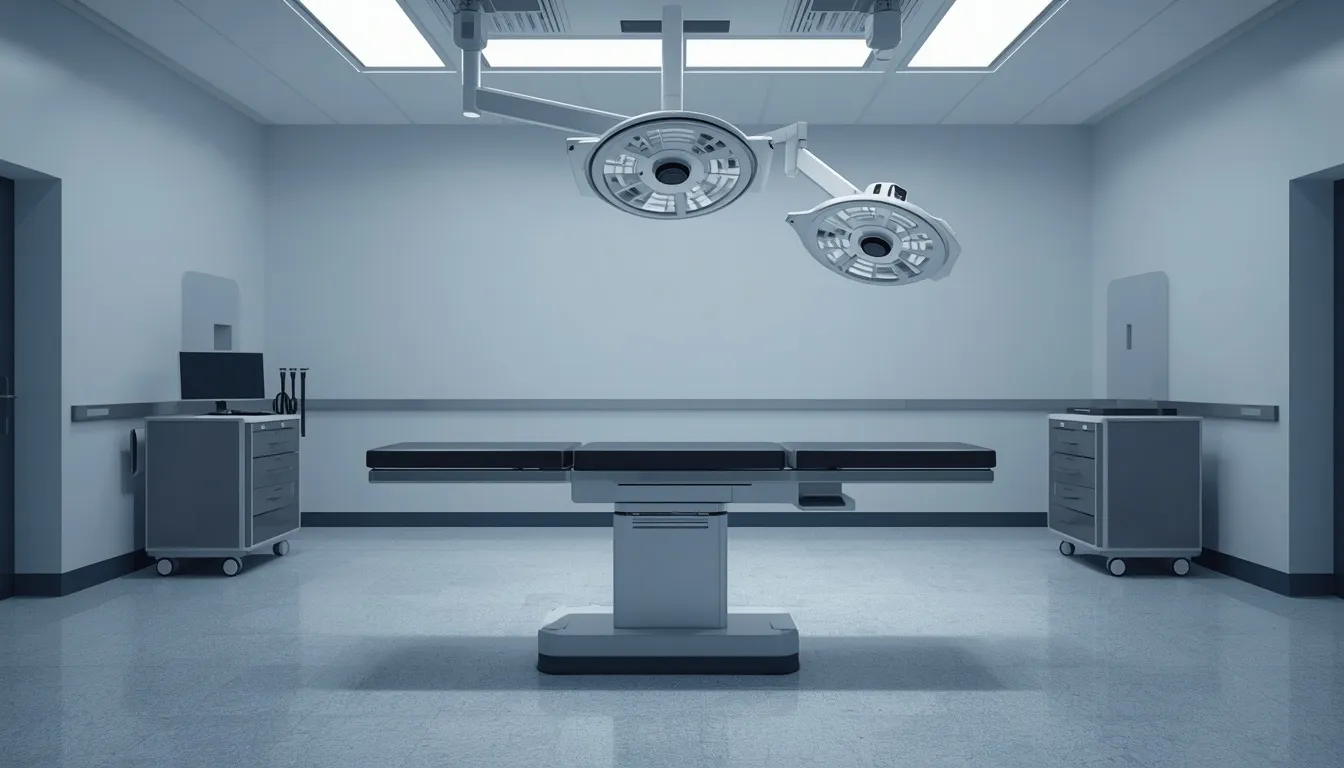

In image-guided surgery, an operating table does much more than support and position the patient. Its design can directly affect how easily imaging equipment reaches the required anatomy and how efficiently the surgical team can adjust the operative field.
One feature that deserves particular attention is longitudinal slide.
Longitudinal slide allows the tabletop to move horizontally along its length relative to the supporting column or base. Although the movement may appear simple, it can be highly useful during procedures involving a C-arm because it can help reposition the patient relative to the imaging field without repeatedly moving the entire table.
For hospitals evaluating an operation theatre table in india, understanding longitudinal slide is therefore about more than comparing movement specifications. It requires considering imaging access, patient positioning, stability, workflow, and the procedures the table is expected to support.
What Is Longitudinal Slide?
Longitudinal slide refers to the controlled movement of the tabletop toward the head or foot end while the table's main base remains in position.
The available sliding distance varies between table models.
This movement is particularly relevant when a mobile C-arm needs access to different anatomical regions. Instead of repositioning the complete table every time the imaging field changes, the tabletop can be shifted within its permitted range.
The practical advantage becomes clearer when we consider how a C-arm operates.
The C-shaped imaging unit needs physical clearance around the patient and table while its X-ray source and detector are positioned on opposite sides of the anatomy being imaged. Table structures, columns, bases, and certain accessories can potentially restrict this movement.
Longitudinal slide can help bring the required anatomy into a more accessible imaging position.
1. Better Access to the Required Imaging Area
One of the main reasons longitudinal slide matters is C-arm access.
During an image-guided procedure, the surgical team may need images of more than one anatomical region or may need to adjust the field of view as the procedure progresses.
If the table has limited longitudinal movement, the team may need to reposition the C-arm, move the table base, or modify the patient's position.
Each option can add another step to the workflow.
With appropriate longitudinal slide, the tabletop can be shifted while the table base remains stationary. This may allow the required anatomy to move into the C-arm's accessible imaging zone more conveniently.
The actual benefit depends on the table design, slide range, patient position, C-arm geometry, and procedure.
2. The Table Column Can Affect Imaging Access
A table may be described as C-arm compatible, but that description alone does not explain how much unobstructed imaging access is actually available.
The supporting column is an important consideration.
When the anatomical area requiring imaging is positioned directly over or close to a large structural component, obtaining the desired C-arm position may become more difficult.
Longitudinal slide helps change the relationship between the patient and the table column.
By moving the tabletop toward the head or foot end, the clinical team may be able to position the anatomy of interest away from the central support structure.
This is why hospitals should evaluate usable imaging access, not simply whether "C-arm compatible" appears on the specification sheet.
3. Radiolucency and Longitudinal Slide Work Together
Longitudinal slide becomes significantly more useful when combined with an appropriately designed radiolucent tabletop.
Radiolucent tabletop sections are intended to minimize obstruction of X-ray imaging within specified areas.
However, radiolucency alone does not guarantee convenient C-arm access.
The anatomy being imaged still needs to be positioned within an accessible radiolucent region and away from structures that may interfere with the required projection.
This makes tabletop design, longitudinal slide, column position, and C-arm clearance interconnected considerations.
During procurement, hospitals should therefore avoid evaluating these specifications separately. The practical question is whether the entire table geometry supports the imaging views required for the hospital's procedures.
4. It Can Reduce the Need to Reposition the Entire Table
Moving an entire operating table during an ongoing procedure can involve more than simply releasing the brakes and pushing it.
The surgical environment may include anesthesia equipment, monitors, instrument trolleys, cables, tubing, surgical lights, and other devices positioned around the patient.
Repositioning the table base may require several elements to be checked or adjusted.
Longitudinal tabletop movement provides another positioning option.
Where clinically appropriate and permitted by the manufacturer's instructions, the tabletop can be shifted while the base remains fixed.
This does not eliminate the need to reposition other equipment in every situation, but it can simplify certain imaging adjustments.
5. Longitudinal Slide Can Support Multiple Surgical Specialties
C-arm imaging is used across a variety of procedures, making table flexibility relevant to more than one department.
Depending on hospital practice, mobile fluoroscopic imaging may be used in areas such as:
- Orthopedics
- Trauma surgery
- Spine procedures
- Urology
- Pain procedures
- Vascular interventions
- Selected general surgical procedures
Each specialty can have different requirements for patient orientation and imaging access.
For example, orthopedic procedures may require access to different parts of an extremity, while spinal procedures can require imaging around specific vertebral levels.
The appropriate slide range should therefore be evaluated according to the procedures actually performed by the hospital rather than selecting the largest number on a specification sheet.
6. Stability During Slide Is Equally Important
A long sliding range is useful only when the table remains stable within its specified operating conditions.
As the tabletop moves away from the central column, the distribution of load changes.
This is where safe working load, table geometry, locking mechanisms, base design, patient orientation, and manufacturer-defined movement limits become important.
Hospitals should ask whether load restrictions apply when the tabletop is fully extended or when longitudinal slide is combined with Trendelenburg, lateral tilt, or other movements.
The maximum patient-load figure on a brochure should not automatically be assumed to apply identically in every possible configuration.
Technical documentation and the manufacturer's instructions for use should always be consulted for the specific table model.
7. Powered Slide Can Improve Positioning Control
In modern motorized tables, longitudinal slide may be electrically controlled.
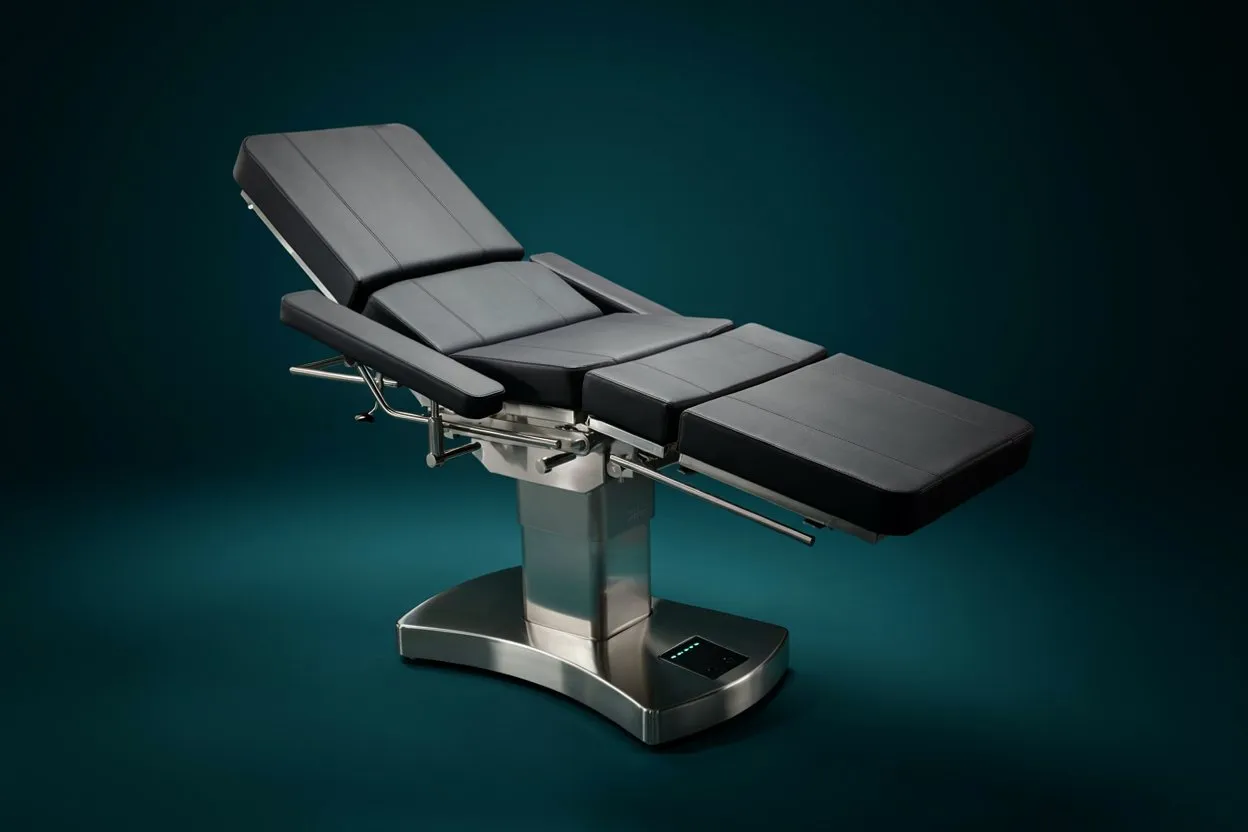
A best operation theatre table can combine powered longitudinal movement with functions such as height adjustment, lateral tilt, Trendelenburg, reverse Trendelenburg, backrest positioning, and other movements depending on its configuration.
Powered control can make incremental adjustments easier for the operating team, particularly when precise positioning is required.
But automation should not be assessed only by the number of powered movements.
Hospitals should evaluate whether controls are intuitive, movements are smooth, table positions are clearly understood, and appropriate safety or backup mechanisms are available.
It is also worth asking how the table can be operated if the primary handset, battery, or power supply becomes unavailable.
8. Table Height Also Influences C-Arm Workflow
Longitudinal movement is only one part of C-arm compatibility.
Table height can affect both surgical ergonomics and imaging equipment positioning.
If the table cannot move to a suitable height, the C-arm may have difficulty achieving certain orientations, depending on the equipment and procedure.
At the same time, the surgical team needs a working height that supports appropriate posture and access.
A useful table design therefore balances vertical movement, longitudinal slide, tilt, radiolucency, and physical clearance.
Evaluating one specification without the others can provide an incomplete picture of real-world performance.
9. The Entire OT Environment Should Be Considered
Image-guided surgery involves coordination between several pieces of equipment.
The relationship between best operation theatre table in india is one example. When the tabletop slides or the patient's position changes, surgical lights may need to be repositioned to maintain appropriate illumination of the operative field.
The C-arm also requires movement space around the table.
At the same time, monitors should remain visible, anesthesia personnel need access to the patient, and cables and tubes must be managed safely.
This makes operating-room layout an important part of table evaluation.
A table can have excellent individual specifications but still be poorly suited to a particular room if the complete equipment workflow is not considered.
10. Hands-On Evaluation Is More Useful Than Slide Range Alone
Manufacturers may specify longitudinal slide in millimetres, making it tempting to compare tables purely by the largest number.
But a greater slide distance does not automatically mean better C-arm performance.
Hospitals should consider:
- Usable radiolucent imaging area
- Table column position
- Base geometry
- C-arm clearance
- Longitudinal slide range
- Patient orientation
- Safe working load
- Stability at extended positions
- Table height range
- Accessory compatibility
- Powered and backup controls
Whenever possible, evaluation should include the hospital's actual or representative C-arm.
Clinical and biomedical teams can position the table as they would during common procedures and determine whether the required anatomical regions can be accessed conveniently.
This provides more meaningful information than comparing specification sheets alone.
Questions Hospitals Should Ask Before Purchasing
When evaluating a C-arm-compatible table, procurement and biomedical teams should ask practical questions.
How much usable longitudinal slide is available? Does the safe working load change at maximum slide? Which parts of the tabletop are radiolucent? Can the C-arm achieve the projections required for the hospital's common procedures? Are there limitations with specific accessories or patient orientations? What happens if powered movement becomes unavailable?
Surgeons, radiology personnel, OT staff, biomedical engineers, and procurement teams can all contribute useful perspectives during the evaluation process.
Conclusion
Longitudinal slide may look like a relatively straightforward operating-table movement, but its value becomes much clearer in C-arm-guided procedures.
By shifting the tabletop relative to the supporting column, longitudinal movement can help position the required anatomy within an accessible imaging area while reducing the need to move the complete table in certain situations.
Its effectiveness, however, depends on the complete table design.
Radiolucency, column position, base geometry, stability, safe working load, height adjustment, patient orientation, and C-arm clearance all need to work together.
For hospitals, the right question is therefore not simply, "How much longitudinal slide does this table have?"
A better question is:
"Does the table provide the imaging access, stability, positioning flexibility, and C-arm compatibility required for the procedures we actually perform?"
That is the difference between evaluating a specification and evaluating how an operating table will function in the real surgical environment.





















Sign in to leave a comment.