

Walk into a beautifully furnished office and look under the desks. That's often where the real design quality shows, or doesn't. Cable management rarely makes it into a furniture buying decision, yet it affects daily comfort and how professional a space actually looks far more than most people expect.

Why this gets overlooked so often
Furniture buying decisions tend to focus on visible details, finish, color, shape. Cable routing lives underneath and out of sight during a showroom visit, which means it's easy to assume every desk handles this reasonably well. In practice, quality varies enormously between a well-engineered desk and one that simply wasn't designed with cables in mind.
What good cable management actually looks like
Built-in cable trays or channels that route power and data cables cleanly from the desktop to the floor, grommet holes positioned sensibly relative to where monitors and equipment typically sit, and enough clearance to add or remove cables without disassembling half the desk. These details matter more with modern setups running dual monitors, docking stations, and charging equipment simultaneously.
Where this matters most
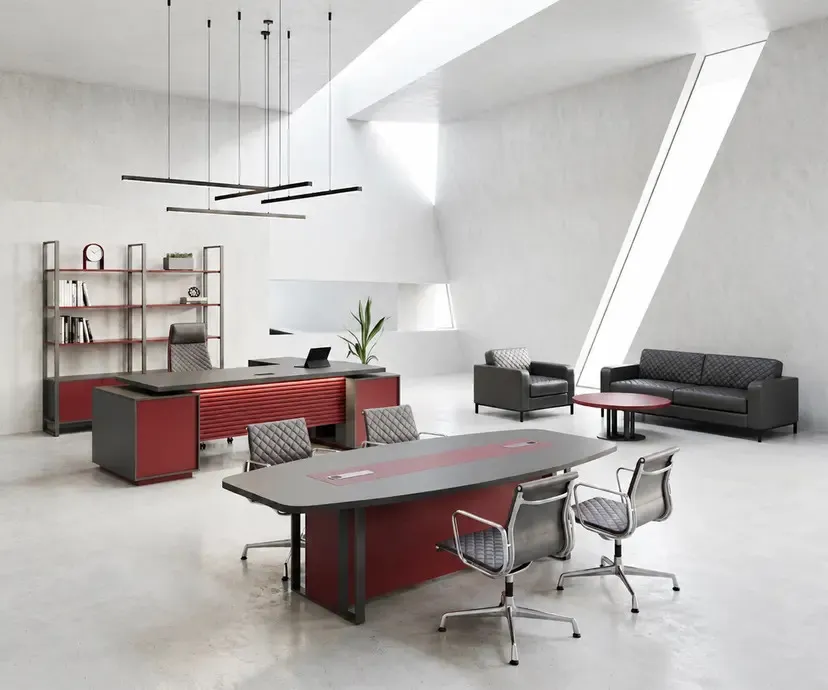
Open-plan workstations with multiple desks in close proximity benefit enormously from good cable management, since tangled cables between neighboring stations create both a visual mess and a genuine tripping hazard. Executive desks and boardroom tables need it just as much, since these are often the spaces most visible to visitors and clients.
Why this is worth asking about before ordering
A desk that looks identical to a competitor's in a photo can differ significantly in how well it actually manages cables day to day. Asking specifically about cable routing design, not just finish and dimensions, reveals a lot about how much genuine thought went into a piece of furniture beyond its surface appearance.
Building this in from the start
As a Dubai-based office furniture manufacturer, we treat cable management as a core design consideration rather than an afterthought bolted onto a finished desk, which is part of what separates furniture that looks good on day one from furniture that stays genuinely functional for years.
























Sign in to leave a comment.