
The CAFM Market at an Inflection Point: Strategic Trends and Commercial Opportunities
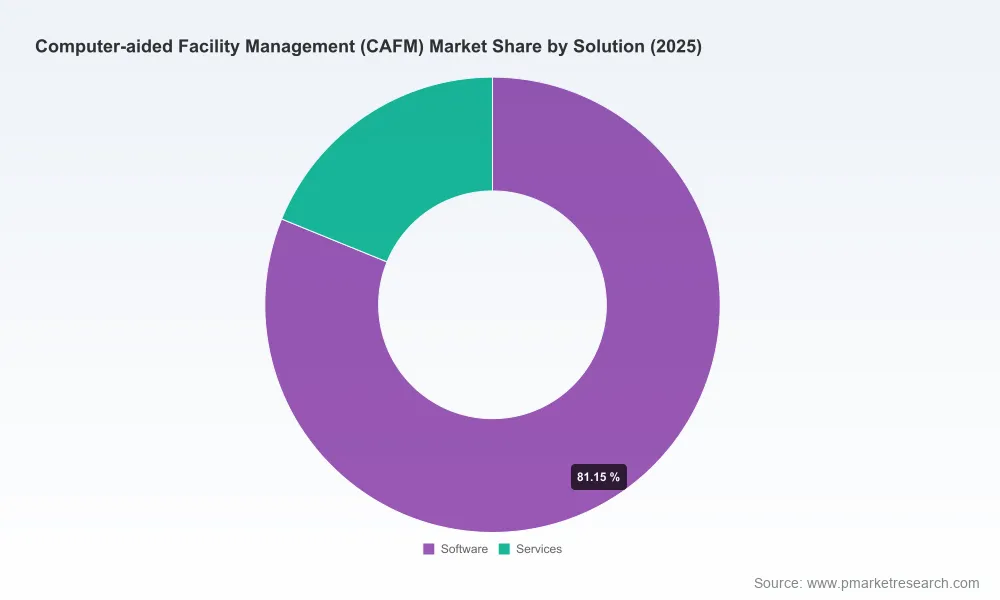
Computer-aided Facility Management (CAFM) has evolved from a niche administrative tool into a cornerstone of enterprise operational strategy. Over the past five years, the market has demonstrated consistent upward momentum, with global revenue climbing from approximately 850 million USD in 2020 to 1.21 billion USD in 2025. The trajectory points toward sustained expansion, with the market projected to reach 2.1 billion USD by the end of the decade. This equates to an 8.2 percent compound annual growth rate across the 2026–2032 forecast window. Such growth is not merely a reflection of incremental software adoption; it signals a fundamental restructuring of how organizations manage physical assets, optimize space, and respond to regulatory and sustainability mandates. The CAFM market is no longer about digitizing work orders. It is about embedding intelligence into the built environment. For executives and investors, the question is no longer whether CAFM matters, but how to position within a landscape where technology convergence, compliance pressure, and operational complexity are reshaping competitive dynamics.
Computerized Maintenance Management System (CMMS) Software Market
Market Overview and Core Challenges
The scale of the CAFM market underscores its transition from a support function to a strategic capability. With total revenue consistently expanding across commercial, institutional, and industrial verticals, the market reflects a broad-based demand for unified facility operations. This growth is concentrated but not dominated; the top three players collectively account for roughly a quarter of revenue, while the top five capture about thirty percent. Such a concentration profile suggests a market that is mature enough to sustain established incumbents, yet fragmented enough to leave meaningful room for specialized challengers and ecosystem-driven entrants. The dynamics favor platforms that can integrate maintenance, asset tracking, space utilization, and compliance into a single operational fabric, rather than point solutions that address isolated workflows.
Several structural challenges are defining the next phase of market evolution. First, organizations are grappling with data fragmentation across legacy systems, Building Information Modeling (BIM) outputs, IoT sensor networks, and enterprise resource planning platforms. The inability to unify these data streams limits the predictive and prescriptive value of CAFM deployments, leaving many implementations stuck at basic tracking rather than advanced optimization. Second, facility managers are increasingly accountable for sustainability and environmental, social, and governance (ESG) reporting, which requires accurate documentation, task scheduling, and regulatory alignment. This shift transforms CAFM from a maintenance tool into a governance instrument, but it also raises the bar for accuracy, auditability, and real-time performance. Third, cybersecurity and privacy considerations introduce operational and cost friction. As CAFM platforms ingest facility telemetry, workforce data, and tenant information, they become attractive targets for disruption and must satisfy stringent privacy regimes. These pressures raise the barrier to entry for lightweight vendors and create a premium for platforms that can demonstrate security, compliance, and data governance by design.
Key Drivers of Market Change
Technology innovation is accelerating the trajectory of CAFM adoption. Machine learning algorithms are increasingly deployed to monitor large volumes of system data, enabling continuous condition assessment, predictive maintenance signaling, and anomaly detection across equipment fleets. This capability reduces unplanned downtime and supports decision-making that goes beyond reactive repair. Integration with IoT sensors, digital twins, and energy management systems further extends the value of CAFM platforms into real-time operational awareness. Organizations that invest in these capabilities are not simply digitizing procedures; they are engineering intelligence into the facility stack, which directly improves asset life cycles, energy efficiency, and occupant experience.
Policy and regulatory environments are reinforcing demand for automated compliance and documentation. Facilities managers are now responsible for a significant portion of sustainability and ESG reporting, which drives increased demand for automated compliance tools within CAFM systems. Platforms that help maintain documentation, schedule necessary tasks, and track regulatory requirements align operational activity with recognized standards, reducing the administrative burden and improving audit readiness. In parallel, governments and corporate procurement policies increasingly prioritize secure, certified platforms for public-sector and regulated environments. Authorization frameworks and compliance certifications are becoming differentiators that open specific customer segments and create competitive advantages for vendors with rigorous security and governance postures.
Demand-side behavior is shifting as workplace utilization patterns remain in flux. Organizations are recalibrating space allocation, hybrid work policies, and tenant experience expectations, which requires CAFM capabilities that can model occupancy, support flexible space design, and measure utilization outcomes. Enterprises that treat facility management as a strategic lever for workforce productivity and real estate optimization are more likely to adopt integrated platforms that connect space planning, maintenance, and tenant operations. This trend rewards vendors that can deliver modular, configurable solutions aligned with dynamic workplace strategies rather than rigid, one-size-fits-all implementations.
CMMS Software Market
Supply chain and cost structure dynamics are also changing the competitive landscape. The shift toward cloud-based deployment is reshaping total cost of ownership, enabling faster rollout, scalability, and continuous feature updates without heavy on-premises infrastructure burdens. Cloud architectures lower the activation threshold for mid-market organizations and accelerate the replacement of legacy systems. At the same time, cost pressures are pushing buyers to consolidate point tools into unified platforms, favoring vendors that can deliver broad functionality with strong integration capabilities. For suppliers, the cost of maintaining interoperability, security, and compliance is climbing, which is consolidating value toward organizations that can invest in platform resilience and ecosystem partnerships.
Competitive Landscape and Leading Strategies
The CAFM market is populated by incumbents with deep enterprise portfolios as well as specialists targeting specific operational or regulatory niches. IBM Corporation anchors its strategy around enterprise-scale CAFM solutions through platforms such as Maximo and Tririga, emphasizing integrated facility maintenance, asset management, and workplace operations. Its positioning targets organizations that require broad enterprise integration and advanced asset lifecycle management. Planon Corporation focuses on full integrated workplace management and CAFM platforms with built-in modules for space management, sustainability, and real estate operations, appealing to customers that value end-to-end coverage across facility and property workflows. FM:Systems, part of Johnson Controls, emphasizes modular CAFM and workplace management software with flexible integrations for space utilization, BIM, and tenant operations, which suits organizations seeking adaptable architectures and ecosystem connectivity.
Other players are carving out distinct value propositions. Accruent centers on comprehensive CAFM platforms that unify facility operations, maintenance, and compliance tracking, making it relevant for organizations with stringent documentation and audit requirements. MRI Software extends into real estate and facilities management with CAFM modules covering maintenance, computerized maintenance management, and compliance, targeting portfolios that blend property management with facility operations. Eptura leverages Archibus-based CAFM and integrated workplace management solutions for space planning, asset management, and government-compliant facility operations, which addresses public-sector and highly regulated customers. ServiceChannel focuses on maintenance and facility management software with CMMS-integrated CAFM operations, appealing to organizations that prioritize work order management and field service workflows. This diversity of positioning reflects a market where breadth, depth, and specialization each offer viable strategic paths.
Recent developments illustrate how these companies are pushing the market forward. Eptura’s worktech innovations aim to help businesses resolve urgent issues with personnel, workspaces, and assets, signaling a move toward faster issue resolution and operational agility. FM:Systems has pursued a multi-pronged strategy: achieving FedRAMP Authorization for secure government facility management, integrating with Johnson Controls Metasys to enhance tenant satisfaction, and publishing research on post-COVID workplace balancing to shape market expectations. These moves demonstrate three complementary plays: regulatory and security credibility, interoperability with broader building management ecosystems, and thought leadership that informs buyer demand. In a market where trust, integration, and relevance determine selection, such actions are deliberate signals of strategic differentiation.
The competitive landscape is evolving along two axes: consolidation and specialization. Larger players are deepening platform breadth and ecosystem integration, while specialists are sharpening focus on verticals, compliance-heavy environments, or specific operational workflows. New entrants are likely to emerge where data analytics, AI-driven optimization, or niche regulatory expertise can deliver measurable ROI faster than broad platforms. The result is a market that rewards clarity of value proposition. Vendors that can articulate a precise operational outcome, demonstrate security and compliance rigor, and show effective integration with existing asset and building management ecosystems are best positioned to capture share. At the same time, fragmented implementations and weak interoperability remain liabilities that buyers are increasingly unwilling to tolerate.
Future Trends and Commercial Opportunities
Over the next three to five years, CAFM platforms are likely to become more anticipatory and more compliance-centric. One key trend is the shift from descriptive reporting to predictive and prescriptive operations. As machine learning and IoT data streams mature, platforms will increasingly recommend maintenance windows, optimize energy consumption, and flag risks before they become disruptions. Commercial opportunity lies with organizations that pair CAFM with analytics and automation to reduce asset downtime, extend equipment life, and improve operational efficiency. Vendors that can translate model outputs into actionable workflows with clear ROI narratives will gain advantage in procurement decisions.
A second trend is the elevation of compliance and ESG as central platform requirements. Facilities managers are now responsible for a significant portion of sustainability and ESG reporting, which drives increased demand for automated compliance tools in CAFM systems. Platforms that embed documentation, task scheduling, and regulatory tracking into everyday operations reduce manual effort and improve audit readiness. This creates opportunities for solutions that standardize compliance workflows across jurisdictions, integrate with energy and emissions data, and provide transparent reporting traces. Buyers will favor platforms that lower the risk of non-compliance while simplifying the scope of reporting responsibilities.
A third trend is the continued rebalancing of deployment models and integration architectures. Cloud adoption will remain the dominant trajectory, driven by scalability, faster updates, and lower upfront infrastructure costs. However, hybrid and interoperable designs will matter for organizations that operate complex portfolios across legacy and modern systems. The commercial opportunity here is for platforms that can connect CAFM with BIM, building management systems, asset registers, and enterprise applications without forcing wholesale replacement. Integration depth and data portability will become core purchasing criteria, especially for organizations managing multi-site portfolios or transitioning from fragmented toolchains.
These trends carry inherent risks. Overreliance on AI-driven recommendations without robust governance can introduce operational risk if models are poorly calibrated or data quality is weak. Privacy and cybersecurity exposures grow as CAFM platforms collect more granular facility and workforce data, and compliance with regulations such as GDPR and the CCPA introduces both cost and complexity. Market volatility in capital expenditure cycles can also affect adoption timing, particularly for large-scale platform rollouts. Organizations that treat these risks as design constraints rather than afterthoughts will be better positioned to capture long-term value.
Strategic Recommendations for Decision-Makers
For technology suppliers and platform vendors, the priority is to sharpen differentiation around measurable operational outcomes rather than feature checklists. Investments should target predictive analytics, seamless integration with building and asset management ecosystems, and compliance functionality that reduces administrative overhead. Vendors that can demonstrate how their platform lowers unplanned downtime, improves space utilization, or streamlines ESG reporting will have stronger positioning in competitive procurement processes. It is equally important to build security, data governance, and certification readiness into the product roadmap early, as these capabilities increasingly determine access to regulated and public-sector segments. Established platform positioning and timely product announcements can reinforce credibility, but sustained advantage will come from interoperability and provable ROI.
For investors evaluating the CAFM space, the focus should be on companies with durable integration capabilities, clear compliance and security postures, and scalable go-to-market motions in high-growth verticals. Market concentration remains moderate, which suggests that consolidation opportunities exist, but value will accrue to players that can combine breadth with specialized expertise. Investors should weigh the strategic importance of cloud architecture, ecosystem partnerships, and data governance as indicators of long-term resilience. Portfolio construction should also consider the risk that narrowing capital budgets or fragmented implementation efforts can slow deployment cycles, making vendor execution and customer success capability critical evaluation criteria. Evidence from recent product certifications and integration moves underscores the value of platforms that can secure regulated segments and connect with broader building management ecosystems.
PW Consulting
For enterprise buyers and procurement leaders, the strategic imperative is to treat CAFM as an operational platform decision rather than a maintenance software purchase. Requirements should be defined around data unification, compliance automation, interoperability with existing systems, and the ability to support evolving workplace and sustainability goals. Procurement processes should assess not only feature coverage but also security certifications, data handling practices, integration roadmaps, and the vendor’s ability to deliver measurable outcomes within a realistic timeframe. Organizations that align their CAFM strategy with broader asset, energy, and compliance objectives are more likely to capture operational value and avoid vendor lock-in to narrowly scoped tools. Timely access to detailed segmentation data, vendor comparisons, and deployment benchmarks can materially improve decision quality, particularly when evaluating platform fit across commercial, institutional, and industrial contexts.
The CAFM market is moving from digitization to intelligence, from isolated maintenance tasks to integrated operational governance. This shift creates meaningful opportunities for organizations that invest with clarity, choose platforms with the right integration and compliance capabilities, and build strategies around measurable outcomes. For those seeking deeper segmentation data, vendor-specific benchmarks, and tailored deployment guidance, the complete research report provides a more granular view of the market and its actionable implications.
For detailed analysis of this topic, please visit the official page: Computer-aided Facility Management (CAFM) Market
Lacy Lee
Senior Marketing Manager
[email protected]
PW Consulting: www.pmarketresearch.com



























Sign in to leave a comment.